

Masdevallia Welischii is a highly prized orchid species native to the high-altitude cloud forests of Peru, celebrated for its striking, vibrant orange blossoms. This compact, tufted epiphyte or lithophyte thrives in cool, moist environments, making it a favorite among intermediate to advanced growers who can replicate its montane habitat. The brilliant coloration and unique structure of its flowers provide a dramatic focal point in any specialized orchid collection.
In cultivation, this orchid demands careful attention to temperature, humidity, and moisture levels to mimic the damp, breezy conditions of the Andes. Unlike many lowland orchids, Masdevallia Welischii does not possess pseudobulbs for water storage, meaning it relies on consistent hydration and high atmospheric humidity to survive. For those willing to meet its specific cultural requirements, it rewards the effort with some of the most luminous blooms in the orchid world.
💡 Did You Know?
The striking orange sepals of Masdevallia Welischii feature microscopic, purple-tinted hairs that refract , creating a stunning metallic or iridescent sheen. This unique optical effect helps the flower stand out in the misty, low- conditions of its native Andean cloud forest habitat, attracting natural pollinators.
🌿 Botanical Overview
Masdevallia Welischii is naturally found growing on mossy trees or rocks at elevations ranging from 3,000 to 3,500 meters above sea level. This high-altitude origin dictates its strict preference for cool to cold temperatures and constant air movement. Structurally, the plant features short, erect ramicauls enveloped by tubular sheaths, each bearing a single, erect, coriaceous leaf that is linear-oblanceolate in shape.
Because it lacks pseudobulbs, the plant has a limited capacity to store water and nutrients. It grows in tight tufts, forming a dense clump of green foliage over time. Understanding this growth habit is crucial for successful cultivation, as the root system must remain continuously damp but well-oxygenated to prevent suffocation and rot.
🌸 Flower Characteristics
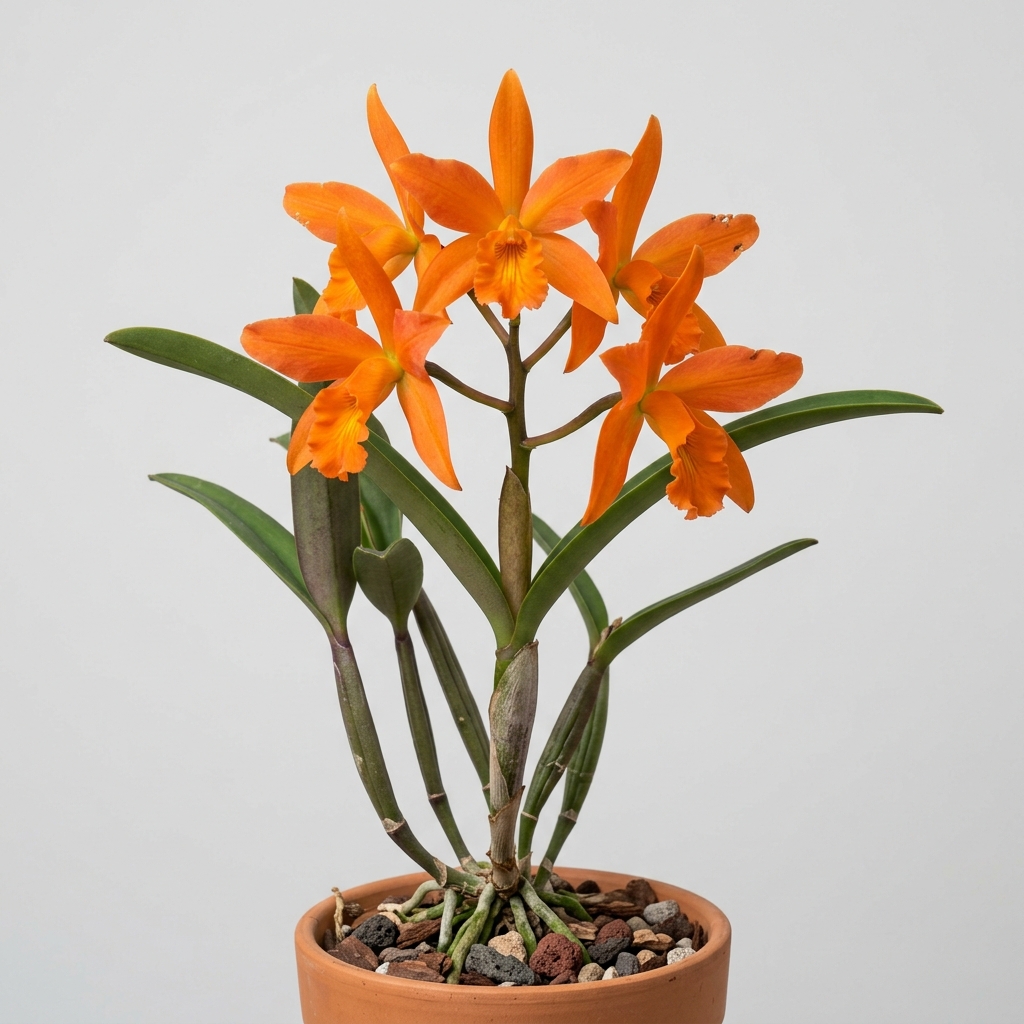
The flowers of Masdevallia Welischii are renowned for their brilliant orange to reddish-orange hue, which often shows a fascinating metallic blue or purple iridescence when viewed under direct light. This shimmering effect is caused by microscopic, light-refracting hairs that cover the surface of the sepals. The sepals are the dominant feature of the bloom, fusing at the base to form a short tube before spreading wide and tapering into long, slender tails.
The petals and lip are highly reduced and hidden deep within the sepaline tube, a characteristic typical of the Masdevallia genus. Each single-flowered inflorescence arises from the base of the ramicaul, holding the bloom slightly above or level with the foliage on a slender, erect to suberect peduncle.
Fragrance & Bloom Profile
Fragrance is not consistently documented or prominent in Masdevallia Welischii, as the species primarily relies on its vivid coloration and unique visual structure to attract pollinators in its native habitat. The blooms are long-lasting, often remaining in pristine condition for several weeks if environmental conditions remain cool and humid. A single mature specimen can produce multiple successive or simultaneous flower spikes, creating a brilliant display of color.
Parentage & Hybrid Lineage
Masdevallia Welischii is a naturally occurring species rather than a man-made hybrid, though it is frequently used as a parent in hybridization programs to introduce its intense orange coloration and iridescent qualities to new grexes. When researching its lineage, growers should note that wild-collected specimens are protected, and plants in cultivation are typically propagated through flasking or division. Its genetic contribution to modern cool-growing hybrids is highly valued by orchid breeders worldwide.
🌱 Growing Conditions
Replicating the cool, misty environment of the Peruvian Andes is the key to success with Masdevallia Welischii. The plant prefers low to medium light levels, similar to those suitable for Phalaenopsis or Miltoniopsis. Direct, intense sunlight must be avoided, as it can quickly scorch the thin leaves and overheat the plant.
💡 Care Tip
To keep temperatures cool during hot summer days, place the orchid near an evaporative cooler or use a small fan to increase air circulation around the pot. Evaporative cooling from damp clay pots or surrounding trays can also help lower the ambient by a few crucial degrees.
Temperature control is critical; daytime temperatures should ideally remain between 60°F and 70°F (15°C to 21°C), with a distinct drop at night to 45°F to 55°F (7°C to 13°C). High humidity levels of 70% to 80% are essential, accompanied by constant, gentle air movement to prevent stagnant air pockets, which can encourage fungal pathogens.
Watering, Feeding & Potting Media
Because Masdevallia Welischii lacks pseudobulbs, the potting medium must never be allowed to dry out completely. Water the plant thoroughly just as the medium approaches dampness, using pure water sources such as rainwater, distilled water, or reverse osmosis water, as the fine roots are highly sensitive to dissolved salts.
A potting mix consisting of fine-grade fir bark mixed with chopped sphagnum moss or perlite works well to retain moisture while allowing excellent drainage. Alternatively, many growers succeed by potting them in pure New Zealand sphagnum moss in small, plastic or clay pots. Fertilize weakly weekly with a highly diluted, balanced orchid fertilizer, flushing the pot with pure water periodically to prevent salt buildup.
Blooming Season & Care Notes
Masdevallia Welischii typically blooms in the spring and summer, though occasional flowers can appear at other times of the year if cool conditions are maintained. After the flowers fade, the old spikes can be cut back to the base of the plant. Repotting is best done in the autumn or early spring when temperatures are cool and the plant is actively producing new root growth. Minimize root disturbance during repotting to avoid stalling the plant’s growth.
⚠️ Common Issues
⚠️ Common Mistake
A frequent error is allowing the potting medium to dry out completely between waterings. Because Masdevallia Welischii lacks water-storing pseudobulbs, even a brief period of complete dryness can severely damage the fine root system, leading to rapid leaf drop and plant decline.
- Leaf Spotting: Often caused by high humidity combined with inadequate air circulation, allowing fungal or bacterial pathogens to colonize the foliage.
- Root Rot:
Occurs when the potting medium degrades, becomes compacted, or lacks sufficient drainage, suffocating the fine roots. - Heat Stress: Indicated by yellowing leaves, leaf drop, or a sudden halt in growth when temperatures consistently exceed 75°F (24°C).
- Pests:
Aphids, spider mites, and thrips can occasionally target the tender new growth and developing flower buds.
❓ Frequently Asked Questions
Can Masdevallia Welischii be grown under artificial LED lights?
Yes, Masdevallia Welischii can be successfully grown under LED lights, provided the light intensity is kept moderate and the fixtures do not generate excess heat. Position the plant at a safe distance from the lights to prevent leaf scorch, and monitor the temperature around the foliage closely.
Why are the leaves on my Masdevallia Welischii dropping?
Leaf drop is a common sign of environmental stress, most frequently caused by high temperatures, low humidity, or severe dehydration. Ensure the plant is kept cool, the humidity remains above 70%, and the potting medium is consistently damp but not waterlogged.
How often should I repot this orchid?
It is generally recommended to repot Masdevallia Welischii every one to two years, or when the potting medium begins to break down and lose its airy structure. Always repot during the cooler months of autumn or early spring to minimize stress on the root system.
What type of water is best for Masdevallia Welischii?
This species is highly sensitive to mineral salts and chlorine found in tap water. It is best to use rainwater, distilled water, or reverse osmosis water to prevent root burn and leaf tip dieback, ensuring the water is at room temperature or slightly cool.
⭐ Final Growing Notes
While Masdevallia Welischii presents a rewarding challenge for the dedicated orchid enthusiast, its brilliant, iridescent orange flowers make it well worth the specialized care. By focusing on cool temperatures, high humidity, pure water, and consistent moisture, growers can enjoy the spectacular beauty of this Andean treasure for many years.
⚕️ Health, Safety & Edibility
Understanding how a plant interacts with people, pets, and the surrounding environment is part of responsible cultivation. This section uses conservative, general guidance and does not replace professional medical or veterinary advice.
Human Safety: No published evidence currently identifies species-specific toxicity concerns for Masdevallia Welischii during normal handling. As with most ornamental plants, it should not be intentionally consumed.
Pet Safety: Published information does not indicate that this orchid commonly poses a toxicity concern for cats or dogs. However, chewing leaves, flowers, roots, or potting media may still cause mild digestive upset.
Edibility: This orchid is cultivated for ornamental display rather than food. Ornamental plants may carry fertilizers, pesticides, or other horticultural treatments that make them unsuitable for consumption.
Skin Contact: Routine handling is not generally associated with skin irritation. Gardeners with sensitive skin may prefer wearing gloves when repotting, pruning, or handling potting media.
🌱 Propagation Tip
Propagation is best achieved by dividing mature, healthy clumps during repotting in early spring. Ensure each division has at least five to eight healthy leaves and a robust root system. Avoid making smaller divisions, as they can struggle to recover without the support of a larger plant mass.
⭐ Expert Advice
When growing in warm climates, consider using net pots or terracotta pots nested inside larger damp clay pots. This double-potting method enhances evaporative cooling around the root zone, helping to shield the sensitive roots from heat stress during peak summer temperatures.

Leave A Comment