
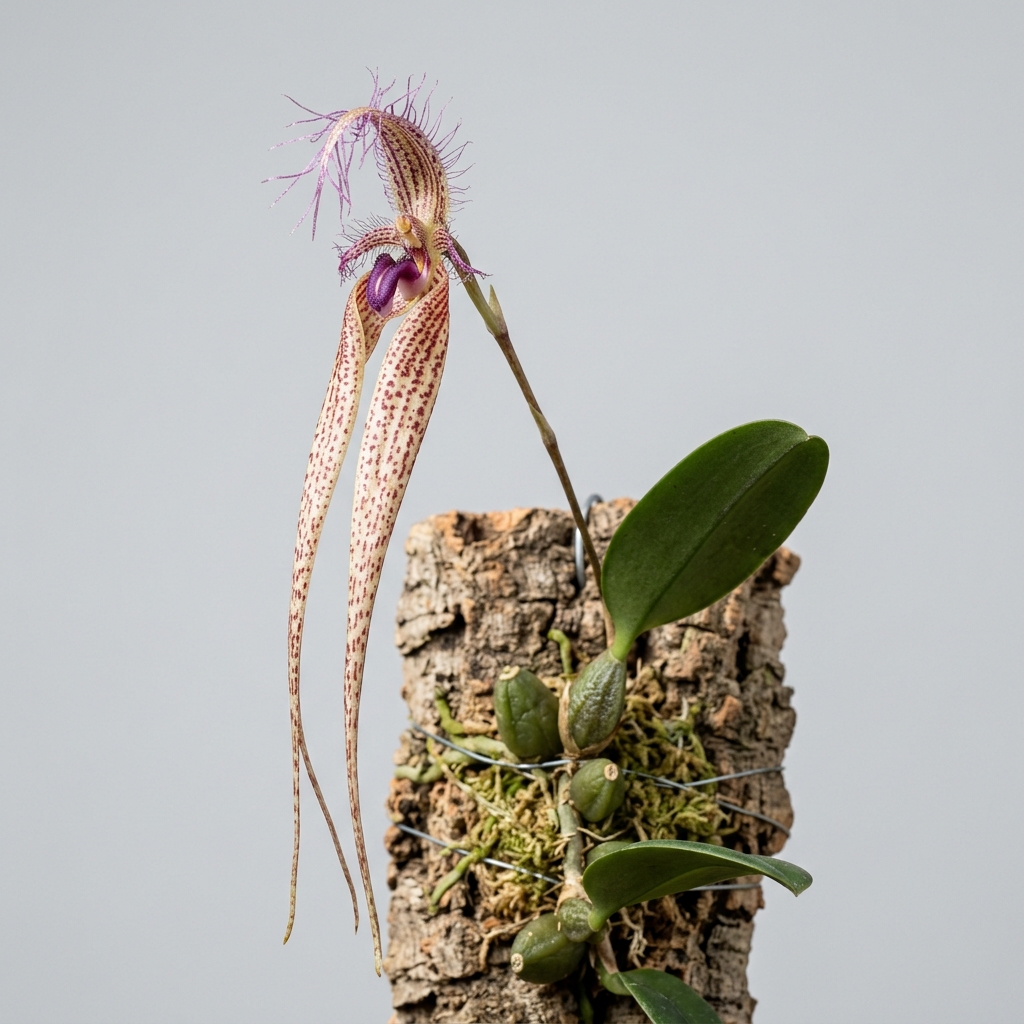
Bulbophyllum Putidum is a captivating and highly unusual orchid species belonging to the vast and diverse genus Bulbophyllum. Highly prized by collectors of miniature and botanical orchids, this species is renowned for its intricate, alien-like floral structure that showcases the extreme evolutionary adaptations of the orchid family. Its creeping growth habit and remarkable dangling sepals make it a standout addition to any specialized indoor collection or humid greenhouse.
Native to the warm, humid forests of Southeast Asia, this orchid has adapted to thrive in moist, shaded environments where it grows epiphytically on moss-covered tree trunks. While its unique floral morphology and fascinating pollination strategy attract orchid enthusiasts worldwide, successful cultivation requires a solid understanding of its specific moisture and humidity needs. For growers willing to replicate its native tropical habitat, Bulbophyllum Putidum offers a rewarding and visually stunning botanical display.
💡 Did You Know?
The hinged, highly mobile lip of Bulbophyllum Putidum is an evolutionary marvel designed to lure pollinators. Even the slightest breeze causes the lip and the fine tassels on the petals to wiggle dynamically, mimicking the movement of small insects to attract carrion flies to the flower.
🌿 Botanical Overview
Bulbophyllum Putidum is a sympodial epiphyte characterized by its distinct, egg-shaped pseudobulbs spaced along a creeping rhizome. Each pseudobulb bears a single, leathery, dark green leaf that is oblong to elliptic in shape. This growth habit allows the plant to spread horizontally, quickly colonizing mounting plaques or shallow baskets when provided with optimal growing conditions.
In its natural habitat, this species grows under the dense canopy of tropical forests, where it is shielded from direct sunlight but exposed to constant air movement and high atmospheric moisture. The root system is relatively fine and shallow, adapted to clinging to mossy bark and absorbing moisture rapidly from frequent tropical rains and heavy morning mists.
🌸 Flower Characteristics
The flowers of Bulbophyllum Putidum are a marvel of natural engineering, dominated by dramatically elongated lateral sepals that taper into long, thread-like tails. These sepals often drape downward, giving the bloom a delicate, cascading appearance. The base color of the flower is typically a pale cream or yellowish-green, heavily overlaid with intricate reddish-brown or purple striping and spotting.
A defining feature of this species is the mobile labellum (lip), which is delicately hinged and moves with the slightest breeze. The dorsal sepal and petals are often adorned with fine, hair-like appendages or tassels that wiggle in the wind. This dynamic movement, combined with the flower’s unique coloration, is designed to mimic organic matter to attract specific insect pollinators.
Fragrance & Bloom Profile
In line with many members of the genus Bulbophyllum, the fragrance of Bulbophyllum Putidum is adapted to attract carrion-seeking flies rather than typical sweet-loving pollinators. The scent is generally described as musty, slightly putrid, or reminiscent of decaying organic material, though the intensity can vary significantly depending on environmental factors such as temperature and humidity.
While some growers report a noticeable odor during the warmest hours of the day, others find the fragrance to be faint or only detectable in close proximity. The blooms typically open one at a time per inflorescence, arising from the base of the pseudobulb, and can last for one to two weeks under ideal, cool, and humid conditions.
Parentage & Hybrid Lineage
As a naturally occurring species rather than a man-made hybrid, Bulbophyllum Putidum does not have a complex lineage of parental cultivars. It belongs to the section Cirrhopetalum, a group within the genus Bulbophyllum known for flowers with fused or elongated lateral sepals and umbrella-like whorls.
In horticultural circles, there is occasional taxonomic confusion between Bulbophyllum Putidum and closely related species such as Bulbophyllum fascinator or Bulbophyllum appendiculatum. Because botanical classifications can shift and regional variations exist, growers should source plants from reputable nurseries to ensure accurate identification, as hybrid registration and parentage documentation for this specific group can sometimes be inconsistent.
🌱 Growing Conditions
To cultivate Bulbophyllum Putidum successfully, growers must replicate its warm, humid, and shaded forest home. It thrives in medium to low light conditions, similar to those preferred by Phalaenopsis orchids. Direct, unfiltered sunlight will quickly scorch the leaves and dehydrate the pseudobulbs, while excessively low light may prevent the plant from blooming.
💡 Care Tip
To maintain the high this orchid craves without risking root rot, place your potted or mounted Bulbophyllum Putidum over a wide tray filled with water and pebbles, ensuring the pot itself never sits directly in the water.
Temperature: wise, this orchid prefers warm to intermediate conditions, ideally ranging from 65°F to 85°F (18°C to 29°C) during the day, with a slight drop at night to stimulate healthy growth. High humidity is absolutely critical; maintaining a relative humidity level between 70% and 80% is ideal. Excellent air circulation must be provided at all times to prevent stagnant air from encouraging fungal pathogens in these highly humid environments.
Watering, Feeding & Potting Media
Bulbophyllum Putidum does not possess large water-storing pseudobulbs, meaning it has a low tolerance for prolonged drought. The potting medium should be kept consistently moist but never waterlogged. Watering frequency will depend heavily on the growing method; mounted plants may require daily misting or soaking, while those in pots or baskets will need watering as soon as the medium begins to approach dryness.
A high-quality New Zealand sphagnum moss or a fine-grade orchid bark mix works exceptionally well for retaining the necessary moisture. If potted, shallow pots or net baskets are preferred to accommodate the creeping rhizome. Feed the orchid with a highly diluted, balanced orchid fertilizer every two to three weeks during the active growing season, flushing the medium with pure water periodically to prevent mineral salt buildup.
Blooming Season & Care Notes
The primary blooming season for Bulbophyllum Putidum typically occurs in the late summer through autumn, though occasional blooms can appear at other times of the year if optimal conditions are maintained. The flower spikes emerge from the base of mature, fully formed pseudobulbs. During the budding phase, it is crucial to maintain stable humidity and avoid sudden temperature fluctuations, which can cause the delicate buds to blast.
Once the blooming cycle is complete, the old flower spikes can be cut back to the base of the pseudobulb. Repotting or remounting should ideally be done in the spring, just as new root growth begins to emerge from the base of the newest pseudobulbs, minimizing transplant shock and allowing the plant to establish itself quickly.
⚠️ Common Issues
⚠️ Common Mistake
A frequent mistake is letting the potting medium dry out completely between waterings. Unlike orchids with large pseudobulbs, this species has limited water storage and will quickly suffer leaf drop and root loss if subjected to prolonged drought.
- Dehydrated Pseudobulbs: Shriveled or wrinkled pseudobulbs indicate insufficient watering or extremely low humidity, requiring immediate adjustment of the watering schedule.
- Root Rot:
Caused by compacted, poorly draining potting media or overwatering, leading to mushy, black roots and declining plant health. - Leaf Spotting: Fungal or bacterial spots can develop on the leaves if humidity is high but air movement is inadequate.
- Bud Blast:
Sudden drops in humidity or drafts can cause developing flower buds to yellow, dry up, and fall off before opening. - Pests:
Mealybugs, spider mites, and scale can occasionally target the tender new growth and the undersides of the leaves.
❓ Frequently Asked Questions
How do I know if my Bulbophyllum Putidum needs more water?
Monitor the pseudobulbs closely; they should remain plump and smooth. If you notice the pseudobulbs beginning to wrinkle or shrivel, or if the potting medium feels completely dry to the touch, the orchid is likely underwatered. Mounted specimens generally require much more frequent watering than those grown in pots.
Can Bulbophyllum Putidum be grown under LED grow lights?
Yes, this orchid adapts very well to indoor cultivation under LED grow lights. Since it prefers moderate to low light levels, place the plant toward the edges of the light footprint or adjust the intensity to mimic dappled shade, ensuring the leaves do not become warm to the touch.
Why are the flower buds on my orchid falling off before opening?
This issue, known as bud blast, is usually triggered by environmental stress. Common culprits include sudden drops in ambient humidity, cold drafts from windows or air conditioners, or allowing the potting medium to dry out completely while the flower spike is actively developing.
Is it better to mount Bulbophyllum Putidum or grow it in a pot?
Because of its creeping rhizome and spreading growth habit, Bulbophyllum Putidum often performs best when mounted on a cork bark plaque or grown in a shallow wooden basket. However, if you cannot maintain high humidity levels, growing it in a shallow pot with moisture-retaining sphagnum moss is highly recommended.
⭐ Final Growing Notes
Bulbophyllum Putidum is a rewarding orchid for growers looking to venture beyond common commercial hybrids into the fascinating world of botanical species. While its moisture and humidity requirements demand consistent attention, its extraordinary, wind-dancer flowers and unique pollination biology make it a true conversation piece. By providing stable warm temperatures, high humidity, and gentle air movement, you can enjoy the exotic charm of this remarkable Southeast Asian treasure for many years.
⚕️ Health, Safety & Edibility
Understanding how a plant interacts with people, pets, and the surrounding environment is part of responsible cultivation. This section uses conservative, general guidance and does not replace professional medical or veterinary advice.
Human Safety: No published evidence currently identifies species-specific toxicity concerns for Bulbophyllum Putidum during normal handling. As with most ornamental plants, it should not be intentionally consumed.
Pet Safety: Published information does not indicate that this orchid commonly poses a toxicity concern for cats or dogs. However, chewing leaves, flowers, roots, or potting media may still cause mild digestive upset.
Edibility: This orchid is cultivated for ornamental display rather than food. Ornamental plants may carry fertilizers, pesticides, or other horticultural treatments that make them unsuitable for consumption.
Skin Contact: Routine handling is not generally associated with skin irritation. Gardeners with sensitive skin may prefer wearing gloves when repotting, pruning, or handling potting media.
🌱 Propagation Tip
Propagate this species by division during the spring repotting cycle. Ensure each division has at least three to four healthy, mature pseudobulbs with active root initials, and use a sterile blade to cut the creeping rhizome cleanly.
⭐ Expert Advice
If growing this orchid mounted, wrap a generous pad of high-quality New Zealand sphagnum moss around the roots before securing it to the cork. This acts as a vital moisture reservoir, helping the plant transition and survive dry indoor spells.

Leave A Comment