
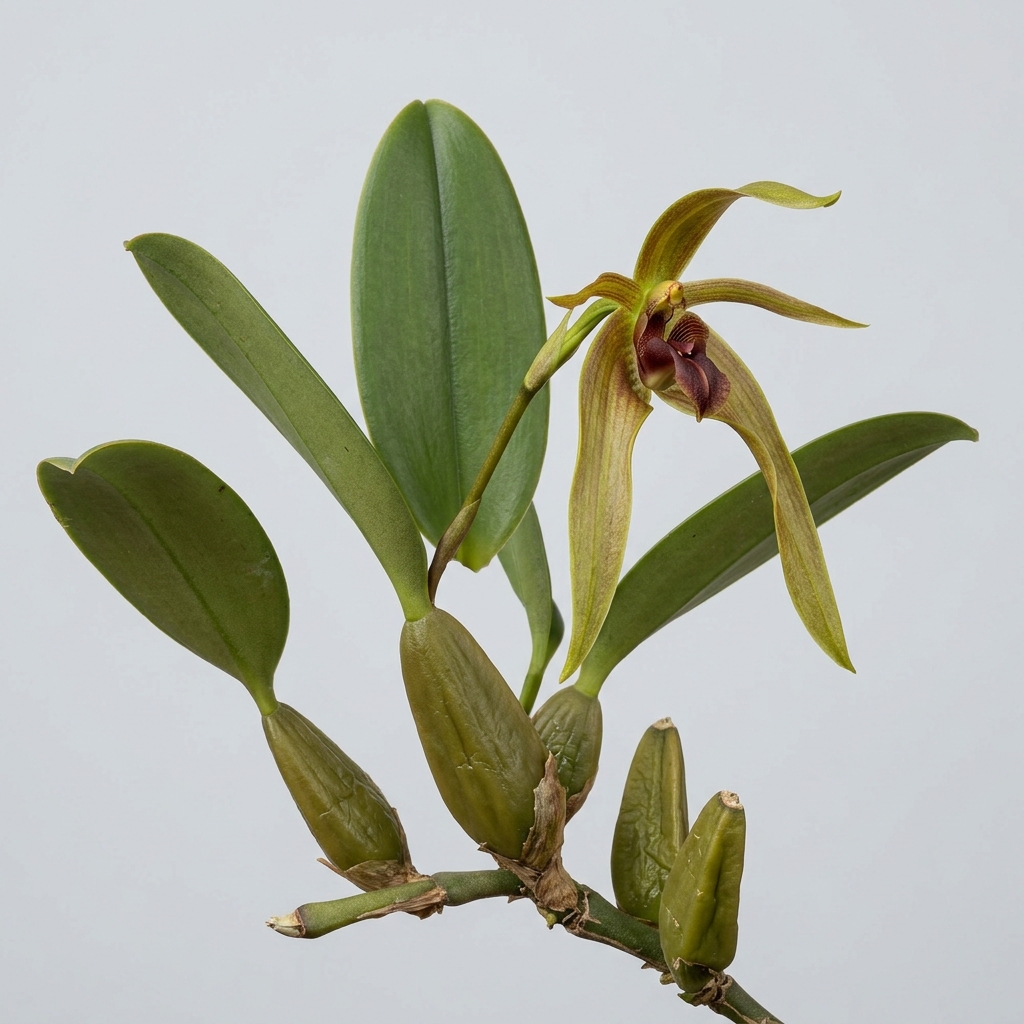
Bulbophyllum Robustum is a highly sought-after orchid species within the massive Bulbophyllum genus, celebrated by collectors for its impressive size and architectural growth habit. Native to the warm, humid rainforests of New Guinea, this epiphytic orchid is characterized by its stout, creeping rhizomes and prominent pseudobulbs. It is a plant that stands out even when not in bloom, making it a prized centerpiece for dedicated orchid enthusiasts.
In cultivation, this species is appreciated for its dramatic, unusual flowers that showcase the complex evolutionary adaptations of the genus. While it requires a commitment to high humidity and consistent moisture, growers find that its unique botanical presentation and robust growth reward the extra care. It represents an excellent choice for intermediate to advanced hobbyists looking to expand their collection with a distinctive tropical species.
💡 Did You Know?
that Bulbophyllum Robustum, like many of its relatives, features a highly specialized, hinged labellum? This sensitive lip structure acts as a mechanical trigger. When a pollinating insect lands on it, the lip tips backward, gently tipping the insect against the column to ensure successful pollen transfer.
🌿 Botanical Overview
Bulbophyllum Robustum is an epiphytic orchid native to the tropical rainforests of New Guinea, where it typically grows on tree trunks and lower branches in shaded, humid environments. True to its name, the plant shows a robust growth habit. It features large, sharply angled, four-sided pseudobulbs that are spaced along a thick, creeping rhizome. Each pseudobulb is topped by a single, leathery, oblong leaf that can reach significant proportions under optimal conditions.
The creeping nature of the rhizome means that the plant tends to spread horizontally rather than growing in a tight clump. This growth habit requires specialized containment or mounting strategies to accommodate its expansive footprint. In its native habitat, this structure allows the orchid to traverse mossy bark, absorbing moisture and nutrients from organic debris collected along its path.
🌸 Flower Characteristics
The flowers of Bulbophyllum Robustum are a testament to the complex evolutionary design of the genus. They are produced on inflorescences that emerge from the base of the mature pseudobulbs. The flowers are relatively large and feature elongated, tapering lateral sepals that often drape downwards, giving the bloom a dramatic, pendulous appearance. The dorsal sepal is typically smaller and forms a hood-like structure over the column.
Coloration can vary among individual specimens, but blooms commonly display shades of greenish-yellow, copper, bronze, or deep purplish-red. The most fascinating feature is the labellum, or lip, which is highly mobile and hinged. This structure is designed to move with the slightest breeze or weight of an insect, facilitating pollination by tipping the visitor directly into the reproductive organs of the flower.
Fragrance & Bloom Profile
The fragrance of Bulbophyllum Robustum is not consistently documented as pleasant, as is common with many species in this genus. Many growers report a distinct, musky, or slightly unpleasant odor, which evolved to attract specific fly pollinators in the wild. However, the intensity of the scent can vary significantly depending on environmental factors such as temperature, humidity, and the time of day.
Individual flowers typically remain open for one to two weeks, depending on growing conditions. While the blooms may not last as long as those of some other orchid genera, their striking visual presentation and unique biological mechanisms make the blooming event a highly anticipated highlight for collectors.
Parentage & Hybrid Lineage
Bulbophyllum Robustum is a naturally occurring species rather than a man-made hybrid. Consequently, it does not have a hybrid lineage or parentage to trace. In the orchid trade, it is primarily grown and appreciated as a species selection. While it may occasionally be used by hybridizers seeking to introduce size and robust growth habits into new Bulbophyllum crosses, such registered hybrids are not widely documented in standard commercial references.
When purchasing this orchid, growers should look for reputable nurseries that propagate the species from seed or division rather than collecting plants from the wild, ensuring the preservation of natural populations in New Guinea.
🌱 Growing Conditions
To cultivate Bulbophyllum Robustum successfully, one must replicate its warm, humid forest canopy home. It prefers intermediate to warm temperatures, ideally ranging from 65°F to 85°F during the day, with a slight drop at night to stimulate healthy metabolic processes. It does not tolerate frost or prolonged exposure to temperatures below 55°F.
💡 Care Tip
Because of its creeping rhizome and spreading growth habit, Bulbophyllum Robustum thrives best when grown in shallow, wide wooden baskets or mounted directly onto cork bark. This allows the roots to spread naturally and ensures the rapid drainage necessary to prevent root suffocation.
Light should be bright but filtered or indirect. Direct midday sunlight will quickly scorch the thick leaves, while too little light will result in weak, elongated growth and a failure to bloom. High humidity is perhaps the most critical factor, with a target range of 70% to 90%. To prevent fungal issues in such humid conditions, constant, gentle air movement is absolutely essential.
Watering, Feeding & Potting Media
This orchid requires consistent moisture and does not possess the drought tolerance of some other pseudobulbous genera. The potting medium should never be allowed to dry out completely. High-quality New Zealand sphagnum moss is highly recommended, as it retains moisture while remaining airy. Alternatively, a mix of fine fir bark, perlite, and charcoal can be used in shallow pots or baskets.
Because of its creeping rhizome, mounting the plant on a slab of cork bark or tree fern fiber is often the most natural way to grow it, provided the grower can maintain the necessary high humidity. Feed the plant weekly with a highly diluted, balanced orchid fertilizer during the active growing season, flushing the medium with pure water periodically to prevent salt buildup.
Blooming Season & Care Notes
Bulbophyllum Robustum typically blooms during the warmer months of summer and autumn, though flowering can occasionally occur at other times of the year if conditions are stable. The flower spikes emerge from the base of the most recently matured pseudobulbs. During spike development, it is crucial to avoid getting water directly on the emerging buds, as this can lead to rot or bud blast.
Repotting or remounting should be done only when the potting medium begins to break down or when the plant has completely outgrown its container. The best time to do this is in the spring, just as new root growth is initiated from the base of the newest pseudobulbs, minimizing transplant shock.
⚠️ Common Issues
⚠️ Common Mistake
A frequent error is allowing the potting medium to dry out completely between waterings. Unlike some orchids with large pseudobulbs that tolerate drought, Bulbophyllum Robustum prefers consistent moisture and can suffer severe leaf drop and stunted pseudobulb growth if subjected to prolonged dry spells.
- Root Rot:
Caused by stagnant, waterlogged potting media. Ensure excellent drainage and avoid over-compacting sphagnum moss. - Bud Blast:
Sudden drops in humidity or temperature can cause developing flower buds to yellow and drop before opening. - Leaf Spotting: Fungal or bacterial spots can develop if water sits on the leaves overnight in stagnant air. Always water early in the day and maintain good airflow.
- Dehydration:
Shriveled pseudobulbs and wrinkled leaves indicate insufficient watering or low humidity. - Pests:
Mealybugs and spider mites can occasionally target the plant, particularly in dry environments. Treat promptly with insecticidal soap or neem oil.
❓ Frequently Asked Questions
How often should I water Bulbophyllum Robustum?
Watering frequency depends on your growing environment, but the medium should remain consistently damp. In warm weather, mounted plants may need daily watering, while those in sphagnum moss baskets may require watering every two to three days.
Can I grow Bulbophyllum Robustum indoors without a greenhouse?
Yes, but it requires effort to maintain the necessary 70% to 90% humidity. Growing it in a dedicated plant room with a humidifier, in a large terrarium, or using humidity trays combined with a small fan can make indoor cultivation successful.
Why are the pseudobulbs on my orchid shriveling?
Shriveled pseudobulbs are a sign of water stress. This can be caused by under-watering, extremely low humidity, or conversely, root rot. If the roots have rotted due to poor drainage, the plant can no longer absorb water, leading to dehydration symptoms.
What is the best way to mount this orchid?
Mounting on a large piece of cork bark or tree fern fiber with a pad of sphagnum moss around the roots is ideal. Secure the creeping rhizome firmly to the mount using monofilament line or plant ties until the new roots attach themselves naturally.
⭐ Final Growing Notes
Bulbophyllum Robustum is a magnificent representative of the diverse world of tropical orchids, offering a rewarding challenge for growers who can provide the warm, humid, and airy conditions it craves. Its robust vegetative structure and fascinating, mechanically complex flowers make it a standout addition to any specialized collection. By focusing on consistent moisture, high humidity, and excellent air circulation, you can enjoy the display of this New Guinea treasure for years to come.
⚕️ Health, Safety & Edibility
Understanding how a plant interacts with people, pets, and the surrounding environment is part of responsible cultivation. This section uses conservative, general guidance and does not replace professional medical or veterinary advice.
Human Safety: No published evidence currently identifies species-specific toxicity concerns for Bulbophyllum Robustum during normal handling. As with most ornamental plants, it should not be intentionally consumed.
Pet Safety: Published information does not indicate that this orchid commonly poses a toxicity concern for cats or dogs. However, chewing leaves, flowers, roots, or potting media may still cause mild digestive upset.
Edibility: This orchid is cultivated for ornamental display rather than food. Ornamental plants may carry fertilizers, pesticides, or other horticultural treatments that make them unsuitable for consumption.
Skin Contact: Routine handling is not generally associated with skin irritation. Gardeners with sensitive skin may prefer wearing gloves when repotting, pruning, or handling potting media.
🌱 Propagation Tip
Propagation is most successfully achieved by division of the rhizome during the active growing season. Ensure that each division contains at least three to four healthy, mature pseudobulbs with active root systems, and pot them in high-grade sphagnum moss to encourage rapid establishment.
⭐ Expert Advice
To maximize bloom potential, maintain a strict balance of high and strong air circulation. Stagnant air in a high- environment is a recipe for fungal infections, whereas active air movement mimics its native canopy habitat and stimulates robust, disease-resistant growth.

Leave A Comment