
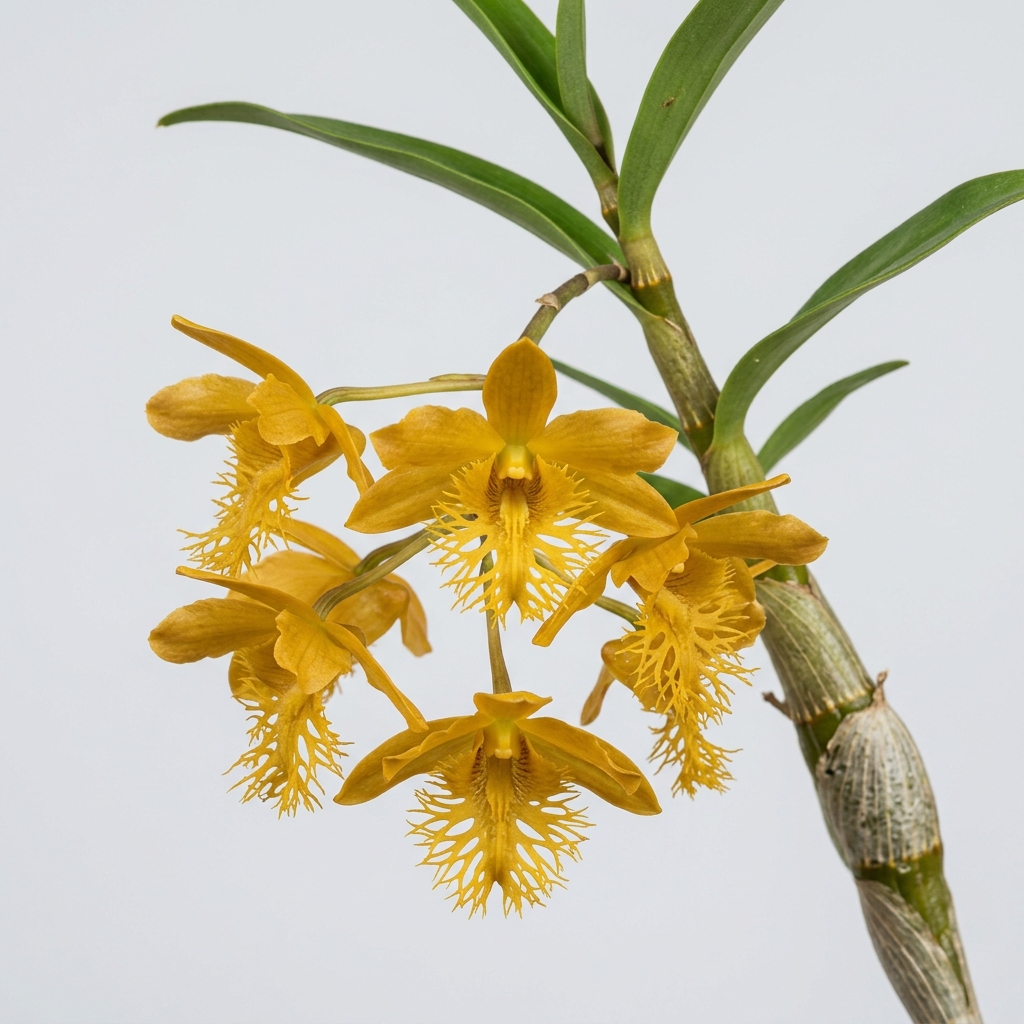
Dendrobium Brymerianum is a highly sought-after epiphytic orchid species celebrated for its remarkably intricate and visually arresting flowers. Native to the seasonally dry montane forests of Southeast Asia, including Myanmar, northern Thailand, Laos, and southwest China, this species has captivated orchid enthusiasts for generations. It features glossy, cane-like pseudobulbs that swell slightly in the middle, providing a sturdy architectural base for its spectacular seasonal floral displays.
What truly sets this orchid apart is the extraordinary, lace-like fringing on its golden-yellow lip, a feature unmatched by almost any other species in the genus. While it requires attentive care—particularly regarding its seasonal watering cycle—the visual reward of its unique blooms makes it a crowning achievement for intermediate and advanced growers. When cultivated successfully, it serves as a stunning showcase of evolutionary botanical design.
💡 Did You Know?
Dendrobium Brymerianum is part of the Dendrobium orchid group, a favorite among growers because its flowers, growth habit, and care needs make it useful for comparing cultivated orchids within the same . Observing its leaves, roots, and bloom spikes can help growers understand how this cultivar responds to indoor conditions.
🌿 Botanical Overview
Dendrobium Brymerianum is a sympodial epiphyte that naturally grows on the branches of trees in deciduous and semi-deciduous forests. Its pseudobulbs are glossy, olive-green to yellowish, and typically reach between 6 to 20 inches in length. These canes are slightly swollen near the center and taper at both ends, giving them a distinctive spindle-like appearance that helps the plant store water during dry spells.
The leaves are lanceolate, leathery, and arranged along the upper portion of the pseudobulbs. Depending on the specific growing environment and seasonal cues, this species can behave as a semi-deciduous orchid, shedding some or all of its leaves during the cooler, drier winter months. This leaf loss is a natural adaptation to conserve moisture and is often a precursor to a successful spring bloom cycle.
🌸 Flower Characteristics
The defining feature of Dendrobium Brymerianum is undoubtedly its magnificent flowers. Measuring approximately 2 to 3 inches across, the blooms are a striking, uniform golden-yellow to deep orange-yellow. They emerge in short racemes from the upper nodes of both leafy and leafless mature canes, typically carrying between two and five flowers per inflorescence.
The sepals and petals are relatively simple, narrow, and slightly reflexed, which serves to direct all attention to the extraordinary labellum. The lip is deeply and intricately fringed with long, branching, moss-like projections that extend outward like delicate lace. This highly complex structure is one of the most dramatic examples of floral ornamentation in the entire orchid family.
Fragrance & Bloom Profile
In addition to their visual splendor, the flowers of Dendrobium Brymerianum are highly fragrant. They emit a strong, sweet scent that is often compared to honey, citrus, or warm floral nectar. This fragrance is most pronounced during the morning and early afternoon hours, filling the growing space with a rich, pleasant aroma.
The blooming period typically occurs in the spring, though occasional early summer blooms are common. Individual flowers are moderately long-lasting, remaining fresh for three to four weeks if the plant is kept in a cool, humid environment away from direct drafts. To maximize the lifespan of the blooms, growers should avoid getting water directly on the open petals.
Parentage & Hybrid Lineage
Dendrobium Brymerianum is a naturally occurring species rather than a man-made hybrid. First described in the late 19th century, it has remained a distinct and highly prized species in botanical collections. Because of its unique fringed lip, it has occasionally been used by hybridizers seeking to introduce this lace-like characteristic into new Dendrobium cultivars.
However, breeding with this species can be challenging, and direct hybrids are relatively rare in the mass commercial market. Most specimens found in cultivation are species selections propagated from seed or tissue culture, preserving the pure, wild characteristics of this remarkable Southeast Asian native.
🌱 Growing Conditions
To cultivate Dendrobium Brymerianum successfully, growers must mimic its native monsoonal climate. It thrives in bright, filtered indirect light, similar to the light levels required by Cattleyas. A slight yellow-green tint to the foliage indicates optimal light exposure, while deep green leaves suggest the plant needs more light to bloom.
💡 Care Tip
For best results, grow Dendrobium Brymerianum in bright filtered with steady and gentle airflow. Avoid placing the plant in harsh midday sun, but do not keep it in a dark corner; weak is one of the most common reasons cultivated orchids refuse to rebloom.
Temperature requirements are intermediate to warm during the active growing season, with daytime temperatures ranging from 75°F to 85°F and night temperatures dropping to around 60°F to 65°F. High humidity of 60% to 80% is essential, paired with excellent air circulation to prevent stagnant air pockets that can foster fungal pathogens.
Watering, Feeding & Potting Media
During the active growing phase in spring and summer, Dendrobium Brymerianum requires frequent, copious watering. The potting medium should be allowed to approach dryness but never dry out completely. Regular applications of a balanced, diluted orchid fertilizer every two weeks will support the rapid development of new pseudobulbs.
The potting medium must be exceptionally free-draining to protect the delicate root system. A mix of coarse fir bark, perlite, and charcoal in a slotted plastic or clay pot works well. Alternatively, because of its epiphytic nature, this species thrives when mounted on cork bark or tree fern slabs, provided the grower can maintain high humidity and water the plant daily during hot weather.
Blooming Season & Care Notes
The blooming cycle of Dendrobium Brymerianum is intimately tied to its winter rest period. As autumn approaches, watering should be gradually reduced, and fertilization must be stopped entirely. During the winter, the plant should receive only enough water to prevent the pseudobulbs from shriveling severely—typically a light misting every two to three weeks.
This cool, dry winter rest, combined with bright light, triggers the development of flower buds along the upper nodes of the canes. Once the flower spikes begin to emerge in early spring, regular watering and warmer temperatures should be gradually resumed. Repotting should only be performed in the spring, just as new root growth begins from the base of the lead pseudobulb.
⚠️ Common Issues
⚠️ Common Mistake
The most common mistake is by calendar instead of root and potting-media condition. Dendrobium roots need moisture and air at the same time, so constantly wet bark or sphagnum can lead to root loss even when the leaves still look healthy.
- Root Rot:
Caused by overwatering during the winter rest period when the plant is inactive. - Bud Blast:
Sudden changes in temperature, low humidity, or drafts can cause developing flower buds to yellow and drop before opening. - Shriveled Canes: While slight wrinkling is normal during the winter rest, severe shriveling indicates extreme dehydration.
- Pests:
Spider mites and scale can target the undersides of leaves, particularly in dry, low-humidity environments. - Leaf Spotting: Fungal or bacterial spots can develop if water sits on the foliage overnight without adequate airflow.
❓ Frequently Asked Questions
Why is my Dendrobium Brymerianum not blooming?
The most common reason for a lack of blooms is the omission of a proper winter rest. Without a distinct period of reduced watering, cooler night temperatures, and no fertilizer during the winter months, the plant will continue vegetative growth instead of initiating flower buds.
How often should I water during the winter rest?
Watering should be minimal. Only apply water—preferably as a light misting—when the pseudobulbs begin to show signs of significant shriveling. In most home environments, a light watering every two to three weeks is sufficient until the new flower spikes appear in spring.
Can I grow this orchid mounted on cork bark?
Yes, Dendrobium Brymerianum performs exceptionally well when mounted on cork bark. Mounting mimics its natural epiphytic growth habit and prevents root rot. However, mounted plants dry out very quickly and may require daily watering during the hot summer months.
What should I do if the leaves turn yellow and fall off?
If this occurs in late autumn or winter, it is likely a natural part of the plant’s semi-deciduous cycle. As long as the pseudobulbs remain firm and green, leaf loss is normal. If leaves turn yellow and drop during the active summer growing season, it may indicate overwatering or root damage.
⭐ Final Growing Notes
Dendrobium Brymerianum is a true masterpiece of the orchid world, offering a rewarding challenge for dedicated growers. By respecting its seasonal rhythm of wet, warm summers and dry, cool winters, you will be rewarded with a breathtaking display of golden, lace-lipped flowers and a delightful honey-like fragrance that makes all the careful cultivation efforts worthwhile.
⚕️ Health, Safety & Edibility
Understanding how a plant interacts with people, pets, and the surrounding environment is part of responsible cultivation. This section uses conservative, general guidance and does not replace professional medical or veterinary advice.
Human Safety: No published evidence currently identifies species-specific toxicity concerns for Dendrobium Brymerianum during normal handling. As with most ornamental plants, it should not be intentionally consumed.
Pet Safety: Published information does not indicate that this orchid commonly poses a toxicity concern for cats or dogs. However, chewing leaves, flowers, roots, or potting media may still cause mild digestive upset.
Edibility: This orchid is cultivated for ornamental display rather than food. Ornamental plants may carry fertilizers, pesticides, or other horticultural treatments that make them unsuitable for consumption.
Skin Contact: Routine handling is not generally associated with skin irritation. Gardeners with sensitive skin may prefer wearing gloves when repotting, pruning, or handling potting media.
🌱 Propagation Tip
Propagation should be approached patiently. Most home growers should wait for natural keikis or divide only mature, healthy plants when the orchid type allows it. Never remove a young growth until it has strong roots and enough leaves to support itself away from the parent plant.
⭐ Expert Advice
Repot after flowering when fresh root tips begin to appear. This timing helps the plant anchor quickly into new bark or sphagnum and reduces stress, especially for orchids grown indoors where airflow, , and drying speed can change from season to season.

Leave A Comment