
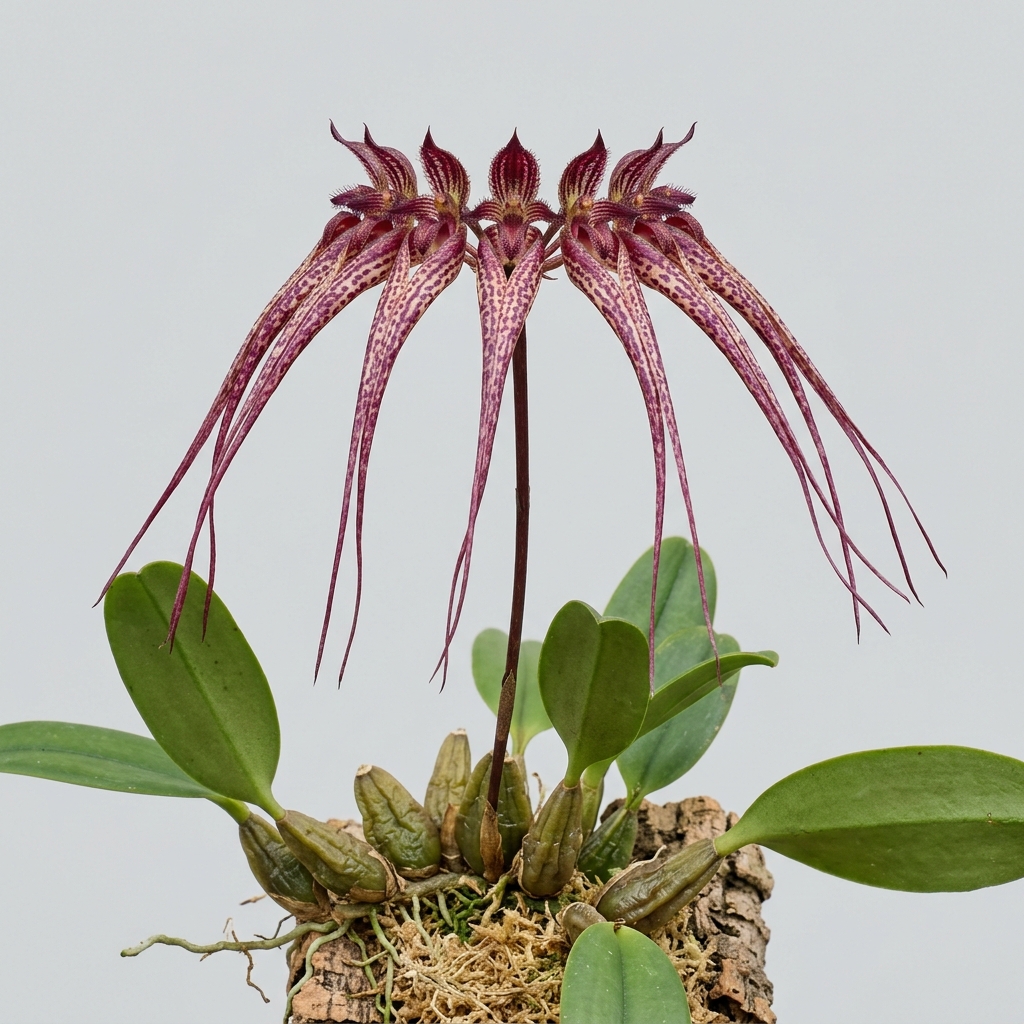
Bulbophyllum Rothschildianum is one of the most visually arresting orchids in cultivation, celebrated for its spectacular, fan-like clusters of long-tailed blossoms. Belonging to the vast and diverse genus Bulbophyllum, this orchid is highly prized by collectors for its unique Cirrhopetalum-type growth habit and dramatic floral presentation. The flowers feature elongated lateral sepals that drape downward like elegant ribbons, creating a captivating display that stands out in any greenhouse or indoor growing space.
As a creeping epiphyte, this orchid produces distinct pseudobulbs topped with thick, leathery leaves along a wandering rhizome. While its exotic appearance might suggest a temperamental nature, Bulbophyllum Rothschildianum is relatively adaptable when provided with consistent moisture, high humidity, and moderate warmth. Understanding its specific environmental preferences is the key to successfully cultivating this remarkable orchid and enjoying its seasonal, show-stopping blooms.
💡 Did You Know?
The mobile, hinged lip of Bulbophyllum Rothschildianum is a highly specialized evolutionary adaptation. It is so finely balanced that even the slightest breeze causes it to rock back and forth, mimicking the movement of a female insect to lure in pollinators.
🌿 Botanical Overview
Bulbophyllum Rothschildianum is native to the warm, humid forest regions of Asia, where it grows as an epiphyte on mossy tree trunks and branches. It belongs to the section Cirrhopetalum, a group within the Bulbophyllum genus characterized by flowers arranged in a circular, umbrella-like umbel. The plant spreads via a creeping rhizome, with pear-shaped or ovoid pseudobulbs spaced along its length, each bearing a single, erect, oblong leaf.
The growth habit of this orchid requires ample space to spread. In its natural habitat, the creeping rhizomes allow the plant to colonize large areas of tree bark, absorbing moisture and nutrients from the surrounding humid air and organic debris. Cultivators must replicate this airy, moisture-retentive environment to encourage healthy vegetative growth and later flowering.
🌸 Flower Characteristics
The inflorescence of Bulbophyllum Rothschildianum is a spectacular umbel, typically bearing several flowers arranged in a radiating fan. The most striking feature of the individual flowers is the extreme elongation of the lateral sepals, which fuse together and taper into long, delicate tails that can reach several inches in length. These sepals are typically adorned with intricate patterns of deep crimson, purple, and cream.
In addition to the dramatic sepals, the flowers feature a small, hinged lip (labellum) that is highly mobile. This lip is designed to move with the slightest breeze, a mechanical adaptation that attracts specific insect pollinators in the wild. The dorsal sepal and petals are often fringed with delicate, hair-like appendages that shimmer in the air, adding to the complex, alien-like beauty of the bloom.
Fragrance & Bloom Profile
The fragrance of Bulbophyllum Rothschildianum is a subject of much discussion among orchid enthusiasts. Like many members of its genus, it has evolved to attract fly pollinators, which means its scent profile is generally described as musky, earthy, or slightly putrid, rather than sweet. However, the intensity of the fragrance can vary significantly depending on environmental conditions, time of day, and individual plant clones.
For most growers, the scent is not overpowering and is easily tolerated, especially given the sheer visual magnificence of the flowers. The blooms typically last for one to two weeks, during which time the intricate details of the fan-shaped umbel remain fully expanded. Providing cooler temperatures and stable humidity during the blooming period can help prolong the life of the delicate flowers.
Parentage & Hybrid Lineage
In horticultural literature, Bulbophyllum Rothschildianum is widely recognized as a distinct species within the section Cirrhopetalum, though some taxonomists treat it under the name Cirrhopetalum rothschildianum. Because of its exceptional floral traits, it has been used extensively in hybridization to create striking new grexes with improved vigor and unique color variations.
When purchasing this orchid, growers may encounter plants labeled as select line-bred cultivars or primary hybrids sharing similar parentage. Because taxonomic classifications within the massive Bulbophyllum genus can occasionally shift, buyers should rely on reputable orchid nurseries to ensure they are acquiring true-to-type specimens of this classic orchid.
🌱 Growing Conditions
To thrive, Bulbophyllum Rothschildianum requires intermediate to warm growing conditions. It prefers bright, filtered light, similar to the dappled sunlight found under a forest canopy. Direct, intense sunlight should be avoided, as it can easily scorch the leathery leaves and dehydrate the pseudobulbs. High-quality LED grow lights or a shaded east- or semi-shaded south-facing window are ideal indoor locations.
💡 Care Tip
To keep this orchid happy, prioritize high and excellent air movement. If growing indoors, placing a small fan nearby and using a humidifying tray can prevent stagnant air while keeping moisture levels high.
Humidity is a critical factor for this species, with a target range of 60% to 80% being optimal. Excellent air movement is essential to prevent stagnant air pockets, which can encourage fungal and bacterial pathogens in high-humidity environments. Temperature ranges should ideally remain between 65°F and 85°F during the day, with a slight drop of 5°F to 10°F at night to mimic natural diurnal cycles.
Watering, Feeding & Potting Media
Unlike many orchids that prefer to dry out completely between waterings, Bulbophyllum Rothschildianum prefers to remain consistently moist but never waterlogged. The fine root system is sensitive to drying out, which can cause the pseudobulbs to shrivel rapidly. Watering should be frequent, especially during the active growing season in spring and summer.
Because of its creeping growth habit, this orchid is exceptionally well-suited for mounting on cork bark or tree fern plaques, provided high humidity can be maintained. Alternatively, it can be grown in shallow, wide baskets or plastic pans filled with a highly draining, moisture-retentive medium such as long-fibered sphagnum moss mixed with fine fir bark and perlite. Feed the plant regularly with a diluted, balanced orchid fertilizer during active growth, flushing the medium periodically with pure water to prevent salt buildup.
Blooming Season & Care Notes
Bulbophyllum Rothschildianum typically initiates its blooming cycle in the late summer or autumn, though occasional blooms can occur at other times of the year if growing conditions are optimal. The flower spikes emerge from the base of mature, fully formed pseudobulbs. During spike development, it is crucial to maintain stable environmental conditions and avoid moving the plant, as sudden changes can lead to bud blast.
Once the blooming cycle is complete, the old flower spikes can be cut back to the base of the pseudobulb. Repotting or remounting should ideally be performed in the spring, just as new root growth begins to emerge from the base of the newest pseudobulbs. This minimizes transplant shock and allows the plant to quickly establish itself in its new medium before the heat of summer.
⚠️ Common Issues
⚠️ Common Mistake
The most common mistake is letting the potting medium dry out completely. Unlike some orchids, Bulbophyllum Rothschildianum lacks large water-storage tissues and will quickly suffer from dehydration if left dry for too long.
- Shriveled Pseudobulbs: Often a sign of under-watering or low humidity, though it can also indicate root loss due to over-watering and later root rot.
- Leaf Spotting: Fungal or bacterial spots can develop if water is allowed to sit on the leaves overnight or if air circulation is inadequate.
- Bud Blast:
The sudden yellowing and dropping of flower buds before they open, usually caused by rapid drops in humidity, drafts, or temperature shocks. - Pests:
Mealybugs and spider mites can occasionally target the tender new growths and the undersides of leaves; treat promptly with insecticidal soap or neem oil.
❓ Frequently Asked Questions
How often should I water Bulbophyllum Rothschildianum?
This orchid should be watered frequently to keep the potting medium or mount consistently moist. During the warm active growing season, this may mean watering daily or every other day, depending on your humidity levels. In the winter, watering can be slightly reduced, but the medium should never be allowed to dry out completely.
Can I grow Bulbophyllum Rothschildianum under artificial LED lights?
Yes, this orchid adapts very well to indoor cultivation under high-quality LED grow lights. Position the plant so it receives bright, indirect light, ensuring the leaves do not become overly warm. Monitor the moisture levels closely, as indoor heating and light setups can dry out the potting medium more quickly.
Why are the pseudobulbs on my orchid shriveling?
Shriveled pseudobulbs are typically a sign of dehydration. This can be caused by insufficient watering, low ambient humidity, or a damaged root system that can no longer absorb water. Inspect the roots; if they are brown and mushy, the plant has been over-watered, whereas dry, brittle roots indicate under-watering.
Is Bulbophyllum Rothschildianum suitable for beginners?
While it is highly rewarding, this orchid is generally considered intermediate in difficulty. It requires more consistent attention to moisture and humidity than hardier beginner orchids like Phalaenopsis. However, for a grower who can maintain high humidity and consistent watering, it is a vigorous and manageable grower.
⭐ Final Growing Notes
Bulbophyllum Rothschildianum remains a crown jewel of the orchid world, offering an unparalleled combination of architectural foliage and dramatic, fan-like blooms. While its moisture and humidity requirements demand an attentive hand, the reward of witnessing its long-tailed, crimson-patterned flowers expand is well worth the effort. By providing a stable, humid environment and mimicking its natural epiphytic habitat, you can enjoy the exotic presence of this magnificent orchid for many years to come.
⚕️ Health, Safety & Edibility
Understanding how a plant interacts with people, pets, and the surrounding environment is part of responsible cultivation. This section uses conservative, general guidance and does not replace professional medical or veterinary advice.
Human Safety: No published evidence currently identifies species-specific toxicity concerns for Bulbophyllum Rothschildianum during normal handling. As with most ornamental plants, it should not be intentionally consumed.
Pet Safety: Published information does not indicate that this orchid commonly poses a toxicity concern for cats or dogs. However, chewing leaves, flowers, roots, or potting media may still cause mild digestive upset.
Edibility: This orchid is cultivated for ornamental display rather than food. Ornamental plants may carry fertilizers, pesticides, or other horticultural treatments that make them unsuitable for consumption.
Skin Contact: Routine handling is not generally associated with skin irritation. Gardeners with sensitive skin may prefer wearing gloves when repotting, pruning, or handling potting media.
🌱 Propagation Tip
This orchid is best propagated by division during spring repotting. Ensure each division has at least three to four healthy pseudobulbs with active root growth to give the new plant the best chance of establishing quickly.
⭐ Expert Advice
For the best display, grow this orchid in a shallow, wide basket or mount it on a cork plaque. Its creeping rhizome will naturally wander across the surface, creating a spectacular specimen plant over time.

Leave A Comment