

Aerangis Distincta is a highly prized African orchid species celebrated for its elegant, star-shaped white blossoms and dramatic, elongated nectar spurs. Native to the shaded riverine forests and woodlands of Malawi and Mozambique, this monopodial epiphyte brings a touch of exotic sophistication to any indoor collection. Orchid enthusiasts value the cultivar for its graceful growth habit and its striking, pendulous flower spikes that drape beautifully from mounted displays or hanging baskets.
Growing Aerangis Distincta successfully requires recreating its humid, understory forest habitat. While it demands consistent moisture and high humidity, it is relatively adaptable compared to some of its more temperamental relatives in the Aerangis genus. With proper attention to air circulation, moderate temperatures, and filtered light, this orchid rewards growers with a spectacular seasonal display of pristine, crystalline blooms that emit a captivating fragrance.
💡 Did You Know?
Aerangis Distincta belongs to the Aerangis orchid group, where flower presentation is often just as important as . White-flowered cultivars are especially valued indoors because their pale blooms reflect well and pair easily with many home, greenhouse, and display settings.
🌿 Botanical Overview
Aerangis Distincta is a monopodial epiphytic orchid, meaning it grows upward from a single stem rather than producing pseudobulbs. In its native habitats of Malawi and Mozambique, it clings to the bark of trees in riverine forests and deep gorges, where it is shielded from direct sunlight but bathed in humid, moving air. The plant features a compact growth habit, with thick, leathery leaves that are dark green, often displaying a subtle grayish or metallic sheen that helps it capture light in the dim forest understory.
The root system of Aerangis Distincta is highly adapted to its epiphytic lifestyle. The roots are thick, fleshy, and covered in a prominent layer of velamen, which allows them to rapidly absorb moisture from rain and atmospheric humidity. These roots often grow aerially, spreading out to anchor the plant securely to its mounting surface while absorbing nutrients from decaying organic matter washed down the tree bark.
🌸 Flower Characteristics
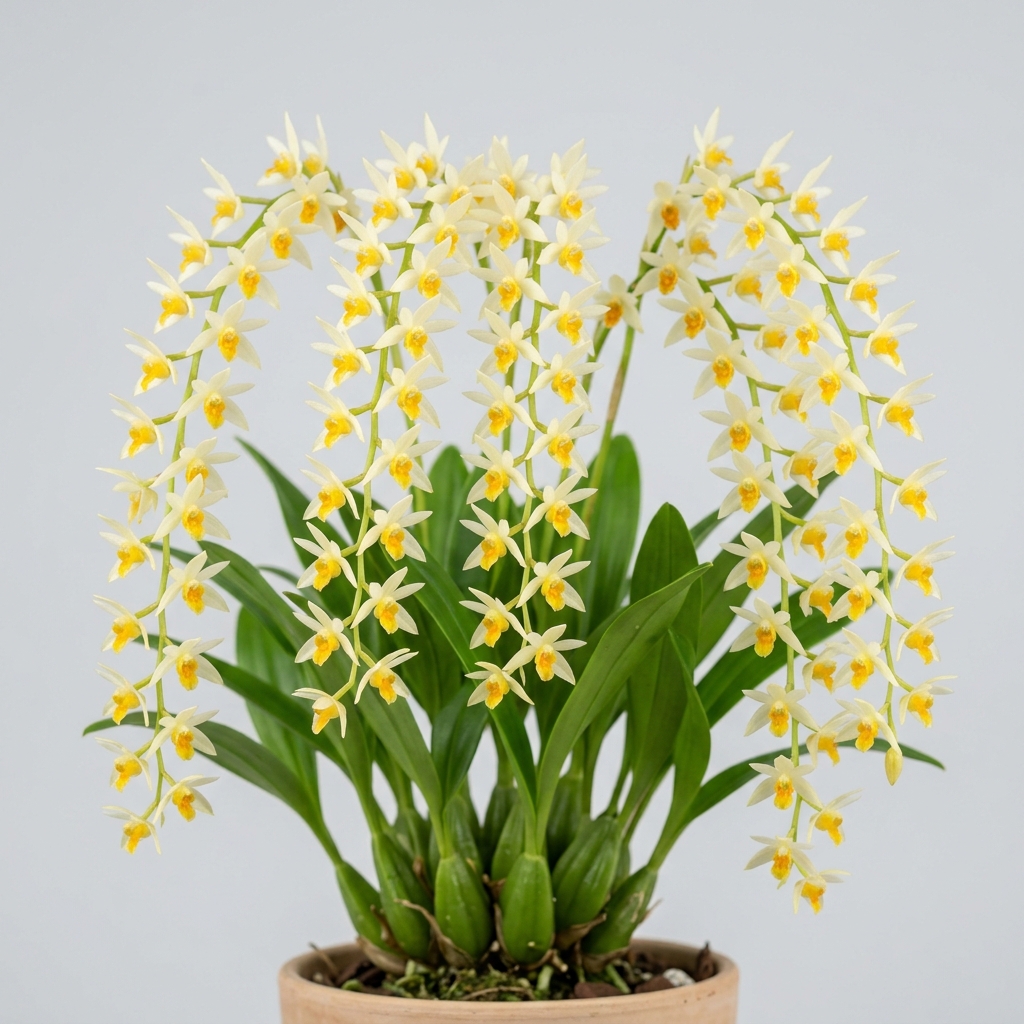
The blossoms of Aerangis Distincta are a masterclass in elegant symmetry. The flowers are pristine white, occasionally blushing with pale cream or light pink tones at the tips of the segments. Each flower features narrow, pointed petals and sepals that spread widely to form a classic star shape. The lip, or labellum, is similarly pointed and leads back to a remarkably long, slender nectar spur that can reach several inches in length.
These flowers are produced on pendulous, arching spikes that emerge from the leaf axils. A single mature spike can carry multiple flowers, arranged neatly in two ranks along the stem. The contrast between the dark, metallic-green foliage and the cascading chain of luminous white flowers creates a dramatic visual presentation that is highly sought after by orchid collectors.
Fragrance & Bloom Profile
One of the most enchanting features of Aerangis Distincta is its nocturnal fragrance. Like many white-flowered orchids with long nectar spurs, this species is adapted for pollination by night-flying hawkmoths. During the day, the flowers emit little to no scent, but as dusk approaches, they release a powerful, sweet fragrance reminiscent of jasmine, gardenia, or honeysuckle.
The blooming cycle typically occurs in late winter or early spring, though variations can occur depending on local growing conditions. Individual flowers are long-lasting, often remaining in pristine condition for three to four weeks if kept in a cool, draft-free environment. The combination of visual elegance and intense evening perfume makes the blooming period the highlight of the growing year.
Parentage & Hybrid Lineage
Aerangis Distincta is a naturally occurring species rather than a man-made hybrid. While some select cultivars have been line-bred by specialty nurseries to improve flower size, count, or plant vigor, the genetic lineage remains true to the wild species found in southeastern Africa. Because it is a distinct species, its characteristics are highly stable, though minor variations in leaf coloration and spur length can be observed among different seed-raised populations.
In the wider orchid hybridizing community, Aerangis species are occasionally crossed with other members of the Angraecinae subtribe, such as Angraecum or Aeranthes, to create unique intergeneric hybrids. However, Aerangis Distincta itself is most commonly grown and appreciated in its pure, species form to preserve its natural elegance and distinct botanical identity.
🌱 Growing Conditions
Replicating the natural canopy environment of Aerangis Distincta is the key to maintaining a healthy specimen. This orchid thrives in medium to low filtered light, similar to the dappled shade of a forest understory. Direct sunlight should be strictly avoided, as it can quickly scorch the sensitive, dark leaves. East- or shaded south-facing windows, or placement under standard LED grow lights, are ideal indoor setups.
💡 Care Tip
For best results, grow Aerangis Distincta in bright filtered with steady and gentle airflow. Avoid placing the plant in harsh midday sun, but do not keep it in a dark corner; weak is one of the most common reasons cultivated orchids refuse to rebloom.
Temperature: wise, the orchid prefers intermediate to warm conditions. Ideal daytime temperatures range from 75°F to 85°F (24°C to 29°C), with a slight drop at night to around 60°F to 65°F (15°C to 18°C). High humidity is crucial, ideally maintained between 60% and 80%. To prevent fungal and bacterial issues in such humid conditions, continuous, gentle air movement from a small fan is absolutely essential.
Watering, Feeding & Potting Media
Because Aerangis Distincta does not possess water-storing pseudobulbs, it has a low tolerance for prolonged drought. Mounted plants should be misted or watered daily during the active growing season, ensuring the roots dry out relatively quickly afterward. If grown in a basket or pot, use an extremely open, fast-draining medium such as coarse fir bark, charcoal, and perlite to prevent the roots from suffocating in stagnant moisture.
Feeding should be light but consistent. Apply a balanced, highly diluted orchid fertilizer (such as a quarter-strength 20-20-20 formula) every second or third watering during the spring and summer. Flush the root system thoroughly with pure water between fertilizer applications to prevent harmful mineral salts from accumulating on the sensitive velamen of the roots.
Blooming Season & Care Notes
As the autumn days shorten and temperatures begin to cool, Aerangis Distincta prepares for its annual blooming cycle. During this pre-bloom phase, slightly reducing the watering frequency and allowing for a more pronounced day-to-night temperature drop can help stimulate spike initiation. Once the flower spikes begin to emerge from the leaf axils, maintain stable conditions and avoid moving the plant to prevent bud drop.
After the blooming cycle is complete, the orchid enters a brief period of semi-dormancy. During this time, reduce watering slightly, allowing the medium or mount to dry out more thoroughly between waterings, and suspend fertilizer applications. Resume normal watering and feeding schedules in late spring when new root tips and leaf growth become visible.
⚠️ Common Issues
⚠️ Common Mistake
The most common mistake is by calendar instead of root and potting-media condition. Aerangis roots need moisture and air at the same time, so constantly wet bark or sphagnum can lead to root loss even when the leaves still look healthy.
- Root Rot:
Caused by overwatering, poor drainage, or decaying potting media that suffocates the roots. - Bud Blast:
Sudden changes in temperature, low humidity, or drafts can cause developing flower buds to yellow and drop before opening. - Leaf Scorch: Exposure to direct sunlight causes dry, brown, or bleached patches on the dark green foliage.
- Pests:
Mealybugs and scale insects can occasionally hide in the leaf axils or along the flower spikes; treat promptly with insecticidal soap or neem oil. - Fungal Leaf Spotting: High humidity combined with stagnant, still air can lead to unsightly black or brown spots on the leaves.
❓ Frequently Asked Questions
Can Aerangis Distincta be grown in a traditional plastic pot?
While it is possible, it is not highly recommended. Aerangis Distincta has aerial roots that require exceptional aeration. If you must use a pot, choose a highly ventilated orchid pot with numerous side slits and fill it with very coarse bark to ensure rapid drainage and air circulation around the roots.
Why are the flower buds on my Aerangis Distincta falling off before opening?
This issue, known as bud blast, is typically caused by a sudden drop in humidity, cold drafts, or moving the plant to a new location while the buds are developing. Keep the orchid in a stable, humid environment with gentle air movement once the flower spike appears.
How often should I water a mounted Aerangis Distincta?
Mounted plants dry out very quickly. During the warm, active growing season, they generally require daily watering or heavy misting. In the winter, you can reduce this to every two to three days, depending on your indoor humidity levels.
Does Aerangis Distincta require a winter rest period?
Yes, it benefits from a mild winter rest. After blooming, reduce watering frequency and stop fertilizing for a few weeks. This mimics the natural dry season of its native habitat and encourages healthy vegetative growth when spring arrives.
⭐ Final Growing Notes
Aerangis Distincta is a rewarding addition to any intermediate orchid collection, offering a perfect blend of architectural foliage, elegant white blooms, and a mesmerizing evening fragrance. By focusing on high humidity, excellent air movement, and a free-draining root environment, growers can successfully cultivate this African gem and enjoy its spectacular seasonal displays for many years to come.
⚕️ Health, Safety & Edibility
Understanding how a plant interacts with people, pets, and the surrounding environment is part of responsible cultivation. This section uses conservative, general guidance and does not replace professional medical or veterinary advice.
Human Safety: No published evidence currently identifies species-specific toxicity concerns for Aerangis Distincta during normal handling. As with most ornamental plants, it should not be intentionally consumed.
Pet Safety: Published information does not indicate that this orchid commonly poses a toxicity concern for cats or dogs. However, chewing leaves, flowers, roots, or potting media may still cause mild digestive upset.
Edibility: This orchid is cultivated for ornamental display rather than food. Ornamental plants may carry fertilizers, pesticides, or other horticultural treatments that make them unsuitable for consumption.
Skin Contact: Routine handling is not generally associated with skin irritation. Gardeners with sensitive skin may prefer wearing gloves when repotting, pruning, or handling potting media.
🌱 Propagation Tip
Propagation should be approached patiently. Most home growers should wait for natural keikis or divide only mature, healthy plants when the orchid type allows it. Never remove a young growth until it has strong roots and enough leaves to support itself away from the parent plant.
⭐ Expert Advice
Repot after flowering when fresh root tips begin to appear. This timing helps the plant anchor quickly into new bark or sphagnum and reduces stress, especially for orchids grown indoors where airflow, , and drying speed can change from season to season.

Leave A Comment