
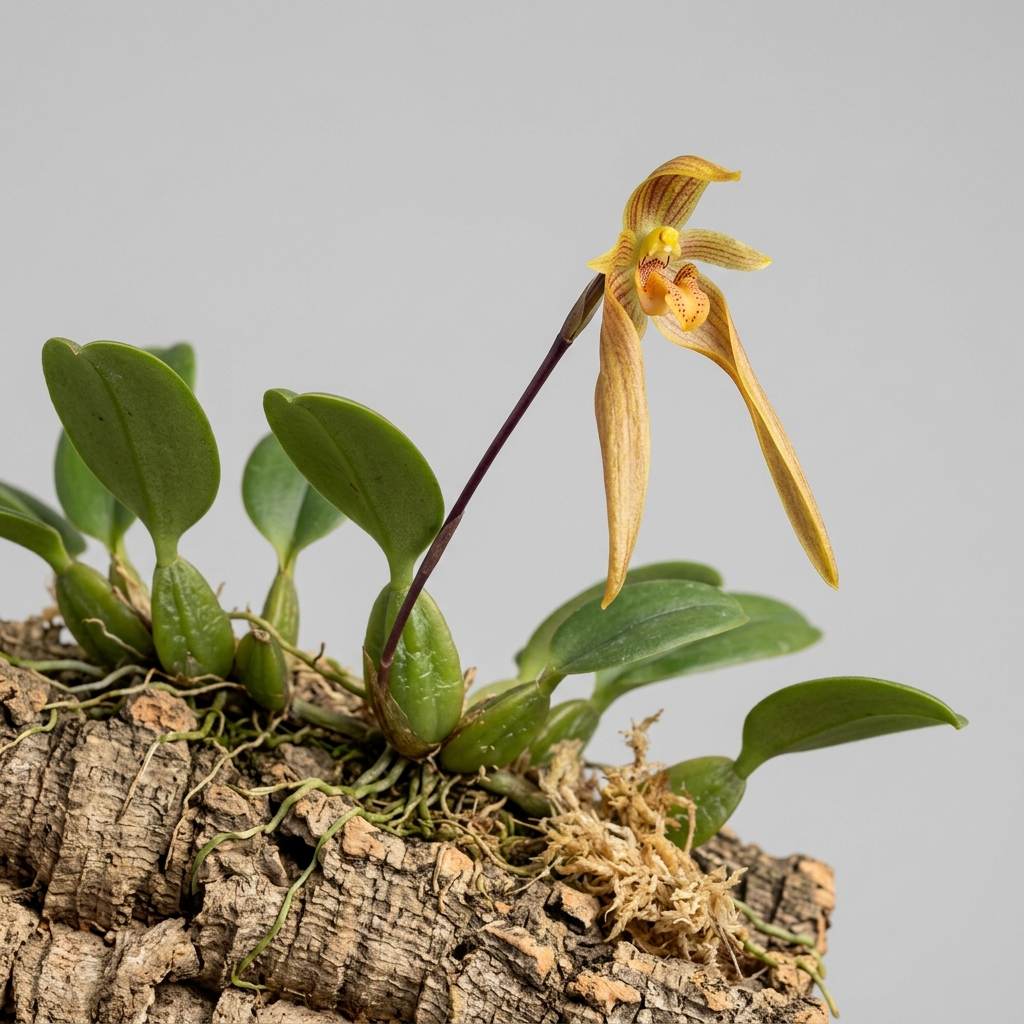
Bulbophyllum Unitubum is a captivating orchid species highly prized by collectors for its bizarre, architectural floral structure and creeping growth habit. Belonging to the vast and diverse genus Bulbophyllum, this orchid showcases the evolutionary ingenuity of the family with its specialized pollination mechanisms and distinct vegetative form. Growers are drawn to its unique presentation, which adds an exotic, primeval aesthetic to any indoor greenhouse or specialized orchid terrarium.
Cultivating this orchid successfully requires an understanding of its native tropical environment, where it typically grows as an epiphyte on moss-covered tree branches. Its creeping rhizomes and single-leaved pseudobulbs allow it to spread across mounting surfaces, creating a lush, cascading display over time. While it demands consistent moisture and high humidity, the reward of its highly unusual, intricate blooms makes it a signature piece for dedicated orchid enthusiasts.
💡 Did You Know?
The hinged, highly mobile lip of Bulbophyllum Unitubum is an evolutionary marvel designed to mimic a female insect. When a pollinator lands on it, the lip tips backward under the insect's weight, gently forcing it against the column of the flower to ensure successful pollen transfer.
🌿 Botanical Overview
Bulbophyllum Unitubum shows the classic sympodial growth habit characteristic of the Bulbophyllum genus. It features prominent, egg-shaped to conical pseudobulbs spaced along a creeping rhizome. Each pseudobulb supports a single, thick, leathery leaf that is dark green and designed to store moisture in its native canopy habitats.
The root system of this orchid is relatively fine and shallow, adapted for clinging to damp bark and absorbing nutrients from passing rainwater and organic debris. Because of its spreading nature, the plant quickly outgrows standard pots, preferring to ramble over wide, flat surfaces where its roots can breathe and access constant atmospheric moisture.
🌸 Flower Characteristics
The flowers of Bulbophyllum Unitubum are a marvel of specialized botanical engineering. Typically produced singly on slender, upright spikes arising from the base of the pseudobulb, each bloom features elongated, sweeping lateral sepals that dominate its visual profile. The colors generally range from warm ochre and bronze to deep reddish-brown, often decorated with intricate veining or fine spotting.
At the center of the flower sits a small, highly mobile lip or labellum. This hinged structure is designed to move with the slightest breeze or insect contact, a classic evolutionary adaptation within the genus to assist in pollination. The overall shape of the flower can appear tubular or hooded near the column, giving the orchid its descriptive name.
Fragrance & Bloom Profile
The fragrance profile of Bulbophyllum Unitubum is not as intensely sweet or floral as that of other orchid families. Instead, it is often described as carrying a faint, musky, or earthy scent, which is typical of many species in this genus that rely on specific insect pollinators like flies.
Individual blooms are moderately long-lasting, often remaining in peak condition for one to two weeks depending on ambient temperature and humidity levels. Because the spikes emerge sequentially from different points along the active rhizome, a mature specimen can remain in various stages of bud and bloom over an extended period.
Parentage & Hybrid Lineage
As a naturally occurring species within the vast Bulbophyllum genus, Bulbophyllum Unitubum does not have a complex hybrid pedigree or man-made parentage. It represents a distinct evolutionary line adapted to specific microclimates in Southeast Asia and New Guinea.
While it is primarily grown as a species by collectors, it has occasionally been used in experimental hybridization programs to introduce its unique floral shape and robust creeping habit to new grexes. However, these hybrid lines remain relatively rare and are not widely documented in mainstream commercial orchid registries.
🌱 Growing Conditions
To thrive, Bulbophyllum Unitubum requires conditions that mimic a warm, humid tropical forest understory. It prefers low to medium indirect light, similar to the light levels suitable for Phalaenopsis orchids. Direct sunlight must be avoided, as it can quickly scorch the thin leaves and dehydrate the shallow root system.
💡 Care Tip
Because this orchid thrives in high- environments, maintaining active air circulation is vital. Use a small, low-powered fan near your growing area to keep the air moving gently, which prevents fungal pathogens from settling on damp leaves.
Temperature ranges should remain consistently warm to intermediate, ideally between 65°F and 85°F (18°C to 29°C) during the day, with a slight drop at night to encourage healthy growth and trigger blooming. High humidity is absolutely critical; maintaining levels between 70% and 90% with excellent air movement is essential to prevent fungal issues while keeping the plant hydrated.
Watering, Feeding & Potting Media
This orchid does not possess large water-storing pseudobulbs compared to some other genera, meaning it has a low tolerance for drying out. The potting or mounting medium should be kept consistently damp but never soggy. High-quality New Zealand sphagnum moss, tree fern fiber, or a fine bark mix work exceptionally well in retaining the necessary moisture.
Mounting the plant on a cork bark slab or a tree fern plaque is highly recommended, as it allows the creeping rhizome to grow naturally. If mounted, the orchid will require daily watering or misting. Fertilize weakly weekly with a balanced, diluted orchid fertilizer during the active growing season, flushing the media regularly with pure water to prevent salt buildup.
Blooming Season & Care Notes
Bulbophyllum Unitubum typically initiates its blooming cycle during the warmer months of late spring through autumn, though flowers can occasionally appear at other times of the year if stable greenhouse conditions are maintained. Once a flower spike emerges from the base of a mature pseudobulb, avoid moving the plant or changing its orientation to the light source, as sudden environmental shifts can cause the developing bud to blast.
Repotting or remounting should only be performed when the plant has completely outgrown its current mount or when the potting medium begins to break down. The best time to undertake this is in early spring, just as new root growth begins to emerge from the base of the newest pseudobulbs.
⚠️ Common Issues
⚠️ Common Mistake
A frequent error is letting the potting medium dry out completely between waterings. Unlike many thick-leaved orchids, this species lacks large water-storage tissues and can suffer severe leaf drop and root dieback if left dry for even a few days.
- Dehydration:
Shriveled pseudobulbs and wrinkled leaves indicate insufficient watering or low humidity. - Root Rot:
Caused by stagnant, waterlogged potting media lacking adequate aeration. - Bud Blast:
Sudden drops in humidity or temperature can cause developing flower buds to yellow and drop off before opening. - Pests:
Mealybugs and spider mites can occasionally hide in the crevices of the rhizomes or under leaves; treat promptly with horticultural soap. - Leaf Spotting: Fungal or bacterial spots can develop if water sits on the foliage overnight without sufficient air circulation.
❓ Frequently Asked Questions
Can Bulbophyllum Unitubum be grown successfully in a home environment?
Yes, but it requires dedicated effort to maintain the high humidity levels it needs. Growing it in a glass terrarium, wardian case, or near a dedicated humidifier is highly recommended to prevent the plant from drying out in typical indoor air.
Why are the pseudobulbs on my orchid shriveling?
Shriveled pseudobulbs are a sign of water stress, usually caused by underwatering, extremely low humidity, or a compromised root system that can no longer absorb moisture. Check the roots to ensure they are healthy and increase watering frequency if they are dry.
Is it better to mount this orchid or grow it in a pot?
Because of its creeping rhizome and spreading growth habit, mounting on cork bark or tree fern plaques is generally superior. If you prefer potting, use a wide, shallow bulb pan or basket filled with moisture-retentive media like sphagnum moss.
How often should I fertilize Bulbophyllum Unitubum?
Apply a highly diluted, balanced orchid fertilizer once a week during the active spring and summer growing phases. Always flush the growing medium with pure, unfertilized water every few weeks to prevent harmful mineral salts from accumulating around the sensitive roots.
⭐ Final Growing Notes
Bulbophyllum Unitubum is an extraordinary orchid that rewards the attentive grower with some of the most unique floral structures in the plant kingdom. By prioritizing high humidity, consistent moisture, and gentle air movement, you can successfully cultivate this tropical gem and enjoy its fascinating, sculptural blooms year after year.
⚕️ Health, Safety & Edibility
Understanding how a plant interacts with people, pets, and the surrounding environment is part of responsible cultivation. This section uses conservative, general guidance and does not replace professional medical or veterinary advice.
Human Safety: No published evidence currently identifies species-specific toxicity concerns for Bulbophyllum Unitubum during normal handling. As with most ornamental plants, it should not be intentionally consumed.
Pet Safety: Published information does not indicate that this orchid commonly poses a toxicity concern for cats or dogs. However, chewing leaves, flowers, roots, or potting media may still cause mild digestive upset.
Edibility: This orchid is cultivated for ornamental display rather than food. Ornamental plants may carry fertilizers, pesticides, or other horticultural treatments that make them unsuitable for consumption.
Skin Contact: Routine handling is not generally associated with skin irritation. Gardeners with sensitive skin may prefer wearing gloves when repotting, pruning, or handling potting media.
🌱 Propagation Tip
Propagate mature specimens during spring repotting by carefully dividing the creeping rhizome. Ensure each division contains at least three to four healthy pseudobulbs with active root systems to give the new plants the best chance of establishing quickly.
⭐ Expert Advice
If you struggle to maintain high , try growing this orchid on a mount wrapped in a generous layer of high-quality sphagnum moss. This setup retains moisture around the roots while allowing the creeping rhizome to spread freely and breathe.




Leave A Comment