

Oncidium Raniferum is a captivating epiphytic orchid species native to the humid forests of Brazil, highly appreciated by collectors for its abundant, miniature floral displays. Belonging to the diverse Oncidium genus, this orchid is characterized by its compact pseudobulbs and arching, branched inflorescences that carry dozens of tiny, brightly colored blossoms. Its manageable size and prolific blooming habit make it an excellent choice for indoor growers and greenhouse enthusiasts alike.
Often referred to informally as the frog-bearing Oncidium due to the unique structure of its floral callus, this species brings a lively, natural aesthetic to any collection. While it requires consistent humidity and careful watering to mimic its native canopy habitat, its overall resilience makes it a rewarding subject for growers transitioning from common mass-market hybrids to specialized species.
💡 Did You Know?
The specific epithet Raniferum translates literally to frog-bearing in Latin. This name was inspired by the unusual, fleshy callus structure located at the base of the flower's lip, which early botanists noted bore a striking resemblance to a tiny, crouching frog designed to guide specific pollinators.
🌿 Botanical Overview
Oncidium Raniferum is naturally found growing as an epiphyte on tree trunks and branches in the montane forests of southeastern Brazil. This environment provides the plant with excellent air circulation, dappled sunlight, and frequent moisture followed by rapid drying. Structurally, the orchid features clustered, ovate-oblong pseudobulbs that are slightly compressed, each topped with one or two narrow, leathery green leaves.
The root system is relatively fine and adapted to gripping bark surfaces, absorbing moisture and nutrients rapidly from passing rain. Because it is a true species rather than a complex artificial hybrid, its growth patterns remain closely tied to seasonal shifts in its native habitat, requiring a subtle distinction between its active summer growth phase and a drier winter rest.
🌸 Flower Characteristics
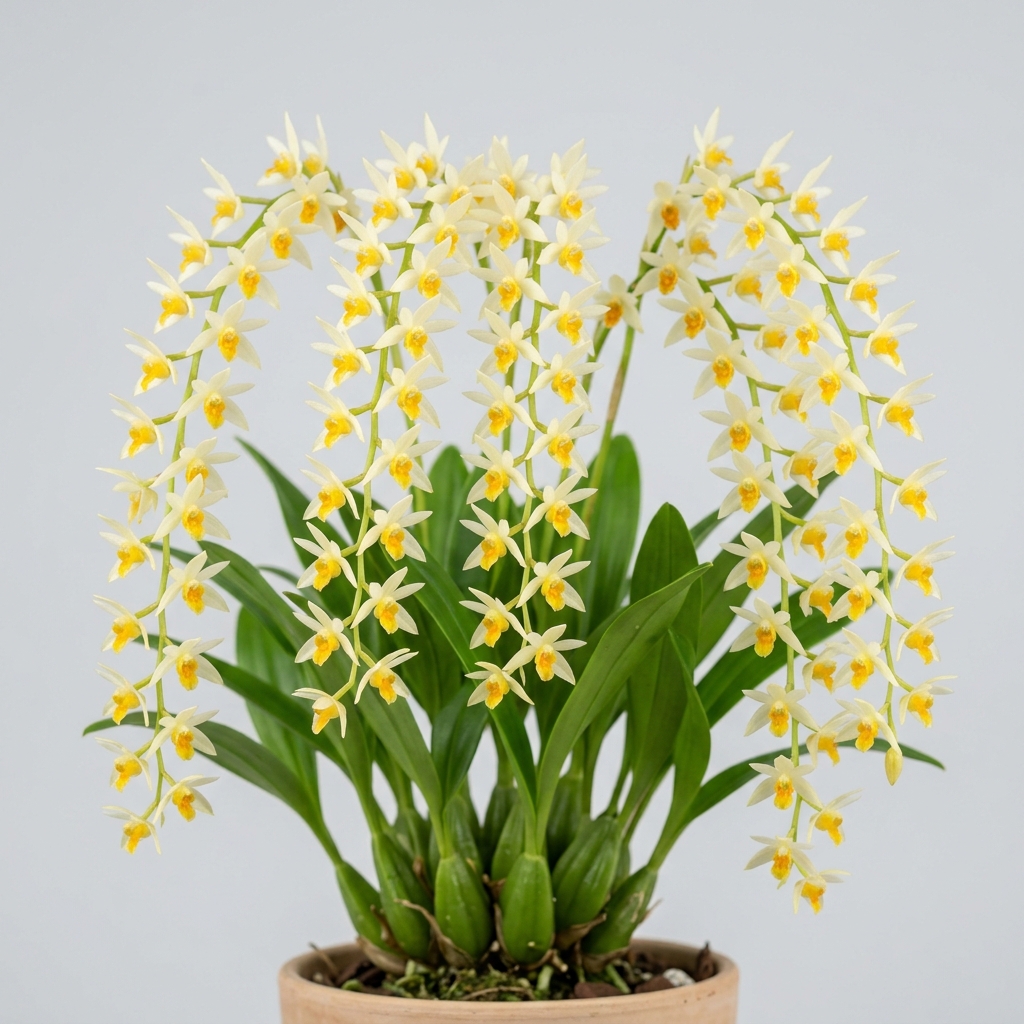
The flowers of Oncidium Raniferum are small but produced in great numbers on branched, arching panicles that can reach up to 30 centimeters in length. Each individual blossom is typically under two centimeters in diameter, featuring bright yellow petals and sepals adorned with rich reddish-brown or chestnut spots and bars. The lip, or labellum, is three-lobed and dominated by a complex, fleshy callus at the base, which historically reminded botanists of a tiny frog. This intricate structure serves as a precise landing platform for native pollinators, showcasing the evolutionary specialization of the genus.
Fragrance & Bloom Profile
Unlike some of its larger, highly fragrant relatives in the Oncidiinae subtribe, the fragrance of Oncidium Raniferum is not consistently documented or prominent. Some growers report a very faint, clean, or slightly herbaceous scent detectable only in warm, bright morning conditions, while others find the blossoms entirely unscented. The primary appeal of this orchid lies in its visual impact, as a single well-grown specimen can produce a cloud of golden-yellow flowers that remain open and vibrant for several weeks.
Parentage & Hybrid Lineage
As a naturally occurring species rather than a man-made hybrid, Oncidium Raniferum does not have a lineage of parent cultivars. It was formally described in the 19th century and represents a distinct branch of the Oncidium genus adapted to Brazilian cloud and montane forests. While it is occasionally used by hybridizers to introduce compact growth habits and high flower counts into modern intergeneric crosses, it is most commonly grown and preserved in its pure species form by orchid purists.
🌱 Growing Conditions
To cultivate Oncidium Raniferum successfully, growers should aim to replicate the dappled light of its native forest canopy. It thrives in bright, filtered light, such as that provided by an east-facing window or a shaded south-facing window; direct midday sun should be avoided to prevent leaf scorch. Temperature-wise, it is moderately adaptable, preferring intermediate to warm conditions with daytime temperatures between 21°C and 27°C (70°F to 80°F) and a slight drop at night. Maintaining a relative humidity level of 50% to 70% along with constant, gentle air movement is crucial to prevent stagnant moisture from settling on the foliage.
💡 Care Tip
Always ensure your Oncidium Raniferum has excellent air movement around its foliage. Stagnant air combined with high can quickly lead to fungal leaf spot or bacterial rot, especially in the tight spaces between the clustered pseudobulbs.
Watering, Feeding & Potting Media
During the active spring and summer growing season, Oncidium Raniferum requires regular watering to keep the potting medium evenly moist but never waterlogged. The fine roots are highly sensitive to salt buildup and prolonged saturation, making a well-draining medium essential. A mix of fine-grade fir bark, perlite, and a small amount of chopped sphagnum moss works exceptionally well in plastic or clay pots. Alternatively, because of its epiphytic nature, this species is an excellent candidate for mounting on cork bark or tree fern slabs, provided the grower can supply daily misting or high humidity. Feed the plant weekly with a highly diluted, balanced orchid fertilizer during active growth, flushing the pot with pure water once a month to remove residual salts.
Blooming Season & Care Notes
Oncidium Raniferum typically initiates its blooming cycle in the late spring or summer, though variations can occur depending on local indoor climates. Once the flower spikes begin to emerge from the base of the mature pseudobulbs, avoid changing the plant’s orientation to the light source, as this can cause the developing buds to twist unnaturally. After the flowers fade, the old spike should be cut back close to the base of the pseudobulb. As winter approaches, the orchid enters a semi-dormant phase where watering should be reduced, allowing the medium to dry out more thoroughly between waterings, and fertilizer should be withheld until new green growth appears in spring.
⚠️ Common Issues
⚠️ Common Mistake
A frequent error is potting Oncidium Raniferum in a heavy, moisture-retaining soil mix or oversized pot. Its fine roots require rapid drainage and air access; using a dense medium will quickly suffocate the roots and lead to plant decline.
- Root Rot:
Caused by overwatering or compacted potting media that retains too much moisture around the fine root system. - Pseudobulb Shriveling: A sign of dehydration, which can result from either underwatering or root loss due to rot.
- Leaf Spotting: Dark spots can develop on the foliage if water is allowed to sit on the leaves overnight without adequate airflow.
- Pests:
Mealybugs and spider mites can occasionally target the tender new growth and flower buds; treat promptly with insecticidal soap or neem oil.
❓ Frequently Asked Questions
How often should I water my Oncidium Raniferum?
Watering frequency depends on your potting medium and environment. Generally, water when the top inch of the bark mix feels dry to the touch, which is typically every 5 to 7 days during summer and less frequently in winter. Mounted plants may require daily misting.
Can Oncidium Raniferum be grown under LED lights?
Yes, this orchid adapts well to artificial lighting. Position the plant under full-spectrum LED grow lights, ensuring it receives moderate intensity for 12 to 14 hours a day, while keeping the light source far enough away to avoid heat stress.
Why are the pseudobulbs on my orchid wrinkling?
Wrinkled pseudobulbs indicate that the plant is not absorbing enough water. This is either due to underwatering or, conversely, overwatering which has rotted the roots and left the orchid unable to take up moisture. Inspect the roots to determine the cause.
Does Oncidium Raniferum require a winter rest?
Yes, it benefits from a cooler, drier rest period during the winter months. Reduce watering significantly, allowing the medium to dry out almost completely between light waterings, and suspend all fertilizing until active growth resumes in the spring.
⭐ Final Growing Notes
Oncidium Raniferum is a delightful species that rewards attentive growers with a spectacular, cloud-like display of miniature golden blossoms. By respecting its natural cycle of wet summers and drier winters, and providing it with bright, filtered light and excellent air circulation, you can enjoy this Brazilian treasure for many years. It remains a standout choice for any collector looking to appreciate the intricate beauty of wild orchid species.
⚕️ Health, Safety & Edibility
Understanding how a plant interacts with people, pets, and the surrounding environment is part of responsible cultivation. This section uses conservative, general guidance and does not replace professional medical or veterinary advice.
Human Safety: No published evidence currently identifies species-specific toxicity concerns for Oncidium Raniferum during normal handling. As with most ornamental plants, it should not be intentionally consumed.
Pet Safety: Published information does not indicate that this orchid commonly poses a toxicity concern for cats or dogs. However, chewing leaves, flowers, roots, or potting media may still cause mild digestive upset.
Edibility: This orchid is cultivated for ornamental display rather than food. Ornamental plants may carry fertilizers, pesticides, or other horticultural treatments that make them unsuitable for consumption.
Skin Contact: Routine handling is not generally associated with skin irritation. Gardeners with sensitive skin may prefer wearing gloves when repotting, pruning, or handling potting media.
🌱 Propagation Tip
This species is best propagated by division during spring repotting. Ensure that each division contains at least three to four healthy, mature pseudobulbs with an active lead growth to give the new plant enough energy to establish successfully.
⭐ Expert Advice
If you struggle to keep the fine roots hydrated in a bark mix, try mounting this orchid on a cork slab with a small pad of sphagnum moss. This naturalistic method mimics its wild epiphytic habit and makes overwatering almost impossible.

Leave A Comment