
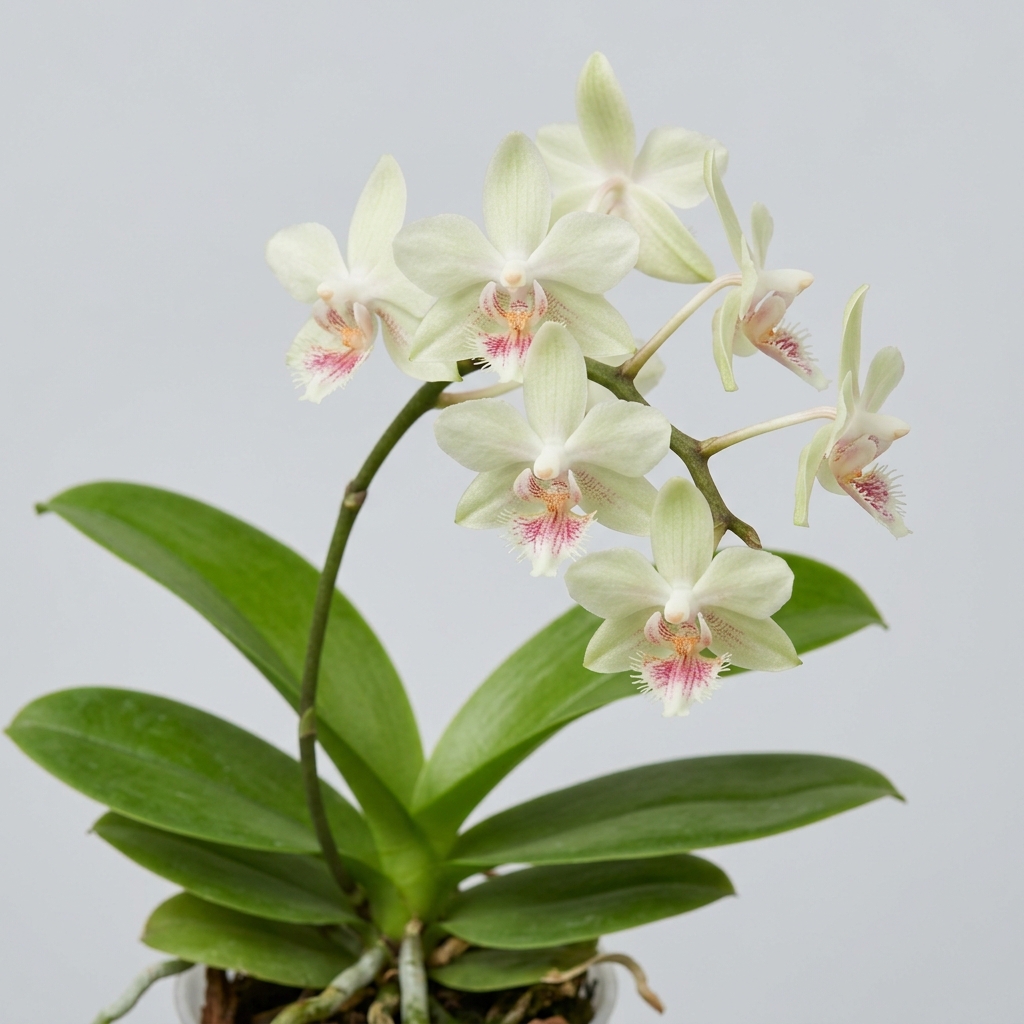
Phalaenopsis Fimbriata is a highly sought-after species orchid cherished by collectors for its unique botanical features and delicate, star-shaped blossoms. Native to the humid, low-elevation forests of Southeast Asia, particularly Sumatra, Java, and Borneo, this epiphytic orchid brings a touch of wild elegance to indoor collections. Its most defining characteristic is its intricately fringed labellum, which distinguishes it from more common commercial moth orchids and makes it a prized specimen for dedicated hobbyists.
While it shares the general growth habit of the Phalaenopsis genus, this species requires slightly more attention to humidity and temperature consistency than standard mass-market hybrids. Growers value Phalaenopsis Fimbriata not only for its exotic, pale-green to cream-colored flowers but also for its compact growth habit, making it an excellent candidate for windowsill cultivation, terrariums, or specialized orchid cabinets.
💡 Did You Know?
The specific epithet fimbriata comes from the Latin word for fringed, directly referencing the delicate, hair-like projections on the orchid's lip. This unique evolutionary adaptation is believed to help attract specific pollinators in its native Southeast Asian rainforests by mimicking the texture of local insects or providing a tactile landing platform.
🌿 Botanical Overview
Phalaenopsis Fimbriata is a monopodial epiphytic orchid, meaning it grows upward from a single stem with alternating leaves. The leaves are typically oblong, glossy, and light to medium green, reaching lengths of six to ten inches under optimal conditions. In its natural habitat, this species grows on tree trunks and branches where its roots are exposed to frequent rainfall and rapid air drying.
Unlike many larger commercial hybrids, this orchid maintains a relatively compact footprint. Its root system is robust, characterized by silvery-green aerial roots covered in velamen, which helps the plant absorb moisture and nutrients directly from the surrounding air. Understanding this epiphytic nature is key to successfully cultivating the plant in a home environment.
🌸 Flower Characteristics
The blossoms of Phalaenopsis Fimbriata are the primary draw for collectors. The flowers are typically one to one and a half inches in diameter, featuring star-like petals and sepals that range in color from a translucent white to a delicate, pale yellowish-green. The most striking feature is the lip, or labellum, which is adorned with fine, hair-like fringes (fimbriae) along the margins and often showcases vibrant magenta or purple markings.
The flowers are produced on arching or pendulous inflorescences that can carry several blooms at once. While the individual flowers may not be as large as those of standard grocery-store Phalaenopsis, their intricate structure and elegant presentation make them highly rewarding to observe up close.
Fragrance & Bloom Profile
The fragrance of Phalaenopsis Fimbriata is a subject of some variation among growers. It is commonly reported to produce a light, pleasant scent that is often described as sweet, floral, or slightly grassy. This fragrance is typically most noticeable during the morning hours when warmth and light stimulate the release of volatile compounds from the petals.
However, fragrance intensity is highly dependent on environmental factors such as temperature, humidity, and light levels. Some individual plants may exhibit a more pronounced scent, while others may seem virtually unscented to the casual observer. The blooms are moderately long-lasting, often remaining fresh for several weeks under stable conditions.
Parentage & Hybrid Lineage
As a naturally occurring species rather than a man-made hybrid, Phalaenopsis Fimbriata does not have a traditional parentage lineage. It belongs to the section Zebrinae within the genus Phalaenopsis. In botanical records, its historical collection and classification are tied to the rich orchid diversity of the Indonesian archipelago.
In the world of orchid hybridization, Phalaenopsis Fimbriata has been used occasionally by breeders looking to introduce its unique fringed lip and compact growth habit into new grexes. However, because its offspring do not always reliably inherit the distinct fimbriate lip, its use in modern commercial breeding remains somewhat limited, preserving its status as a specialized species for purists.
🌱 Growing Conditions
To thrive, Phalaenopsis Fimbriata requires conditions that mimic its native tropical canopy. It prefers bright, filtered indirect light. Direct sunlight must be avoided, as it can easily scorch the tender, light-green leaves. East-facing windows or shaded south-facing windows are often ideal, as is cultivation under modern LED grow lights.
💡 Care Tip
To maintain the high Phalaenopsis Fimbriata craves without risking fungal rot, pair your humidifier with a small, low-powered oscillating fan. Continuous, gentle air movement mimics the natural breezes of its native canopy and keeps the foliage dry.
Temperature management is crucial for this warm-to-intermediate grower. Daytime temperatures should ideally range between 75°F and 85°F, with a slight drop at night to around 65°F. High humidity is essential, ideally maintained between 60% and 80%. To prevent fungal issues in such humid conditions, growers must ensure continuous, gentle air circulation around the foliage and roots.
Watering, Feeding & Potting Media
Watering Phalaenopsis Fimbriata requires a careful balance. The potting medium should remain evenly moist but never waterlogged. When the top layer of the medium begins to feel dry, it is time to water thoroughly. Using rainwater, distilled water, or reverse osmosis water is highly recommended, as this species can be sensitive to mineral buildup from hard tap water.
A high-quality, free-draining medium is essential. Many growers succeed using high-grade New Zealand sphagnum moss in clay pots, which helps maintain consistent moisture, while others prefer a mix of fine fir bark, perlite, and charcoal. For those with high-humidity grow spaces, mounting the orchid on cork bark with a small pad of moss allows the roots to grow in their natural, exposed state. Feed the plant with a highly diluted, balanced orchid fertilizer every second or third watering during the active growing season.
Blooming Season & Care Notes
Phalaenopsis Fimbriata typically initiates its blooming cycle in the late spring or summer months, though well-established plants in stable indoor environments may bloom at other times of the year. The flower spikes emerge from the base of the plant, opposite the leaves, and should be allowed to develop naturally without excessive staking unless necessary to support the weight of the blooms.
Once the blooming cycle is complete, do not rush to cut the green flower spikes. Unlike some hybrids, species Phalaenopsis may occasionally produce secondary blooms or even keikis (baby plants) from the nodes of old spikes. Only prune the spike if it turns completely yellow or brown and dry. Repotting should be done every one to two years, ideally just after flowering when new root growth is active.
⚠️ Common Issues
⚠️ Common Mistake
A frequent error is cutting down green flower spikes immediately after the initial blooms fade. This species can produce secondary flowers or keikis from active nodes on older spikes. Only prune the spike if it has completely dried out and turned brown.
- Root Rot:
Caused by overwatering or compacted potting media that prevents oxygen from reaching the roots. - Bud Blast:
Sudden drops in humidity, drafty conditions, or temperature shocks can cause developing buds to yellow and fall off before opening. - Spider Mites and Mealybugs: These common pests can hide in the crevices of the leaves and under the flower spikes, requiring prompt treatment with insecticidal soap or neem oil.
- Leaf Scorch: Bleached or brown patches on the leaves indicate the plant is receiving too much direct sunlight.
- Bacterial Leaf Spot: Appears as wet, sunken spots on the leaves, often due to water sitting on the foliage in stagnant air.
❓ Frequently Asked Questions
How do I encourage my Phalaenopsis Fimbriata to bloom?
To stimulate blooming, ensure the plant receives adequate bright, indirect light and a slight drop in nighttime temperatures of about 10°F to 15°F for a few weeks in the autumn or early winter. Maintaining consistent humidity and a regular, diluted fertilizing schedule during the growing season also provides the plant with the energy needed to produce strong flower spikes.
Can Phalaenopsis Fimbriata be grown mounted on wood?
Yes, Phalaenopsis Fimbriata thrives when mounted on cork bark or tree fern plaques, as this closely mimics its natural epiphytic growth habit. However, mounted orchids dry out much faster than potted ones, so this method is only recommended if you can maintain high ambient humidity and water the plant daily or multiple times a week.
Why are the leaves on my orchid turning yellow?
Yellowing leaves can indicate several issues. If it is only the oldest, bottom leaf, it is likely a natural shedding process. However, widespread yellowing can be a sign of overwatering leading to root rot, underwatering, or excessive direct sunlight. Inspect the roots immediately; healthy roots should be firm and green or silvery-white, while rotted roots will be mushy and brown.
What is the ideal humidity level for this orchid?
Phalaenopsis Fimbriata prefers a high humidity level of 60% to 80%. While it can tolerate slightly lower humidity for short periods, prolonged dry air can stunt leaf growth, dry out aerial roots, and cause bud blast. Using a humidifier, humidity trays, or growing the plant in a dedicated glass cabinet can help maintain these optimal levels.
⭐ Final Growing Notes
Phalaenopsis Fimbriata is a rewarding species orchid that brings a unique, exotic charm to any indoor collection. While it demands slightly more attention to humidity and watering than standard commercial hybrids, its stunning, fringed blossoms and compact growth habit make it well worth the extra care. By providing bright indirect light, consistent warmth, and excellent air circulation, you can enjoy the delicate beauty of this Southeast Asian treasure for many years to come.
⚕️ Health, Safety & Edibility
Understanding how a plant interacts with people, pets, and the surrounding environment is part of responsible cultivation. This section uses conservative, general guidance and does not replace professional medical or veterinary advice.
Human Safety: No published evidence currently identifies species-specific toxicity concerns for Phalaenopsis Fimbriata during normal handling. As with most ornamental plants, it should not be intentionally consumed.
Pet Safety: Published information does not indicate that this orchid commonly poses a toxicity concern for cats or dogs. However, chewing leaves, flowers, roots, or potting media may still cause mild digestive upset.
Edibility: This orchid is cultivated for ornamental display rather than food. Ornamental plants may carry fertilizers, pesticides, or other horticultural treatments that make them unsuitable for consumption.
Skin Contact: Routine handling is not generally associated with skin irritation. Gardeners with sensitive skin may prefer wearing gloves when repotting, pruning, or handling potting media.
🌱 Propagation Tip
While species orchids are typically propagated by seed in sterile labs, Phalaenopsis Fimbriata will occasionally produce a keiki on an old flower spike. Leave the keiki attached until it has at least three leaves and several two-inch roots before gently detaching and potting it.
⭐ Expert Advice
When repotting Phalaenopsis Fimbriata, choose a pot that just fits the root mass. Orchids in oversized pots retain too much moisture in the center of the medium, which quickly leads to root suffocation and rot. Tight potting encourages healthier root systems and more reliable blooming.




Leave A Comment