
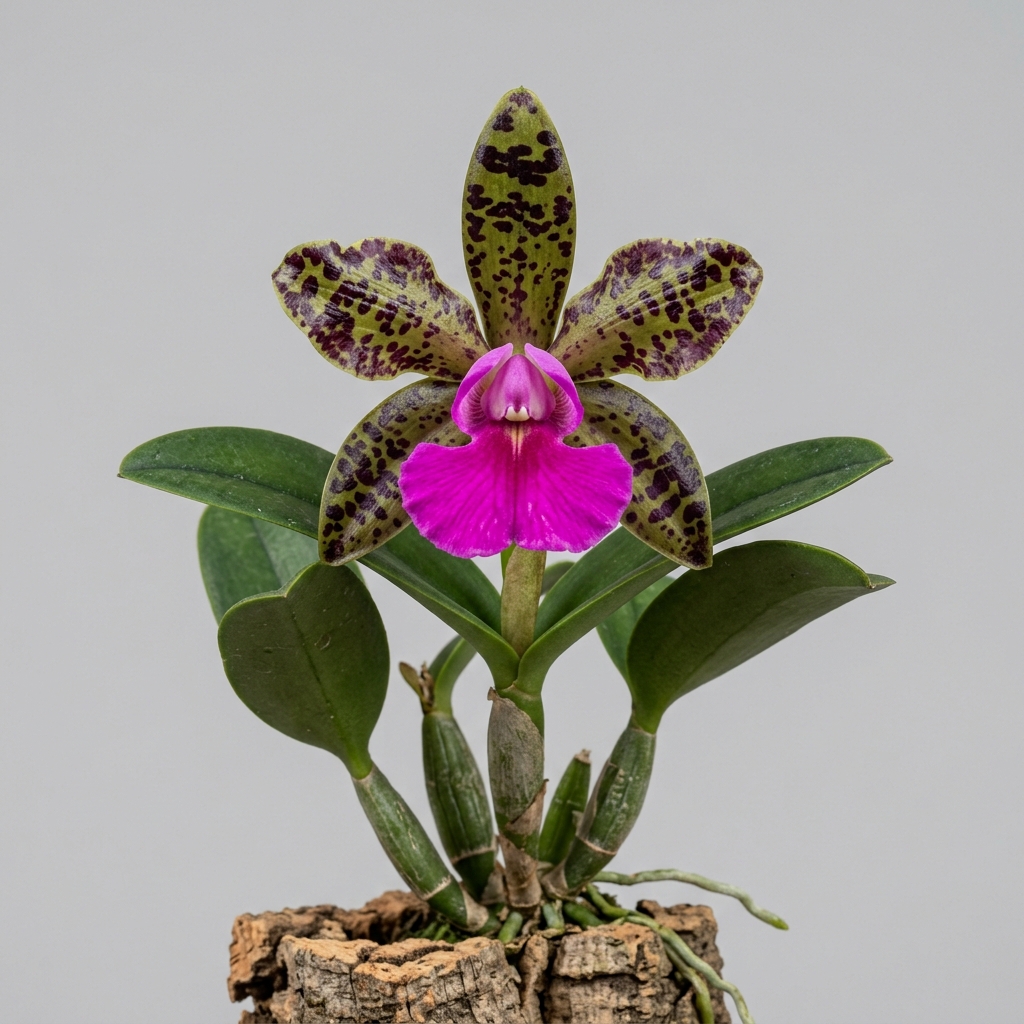
Cattleya aclandiae is a highly prized dwarf orchid species native to the warm, humid coastal forests of Brazil. Renowned for its compact growth habit and disproportionately large, striking flowers, this bifoliate orchid has captured the fascination of collectors worldwide. Its distinctive appearance, featuring heavily spotted petals and a vibrant, exposed magenta lip, makes it a standout addition to any tropical plant collection.
Cultivating this miniature species presents a rewarding challenge for orchid enthusiasts. Unlike larger, more forgiving members of its genus, Cattleya aclandiae demands precise environmental conditions, particularly regarding root aeration and moisture control. When its specific needs for bright light, high humidity, and rapid drying cycles are met, this orchid rewards growers with long-lasting, fragrant blooms that showcase one of nature’s most dramatic color contrasts.
💡 Did You Know?
Unlike many other Cattleya species whose flower buds are protected by a green sheath, the buds of Cattleya aclandiae emerge directly from the center of the newly formed leaves without any protective covering, making them particularly sensitive to water pooling during their early development.
🌿 Botanical Overview
Cattleya aclandiae is a miniature epiphytic orchid characterized by its short, cylindrical pseudobulbs, which rarely exceed three to five inches in height. Each pseudobulb typically bears two thick, leathery, elliptic leaves that are often tinged with red or purple when exposed to optimal high-light conditions. This pigmentation is a natural defense mechanism and a reliable indicator that the plant is receiving sufficient light to trigger blooming.
In its native Brazilian habitat, this species grows on the rough bark of trees in dry, elevated coastal forests. These environments expose the orchid to bright sunlight, high humidity, and constant wind currents. Understanding these natural conditions is key to successful cultivation, as the plant has evolved to absorb moisture rapidly and dry out completely within a few hours.
🌸 Flower Characteristics
The flowers of Cattleya aclandiae are remarkably large compared to the diminutive size of the plant, often reaching three to four inches in diameter. The sepals and petals are fleshy, rigid, and typically range in color from olive green to yellowish-green, heavily decorated with dark purple, maroon, or chocolate-brown spots. This striking pattern provides excellent camouflage in the dappled light of its natural canopy.
The most prominent feature of the blossom is its broad, fan-shaped lip, or labellum. Unlike many other Cattleya species, the lip of Cattleya aclandiae is exposed, lacking the side lobes that typically wrap around the column. The lip is a brilliant magenta or deep purple, creating a stunning contrast against the spotted petals. Flowers are borne on short spikes arising from the apex of mature pseudobulbs, usually presenting one to two blooms per growth.
Fragrance & Bloom Profile
This species is highly celebrated for its intense, spicy fragrance, which is often described as a blend of sweet honey and fresh black pepper. The scent is most pronounced during the morning hours when temperatures begin to rise and light levels increase. The blooms are long-lasting, often remaining pristine for three to five weeks if kept in a stable, cool environment.
Because the flowers are heavy-textured and waxy, they resist wilting better than softer-petaled orchids. The blooming cycle typically peaks in late spring and early summer, though healthy, vigorous specimens may occasionally produce a second flush of flowers in the autumn if growing conditions remain optimal.
Parentage & Hybrid Lineage
Cattleya aclandiae is a distinct, naturally occurring species first described in the 19th century and named in honor of Lady Ackland. Because of its compact growth habit, striking spotted patterns, and vibrant lip, it has been widely used by orchid hybridizers to create compact, large-flowered hybrids, often referred to as mini-catts.
While its role in hybridizing is well-documented, pure strains of Cattleya aclandiae are highly sought after by species purists. Line breeding within the species has focused on improving flower size, flatness, and intensity of coloration, resulting in several exceptional select clones. When purchasing, growers should note that while hybrids containing this species are often highly resilient, the true species retains its reputation for being somewhat sensitive to cultural mistakes.
🌱 Growing Conditions
To thrive, Cattleya aclandiae requires bright, filtered light. While it can tolerate some direct morning sun, hot afternoon sun must be shaded to prevent leaf scorch. A light level similar to that required by other Cattleyas—around 2,500 to 3,500 foot-candles—is ideal. Healthy plants will display a slight reddish or purple speckling on their leaves, indicating they are receiving the maximum safe amount of light.
💡 Care Tip
Always mount Cattleya aclandiae on cork bark or tree fern plaques if your growing area allows. This mimics its natural epiphytic habitat, ensuring the roots dry rapidly after and preventing the root rot to which this species is highly susceptible.
Temperature control is equally critical. This species prefers warm day temperatures between 75°F and 85°F, with a night drop to around 60°F to 65°F. High humidity of 60% to 80% must be maintained, but this must always be accompanied by strong, continuous air movement. Stagnant air combined with high humidity is a primary cause of bacterial and fungal infections in this species.
Watering, Feeding & Potting Media
Watering practices must respect the orchid’s epiphytic nature. Cattleya aclandiae does not tolerate wet feet; its roots must dry rapidly after watering. For this reason, mounting the plant on cork bark, tree fern plaques, or wooden rafts is highly recommended. If grown in pots, use extremely open, fast-draining media such as coarse fir bark, charcoal, and perlite in shallow clay pots or slatted baskets.
During the active growing season in spring and summer, water the plant thoroughly, ideally in the morning so it dries by nightfall. Reduce watering during the cooler winter months when the plant enters a semi-dormant state. Feed with a balanced, diluted orchid fertilizer weekly during active growth, but flush the media with pure water periodically to prevent salt buildup, which can quickly destroy the sensitive root tips.
Blooming Season & Care Notes
The primary blooming period occurs from late spring through summer, coinciding with the peak of the active growing season. Flower buds emerge from the center of newly matured leaves without a protective sheath, which is atypical for many other Cattleya species. Growers must be careful not to allow water to pool in the crown of the new growth during this stage, as it can cause the developing buds to rot.
Repotting or remounting should only be performed when new root tips are actively emerging from the base of the newest pseudobulb. Cattleya aclandiae is notoriously sensitive to root disturbance and can decline rapidly if repotted at the wrong time. Minimizing disturbance by using durable mounting materials like cork bark will reduce the frequency of required interventions.
⚠️ Common Issues
⚠️ Common Mistake
The most common mistake is repotting this orchid when it is dormant. Cattleya aclandiae has highly sensitive roots that do not tolerate disturbance; repotting should only occur when green, active root tips are visible at the base of new growth.
- Root Rot:
Caused by overwatering, poor drainage, or decaying potting media. Roots will turn mushy and black, leading to rapid plant decline. - Leaf Spotting: Fungal or bacterial pathogens can cause black or brown spots on the leaves, often due to water pooling on foliage in stagnant air.
- Bud Blast:
Developing flower buds may turn yellow and drop off due to sudden changes in temperature, low humidity, or water contact. - Dehydration:
Shriveled pseudobulbs and wrinkled leaves indicate insufficient moisture, often because mounted plants are not watered frequently enough. - Pests:
Scale insects and mealybugs can hide in the dry sheaths of pseudobulbs and under leaves; treat promptly with insecticidal soap or horticultural oil.
❓ Frequently Asked Questions
Can Cattleya aclandiae be grown in a standard plastic pot?
While possible, growing Cattleya aclandiae in standard plastic pots is highly discouraged due to the risk of root rot. This species requires exceptional drainage and rapid drying. If you must use a pot, choose a shallow clay pot with extra drainage holes and fill it with very coarse, chunky bark media.
Why are the leaves on my Cattleya aclandiae turning reddish-purple?
A reddish-purple tint on the leaves is generally a healthy sign that the orchid is receiving optimal light. This pigmentation acts as a natural sunscreen. However, if the leaves turn yellow or develop bleached, dry patches, the light is too intense and the plant should be shaded.
How often should I water a mounted Cattleya aclandiae?
Mounted plants dry out very quickly and typically require daily watering during the hot summer months, sometimes even twice a day if humidity is low. In winter, reduce watering to every two to three days, or just enough to prevent the pseudobulbs from shriveling excessively.
What causes bud blast in this species?
Bud blast is usually triggered by environmental stress, such as a sudden drop in humidity, drafty conditions, or water pooling directly on the developing buds. Ensure stable temperatures and high humidity, and avoid overhead misting once the flower buds begin to emerge from the leaves.
⭐ Final Growing Notes
Cattleya aclandiae is a magnificent jewel of the orchid world, offering a spectacular visual reward for those willing to accommodate its specific cultural demands. By prioritizing excellent root aeration, bright light, and consistent air movement, growers can successfully cultivate this charming dwarf species. Its compact size makes it an ideal candidate for space-limited collections, while its dramatic, fragrant blossoms ensure it remains a perennial favorite among orchid enthusiasts.
🌱 Propagation Tip
Propagate this species only by division of mature, healthy clumps during active root growth. Ensure each division has at least three to four healthy pseudobulbs to provide the plant with enough energy to recover from the shock of separation.
⭐ Expert Advice
To encourage robust blooming, provide a distinct winter rest period with reduced and no fertilizer, but maintain high levels. This seasonal shift mimics the dry winters of its native Brazilian habitat, triggering strong spring flower spikes.




Leave A Comment