
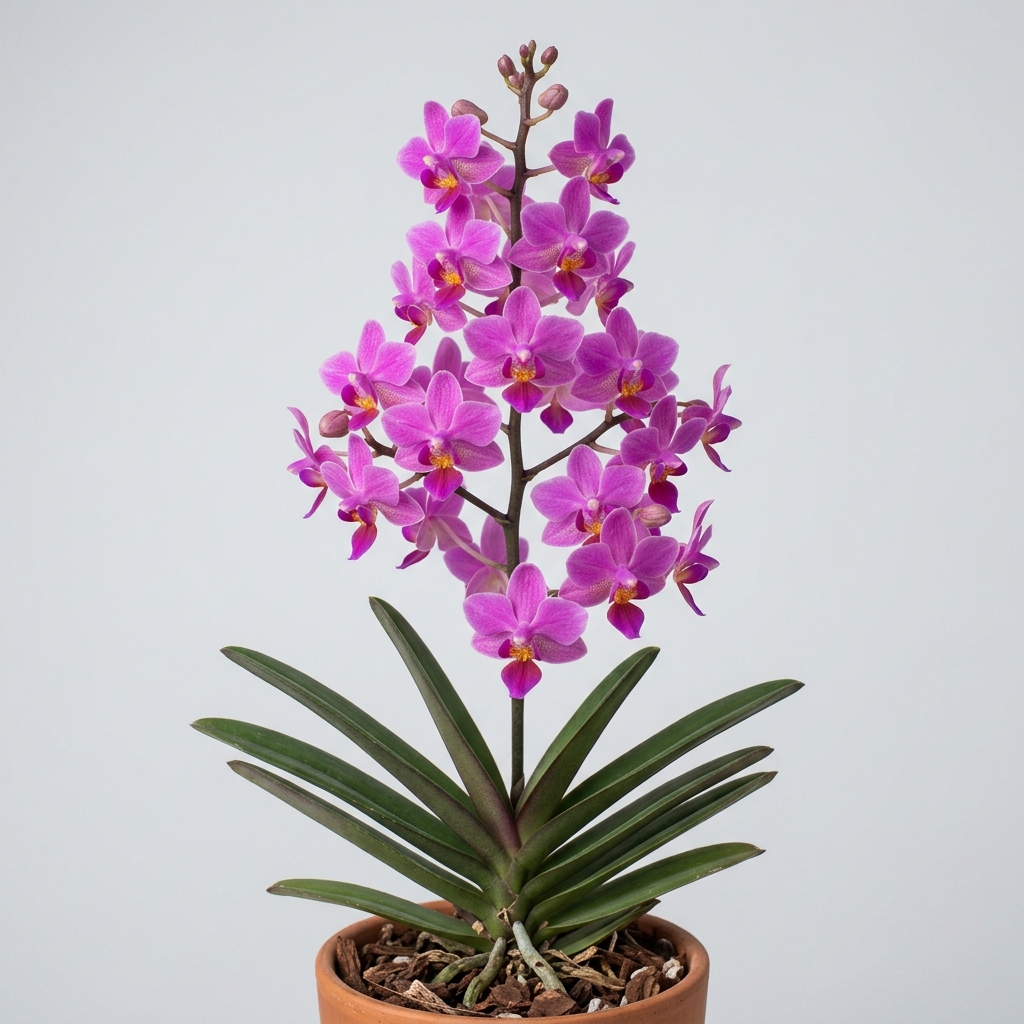
Phalaenopsis pulcherrima is a highly valued orchid species, historically classified under the genus Doritis, renowned for its upright growth habit, vibrant pink to purple blossoms, and resilient nature. Unlike typical epiphytic moth orchids that drape gracefully from tree branches, this species often shows a semi-terrestrial or lithophytic growth habit in its native Southeast Asian habitats. This unique ecological niche makes it an exceptionally sturdy and distinctive addition to any indoor orchid collection.
Growers particularly appreciate this species for its ease of care, tolerance for higher light levels than standard Phalaenopsis, and its prolific blooming habit. It has served as a foundational parent in orchid hybridization, passing down its stiff, upright flower spikes and intense coloration to countless classic hybrids. Whether grown as a collector’s species or as an easy-care windowsill companion, it offers a rewarding and colorful display.
💡 Did You Know?
Unlike most epiphytic Phalaenopsis orchids that grow clinging to tree branches, Phalaenopsis pulcherrima is primarily lithophytic or semi-terrestrial. In its native Southeast Asian habitats, it is frequently found growing in sandy, nutrient-poor soils or directly on rocky crevices exposed to bright, filtered sunlight, which explains its tolerance for higher levels in cultivation.
🌿 Botanical Overview
Phalaenopsis pulcherrima is native to a broad region of Southeast Asia, including Thailand, Vietnam, Malaysia, Sumatra, and Borneo. In these regions, it is commonly found growing in sandy soils, low-elevation pine forests, or directly on rocky crevices near sea level up to low montane elevations. This terrestrial and lithophytic lifestyle has equipped the plant with a robust root system and a growth habit that differs significantly from its tree-dwelling relatives.
The plant features short, stout stems clothed in stiff, fleshy, dark green leaves that are narrower and more upright than those of typical moth orchids. Under high light conditions, the leaves often develop a beautiful purple or reddish pigmentation on their undersides, which is a natural protective adaptation. The roots are thick and fleshy, designed to anchor the plant securely in loose, sandy substrates or rocky terrain while absorbing moisture and nutrients efficiently.
🌸 Flower Characteristics
The flowers of Phalaenopsis pulcherrima are relatively small, typically measuring between one to two centimeters across, but they make up for their size with their sheer abundance and intense coloration. The blossoms are presented on stiff, strictly upright, and sometimes branched inflorescences that can reach up to sixty centimeters in height. This vertical presentation stands in stark contrast to the arching spikes of most other Phalaenopsis species.
Each flower features reflexed petals and sepals, giving the bloom a dynamic, star-like appearance. The prominent three-lobed lip, or labellum, is a key feature, often displaying a deep magenta or purple hue with intricate yellow or white markings at the base. While pink and purple are the most common colors, rare color forms exist, including pure white (alba) and blue-toned (coerulea) variations.
Fragrance & Bloom Profile
This species is generally considered unscented, though some growers report a very faint, clean, or slightly sweet aroma when the plant is kept in warm, highly humid conditions under bright morning sun. The lack of a strong fragrance is easily overlooked due to the exceptional longevity and presentation of the flowers.
The blooming cycle typically begins in mid-summer and can extend well into the autumn months. The flowers open sequentially from the bottom of the spike upward, ensuring a continuous and vibrant display that can last for several months. Individual flowers are remarkably long-lived and hold their color well without fading.
Parentage & Hybrid Lineage
As a naturally occurring species, Phalaenopsis pulcherrima does not have parentage in the hybrid sense. However, its historical classification as Doritis pulcherrima made it the cornerstone of the intergeneric hybrid group known as Doritaenopsis. Although taxonomists have now consolidated Doritis into Phalaenopsis, the influence of this species remains legendary in orchid breeding.
Hybridizers have long utilized this species to introduce upright spike habits, compact growth, and intense, non-fading purple and pink pigments into commercial Phalaenopsis lines. It is also highly valued for imparting temperature tolerance and overall vigor to its hybrid offspring, making them much easier for hobbyists to grow at home.
🌱 Growing Conditions
To grow Phalaenopsis pulcherrima successfully, it is helpful to mimic its brighter, semi-terrestrial native habitat. It thrives in bright, filtered light that is significantly stronger than what is recommended for standard moth orchids. A location near an east- or shaded south-facing window where it receives bright indirect light with some gentle morning sun is ideal.
💡 Care Tip
Provide this species with slightly brighter than your standard moth orchids. A location with bright, filtered morning sun will encourage stronger, more upright flower spikes and a healthier, more compact growth habit.
Temperature: wise, this orchid prefers warm to intermediate conditions. Daytime temperatures between 75°F and 85°F are ideal, with a slight drop to 65°F or 70°F at night. High humidity of 50% to 70% is preferred, accompanied by constant, gentle air circulation to prevent stagnant moisture from settling on the leaves and causing fungal issues.
Watering, Feeding & Potting Media
Because of its semi-terrestrial nature, the root system of Phalaenopsis pulcherrima prefers more consistent moisture than epiphytic species. It should not be allowed to dry out completely for extended periods. Water the plant thoroughly just as the potting medium approaches dryness, ensuring that excess water drains away completely to prevent root rot.
A potting medium that retains slightly more moisture while remaining highly aerated is ideal. A mix of fine-grade fir bark, perlite, and charcoal, sometimes blended with a small amount of chopped sphagnum moss, works exceptionally well. Feed the plant weekly with a highly diluted, balanced orchid fertilizer during the active spring and summer growing seasons, flushing the pot with pure water once a month to remove salt buildup.
Blooming Season & Care Notes
The primary blooming season occurs during the warm months of summer and early autumn. Once the flower spike has finished blooming, it is best to leave it intact if it remains green, as it can occasionally produce secondary branches or even vegetative keikis. Cut the spike back to the base only if it turns brown and dry.
Repotting should be performed every one to two years, ideally in the spring when active new root growth is visible. Because this species can be sensitive to root disturbance, handle the fleshy roots gently and avoid over-potting; select a pot size that just comfortably accommodates the root mass.
⚠️ Common Issues
⚠️ Common Mistake
Avoid letting the potting medium dry out completely for long periods. While it tolerates more than other Phalaenopsis, its semi-terrestrial roots prefer consistent, even moisture and can suffer if left bone-dry.
- Root Rot:
Caused by compacted, poorly draining media or overwatering. Ensure the pot has excellent drainage. - Leaf Scorch: Appears as bleached or black patches on the leaves, resulting from exposure to direct, intense midday sunlight.
- Bud Blast:
The premature dropping of unopened flower buds, often triggered by sudden temperature drops, low humidity, or drafts. - Pests:
Mealybugs and spider mites can occasionally target the crevices of the stiff leaves; treat promptly with insecticidal soap or neem oil. - Fungal Leaf Spotting: Occurs when water is allowed to sit on the leaves overnight. Always water early in the day.
❓ Frequently Asked Questions
How much light does Phalaenopsis pulcherrima need compared to other moth orchids?
This species requires significantly brighter light than standard Phalaenopsis orchids. It thrives in bright, filtered light similar to Cattleya conditions, which helps maintain its compact, upright growth and encourages robust flowering.
Can Phalaenopsis pulcherrima produce keikis on its flower spikes?
Yes, this species is well-known for its propensity to produce basal offsets and aerial keikis along its flower spikes. These can be detached and potted individually once they have developed several healthy roots of their own.
What is the best potting medium for Phalaenopsis pulcherrima?
A fine-grade bark mix blended with perlite and a small amount of sphagnum moss is ideal. This combination mimics its semi-terrestrial habitat by retaining even moisture while providing excellent aeration for the roots.
Why are the leaves on my Phalaenopsis pulcherrima turning purple?
A purple or reddish tint on the undersides or margins of the leaves is a natural response to high light levels. It indicates that the plant is receiving maximum healthy light, though extremely dark purple leaves may suggest it is close to its limit.
⭐ Final Growing Notes
Phalaenopsis pulcherrima is a delightful and resilient orchid species that bridges the gap between terrestrial and epiphytic growth habits. Its striking, upright spikes of long-lasting magenta flowers, combined with its tolerance for brighter light and warmer temperatures, make it an exceptionally rewarding plant for both novice growers and seasoned orchid enthusiasts looking to diversify their collections.
🌱 Propagation Tip
This orchid frequently produces basal offsets or keikis along its flower spikes. Allow these baby plants to develop several healthy roots at least two inches long before carefully detaching and potting them in a fine orchid mix.
⭐ Expert Advice
To stimulate a robust autumn bloom, ensure a slight drop of about ten degrees Fahrenheit between day and night during the late summer months, while maintaining high and excellent air circulation.




Leave A Comment