
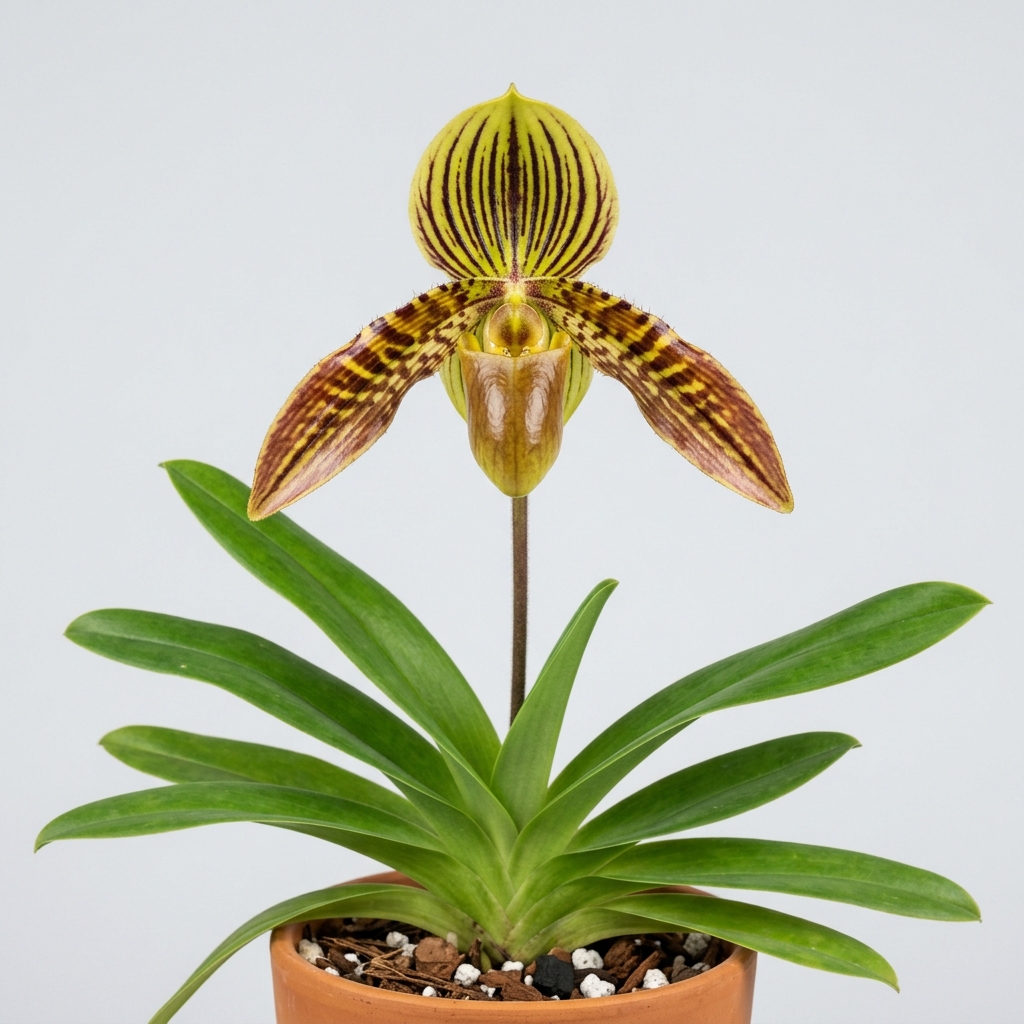
Paphiopedilum Tigrinum is an exquisite slipper orchid species highly prized by collectors for its dramatic, tiger-like markings and elegant growth habit. Belonging to the Cypripedioideae subfamily, this terrestrial or lithophytic orchid produces striking, solitary blooms that instantly command attention in any indoor collection.
Growers value this orchid for its compact, fan-shaped foliage and the architectural beauty of its flowers. While it requires a bit of patience and attention to environmental details, establishing a consistent care routine rewards the enthusiast with long-lasting, exotic blooms that showcase some of the most intricate patterns in the genus.
💡 Did You Know?
The specific epithet tigrinum is derived from the Latin word for tiger, directly referencing the bold, horizontal stripes on the orchid's petals. Discovered relatively recently in the wild compared to other slipper orchids, this species has quickly captured the imagination of breeders who use its unique patterns to create striking new hybrids.
🌿 Botanical Overview
Paphiopedilum Tigrinum is native to mountainous regions of southwestern China and Myanmar, where it typically grows in leaf litter on shaded limestone cliffs or steep slopes. This natural habitat dictates its preference for excellent drainage, constant moisture, and high humidity. The plant features a classic fan-shaped growth habit with strap-like, leathery green leaves that lack the heavy mottling seen in some other slipper orchids.
The root system of this species is relatively thick and covered in fine root hairs, designed to cling to organic debris and rocky crevices. Unlike epiphytic orchids with pseudobulbs, Paphiopedilum species store water primarily in their fleshy leaves and roots, making them more sensitive to prolonged dry spells. Understanding this growth habit is key to maintaining a healthy specimen over many seasons.
🌸 Flower Characteristics
The defining feature of Paphiopedilum Tigrinum is its remarkable flower, which typically measures around 8 to 12 centimeters across. The dorsal sepal is often pale green or yellow-green with dark purple-brown vertical stripes and a white margin. The petals are long, narrow, and gracefully reflexed or twisted downward, showcasing bold, horizontal tiger-like bands of deep bronze, mahogany, and yellow.
The pouch, or labellum, is helmet-shaped and usually displays a glossy, brownish-yellow or olive-green hue. Each inflorescence emerges from the center of the mature leaf fan, carrying a single, long-lasting flower on a sturdy, pubescent purplish stem. The waxy texture of the bloom ensures it remains pristine for several weeks, making it a standout display piece.
Fragrance & Bloom Profile
This orchid is primarily grown for its visual appeal rather than its scent. Fragrance is not consistently documented for Paphiopedilum Tigrinum, and most growers report that the flowers are completely unscented. On rare occasions, subtle, earthy undertones may be detected under specific warm, humid conditions, but this is highly variable and not a reliable characteristic of the species.
The blooming cycle is highly anticipated, with individual flowers lasting anywhere from four to eight weeks depending on environmental stability. Because the plant does not produce multiple flowers on a single spike simultaneously, the focus remains entirely on the singular, dramatic presentation of each mature fan’s bloom.
Parentage & Hybrid Lineage
Paphiopedilum Tigrinum is a distinct, naturally occurring species rather than a man-made hybrid. First described scientifically in the late 20th century, its unique morphology has made it a valuable parent in slipper orchid breeding programs. Hybridizers use it to introduce bold striping, reflexed petal shapes, and rich bronze tones to new grexes.
Because it is a true species, maintaining the genetic purity of cultivated specimens is a priority for conservation-minded growers. When purchasing, enthusiasts should look for nursery-propagated plants from reputable sources, as wild collection is strictly prohibited and threatens natural populations.
🌱 Growing Conditions
To successfully cultivate Paphiopedilum Tigrinum, growers should aim to replicate its montane forest habitat. It thrives in bright, filtered indirect light, similar to the dappled shade found under a forest canopy. Direct sunlight should be avoided, as it can easily scorch the tender, non-mottled leaves. East- or shaded south-facing windows are often ideal.
💡 Care Tip
To maintain the high Paphiopedilum Tigrinum craves without risking fungal issues, place the pot on a tray filled with pebbles and water. Ensure the bottom of the pot does not touch the water directly, and keep a small fan running nearby to provide gentle, continuous air movement.
Temperature management is crucial; this orchid prefers intermediate to warm conditions, with daytime temperatures ranging from 20 degrees Celsius to 26 degrees Celsius (68 to 78 degrees Fahrenheit) and a slight drop at night to stimulate healthy growth and eventual blooming. High humidity between 60% and 80% is highly beneficial, accompanied by gentle, continuous air movement to prevent fungal pathogens from settling on the foliage.
Watering, Feeding & Potting Media
Watering is perhaps the most critical aspect of caring for Paphiopedilum Tigrinum. Because it lacks pseudobulbs, the potting medium should remain consistently damp but never waterlogged. Water thoroughly when the top layer of the medium begins to feel slightly dry, using rainwater, distilled water, or reverse osmosis water to avoid mineral buildup.
A well-draining potting mix is essential to prevent root rot. A combination of fine-grade fir bark, perlite, charcoal, and a small amount of chopped sphagnum moss works exceptionally well. Feed the orchid with a highly diluted, balanced orchid fertilizer (such as a quarter-strength 20-20-20 mix) every second or third watering during the active growing season, flushing the pot with pure water periodically to wash away residual salts.
Blooming Season & Care Notes
The typical blooming season for Paphiopedilum Tigrinum occurs from late spring through autumn, though variations can happen based on indoor microclimates. A mature, healthy fan will produce a single flower spike from its center. Once the bloom fades, the spike should be cut back close to the base of the fan using sterilized shears.
This fan will not bloom again; instead, the plant will direct its energy into producing new vegetative leads or offsets from the base. Repotting is best performed every one to two years, immediately after the blooming cycle concludes or in early spring when new root growth is detected. This ensures the potting medium remains fresh and does not break down into a suffocating, acidic paste.
⚠️ Common Issues
⚠️ Common Mistake
The most common mistake is treating this slipper orchid like an epiphyte and letting the potting medium dry out completely between waterings. Because they lack water-storing pseudobulbs, prolonged dry spells will quickly damage the roots and cause the foliage to dehydrate, leading to dropped buds and stalled growth.
- Root Rot:
Caused by overwatering or compacted, poorly draining potting media. Roots will turn mushy and brown. - Bud Blast:
Sudden drops in humidity, drafts, or water stress can cause developing buds to shrivel and die before opening. - Leaf Scorch: Exposure to direct sunlight leads to bleached or brown, dry patches on the foliage.
- Mealybugs and Scale: These pests often hide in the tight crevices at the base of the leaf fans; treat promptly with insecticidal soap or neem oil.
- Fungal Spotting: Poor air circulation combined with high humidity can cause unsightly black or brown spots on the leaves.
❓ Frequently Asked Questions
How often should I water my Paphiopedilum Tigrinum?
Water when the top centimeter of the potting medium feels dry to the touch. This typically translates to once or twice a week, depending on your home’s temperature and humidity levels. Never let the roots dry out completely, but avoid letting the pot sit in standing water.
Does Paphiopedilum Tigrinum require a winter rest period?
While it does not require a severe dry rest, reducing watering slightly and keeping temperatures on the cooler side of its range during the winter months mimics its natural seasonal cycle and can help stimulate spring bud development.
Can I grow Paphiopedilum Tigrinum under LED grow lights?
Yes, this orchid adapts well to artificial lighting. Place the plant under moderate-intensity LED grow lights, ensuring they are positioned far enough away to prevent heat stress or leaf bleaching. Aim for a 12-to-14-hour daily light cycle.
Why are the leaf tips of my orchid turning brown?
Brown leaf tips are usually a sign of low humidity, underwatering, or mineral buildup from tap water. Ensure you are using purified water and maintain a humidity level of at least 60% around the plant.
⭐ Final Growing Notes
Cultivating Paphiopedilum Tigrinum is a rewarding endeavor for any orchid enthusiast looking to add a touch of dramatic, exotic beauty to their collection. By providing consistent moisture, high humidity, and filtered light, you can enjoy the spectacular, tiger-striped blooms of this remarkable species for years to come.
⚕️ Health, Safety & Edibility
Understanding how a plant interacts with people, pets, and the surrounding environment is part of responsible cultivation. This section uses conservative, general guidance and does not replace professional medical or veterinary advice.
Human Safety: No published evidence currently identifies species-specific toxicity concerns for Paphiopedilum Tigrinum during normal handling. As with most ornamental plants, it should not be intentionally consumed.
Pet Safety: Published information does not indicate that this orchid commonly poses a toxicity concern for cats or dogs. However, chewing leaves, flowers, roots, or potting media may still cause mild digestive upset.
Edibility: This orchid is cultivated for ornamental display rather than food. Ornamental plants may carry fertilizers, pesticides, or other horticultural treatments that make them unsuitable for consumption.
Skin Contact: Routine handling is not generally associated with skin irritation. Gardeners with sensitive skin may prefer wearing gloves when repotting, pruning, or handling potting media.
🌱 Propagation Tip
Unlike some orchids that produce keikis, Paphiopedilum Tigrinum is propagated by division. Only attempt this when the plant has grown into a large clump with at least six to eight healthy fans. Carefully separate the rhizome, ensuring each new division has at least three mature fans and a well-developed root system.
⭐ Expert Advice
When repotting Paphiopedilum Tigrinum, add a small amount of crushed oyster shells or agricultural lime to the bark mix. This species naturally grows near limestone formations, and a slightly alkaline to neutral substrate helps mimic its native soil chemistry, promoting stronger root development and healthier leaf growth.

Leave A Comment