

Cattleya Coccinea is a highly prized miniature orchid species celebrated for its intense, brilliant scarlet-red flowers. Originally native to the cool, mist-shrouded montane forests of Brazil, this compact epiphyte has captured the fascination of orchid enthusiasts worldwide, serving as a cornerstone in miniature red Cattleya breeding.
Despite its diminutive stature, this orchid produces remarkably large, vibrant blooms that contrast beautifully against its dark green, leathery foliage. While it has a reputation for being somewhat demanding in cultivation due to its specific temperature and humidity requirements, successful growers are rewarded with a spectacular display of color that few other miniature orchids can match.
💡 Did You Know?
Cattleya Coccinea was historically known as Sophronitis coccinea before genetic testing placed it in the Cattleya . Its brilliant red color is highly dominant in breeding, making it the primary genetic source behind almost all modern red Cattleya hybrids, despite the species itself being a challenging miniature to grow.
🌿 Botanical Overview
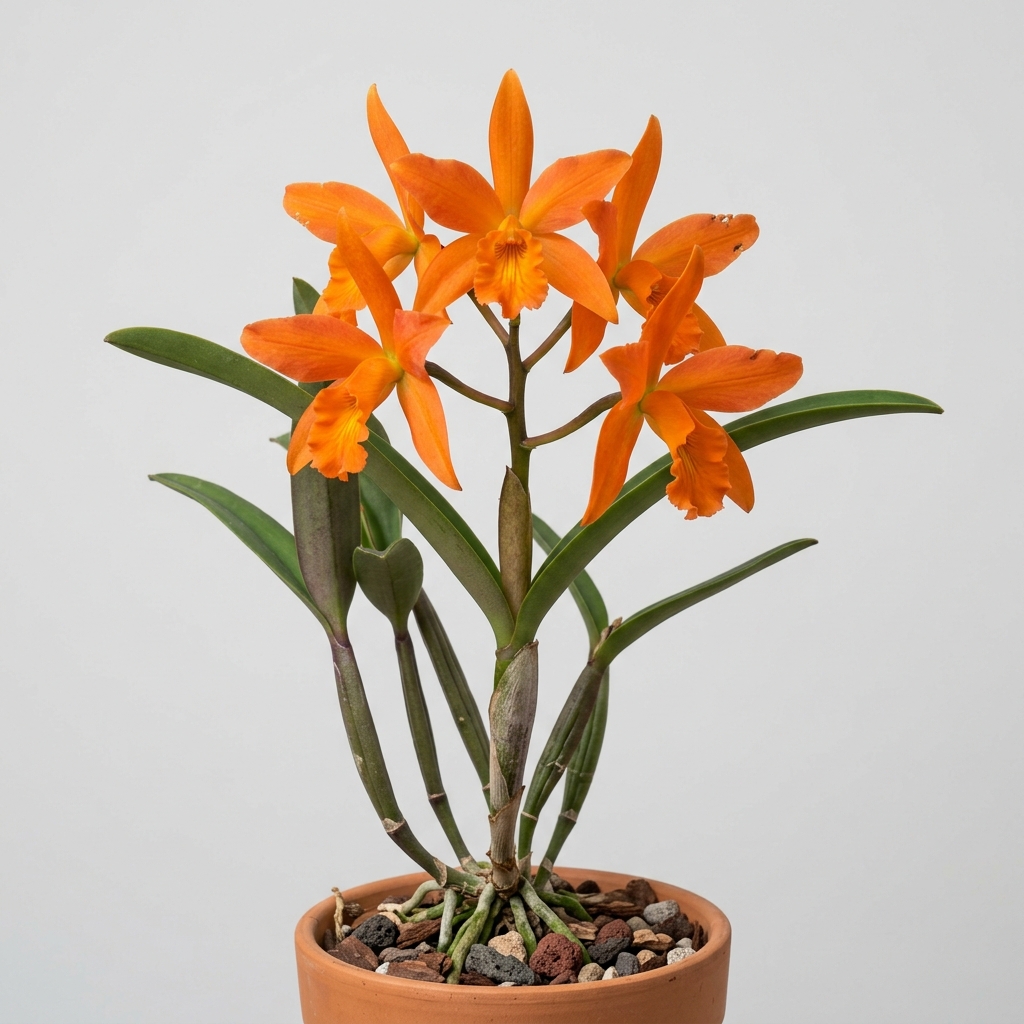
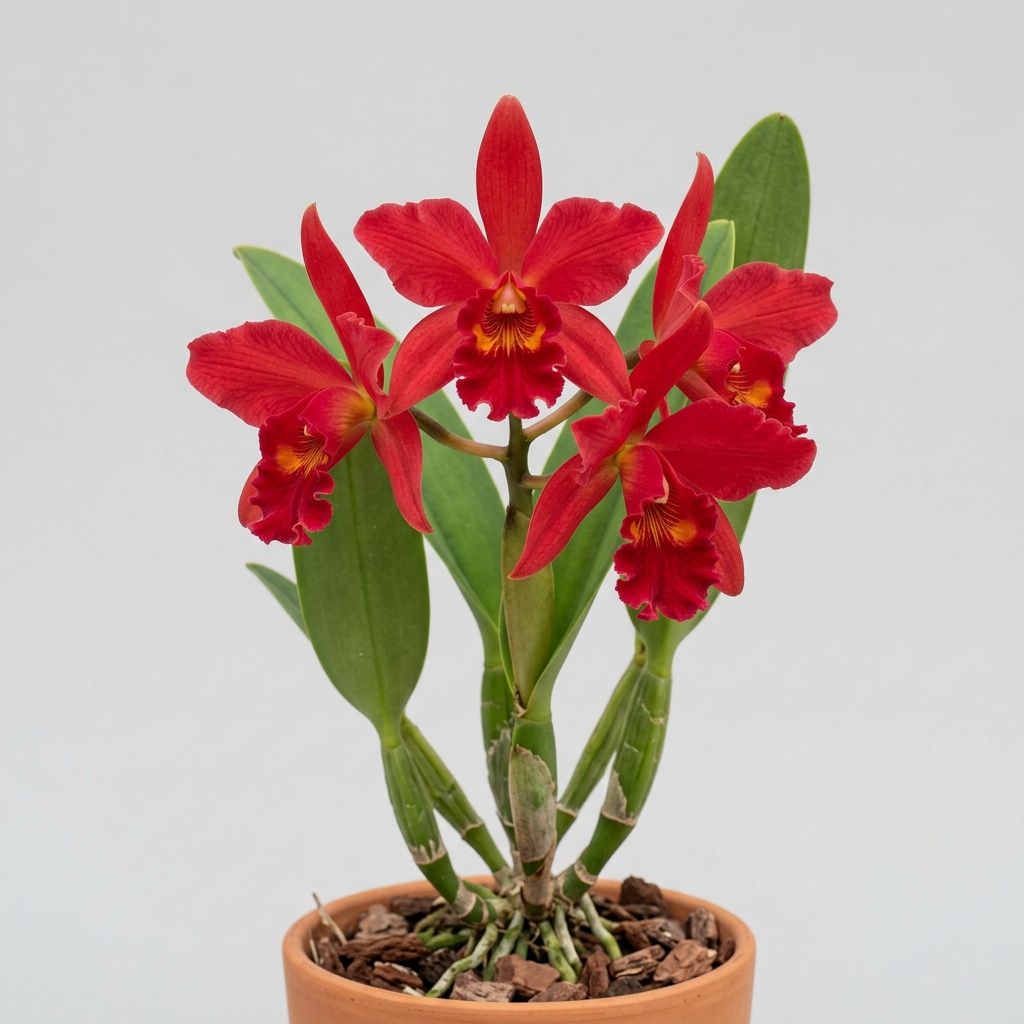
Cattleya Coccinea is a classic miniature sympodial epiphyte. It features small, tightly clustered pseudobulbs, each topped with a single, thick, linear-elliptic leaf. The foliage is typically dark green, often showing a reddish-purple midrib or tint when grown under optimal light levels.
In its native Brazilian habitat, it grows on mossy tree trunks and branches at elevations where it is constantly bathed in cool, humid air and frequent mists. This evolutionary adaptation dictates its strict cultural requirements in home or greenhouse environments, where stagnant air and excessive heat are its primary enemies.
🌸 Flower Characteristics
The flowers of Cattleya Coccinea are the primary reason for its fame, measuring up to two inches (five centimeters) across, which is exceptionally large relative to the size of the plant. The petals and sepals are broad, overlapping, and saturated with a brilliant, velvety scarlet-red or deep orange-red hue.
The lip (labellum) is relatively small, tubular, and features yellow or orange-yellow striping in the throat, which guides pollinators. The flowers are borne singly on short spikes arising from the apex of the newest pseudobulb, presenting themselves proudly just above the foliage.
Fragrance & Bloom Profile
Unlike many of its larger Cattleya relatives, Cattleya Coccinea is generally reported to be non-fragrant. While some growers occasionally report a faint, clean scent under warm, humid conditions, a distinct fragrance profile is not consistently documented in horticultural literature.
The blooms are remarkably long-lasting for a miniature orchid, often remaining pristine for four to six weeks if kept in a cool, stable environment. The intense coloration does not fade easily, maintaining its vivid saturation from the day the bud opens until the flower naturally senesces.
Parentage & Hybrid Lineage
Cattleya Coccinea is a true species rather than a hybrid cultivar, though it has been extensively used as a parent in orchid hybridization. Historically classified under the genus Sophronitis, its genetic material is responsible for introducing the brilliant red coloration and compact growth habit into modern Sophrolaeliocattleya (now classified under Cattleya) hybrids.
Because of its dominant red gene, it has been crossed with larger, lavender, and yellow Cattleya species to produce compact, brightly colored offspring. When purchasing this plant, growers should ensure they are acquiring the true species or a line-bred cultivar selected for improved flower size and vigor.
🌱 Growing Conditions
Replicating the cool, misty montane forests of Brazil is key to successfully growing Cattleya Coccinea. It thrives in bright, filtered light, similar to the light levels preferred by Miltoniopsis or high-light Paphiopedilum species. Direct midday sun must be avoided to prevent scorching the delicate foliage.
💡 Care Tip
To keep this miniature orchid thriving, prioritize air movement. Constant, gentle ventilation prevents stagnant moisture from sitting on the leaves and roots, which is crucial for preventing fungal rot in the high- environments this species requires.
Temperature control is critical; this species prefers cool to intermediate conditions, ideally with daytime temperatures between 65°F and 75°F (18°C to 24°C) and a distinct drop at night to 50°F to 55°F (10°C to 13°C). High humidity of 70% to 80% coupled with constant, gentle air movement is essential to prevent fungal pathogens and leaf drop.
Watering, Feeding & Potting Media
Unlike larger, drought-tolerant Cattleya species, Cattleya Coccinea does not possess large pseudobulbs for water storage and should never be allowed to dry out completely. The potting medium should remain evenly moist but never waterlogged. Watering frequency must be adjusted based on temperature and humidity levels.
A high-quality, free-draining medium is vital. Fine fir bark mixed with perlite and chopped sphagnum moss works well in small plastic or clay pots. Alternatively, many growers succeed by mounting the plant on cork bark with a small pad of sphagnum moss, provided they can maintain high humidity and water daily. Feed weekly with a highly diluted, balanced orchid fertilizer during the active growing season.
Blooming Season & Care Notes
The primary blooming season for Cattleya Coccinea spans from late autumn through winter and into early spring, aligning with the cooler months of the year. Flower buds develop within the sheath of the newly matured pseudobulb.
During the bud development phase, avoid sudden temperature fluctuations or dry drafts, which can cause bud blast. Once flowering concludes, the plant enters a brief period of semi-dormancy where watering should be slightly reduced, though the medium must still not dry out entirely. Repotting should only be performed when new root growth is visible at the base of the newest pseudobulb.
⚠️ Common Issues
⚠️ Common Mistake
The most common mistake is letting the potting medium dry out completely. Unlike larger, thick-leaved Cattleya species, this miniature lacks substantial water-storing pseudobulbs and will quickly suffer dehydration, leaf drop, and root loss if left dry for too long.
- Root Rot: Caused by overwatering or compacted, poorly draining potting media that suffocates the delicate root system.
- Bud Blast: Occurs when developing flower buds dry out, drop, or fail to open due to low humidity, drafts, or sudden temperature spikes.
- Heat Stress: Characterized by yellowing leaves, leaf drop, and a general decline in vigor when temperatures consistently exceed 80°F (27°C).
- Pests: Mealybugs and scale insects can hide in the tight crevices between pseudobulbs and beneath the dry sheaths; treat promptly with insecticidal soap or neem oil.
❓ Frequently Asked Questions
How do I encourage my Cattleya Coccinea to bloom?
To trigger blooming, ensure the orchid experiences a distinct temperature drop of 10°F to 15°F (5°C to 8°C) at night, particularly during the autumn months. Adequate light levels and maintaining high humidity are also essential for the development of healthy flower buds.
Can Cattleya Coccinea be grown under LED lights?
Yes, this miniature orchid adapts exceptionally well to indoor growing under LED lights. Position the plant where it receives bright, indirect light, and monitor the temperature closely to ensure the heat generated by the fixtures does not dry out the surrounding air or overheat the foliage.
Why are the leaves on my orchid turning yellow and dropping?
Yellowing and dropping leaves are often a sign of heat stress or root rot. If temperatures are too high or the potting medium is waterlogged and decaying, the roots will fail, leading to rapid leaf loss. Check the root health and adjust your growing environment accordingly.
Is Cattleya Coccinea suitable for beginner orchid growers?
Due to its strict requirements for cool temperatures, high humidity, and consistent moisture, this species is generally considered moderately challenging and may be difficult for absolute beginners. However, determined growers who can control their environment will find it highly rewarding.
⭐ Final Growing Notes
While Cattleya Coccinea demands more attention to temperature and humidity than its larger, more forgiving relatives, its breathtaking scarlet blooms make it an indispensable treasure for any serious orchid collection. By providing cool nights, consistent moisture, and excellent air circulation, you can enjoy the vibrant, jewel-like flowers of this Brazilian masterpiece year after year.
⚕️ Health, Safety & Edibility
Understanding how a plant interacts with people, pets, and the surrounding environment is part of responsible cultivation. This section uses conservative, general guidance and does not replace professional medical or veterinary advice.
Human Safety: No published evidence currently identifies species-specific toxicity concerns for Cattleya Coccinea during normal handling. As with most ornamental plants, it should not be intentionally consumed.
Pet Safety: Published information does not indicate that this orchid commonly poses a toxicity concern for cats or dogs. However, chewing leaves, flowers, roots, or potting media may still cause mild digestive upset.
Edibility: This orchid is cultivated for ornamental display rather than food. Ornamental plants may carry fertilizers, pesticides, or other horticultural treatments that make them unsuitable for consumption.
Skin Contact: Routine handling is not generally associated with skin irritation. Gardeners with sensitive skin may prefer wearing gloves when repotting, pruning, or handling potting media.
🌱 Propagation Tip
Propagation is best achieved by division during repotting, but only when the plant has at least six to eight healthy pseudobulbs. Ensure each division has at least three active pseudobulbs and a strong lead growth to guarantee successful establishment.
⭐ Expert Advice
If you struggle to keep temperatures cool enough during hot summer months, try using a clay pot nested inside a larger clay pot filled with damp sphagnum moss. The evaporative cooling effect can lower the root zone by several crucial degrees.

Leave A Comment