
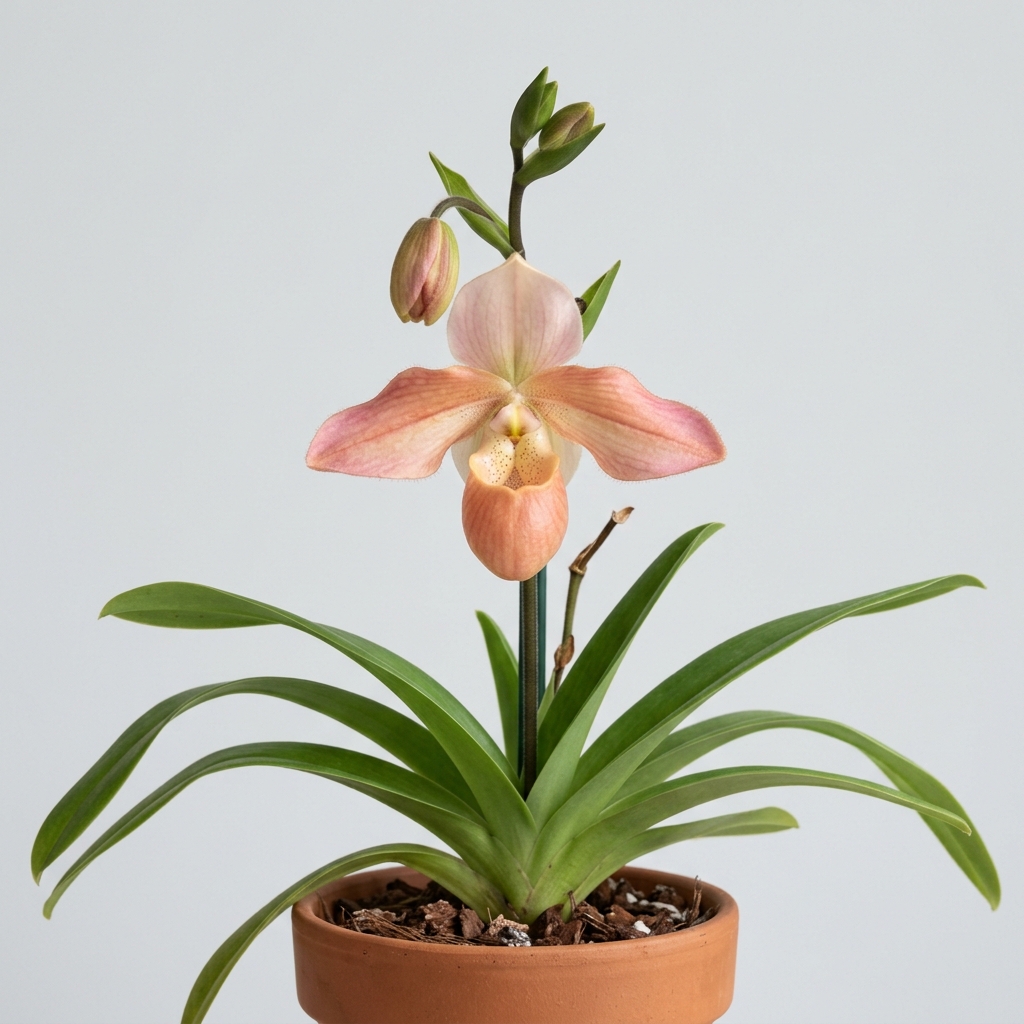
Phragmipedium Hanne Popow is a highly celebrated slipper orchid hybrid, cherished by collectors for its soft, pastel coloration and manageable growth habit. As a primary hybrid, it combines the desirable traits of its parent species to produce delicate, rounded flowers that display a beautiful range of pink, peach, and cream tones. This cultivar is particularly well-suited for indoor growers who appreciate the unique charm of South American lady’s slipper orchids but have limited space for larger specimens.
Unlike many other orchid groups that require strict drying-out periods, this hybrid thrives in consistently moist conditions, making its care routine distinct yet highly rewarding. Its sequential blooming habit ensures that a single flower spike can provide elegant displays over several months, with new buds opening as older flowers fade. For both novice slipper orchid enthusiasts and seasoned growers, it represents an accessible entry point into the captivating world of Phragmipedium cultivation.
💡 Did You Know?
Phragmipedium Hanne Popow is a primary hybrid of Phragmipedium schlimii and Phragmipedium besseae. This cross beautifully blends the soft pink tones of schlimii with the intense warm colors of besseae, resulting in its signature pastel peach and salmon hues that are highly prized by slipper orchid collectors worldwide.
🌿 Botanical Overview
Phragmipedium Hanne Popow is a terrestrial or lithophytic slipper orchid hybrid characterized by its fan-shaped growth habit. The plant produces narrow, strap-like, bright green leaves that grow in a tight rosette. Unlike its epiphytic relatives, this orchid possesses a root system designed to absorb constant moisture and nutrients from damp environments, reflecting the montane habitats of its ancestral species.
The growth cycle is continuous under ideal conditions, with new fans emerging from the base of mature growths. As each fan reaches maturity, it produces a terminal inflorescence from the center. The overall plant size remains relatively compact, making it an excellent candidate for windowsill cultivation or dedicated orchid cases.
🌸 Flower Characteristics
The blossoms of Phragmipedium Hanne Popow are renowned for their soft, delicate textures and rounded symmetry. The flowers typically feature a prominent, pouch-like lip (labellum) that is characteristic of the slipper orchid subfamily. Petals and sepals are generally wide and overlapping, presenting a harmonious blend of rose-pink, salmon, and soft yellow-cream undertones.
A single flower spike is sequential, meaning it produces one or two flowers at a time on a slowly elongating stem. As one bloom begins to decline, the next bud behind it matures and opens. This elegant presentation extends the overall display period significantly, with each individual flower lasting several weeks.
Fragrance & Bloom Profile
This hybrid is primarily grown for its visual elegance rather than its olfactory appeal. Fragrance is not a dominant trait in Phragmipedium Hanne Popow, and most growers report that the flowers are completely unscented. On rare occasions, under specific warm and humid conditions, a very faint, clean scent may be detected, but this is highly variable and not a reliable characteristic of the cultivar.
The blooming cycle can occur at almost any time of the year, though it is most frequently observed from late spring through autumn. Because of the sequential blooming habit, a single healthy spike can remain active for three to six months, providing a long-lasting focal point in any collection.
Parentage & Hybrid Lineage
Phragmipedium Hanne Popow is a classic primary hybrid, resulting from the cross between Phragmipedium schlimii and Phragmipedium besseae. This cross was first registered in the late 20th century and has since become a cornerstone of modern Phragmipedium breeding. The influence of Phragmipedium schlimii contributes the soft pink coloration, rounded flower shape, and compact growth habit.
Conversely, Phragmipedium besseae introduces vibrant warm tones, which modify the pink to create the highly sought-after peach and salmon hues. While individual plants from this cross can exhibit slight variations in color intensity and form, the hybrid consistently maintains a reputation for vigor and beauty.
🌱 Growing Conditions
To cultivate Phragmipedium Hanne Popow successfully, replicating its ancestral montane environment is key. It thrives in bright, filtered light, similar to the dappled sunlight found under forest canopies. Direct afternoon sun should be avoided, as it can easily scorch the tender foliage. East- or shaded south-facing windows are often ideal.
💡 Care Tip
Always use pure water, such as rainwater, distilled, or reverse osmosis water, for this hybrid. Phragmipediums are highly sensitive to dissolved minerals and salts found in tap water, which can quickly cause root dieback and unsightly black leaf tips.
Temperature: wise, this hybrid prefers intermediate to warm conditions, with daytime temperatures ranging between 70°F and 80°F (21°C to 27°C) and a slight drop at night to around 60°F to 65°F (15°C to 18°C). High humidity is crucial, ideally maintained between 60% and 80%, accompanied by gentle, continuous air movement to prevent fungal pathogens from settling on the leaves.
Watering, Feeding & Potting Media
Watering is the most critical aspect of Phragmipedium care. Unlike Cattleyas or Phalaenopsis, Phragmipedium Hanne Popow must never be allowed to dry out completely. The potting medium should remain consistently damp. Many growers successfully use the “tray method,” where the pot sits in a shallow saucer containing a small amount of pure, low-mineral water, such as rainwater, distilled water, or reverse osmosis water.
Feeding should be light but regular. Use a balanced, urea-free orchid fertilizer diluted to one-quarter strength every two weeks, followed by a thorough flush with pure water to prevent salt buildup. The potting medium must be moisture-retentive yet free-draining. A mix of fine fir bark, chopped sphagnum moss, perlite, and a small amount of charcoal or sponge rock works exceptionally well.
Blooming Season & Care Notes
While blooming can occur year-round, peak activity is typically concentrated in the spring and summer months. Once a flower spike emerges, avoid changing the plant’s orientation to the light source, as this can cause the developing buds to twist or stall. After the final flower on a spike has fallen and the stem begins to turn brown, it can be cut back to the base of the fan.
Repotting is best performed annually or biennially, ideally just as new root growth is initiated from the base of the newest fans. Because these plants prefer constant moisture, the potting medium degrades faster than it would under drier cultivation styles. Fresh media ensures the roots remain healthy and well-oxygenated.
⚠️ Common Issues
⚠️ Common Mistake
A frequent error is allowing the potting medium to dry out completely between waterings. Unlike epiphytic orchids like Phalaenopsis, Phragmipediums lack pseudobulbs for water storage and require a constantly damp root zone to prevent dehydration and bud drop.
- Root Rot:
Although they love moisture, stagnant, oxygen-deprived media can cause roots to decay. Always ensure the medium remains fresh and airy. - Leaf Tip Burn: Often caused by excessive mineral buildup from tap water or over-fertilization. Use pure water and flush the pot regularly.
- Bud Blast:
Sudden drops in humidity, drafts, or water stress can cause developing buds to yellow and drop before opening. - Pests:
Mealybugs and spider mites can occasionally hide in the tight crevices of the leaf fans. Treat promptly with insecticidal soap or horticultural oil.
❓ Frequently Asked Questions
Can Phragmipedium Hanne Popow be grown in tap water?
It is highly recommended to avoid municipal tap water, as this hybrid is sensitive to dissolved minerals and chlorine. Using rainwater, distilled water, or reverse osmosis water will prevent leaf tip burn and root damage.
How long do individual flowers last on this orchid?
While an individual bloom typically lasts about two to three weeks, the sequential nature of the flower spike means that new buds will continue to open, keeping the plant in bloom for several months.
Does this orchid require a cold period to initiate blooming?
No, Phragmipedium Hanne Popow does not require a severe cold drop to bloom. Maintaining a consistent day-to-night temperature fluctuation of about 10 to 15 degrees Fahrenheit is sufficient to encourage regular flowering.
Is it normal for this orchid to sit in water?
Yes, unlike many other orchids, Phragmipediums thrive with constant moisture. Keeping the pot in a shallow tray with a small amount of pure water is a common and successful growing method, provided the potting medium is airy.
⭐ Final Growing Notes
Phragmipedium Hanne Popow remains a favorite among orchid enthusiasts for its stunning pastel blooms and rewarding growth habit. By prioritizing high-quality water, consistent moisture, and moderate light, growers can enjoy the elegant, sequential displays of this exceptional primary hybrid for many years.
⚕️ Health, Safety & Edibility
Understanding how a plant interacts with people, pets, and the surrounding environment is part of responsible cultivation. This section uses conservative, general guidance and does not replace professional medical or veterinary advice.
Human Safety: Species-specific human toxicity data for Phragmipedium Hanne Popow is limited. Use conservative handling practices and avoid intentional consumption.
Pet Safety: Pet-specific safety information for Phragmipedium Hanne Popow is limited, so keep it away from animals that commonly chew plants.
Edibility: Phragmipedium Hanne Popow should not be treated as edible. Ornamental specimens may contain natural irritants or horticultural residues that make them unsuitable for consumption.
Skin Contact: Skin irritation is not well documented for this plant, but gloves are sensible when repotting, pruning, or handling potting media.
🌱 Propagation Tip
This orchid is best propagated by division during repotting. Ensure that each division has at least two or three mature, healthy fans with active root systems. Avoid dividing the plant too small, as larger specimens recover much faster and bloom more reliably.
⭐ Expert Advice
To maximize the blooming period, maintain high and stable temperatures while the flower spike is active. Sudden environmental shifts or dry indoor air can trigger bud blast, causing the sequential buds to wither before they have a chance to open.

Leave A Comment