
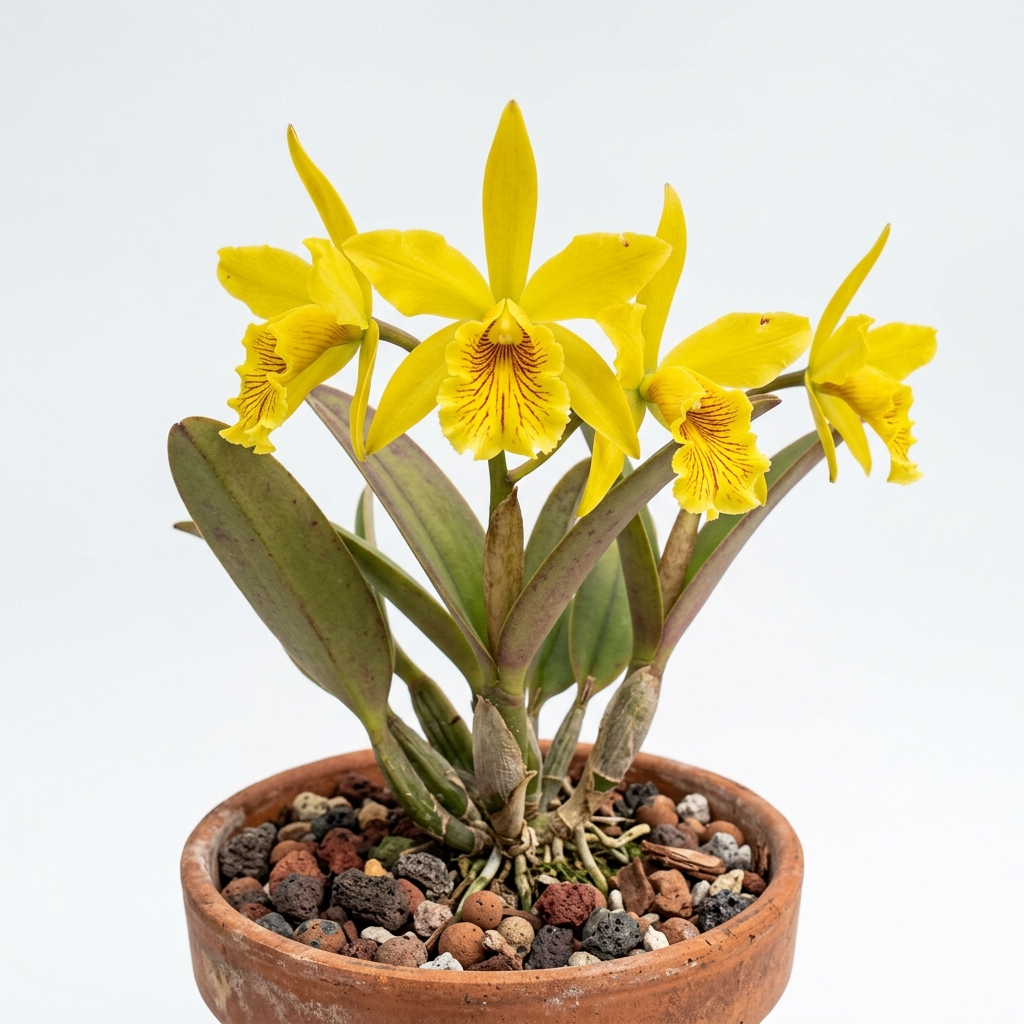
Cattleya Briegeri is a highly prized rupicolous orchid species native to the high-altitude, rocky regions of Brazil. Belonging to the group of orchids formerly classified under the genus Laelia, this compact plant is celebrated for its striking, star-shaped yellow blossoms and its robust, architectural growth habit. It is a favorite among miniature orchid collectors who appreciate its wild, montane heritage and its brilliant floral displays.
In cultivation, this species appeals to growers who enjoy replicating specialized microclimates. While it requires specific attention to drainage, light, and seasonal watering cycles, its rewarding blooms and compact footprint make it an exceptional specimen for greenhouses, sunrooms, and indoor grow setups equipped with high-intensity lighting.
💡 Did You Know?
Cattleya Briegeri is part of the Cattleya orchid group, a favorite among growers because its flowers, growth habit, and care needs make it useful for comparing cultivated orchids within the same . Observing its leaves, roots, and bloom spikes can help growers understand how this cultivar responds to indoor conditions.
🌿 Botanical Overview
Cattleya Briegeri is native to the state of Minas Gerais in Brazil, where it grows as a lithophyte on sun-drenched, iron-rich sandstone ledges. These unique environmental origins shape its physical characteristics. The plant features short, stout, and clustered pseudobulbs designed to store moisture and nutrients during periods of drought. The leaves are rigid, thick, and upright, presenting a leathery texture that minimizes water loss under intense sunlight.
Under optimal light conditions, the foliage often develops a reddish or purple pigmentation. This coloration is a natural defense mechanism against high light levels and serves as an indicator that the orchid is receiving sufficient energy to produce blooms. The root system is adapted to cling tightly to rocky surfaces, absorbing moisture rapidly from morning dews and passing rain showers before drying out quickly in the mountain breeze.
🌸 Flower Characteristics
The blossoms of Cattleya Briegeri are highly distinctive, characterized by their vibrant, clear yellow coloration. The flowers are star-shaped, with petals and sepals of relatively equal size that present a symmetrical, open form. The lip, or labellum, is tubular at the base and opens into a ruffled mid-lobe, which may feature subtle orange or darker yellow veining deep within the throat.
The flowers are borne on an erect inflorescence that rises cleanly above the rigid foliage. A single spike typically carries between two and six flowers, creating a bright, clustered display. The individual blooms are relatively small compared to standard Cattleya hybrids, but their intense color and clean presentation make them exceptionally eye-catching.
Fragrance & Bloom Profile
Fragrance in Cattleya Briegeri is not a dominant trait, and its presence is not consistently documented among growers. Some specimens may emit a very faint, clean, or slightly sweet scent during the warmest hours of the day, while others appear entirely scentless. Growers should value this species primarily for its visual appeal rather than its aromatic qualities.
The blooms are remarkably long-lasting for a miniature Cattleya species. When kept in intermediate temperatures and moderate humidity, the flowers can remain fresh and vibrant for several weeks. To maximize the lifespan of the blooms, avoid getting water directly on the petals when watering the plant.
Parentage & Hybrid Lineage
Cattleya Briegeri is a naturally occurring species rather than a man-made hybrid. Historically classified as Laelia briegeri, it was moved to the genus Cattleya following modern DNA sequencing that reorganized many Brazilian rupicolous laelias. It belongs to a specialized group of orchids known to collectors as rupicolous Cattleyas, celebrated for their compact size and lithophytic habit.
In orchid breeding, Cattleya Briegeri has been used extensively as a parent species. Hybridizers value it for its ability to pass down its compact growth habit, rigid foliage, and intense yellow flower color to its offspring. It has contributed to numerous successful miniature Cattleya hybrids, bringing a touch of wild Brazilian resilience to modern cultivated varieties.
🌱 Growing Conditions
Replicating the natural habitat of Cattleya Briegeri is the key to successful cultivation. This orchid requires very bright light, comparable to or slightly higher than standard Cattleya levels. Filtered direct sunlight in the morning or late afternoon is highly beneficial, provided the plant is gradually acclimated to prevent leaf scorch. Under artificial setups, high-output LED or T5 grow lights are recommended.
💡 Care Tip
For best results, grow Cattleya Briegeri in bright filtered with steady and gentle airflow. Avoid placing the plant in harsh midday sun, but do not keep it in a dark corner; weak is one of the most common reasons cultivated orchids refuse to rebloom.
Temperature management should mimic its montane origin, featuring warm to intermediate daytime temperatures between 75 degrees Fahrenheit and 85 degrees Fahrenheit, followed by a distinct drop at night to around 55 degrees Fahrenheit to 60 degrees Fahrenheit. This diurnal temperature fluctuation is crucial for the plant’s metabolic health and helps initiate the blooming cycle. Constant, active air movement is absolutely essential to prevent heat stress and fungal pathogens.
Watering, Feeding & Potting Media
Watering must follow a strict wet-to-dry cycle. The roots of Cattleya Briegeri are highly sensitive to standing water and will rot quickly if kept constantly wet. Water the plant thoroughly, allowing water to run freely through the container, and then permit the media to dry out completely before watering again. During the active summer growing season, watering frequency will need to be increased.
Because of its lithophytic nature, traditional organic potting mixes like fine bark or sphagnum moss are generally unsuitable. Instead, use highly porous, inorganic media such as lava rock, pumice, or expanded clay pebbles, occasionally blended with a small amount of coarse tree fern fiber. Clay pots are highly recommended as they allow the root zone to breathe and dry out rapidly. Feed the plant weakly with a balanced, highly diluted orchid fertilizer during the active growing season, flushing the pot with pure water periodically to prevent mineral salt buildup.
Blooming Season & Care Notes
Cattleya Briegeri typically blooms in the spring or early summer, with new growth emerging shortly after the flowering cycle concludes. Once the blooms fade, the flower spike should be cut back close to the base of the leaf sheath. Repotting should only be performed when new root tips begin to emerge from the base of the newest pseudobulb, as this ensures the plant establishes itself quickly in its new container.
As autumn transitions into winter, the orchid enters a semi-dormant rest period. During this time, watering must be significantly reduced. Only water or mist the plant occasionally to prevent the pseudobulbs from shriveling excessively. Resume regular watering and light feeding in early spring when active green root tips and new vegetative growths become visible.
⚠️ Common Issues
⚠️ Common Mistake
The most common mistake is by calendar instead of root and potting-media condition. Cattleya roots need moisture and air at the same time, so constantly wet bark or sphagnum can lead to root loss even when the leaves still look healthy.
- Root Rot:
Caused by overwatering or using dense, organic potting media that retains moisture for too long. - Pseudobulb Shriveling: Indicates severe dehydration, which can occur either from underwatering or from root loss due to rot.
- Leaf Scorch: Appears as bleached or blackened patches on the leaves, resulting from sudden exposure to intense sunlight without proper acclimation.
- Pests:
Scale insects and mealybugs can occasionally hide under the dry, papery sheaths surrounding the pseudobulbs.
❓ Frequently Asked Questions
How much light does Cattleya Briegeri need to bloom?
Cattleya Briegeri requires very high light levels to bloom successfully. The leaves should maintain a light green color, often showing a slight purple or reddish tint along the margins, which indicates the plant is receiving optimal light for flower production.
What is the best potting mix for this orchid?
The best potting mix is a highly porous, inorganic medium such as medium-grade lava rock, pumice, or clay pebbles. These materials mimic the rocky crevices of its native habitat and ensure the roots dry out rapidly after watering.
How do I care for Cattleya Briegeri during the winter?
During the winter, provide a distinct dry rest period. Reduce watering significantly, allowing the media to remain dry for longer periods, and lower the ambient temperature slightly. Only water or mist occasionally to prevent extreme shriveling of the pseudobulbs.
Why are the leaves on my Cattleya Briegeri turning purple?
A purple or reddish pigmentation on the leaves is a natural response to high light levels. It acts as a sunblock for the plant and is generally a positive sign that the orchid is receiving enough light to support healthy growth and future blooming.
⭐ Final Growing Notes
Cattleya Briegeri is a captivating species that rewards the attentive grower with brilliant, star-like yellow flowers and a unique, rugged aesthetic. By providing bright light, exceptional drainage, strong air circulation, and a cool, dry winter rest, you can successfully cultivate this Brazilian treasure and enjoy its vibrant spring blooms for years to come.
⚕️ Health, Safety & Edibility
Understanding how a plant interacts with people, pets, and the surrounding environment is part of responsible cultivation. This section uses conservative, general guidance and does not replace professional medical or veterinary advice.
Human Safety: No published evidence currently identifies species-specific toxicity concerns for Cattleya Briegeri during normal handling. As with most ornamental plants, it should not be intentionally consumed.
Pet Safety: Published information does not indicate that this orchid commonly poses a toxicity concern for cats or dogs. However, chewing leaves, flowers, roots, or potting media may still cause mild digestive upset.
Edibility: This orchid is cultivated for ornamental display rather than food. Ornamental plants may carry fertilizers, pesticides, or other horticultural treatments that make them unsuitable for consumption.
Skin Contact: Routine handling is not generally associated with skin irritation. Gardeners with sensitive skin may prefer wearing gloves when repotting, pruning, or handling potting media.
🌱 Propagation Tip
Propagation should be approached patiently. Most home growers should wait for natural keikis or divide only mature, healthy plants when the orchid type allows it. Never remove a young growth until it has strong roots and enough leaves to support itself away from the parent plant.
⭐ Expert Advice
Repot after flowering when fresh root tips begin to appear. This timing helps the plant anchor quickly into new bark or sphagnum and reduces stress, especially for orchids grown indoors where airflow, , and drying speed can change from season to season.

Leave A Comment