
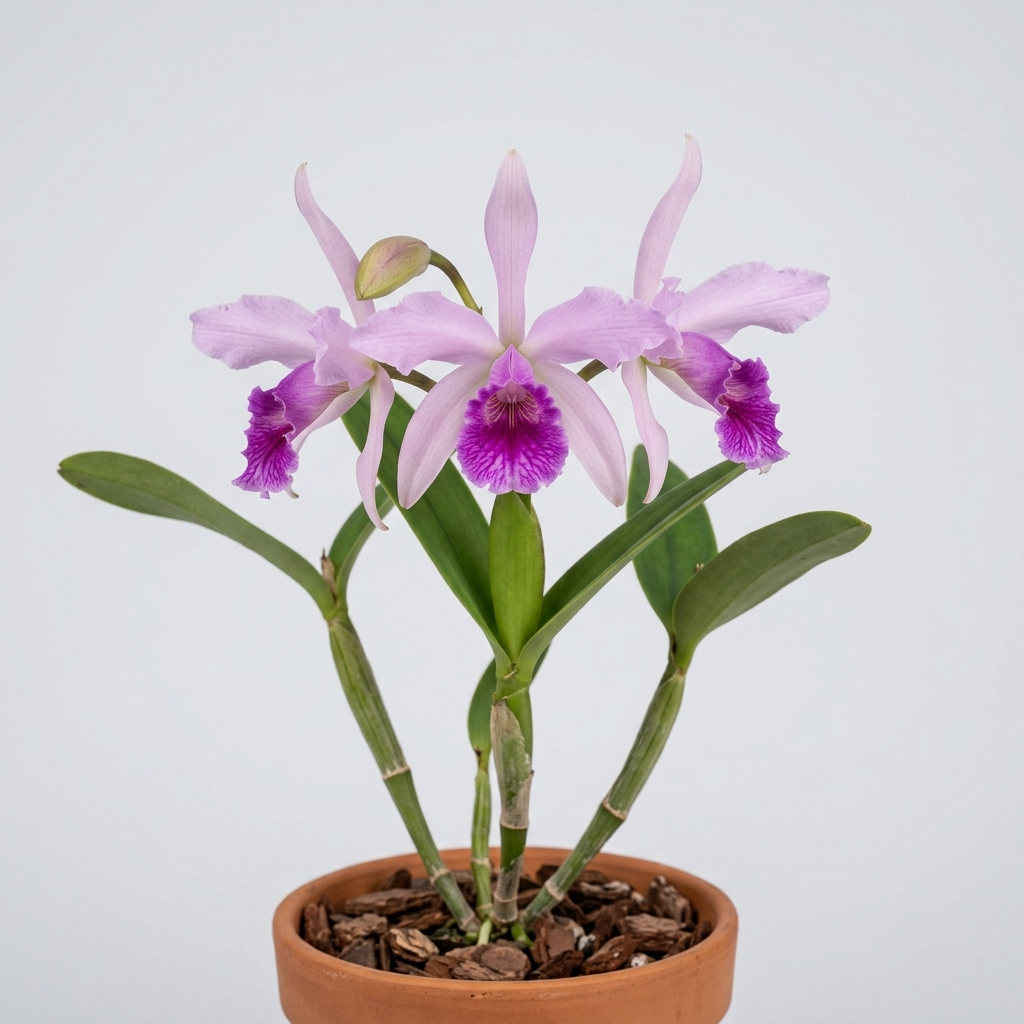
Cattleya Intermedia is a highly prized bifoliate orchid species native to Brazil, celebrated for its elegant growth habit and striking floral variations. Known for its slender pseudobulbs and resilient nature, this orchid has been a cornerstone of Cattleya breeding for generations, captivating both novice growers and seasoned collectors alike.
Cultivators value this orchid not only for its classic beauty but also for its adaptability to indoor and greenhouse environments. Its flowers, which range from soft lavender-pinks to pristine whites and peloric forms, present a spectacular display that epitomizes the charm of the genus, making it a staple in diverse orchid collections worldwide.
💡 Did You Know?
Cattleya Intermedia is famous for its peloric variety, Cattleya Intermedia var. aquinii. In this unique variation, the petals mimic the color and ruffled shape of the lip, creating a striking three-lipped appearance. This natural mutation was discovered in southern Brazil in the late nineteenth century and became the genetic foundation for almost all modern splashed-petal Cattleya hybrids grown today.
🌿 Botanical Overview
Cattleya Intermedia is a classic bifoliate orchid native to the coastal regions of southern and southeastern Brazil. In its natural habitat, it thrives as an epiphyte or occasional lithophyte, growing on trees and rocks where it is exposed to bright light and constant coastal breezes. The plant features slender, jointed pseudobulbs that typically produce two, and occasionally three, leathery, oblong leaves at the apex.
This growth habit makes it more compact and upright than many unifoliate Cattleya species, allowing growers to maximize space on benches or windowsills. The root system is robust and highly adapted to securing the plant to rough bark surfaces, absorbing moisture rapidly from morning mists and rain showers before drying out quickly in the afternoon breeze.
🌸 Flower Characteristics
The blossoms of Cattleya Intermedia are renowned for their delicate texture and balanced proportions. Individual flowers typically measure between three and five inches in diameter, emerging from a green sheath at the top of the mature pseudobulb. The sepals and petals are generally narrow and elegant, displaying shades of pale rose, lavender, or pure white, depending on the specific color form.
The defining feature of the flower is its tri-lobed lip, or labellum. The lateral lobes wrap neatly around the column, while the mid-lobe flares forward, often painted with a vivid, contrasting amethyst or magenta hue. Some cultivated varieties, such as the peloric aquinii form, display striking splashes of this rich color on the tips of the petals, mimicking the appearance of the lip.
Fragrance & Bloom Profile
This orchid produces a delightful, moderately strong fragrance that is often described as sweet, clean, and subtly spicy. The scent is most pronounced during the morning hours when temperatures begin to rise and light levels increase, filling the growing space with a pleasant floral aroma.
A single flower spike can carry anywhere from two to nine blossoms, depending on the maturity and vigor of the plant. The flowers are remarkably long-lasting for a Cattleya, often remaining fresh and vibrant for four to six weeks if kept in cool, stable conditions away from direct drafts.
Parentage & Hybrid Lineage
As a distinct species rather than a complex artificial hybrid, Cattleya Intermedia carries a pure genetic heritage that has made it invaluable to orchid hybridizers. It is the parent of numerous primary hybrids and has contributed its compact growth habit, multi-floral spike presentation, and unique color patterns to countless modern Cattleya grexes.
While its wild origins are well-documented along the Brazilian coast, many select cultivars in circulation today are the result of generations of line-breeding. Growers have selectively bred outstanding wild-collected clones to enhance flower size, substance, and color intensity, resulting in highly refined specimens that retain the species’ natural vigor.
🌱 Growing Conditions
To cultivate Cattleya Intermedia successfully, growers should aim to replicate its bright, airy coastal habitat. It thrives in bright, filtered light, requiring more light than Phalaenopsis but slightly less than some of the larger unifoliate Cattleyas. A location with strong morning sun and afternoon shade, such as an east- or shaded south-facing window, is ideal.
💡 Care Tip
Always prioritize air movement when growing this orchid. Because it originates from coastal regions with constant sea breezes, stagnant air is its greatest enemy. Running a small, oscillating fan near your growing area will help dry the foliage quickly after , prevent fungal pathogens from settling on the leaves, and encourage robust root development.
Temperature: wise, this orchid is highly adaptable, classified as an intermediate to warm grower. It prefers daytime temperatures between 75°F and 85°F, with a nightly drop to around 60°F to 65°F. Adequate air circulation is absolutely critical; stagnant air can quickly lead to fungal infections and rot, so a small fan should be kept running nearby.
Watering, Feeding & Potting Media
Watering should be frequent but must allow the roots to dry out rapidly. During the active growing season in spring and summer, water the plant thoroughly, then allow the potting medium to become nearly dry before watering again. In the winter rest period, reduce watering frequency significantly, providing just enough moisture to prevent the pseudobulbs from shriveling.
A coarse, free-draining potting mix is essential. Most growers prefer medium to large fir bark chips mixed with charcoal and perlite to ensure excellent drainage and aeration. Alternatively, because of its epiphytic nature, Cattleya Intermedia performs exceptionally well when mounted on cork bark or tree fern plaques, provided the grower can maintain high humidity and water the plant daily during hot weather. Feed with a balanced orchid fertilizer diluted to quarter-strength every second or third watering during active growth.
Blooming Season & Care Notes
The primary blooming season occurs in late spring and early summer, triggered by the completion of the new season’s pseudobulb growth. As the new growth matures, a sheath will form at the apex, from which the flower buds will eventually emerge. During this bud-development phase, avoid moving the plant or changing its orientation to the light source, as this can cause the buds to twist or fail to open properly.
Repotting should only be done when new root tips begin to emerge from the base of the newest pseudobulb, typically right after flowering or in early spring. Repotting at any other time can severely shock the plant and set back its growth for a season or more.
⚠️ Common Issues
⚠️ Common Mistake
A frequent mistake is repotting this orchid at the wrong time of year. Cattleya Intermedia is highly sensitive to root disturbance. If you repot when the plant is dormant or not actively producing new roots, the existing roots may die, and the orchid will struggle to absorb moisture, leading to severe dehydration and a long, difficult recovery period.
- Root rot caused by overwatering or compacted, decaying potting media that retains too much moisture.
- Bud blast, where developing buds turn yellow and drop, often triggered by sudden temperature fluctuations, low humidity, or drafts.
- Dehydration, indicated by shriveled pseudobulbs and wrinkled leaves, usually due to underwatering or a compromised root system.
- Scale insects and mealybugs, which tend to hide under the dry sheaths of the pseudobulbs and beneath the leaves.
- Leaf spotting or black rot, resulting from water sitting on the foliage overnight in cool, poorly ventilated conditions.
❓ Frequently Asked Questions
How often should I water Cattleya Intermedia?
Watering frequency depends on your growing environment and potting medium. Generally, water once or twice a week during the active spring and summer growing season, allowing the medium to dry out almost completely between waterings. In winter, reduce watering to once every ten to fourteen days, providing just enough moisture to keep the pseudobulbs plump.
Why are the pseudobulbs on my orchid shriveling?
Shriveled pseudobulbs indicate dehydration, which can be caused by two opposite issues: either the plant is not receiving enough water, or the roots have rotted due to overwatering, leaving the plant unable to absorb moisture. Check the root system; if the roots are brown and mushy, repot the plant in fresh media and adjust your watering schedule.
Can Cattleya Intermedia be grown under LED lights?
Yes, this orchid adapts well to indoor cultivation under high-output LED grow lights. Position the plant about twelve to eighteen inches below the light source, ensuring it receives twelve to fourteen hours of light daily. Monitor the leaves; they should be a light grassy green. Dark green leaves indicate insufficient light, while yellow or red-tinted leaves suggest the light is too intense.
What causes the flower buds to turn yellow and drop before opening?
This issue, known as bud blast, is typically caused by environmental stress. Sudden changes in temperature, low humidity, cold drafts, or chemical fumes can shock the developing buds. To prevent this, keep the orchid in a stable environment with consistent humidity and good air circulation once the flower sheath begins to swell.
⭐ Final Growing Notes
Cattleya Intermedia remains one of the most rewarding and resilient orchids for collectors of all experience levels. By providing bright, filtered light, excellent air movement, and a strict wet-to-dry watering cycle, growers can enjoy its elegant, long-lasting blossoms year after year. Its compact growth habit and historical significance make it a true masterpiece of the orchid world, offering a delightful combination of classic beauty and straightforward care.
⚕️ Health, Safety & Edibility
Understanding how a plant interacts with people, pets, and the surrounding environment is part of responsible cultivation. This section uses conservative, general guidance and does not replace professional medical or veterinary advice.
Human Safety: No published evidence currently identifies species-specific toxicity concerns for Cattleya Intermedia during normal handling. As with most ornamental plants, it should not be intentionally consumed.
Pet Safety: Published information does not indicate that this orchid commonly poses a toxicity concern for cats or dogs. However, chewing leaves, flowers, roots, or potting media may still cause mild digestive upset.
Edibility: This orchid is cultivated for ornamental display rather than food. Ornamental plants may carry fertilizers, pesticides, or other horticultural treatments that make them unsuitable for consumption.
Skin Contact: Routine handling is not generally associated with skin irritation. Gardeners with sensitive skin may prefer wearing gloves when repotting, pruning, or handling potting media.
🌱 Propagation Tip
Propagate this orchid by division only when the plant has outgrown its container and possesses at least six to eight healthy pseudobulbs. Carefully divide the rhizome using a sterile cutting tool, ensuring that each new division has at least three active pseudobulbs and a strong lead growth to support rapid recovery and future blooming.
⭐ Expert Advice
To achieve the most vibrant and robust growth, provide a distinct drop of about ten to fifteen degrees Fahrenheit between day and night. This diurnal fluctuation mimics its native Brazilian habitat, signaling the orchid to store energy efficiently, which ultimately leads to stronger flower spikes, larger blossoms, and more intense coloration on the lip.




Leave A Comment