
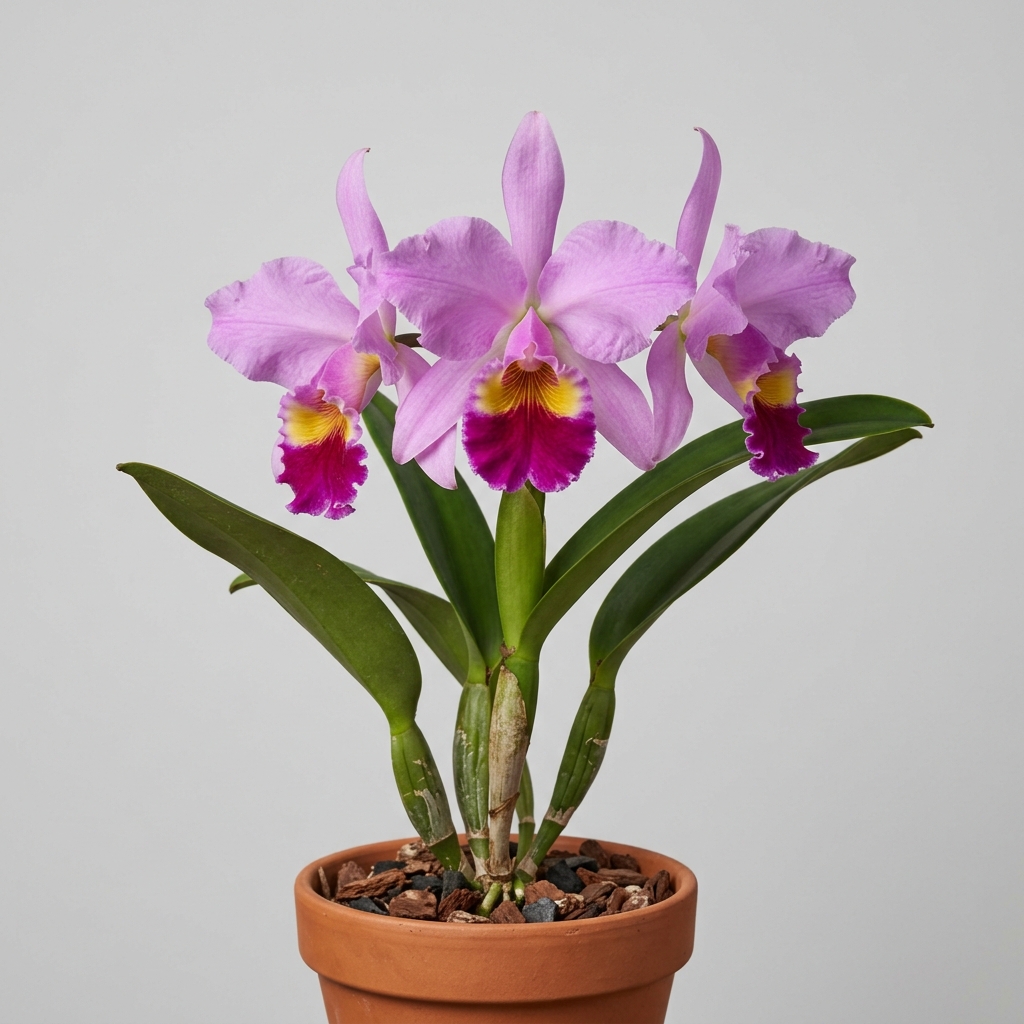
Cattleya Jenmanii is a highly prized unifoliate orchid species native to the mountainous regions of Venezuela and Guyana. Renowned for its compact growth habit and exceptionally fragrant blossoms, this orchid has earned a dedicated following among collectors who appreciate its classic Cattleya form and reliable blooming nature.
Cultivators value Cattleya Jenmanii for its manageable size and its ability to produce striking, medium-to-large flowers that fill growing spaces with a rich, sweet perfume. Whether grown in a dedicated greenhouse or on a bright windowsill, this resilient species offers a rewarding experience for both intermediate growers and seasoned orchid enthusiasts.
💡 Did You Know?
Cattleya Jenmanii was lost to cultivation for nearly a century after its initial discovery in the late 19th century. It was rediscovered in the wild in Venezuela during the mid-20th century, sparking a major revival of interest among orchid hybridizers and species collectors worldwide.
🌿 Botanical Overview
Cattleya Jenmanii is characterized by its clavate or club-shaped pseudobulbs, each topped with a single, leathery, dark green leaf. This unifoliate growth habit makes it more compact than many of its bifoliate relatives, allowing it to fit comfortably in smaller growing areas. The pseudobulbs act as water storage organs, helping the plant survive dry spells in its natural habitat.
In the wild, this species grows epiphytically on tree trunks and branches, or occasionally lithophytically on damp rocks. It is found at elevations ranging from 300 to 1,200 meters, where it experiences distinct seasonal variations in moisture and temperature. This natural adaptability translates well to home cultivation, provided its basic environmental needs are met.
🌸 Flower Characteristics
The flowers of Cattleya Jenmanii are typically 10 to 15 centimeters in diameter, presenting a classic, elegant silhouette. The petals and sepals are generally a soft lavender to rose-purple, though color forms ranging from pure white (alba) to blue-toned (coerulea) exist within cultivation. The prominent lip, or labellum, is a key feature, often displaying a deep purple or magenta mid-lobe complemented by a rich yellow throat with fine veining.
Blooms are produced from a green sheath at the apex of the matured pseudobulb. A single inflorescence can carry between two to seven flowers, which are well-spaced and presented elegantly above the foliage. The substance of the petals is moderately firm, allowing the blossoms to maintain their shape and beauty for several weeks.
Fragrance & Bloom Profile
One of the most compelling attributes of Cattleya Jenmanii is its intense, pleasing fragrance. The scent is commonly described as a sweet, floral perfume with subtle spicy undertones, which is most pronounced during the morning hours when temperatures begin to rise. This strong fragrance profile makes it a standout choice for growers who prioritize aromatic orchids.
The blooms typically last between three to four weeks under optimal conditions. To maximize the lifespan of the flowers, growers should keep the plant in a slightly cooler, draft-free location once the buds have fully opened, and avoid getting water directly on the petals.
Parentage & Hybrid Lineage
As a distinct species rather than a man-made hybrid, Cattleya Jenmanii carries a pure genetic lineage that has been utilized extensively in orchid breeding. It belongs to the labiata group of Cattleyas and shares many physical traits with closely related species such as Cattleya labiata and Cattleya gaskelliana.
In hybridizing programs, Cattleya Jenmanii is highly valued for imparting its compact growth habit, strong fragrance, and rich lip coloration to its progeny. While many registered hybrids trace their lineage back to this species, pure line breeding of select Cattleya Jenmanii clones remains highly popular to preserve and enhance its natural characteristics.
🌱 Growing Conditions
To thrive, Cattleya Jenmanii requires bright, filtered light. In a home environment, an east- or shaded south-facing window is ideal. The leaves should be a light, grassy green; dark green leaves indicate insufficient light, while yellowing or scorched patches suggest the light is too intense.
💡 Care Tip
To encourage robust blooming, ensure your Cattleya Jenmanii experiences a distinct drop of about 6 to 8 degrees Celsius between day and night, especially during the late summer and autumn months when the flower sheaths are maturing.
This orchid prefers intermediate to warm temperatures, ideally ranging from 18 to 29 degrees Celsius during the day, with a night-time drop of about 6 to 8 degrees to stimulate bud development. Maintain relative humidity levels between 50% and 70%, supported by good air movement to prevent stagnant air and fungal issues.
Watering, Feeding & Potting Media
Cattleya Jenmanii should be watered thoroughly and then allowed to dry out almost completely before the next watering. During active growth, watering frequency will need to be increased, whereas during the winter rest period, watering should be scaled back significantly.
A coarse, free-draining potting medium is essential to prevent root rot. Medium-grade fir bark mixed with perlite, charcoal, or horticultural pumice works exceptionally well. Feed the plant weekly with a balanced orchid fertilizer diluted to one-quarter strength during the active growing season, flushing the pot with pure water once a month to remove accumulated salts.
Blooming Season & Care Notes
The primary blooming season for Cattleya Jenmanii typically occurs in the autumn and early winter, though some clones may bloom a second time in the spring. As the new pseudobulb matures, a sheath will form at the base of the leaf, from which the flower buds will eventually emerge.
Once blooming is complete, the orchid enters a semi-dormant phase. This is the ideal time to reduce watering and halt fertilization. Repotting should only be performed when new root growth is visible at the base of the lead pseudobulb, usually in the spring, to minimize transplant shock.
⚠️ Common Issues
Like many epiphytic orchids, Cattleya Jenmanii is susceptible to specific cultural and pest issues if environmental conditions are suboptimal.
⚠️ Common Mistake
A common mistake is keeping the potting medium constantly wet. Unlike some other orchid genera, Cattleya roots must dry out rapidly between waterings; prolonged moisture leads to root rot and the eventual decline of the plant.
- Root Rot: Caused by overwatering or a decomposing, compacted potting medium that suffocates the roots.
- Bud Blast: Sudden dropping or yellowing of buds, often triggered by rapid temperature fluctuations, low humidity, or drafts.
- Scale and Mealybugs: Common pests that hide in the dry sheaths of pseudobulbs and under leaves; treat with horticultural oil or insecticidal soap.
- Leaf Scorch: Black or brown dry patches on leaves caused by direct, unfiltered midday sunlight.
❓ Frequently Asked Questions
How often should I water my Cattleya Jenmanii?
Water your Cattleya Jenmanii when the potting medium is nearly dry. This typically translates to once or twice a week during the warm growing season and once every ten to fourteen days during the cooler winter rest period. Always adjust watering based on your local humidity and temperature.
Why are the buds on my orchid turning yellow and falling off?
This issue, known as bud blast, is usually caused by environmental stress. Common culprits include sudden drops in temperature, dry indoor air, drafty locations, or underwatering while the buds are developing. Keep the plant in a stable environment once sheaths appear.
What is the best potting medium for this orchid?
A coarse, highly porous medium is best. A mix of medium-grade fir bark, charcoal, and perlite provides the rapid drainage and excellent root aeration that Cattleya Jenmanii requires to prevent root rot.
Can I grow Cattleya Jenmanii under artificial lights?
Yes, Cattleya Jenmanii can be grown successfully under high-output LED or T5 fluorescent grow lights. Ensure the lights are positioned close enough to provide bright, indirect light for 12 to 14 hours a day, keeping a close eye on leaf color to monitor light intensity.
⭐ Final Growing Notes
Cattleya Jenmanii remains a classic and highly rewarding species for any orchid collection. By mimicking its natural epiphytic habitat with bright light, distinct wet-to-dry watering cycles, and excellent air circulation, growers can enjoy its spectacular, fragrant blossoms year after year.
⚕️ Health, Safety & Edibility
Understanding how a plant interacts with people, pets, and the surrounding environment is part of responsible cultivation. This section uses conservative, general guidance and does not replace professional medical or veterinary advice.
Human Safety: No published evidence currently identifies species-specific toxicity concerns for Cattleya Jenmanii during normal handling. As with most ornamental plants, it should not be intentionally consumed.
Pet Safety: Published information does not indicate that this orchid commonly poses a toxicity concern for cats or dogs. However, chewing leaves, flowers, roots, or potting media may still cause mild digestive upset.
Edibility: This orchid is cultivated for ornamental display rather than food. Ornamental plants may carry fertilizers, pesticides, or other horticultural treatments that make them unsuitable for consumption.
Skin Contact: Routine handling is not generally associated with skin irritation. Gardeners with sensitive skin may prefer wearing gloves when repotting, pruning, or handling potting media.
🌱 Propagation Tip
Propagate Cattleya Jenmanii by division only when the plant has outgrown its pot and has at least six to eight healthy pseudobulbs. Ensure each new division has at least three active pseudobulbs and a healthy lead growth with active root tips.
⭐ Expert Advice
When repotting Cattleya Jenmanii, secure the plant firmly in the new container using an orchid pot clip. Any movement of the plant before new roots have anchored into the fresh bark can damage the delicate, growing root tips and stall growth.

Leave A Comment