
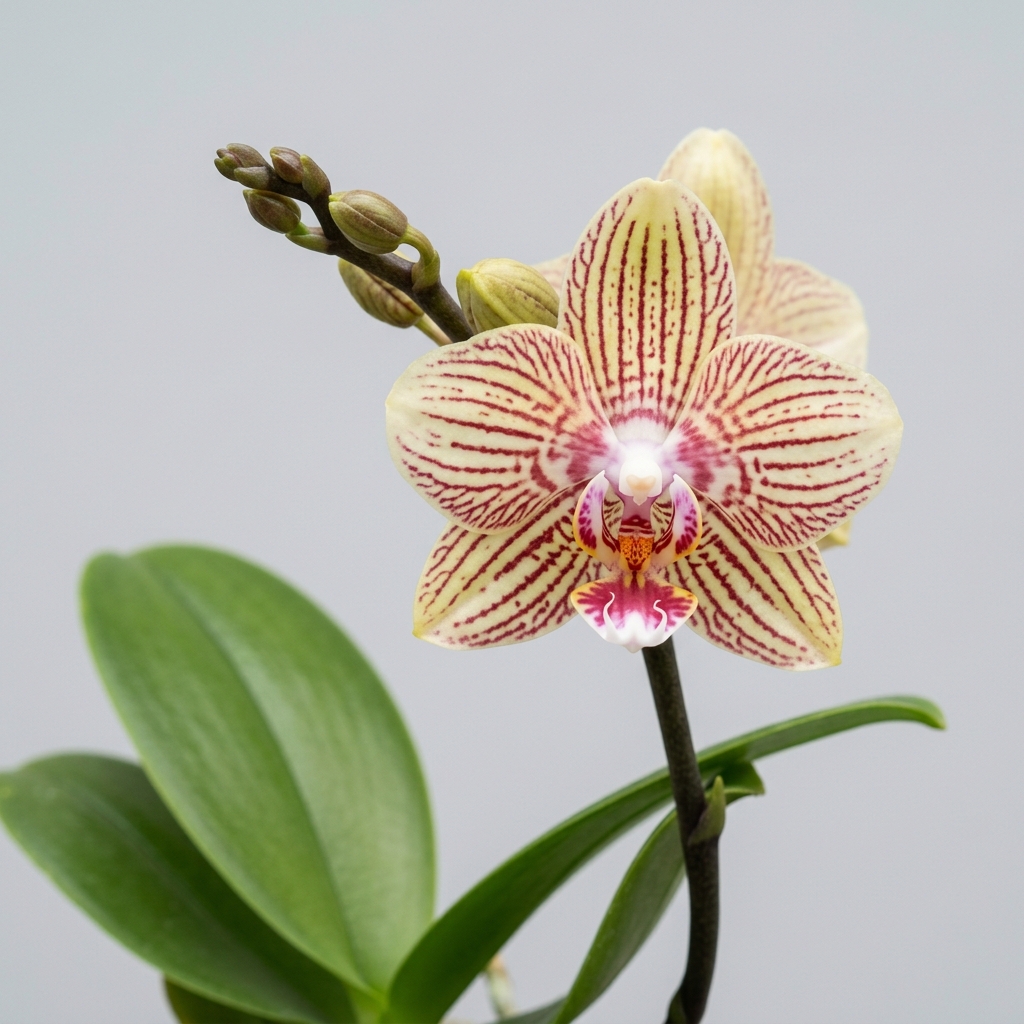
Phalaenopsis Zebrina is a highly sought-after orchid among collectors, celebrated for its striking, tiger-striped floral patterns and compact growth habit. Belonging to the popular moth orchid genus, this plant brings a wild, exotic aesthetic to indoor growing spaces without requiring the expansive greenhouse setups of larger tropical species. Its manageable size and visually arresting blossoms make it a standout addition to any dedicated orchid collection.
Growers particularly value this orchid for its potential to produce intensely fragrant, long-lasting flowers that emerge sequentially on relatively short spikes. While it demands slightly more attention to humidity and moisture consistency than mass-market hybrid moth orchids, its rewarding bloom cycle and unique botanical charm make the extra care well worth the effort for intermediate and advanced hobbyists alike.
💡 Did You Know?
The striking horizontal bars on the petals of Phalaenopsis Zebrina are not just for show; in their native tropical habitats, these bold patterns help attract specific forest pollinators. This sequential bloomer can keep a single flower spike active for months, producing one or two highly fragrant blossoms at a time rather than a single massive burst, ensuring a prolonged display.
🌿 Botanical Overview
Phalaenopsis Zebrina shows the classic monopodial growth habit characteristic of the genus, producing a single upright stem that slowly adds new leaves from the crown over time. The leaves are typically fleshy, obovate to elliptic, and display a rich, glossy green coloration that serves as an attractive backdrop to the vibrant flowers. In optimal conditions, the root system is robust, producing thick, silvery-green aerial roots covered in velamen to absorb moisture and nutrients from the air.
In its native-style environments, this orchid grows epiphytically, clinging to the branches of trees where it enjoys dappled light and excellent air circulation. Because it lacks pseudobulbs for water storage, the plant relies heavily on its thick leaves and moisture-retaining roots to survive dry spells, making consistent environmental conditions crucial for its long-term health and vigor in cultivation.
🌸 Flower Characteristics
The blossoms of Phalaenopsis Zebrina are the primary draw for enthusiasts, featuring a dramatic interplay of colors and patterns. The sepals and petals are typically creamy white to pale yellow, heavily marked with bold, horizontal bars of reddish-brown, mahogany, or deep purple, reminiscent of zebra stripes. The lip, or labellum, is often highly detailed, showcasing a contrasting bright white, yellow, or magenta hue with delicate trichomes or hairs near the center.
Flowers are generally moderate in size, typically measuring between two to three inches in diameter. They are presented on relatively short, arching or pendent inflorescences that emerge from the leaf axils. Rather than blooming all at once, the spikes often produce flowers sequentially, extending the overall display period and allowing growers to appreciate individual blooms up close over several weeks or even months.
Fragrance & Bloom Profile
One of the most appealing traits of Phalaenopsis Zebrina is its delightful fragrance, which is frequently described by growers as sweet, spicy, or citrus-like. This scent is typically most pronounced during the morning hours when temperatures begin to rise and light levels increase. The intensity of the fragrance can vary based on environmental factors such as humidity, temperature, and the overall vigor of the plant.
The blooms themselves are remarkably waxy and heavy-textured, which contributes to their impressive longevity. Individual flowers can remain pristine on the spike for several weeks. Because the inflorescences can remain green and active for multiple seasons, growers are advised not to cut them back after the initial blooms fade, as they can branch and produce additional flowers in later cycles.
Parentage & Hybrid Lineage
The exact taxonomic status and hybrid lineage of Phalaenopsis Zebrina are subject to ongoing discussion among orchid taxonomists and registration authorities. In some horticultural circles, it is treated as a distinct species closely allied with Phalaenopsis sumatrana, while in others, it may be classified as a specific variety, form, or selected cultivar within that complex. Due to these historical shifts in nomenclature, its precise parentage is not always consistently documented in standard commercial registries.
Regardless of its formal classification, the genetic traits of this orchid have been highly influential in breeding programs aimed at introducing bold patterning and fragrance to modern Phalaenopsis hybrids. When purchasing this plant, growers should look for reputable sources that document the specific clonal name or lineage to ensure they are acquiring the authentic, highly patterned form they desire.
🌱 Growing Conditions
To cultivate Phalaenopsis Zebrina successfully, replicating its natural canopy environment is key. It thrives in moderate, filtered light, similar to the conditions preferred by standard moth orchids. Direct afternoon sunlight must be avoided, as it can easily scorch the fleshy leaves, leading to permanent damage and susceptibility to disease. East-facing windows or shaded south-facing windows are often ideal, as is growing under professional LED setup systems.
💡 Care Tip
Place your orchid in a location with gentle, continuous air movement, such as near a low-speed fan. Good air circulation is vital for preventing fungal infections on the leaves and crown, especially in the high- environments this cultivar requires to thrive.
Temperature: wise, this orchid prefers warm to intermediate conditions, with daytime temperatures ranging between 75°F and 85°F, and a slight drop of 10°F at night to help stimulate blooming. High humidity is essential, ideally maintained between 60% and 80%. To prevent stagnant air from causing fungal or bacterial issues in these humid conditions, a small oscillating fan should be kept running nearby to ensure gentle, continuous air movement.
Watering, Feeding & Potting Media
Watering should be approached with care, keeping the potting medium evenly moist but never waterlogged. Because this orchid lacks water-storing pseudobulbs, it does not tolerate prolonged dry periods well. Water thoroughly when the top inch of the medium feels dry to the touch, using tepid, low-mineral water such as rainwater, reverse osmosis water, or distilled water to prevent mineral buildup on the sensitive roots.
A loose, well-draining potting mix is critical for root health. A blend of medium-grade New Zealand sphagnum moss and high-quality fir bark works exceptionally well, providing the necessary moisture retention while allowing plenty of oxygen to reach the roots. During the active growing season, feed the plant weakly weekly with a balanced, urea-free orchid fertilizer diluted to one-quarter strength, flushing the pot with pure water once a month to remove accumulated salts.
Blooming Season & Care Notes
Phalaenopsis Zebrina can bloom at various times throughout the year, though peak flowering often occurs in the spring and summer months in response to increasing day length and warmer temperatures. To encourage the development of flower spikes, ensure the plant experiences a slight, natural drop in nighttime temperatures during the autumn. Once a spike emerges, maintain stable environmental conditions, as sudden drafts or temperature fluctuations can cause the developing buds to blast.
After the blooming cycle is complete, leave the green flower spikes intact unless they turn yellow or brown and dry out naturally. Repotting should be performed every one to two years, ideally just after flowering has finished and new root growth is visible at the base of the plant. Choose a pot that is only slightly larger than the current root mass to prevent excess medium from holding too much moisture and causing root rot.
⚠️ Common Issues
⚠️ Common Mistake
Avoid this orchid late in the evening or allowing water to pool in the center crown. Standing water in the leaf axils overnight is a primary cause of crown rot, a rapid and often fatal bacterial disease that can quickly destroy the plant.
- Root Rot:
Caused by overwatering or compacted, decaying potting media that suffocates the roots. - Bud Blast:
The premature dropping or drying of flower buds, often triggered by sudden changes in temperature, low humidity, or drafts. - Spider Mites and Mealybugs: Common pests that hide in leaf axils or under leaves; treat promptly with insecticidal soap or horticultural oil.
- Bacterial Soft Rot: Appears as water-soaked spots on leaves, typically caused by water sitting in the crown overnight; ensure good airflow and water only in the morning.
- Leaf Scorch: Bleached or blackened patches on leaves resulting from exposure to direct, unfiltered sunlight.
❓ Frequently Asked Questions
How often should I water my Phalaenopsis Zebrina?
Watering frequency depends on your home’s humidity and temperature, but generally, you should water when the top inch of the potting medium feels dry. This typically translates to once or twice a week. Avoid letting the medium dry out completely, but never allow the pot to sit in standing water.
Why are the flower buds on my orchid falling off before opening?
This issue, known as bud blast, is usually caused by environmental stress. Common culprits include sudden drafts, rapid temperature drops, extremely low humidity, or moving the plant to a new location while the buds are developing. Maintaining a stable environment will help prevent this.
Can I grow Phalaenopsis Zebrina mounted on cork bark?
Yes, this orchid grows beautifully when mounted on cork bark or tree fern plaques, mimicking its natural epiphytic habit. However, mounted plants require very high humidity and must be misted or watered daily, sometimes multiple times a day, to prevent the roots from drying out excessively.
What should I do with the flower spike after the blooms fade?
Do not cut the flower spike off while it remains green. Phalaenopsis Zebrina often produces flowers sequentially or branches from old spikes to bloom again. Only cut the spike back to the base of the plant if it turns completely yellow, brown, and dry.
⭐ Final Growing Notes
Cultivating Phalaenopsis Zebrina offers a highly rewarding experience for orchid enthusiasts looking to expand their collection beyond standard hybrids. By providing consistent warmth, high humidity, gentle air circulation, and careful watering, you can enjoy the spectacular zebra-striped blooms and sweet fragrance of this exceptional orchid for many years to come.
⚕️ Health, Safety & Edibility
Understanding how a plant interacts with people, pets, and the surrounding environment is part of responsible cultivation. This section uses conservative, general guidance and does not replace professional medical or veterinary advice.
Human Safety: No published evidence currently identifies species-specific toxicity concerns for Phalaenopsis Zebrina during normal handling. As with most ornamental plants, it should not be intentionally consumed.
Pet Safety: Published information does not indicate that this orchid commonly poses a toxicity concern for cats or dogs. However, chewing leaves, flowers, roots, or potting media may still cause mild digestive upset.
Edibility: This orchid is cultivated for ornamental display rather than food. Ornamental plants may carry fertilizers, pesticides, or other horticultural treatments that make them unsuitable for consumption.
Skin Contact: Routine handling is not generally associated with skin irritation. Gardeners with sensitive skin may prefer wearing gloves when repotting, pruning, or handling potting media.
🌱 Propagation Tip
While this orchid is typically propagated through tissue culture in professional labs, mature plants may occasionally produce a keiki, or baby plant, on an old flower spike. Wait until the keiki has developed several healthy roots at least two inches long before carefully detaching and potting it.
⭐ Expert Advice
To maximize the of your blooms, ensure the plant receives bright, indirect morning and a slight rise in during the day. The essential oils responsible for the sweet, spicy scent are most active under these warm, bright morning conditions.

Leave A Comment