
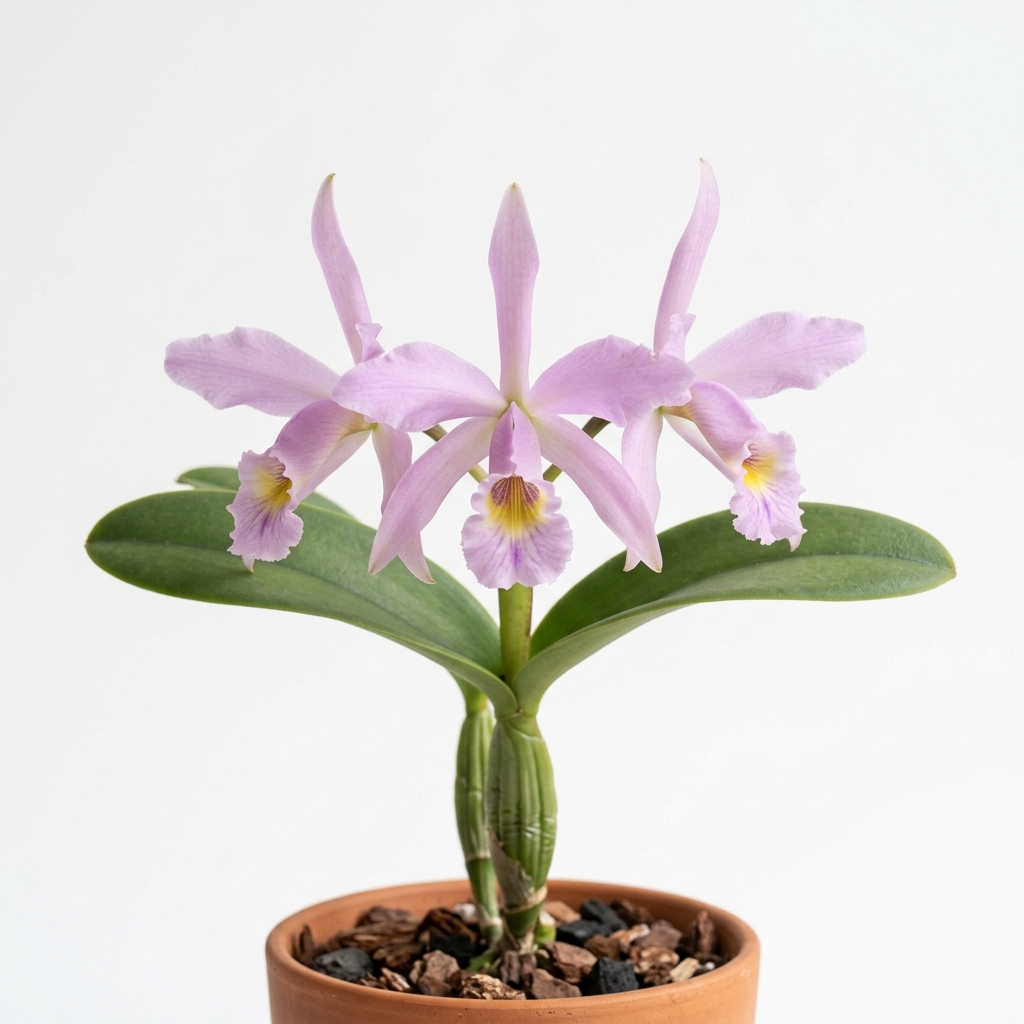
Cattleya Kerrii is a highly prized bifoliate orchid species native to the warm, humid regions of Brazil. Known for its compact growth habit and delicate pastel blooms, this orchid appeals to collectors who appreciate the understated elegance of wild Cattleya species. Its manageable size makes it an excellent candidate for indoor growers and greenhouse enthusiasts alike, offering a classic orchid aesthetic without requiring excessive space.
While less common in mass commercial cultivation than larger, showier hybrid Cattleyas, Cattleya Kerrii is celebrated for its resilience and charming floral presentation. Growers value this species for its ability to produce clusters of soft pink to lavender flowers that emerge from neat, dual-leaved pseudobulbs. Understanding its specific environmental preferences is key to successfully maintaining this tropical treasure over many blooming seasons.
💡 Did You Know?
Cattleya Kerrii is a bifoliate species, meaning it naturally produces two leaves per pseudobulb instead of the single leaf found on unifoliate Cattleyas. This structural adaptation helps the plant maximize photosynthesis and water storage in its native Brazilian habitats, making it highly resilient to occasional dry spells in home cultivation.
🌿 Botanical Overview
Cattleya Kerrii is a distinct bifoliate orchid, meaning each pseudobulb typically supports two leaves at its apex. The pseudobulbs are slender, cylindrical, and grow in a clustered, sympodial habit. The leaves are thick, leathery, and elliptic, designed to store moisture and withstand periods of lower humidity in its native Brazilian habitat.
In nature, this species grows epiphytically, clinging to tree trunks and branches where it receives excellent air circulation and dappled sunlight. This growth habit dictates its care requirements in cultivation, where mimicking its natural airflow and drainage patterns is essential for long-term health.
🌸 Flower Characteristics
The flowers of Cattleya Kerrii are characterized by their delicate, starry shape and soft coloration. The petals and sepals are typically a uniform pale pink or light lavender, creating a soft, luminous appearance. The lip, or labellum, is relatively small compared to larger Cattleya hybrids, often featuring a tubular shape with a yellow or cream-colored throat and subtle purple veining.
Blooms are produced in small clusters, usually carrying two to four flowers per inflorescence. The flower spike emerges from a sheath at the top of the mature pseudobulb, presenting the blossoms neatly above the foliage for an elegant display.
Fragrance & Bloom Profile
The fragrance of Cattleya Kerrii is not as intense or heavily documented as some of its larger relatives, such as Cattleya labiata. Many growers report a faint, sweet, or slightly floral scent that is most noticeable during the morning hours when temperatures begin to rise.
Each individual flower typically lasts between two to three weeks, depending on environmental conditions. To maximize the lifespan of the blooms, growers should keep the plant in a cooler, draft-free location once the buds have fully opened.
Parentage & Hybrid Lineage
Unlike many modern orchids found in nurseries, Cattleya Kerrii is a naturally occurring species rather than a man-made hybrid. It was formally described in the late 20th century, named in honor of the collector or botanist who brought it to scientific attention.
Because it is a true species, it does not have a hybrid parentage. However, it is occasionally used by hybridizers looking to introduce compact growth habits, bifoliate leaf structures, and soft pastel tones into new Cattleya crosses.
🌱 Growing Conditions
To thrive, Cattleya Kerrii requires bright, indirect light. An east- or shaded south-facing window is ideal, providing the necessary energy for blooming without scorching the foliage. The leaves should maintain a light green color; dark green leaves indicate insufficient light, while yellowing or red-tinted leaves suggest excess exposure.
💡 Care Tip
Ensure your Cattleya Kerrii receives strong air movement. Placing a small, gentle fan near your growing area prevents stagnant air, which significantly reduces the risk of fungal leaf spot and root rot in high- environments.
Temperature ranges should mimic its tropical origin, favoring warm daytime temperatures between 75°F and 85°F, with a slight drop at night to around 60°F to 65°F. Consistent air movement is vital to prevent stagnant air pockets, which can lead to fungal infections.
Watering, Feeding & Potting Media
Watering should be approached with a soak and dry strategy. The potting medium must be allowed to dry out almost completely between waterings, as the roots are highly susceptible to rot if kept constantly wet. During the active growing season in spring and summer, water more frequently, reducing the frequency during the cooler winter rest period.
A coarse, fast-draining potting mix is essential. A blend of medium to large fir bark, horticultural charcoal, and perlite works exceptionally well. Feed the plant weekly with a diluted, balanced orchid fertilizer during active growth, flushing the pot with pure water once a month to prevent salt buildup.
Blooming Season & Care Notes
Cattleya Kerrii typically initiates its blooming cycle in mid to late summer, though variations can occur based on local growing climates. As the new pseudobulb matures, a green sheath will develop at the base of the leaves. It is crucial to monitor this sheath; if water becomes trapped inside, it can cause the emerging buds to rot.
After flowering concludes, the orchid enters a semi-dormant phase. Reduce watering and halt fertilization until new root tips and vegetative shoots begin to emerge in the spring. Repotting should only be done when new root growth is visible, typically every two to three years.
⚠️ Common Issues
⚠️ Common Mistake
A frequent error is the orchid on a strict calendar schedule. Environmental factors like and fluctuate, so always assess the moisture level of the potting medium manually before to prevent root suffocation and decay.
- Root Rot:
Caused by overwatering or compacted, decaying potting media that retains too much moisture. - Bud Blast:
Sudden drops in humidity, extreme temperature fluctuations, or drafts can cause developing buds to yellow and drop before opening. - Scale and Mealybugs: These common pests hide in the crevices of the pseudobulbs and under the papery sheaths; treat promptly with insecticidal soap or neem oil.
- Leaf Scorching: Direct, unfiltered midday sun can cause dry, brown, or black patches on the leaves.
❓ Frequently Asked Questions
How often should I water my Cattleya Kerrii?
Watering frequency depends on your home’s humidity and temperature, but generally, Cattleya Kerrii should be watered once every 7 to 10 days. Always check the potting medium first; the top few inches should be completely dry, and the pot should feel light before you apply water again.
Can Cattleya Kerrii be grown mounted on wood?
Yes, because of its epiphytic nature, Cattleya Kerrii thrives when mounted on cork bark or tree fern plaques. Mounted plants require daily watering or high-humidity greenhouse conditions, as their roots will dry out much faster than those grown in pots.
Why is my Cattleya Kerrii not blooming?
The most common reason for a lack of blooms is insufficient light. If the leaves are a deep, dark green, move the orchid to a brighter location with filtered sunlight. Additionally, ensure the plant experiences a slight temperature drop at night, which helps trigger bud initiation.
When is the best time to repot this orchid?
The ideal time to repot Cattleya Kerrii is in the spring, just as new green root tips begin to emerge from the base of the newest pseudobulb. Repotting at this stage allows the orchid to establish itself quickly in the fresh medium with minimal transplant shock.
⭐ Final Growing Notes
Cattleya Kerrii is a rewarding species that brings a touch of wild Brazilian beauty to any orchid collection. By providing bright, filtered light, excellent drainage, and a distinct wet-to-dry watering cycle, growers can enjoy its delicate pastel blooms year after year. Its compact size and resilient nature make it an exceptional choice for both intermediate growers and dedicated collectors seeking a classic bifoliate species.
⚕️ Health, Safety & Edibility
Understanding how a plant interacts with people, pets, and the surrounding environment is part of responsible cultivation. This section uses conservative, general guidance and does not replace professional medical or veterinary advice.
Human Safety: No published evidence currently identifies species-specific toxicity concerns for Cattleya Kerrii during normal handling. As with most ornamental plants, it should not be intentionally consumed.
Pet Safety: Published information does not indicate that this orchid commonly poses a toxicity concern for cats or dogs. However, chewing leaves, flowers, roots, or potting media may still cause mild digestive upset.
Edibility: This orchid is cultivated for ornamental display rather than food. Ornamental plants may carry fertilizers, pesticides, or other horticultural treatments that make them unsuitable for consumption.
Skin Contact: Routine handling is not generally associated with skin irritation. Gardeners with sensitive skin may prefer wearing gloves when repotting, pruning, or handling potting media.
🌱 Propagation Tip
Propagate Cattleya Kerrii by division only when the plant has outgrown its pot and has at least six healthy pseudobulbs. Carefully divide the rhizome, ensuring each new division retains at least three mature pseudobulbs and active root leads to guarantee survival.
⭐ Expert Advice
To encourage robust blooming, provide a distinct 10-to-15-degree drop between day and night during the autumn and winter months. This natural differential mimics its native habitat and is a key trigger for healthy sheath and bud development.

Leave A Comment