
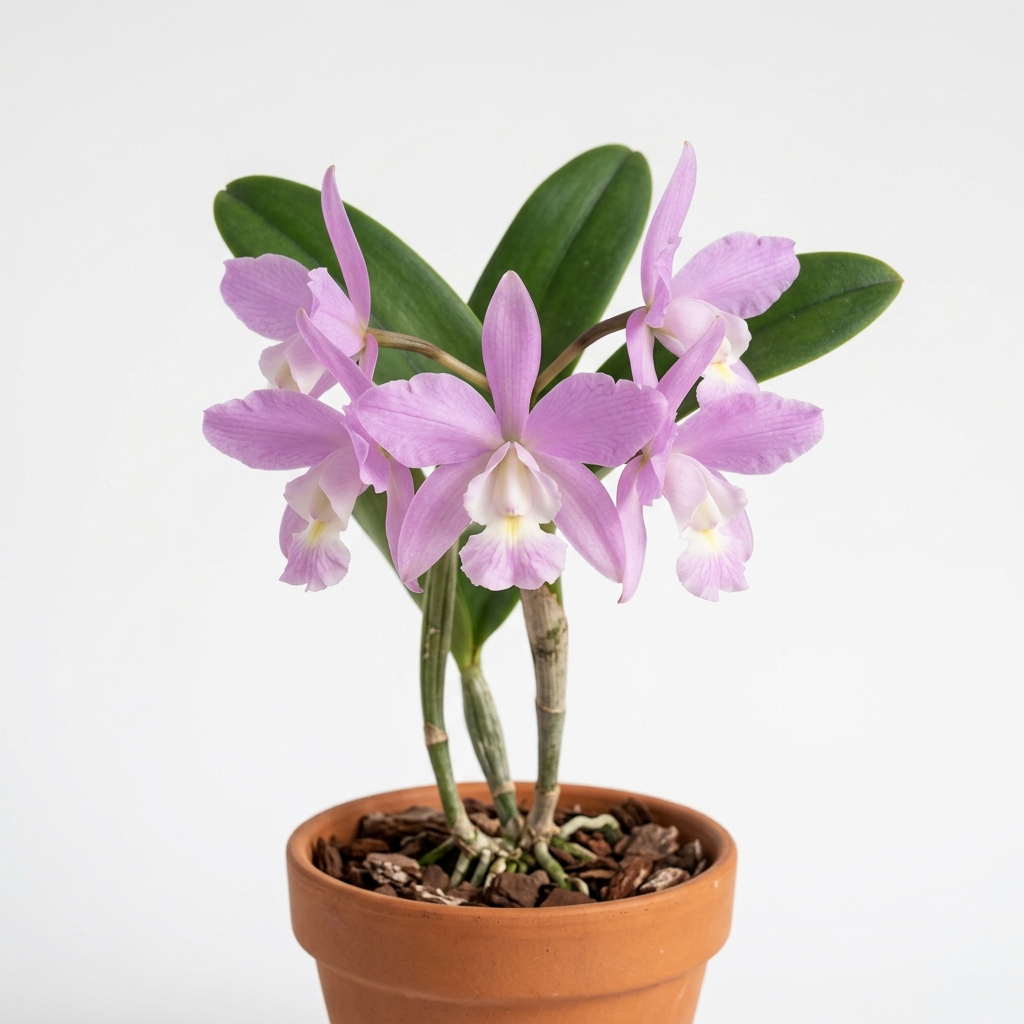
Cattleya Loddigesii is a highly esteemed bifoliate orchid species native to southeastern Brazil, celebrated for its elegant growth habit and pastel-toned blossoms. This orchid is a cornerstone of classical collections, prized for its resilience and its ability to produce clusters of long-lasting, waxy flowers that gracefully arch above its dual-leaved pseudobulbs.
Cultivators value this species not only for its historical significance in orchid hybridization but also for its adaptable nature under intermediate growing conditions. Whether grown in a dedicated greenhouse or on a bright windowsill, it rewards proper care with a reliable annual display of soft lavender-pink blooms that bring a refined tropical aesthetic to any indoor space.
💡 Did You Know?
Cattleya Loddigesii was one of the very first Cattleya species to be imported and successfully cultivated in Europe during the early nineteenth century. Its exceptional durability during long sea voyages helped spark the historic Victorian orchid-mania craze, establishing it as a foundational species in early orchid hybridization.
🌿 Botanical Overview
Cattleya Loddigesii is a medium-sized epiphytic or lithophytic orchid native to the cool, moist forests of Brazil. It is characterized by its slender, cylindrical pseudobulbs that typically bear two (and occasionally three) thick, leathery leaves at the apex, classifying it as a classic bifoliate Cattleya. This growth habit allows the plant to store water and nutrients efficiently, helping it survive seasonal dry spells in its native habitat.
In the wild, these orchids are often found growing on trees or rocky outcroppings where they receive excellent air circulation and dappled sunlight. The root system is robust and opportunistic, clinging tightly to substrates to absorb moisture from morning mists and rain showers. Understanding this natural growth habit is key to successfully cultivating the species in home or greenhouse environments.
🌸 Flower Characteristics
The flowers of Cattleya Loddigesii are renowned for their heavy, waxy substance and symmetrical form, which contribute to their exceptional longevity. Individual blooms typically range from three to over four inches in diameter, presented in clusters of two to nine flowers on a terminal inflorescence. The petals and sepals are generally a uniform shade of soft lilac-pink or lavender, though color intensity can vary depending on the specific clone or cultivar.
The lip, or labellum, is a defining feature of the bloom, featuring lateral lobes that wrap neatly around the column. The midlobe of the lip is often lighter in color, frequently displaying a pale cream or white base highlighted by a soft yellow disc in the throat. This contrasting throat coloration serves as a visual guide for pollinators and adds a delicate depth to the overall floral presentation.
Fragrance & Bloom Profile
This orchid is widely appreciated for its pleasant, moderate fragrance, which is typically described as sweet, floral, and slightly spicy. The scent is most pronounced during the morning hours when light and temperature levels begin to rise, gently filling the growing area without becoming overwhelming.
The blooms are remarkably durable, often remaining fresh and vibrant for four to six weeks under optimal conditions. Because the flowers possess a thick, waxy texture, they resist environmental stressors better than many thin-petaled orchid species, making them excellent subjects for exhibition and home display alike.
Parentage & Hybrid Lineage
As a true species rather than a man-made hybrid, Cattleya Loddigesii holds a distinguished place in orchid history. It was one of the earliest Cattleyas introduced to European cultivation in the early nineteenth century. While its exact natural variations and regional forms are subject to ongoing botanical study, it is universally recognized as a distinct and stable species within the genus.
In hybridizing, Cattleya Loddigesii has been extensively utilized to impart cold tolerance, compact growth habits, and flower substance to modern Cattleya hybrids. Its genetic legacy is present in thousands of registered grexes, where it consistently contributes its reliable blooming habit and soft, pastel color palette to its offspring.
🌱 Growing Conditions
To thrive, Cattleya Loddigesii requires bright, filtered light, similar to the dappled sunlight of its native canopy. A south or east-facing window with a sheer curtain is often ideal for indoor growers. The leaves should maintain a light, grassy-green color; dark green leaves indicate insufficient light, while yellowing or reddish-purple tinting suggests the light is too intense.
💡 Care Tip
To encourage robust blooming, ensure your orchid experiences a distinct drop of about 10 to 15 degrees Fahrenheit between day and night. This natural fluctuation mimics its native Brazilian habitat and is essential for triggering the development of healthy flower buds.
Temperature ranges should mimic intermediate to warm climates, with daytime temperatures between 75°F and 85°F (24°C to 29°C) and a nighttime drop to around 60°F to 65°F (15°C to 18°C). This diurnal temperature fluctuation is crucial for triggering healthy growth and later flower bud development. High humidity, ideally between 50% and 70%, combined with constant, gentle air movement, will prevent stagnant air pockets and minimize the risk of fungal infections.
Watering, Feeding & Potting Media
Watering should be approached with a soak and dry strategy. During the active growing season in spring and summer, water the plant thoroughly, then allow the potting medium to dry out almost completely before watering again. In the winter, when growth slows, reduce watering frequency significantly, providing just enough moisture to prevent the pseudobulbs from shriveling excessively.
A well-draining, coarse potting medium is essential to prevent root rot. A mixture of medium to large fir bark, horticultural charcoal, and perlite works exceptionally well in clay or plastic pots. Alternatively, this species can be mounted on cork bark or tree fern plaques if high humidity can be consistently maintained. Feed the orchid weekly with a balanced, water-soluble orchid fertilizer diluted to one-quarter or one-half strength during active growth, flushing the pot with pure water once a month to remove accumulated salts.
Blooming Season & Care Notes
Cattleya Loddigesii typically initiates its blooming cycle in late summer or early autumn, though variations in local climate and indoor conditions can shift this timing. The flower buds develop within a green sheath at the apex of the mature pseudobulb. During this development phase, avoid moving the plant or changing its orientation to the light source, as this can cause the buds to twist or fail to open properly.
Once the blooming cycle is complete, cut the spent flower spike back to the base of the sheath using sterilized cutting tools. Repotting should only be performed when new root tips begin to emerge from the base of the newest pseudobulb, which typically occurs shortly after flowering or in early spring. This timing ensures the plant establishes quickly in its new medium with minimal transplant shock.
⚠️ Common Issues
⚠️ Common Mistake
A frequent error is repotting this orchid at the wrong time of year. Avoid repotting during active flowering or deep winter dormancy. Instead, wait until you see fresh, green root tips emerging from the base of the newest pseudobulb, which allows the plant to establish quickly with minimal shock.
- Root Rot:
Caused by overwatering or a decomposing, compacted potting medium that suffocates the roots. - Bud Blast:
The premature dropping or drying of flower buds, often triggered by sudden temperature swings, low humidity, or drafts. - Scale and Mealybugs: Common pests that hide under the dry sheaths of the pseudobulbs or on the undersides of leaves.
- Pseudobulb Shriveling: Indicates severe dehydration, either from underwatering or from root loss due to overwatering.
- Leaf Spotting: Fungal or bacterial spots arising from water sitting on the foliage in cool, stagnant air.
❓ Frequently Asked Questions
How often should I water my Cattleya Loddigesii?
Watering frequency depends on your environmental conditions, but generally, you should water once or twice a week during the active summer growing season. Always allow the potting medium to dry out almost completely between waterings, and reduce this frequency during the cooler winter dormancy period.
Why are the flower buds on my orchid turning yellow and falling off?
This issue, known as bud blast, is typically caused by environmental stress. Common culprits include sudden drops in temperature, low humidity, exposure to cold drafts, or moving the plant to a different location while the buds are actively developing inside the sheath.
Can I grow Cattleya Loddigesii mounted on cork bark?
Yes, this species responds very well to being mounted on cork bark or tree fern plaques. However, mounted orchids dry out much faster than potted ones, so you will need to mist or water the plant daily, especially in dry indoor environments or during hot summer months.
What is the best light level for this orchid?
Cattleya Loddigesii thrives in bright, indirect light. Aim for filtered sunlight, such as that from an east-facing window or a shaded south-facing window. The leaves should be a healthy light green; dark green leaves suggest the plant needs more light to bloom successfully.
⭐ Final Growing Notes
Cattleya Loddigesii remains a timeless favorite among orchid enthusiasts for its classic beauty, reliable blooming habit, and forgiving nature. By providing bright, filtered light, maintaining a distinct wet-to-dry watering cycle, and ensuring excellent air circulation, growers of all experience levels can enjoy the elegant, lavender-pink blossoms of this historic Brazilian species for years to come.
⚕️ Health, Safety & Edibility
Understanding how a plant interacts with people, pets, and the surrounding environment is part of responsible cultivation. This section uses conservative, general guidance and does not replace professional medical or veterinary advice.
Human Safety: No published evidence currently identifies species-specific toxicity concerns for Cattleya Loddigesii during normal handling. As with most ornamental plants, it should not be intentionally consumed.
Pet Safety: Published information does not indicate that this orchid commonly poses a toxicity concern for cats or dogs. However, chewing leaves, flowers, roots, or potting media may still cause mild digestive upset.
Edibility: This orchid is cultivated for ornamental display rather than food. Ornamental plants may carry fertilizers, pesticides, or other horticultural treatments that make them unsuitable for consumption.
Skin Contact: Routine handling is not generally associated with skin irritation. Gardeners with sensitive skin may prefer wearing gloves when repotting, pruning, or handling potting media.
🌱 Propagation Tip
Propagate Cattleya Loddigesii by division only when the plant has outgrown its container and possesses at least six to eight mature pseudobulbs. Carefully divide the rhizome using a sterile blade, ensuring each new division has at least three healthy pseudobulbs and active root growth.
⭐ Expert Advice
If you struggle to get your Cattleya Loddigesii to bloom, gradually increase its exposure. Many growers keep this species in too much shade, resulting in lush, dark green leaves but no flowers. Aim for a bright, grassy-green leaf color to ensure it receives enough energy to produce its signature floral display.

Leave A Comment