

Cattleya Luteola is a highly esteemed miniature orchid species native to the tropical rainforests of South America, particularly within the Amazon basin. Renowned for its compact growth habit and charming, star-shaped blossoms, this diminutive epiphyte is a favorite among space-conscious collectors and indoor growers alike. Unlike its larger, more flamboyant relatives in the genus, this species offers a refined, understated elegance that fits perfectly on windowsills or in small terrariums.
Growers value this orchid not only for its manageable size but also for its relative resilience and frequent blooming potential. The plant typically produces clusters of soft yellow to greenish-yellow flowers that stand out beautifully against its deep green, leathery foliage. Understanding its specific cultural requirements is the key to successfully maintaining this delightful miniature and encouraging regular, healthy blooming cycles.
💡 Did You Know?
Cattleya Luteola is one of the smallest species in the entire Cattleya , rarely exceeding five inches in total height. Despite its tiny stature, it has played a monumental role in orchid breeding, serving as a primary parent for hundreds of compact, yellow-flowered hybrids prized by collectors worldwide.
🌿 Botanical Overview
Cattleya Luteola is historically recognized as one of the smallest species within the Cattleya genus. Originating from the humid, lowland forests of Brazil, Peru, Ecuador, and Bolivia, it naturally grows as an epiphyte on tree trunks and branches. Its native habitat experiences high humidity, consistent warmth, and dappled sunlight filtering through the dense forest canopy.
The plant features short, clustered pseudobulbs that rarely exceed a few inches in height. Each pseudobulb is topped by a single, rigid, oblong leaf that is leathery to the touch. This compact growth habit allows the orchid to conserve moisture and nutrients efficiently, making it highly adaptable to mounted culture or small pots.
🌸 Flower Characteristics
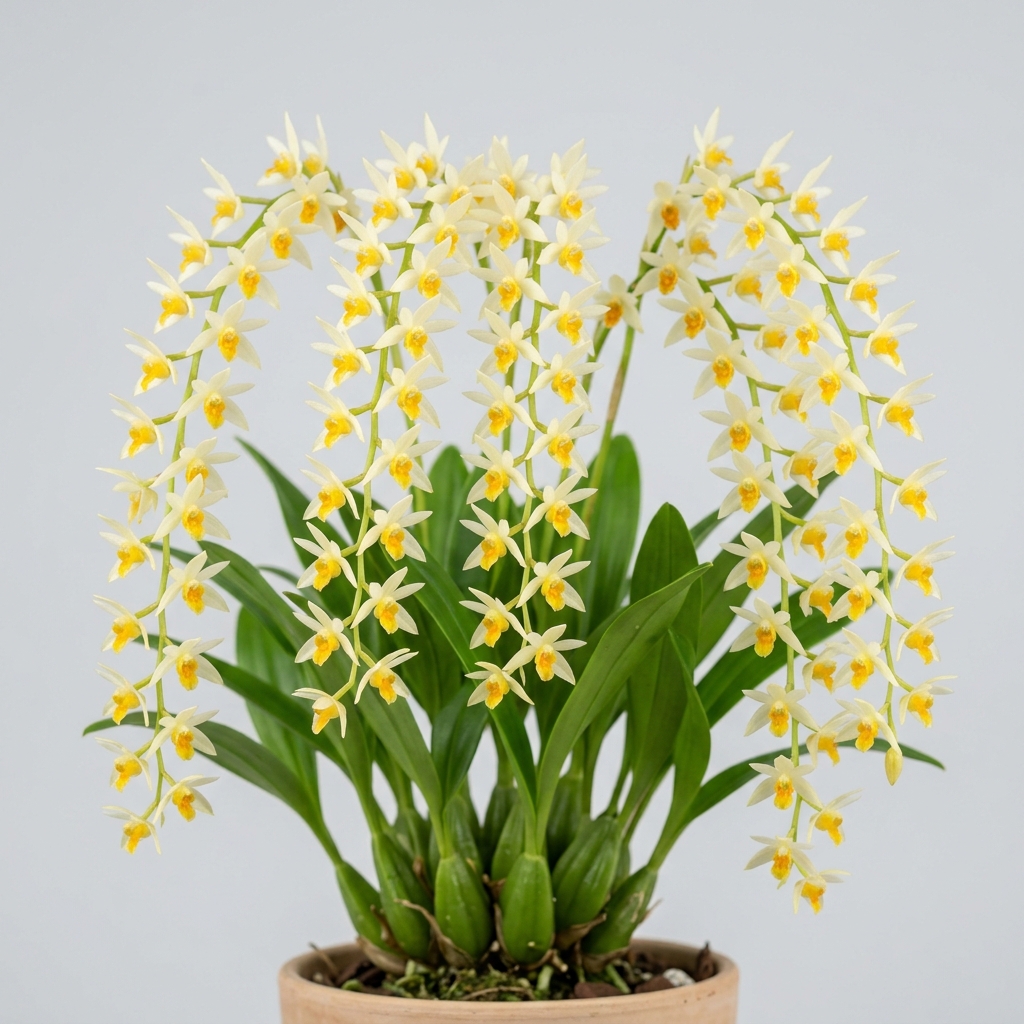
The blossoms of Cattleya Luteola are small but striking, typically measuring between one and two inches in diameter. The petals and sepals are relatively narrow and present a uniform shade of pale yellow, lemon yellow, or soft greenish-yellow. This monochromatic display is beautifully contrasted by the tubular lip, or labellum, which often features delicate white margins and faint purple, red, or yellow veining near the throat.
Flowers are produced on short, terminal inflorescences that emerge from the apex of mature pseudobulbs. A single spike can carry anywhere from two to six flowers, which are presented in a loose, elegant cluster just above the foliage. The overall effect is a delicate, star-like display that highlights the species' minimalist charm.
Fragrance & Bloom Profile
The fragrance of Cattleya Luteola is generally described as subtle and pleasant, often carrying light citrusy or sweet floral notes. However, scent production can be highly variable and is often dependent on environmental factors such as temperature, humidity, and the time of day. Many growers report that the fragrance is most noticeable during the mid-morning hours when temperatures begin to rise.
Individual blooms are relatively long-lasting for a miniature Cattleya, often remaining fresh for three to four weeks under ideal conditions. Because the plant can produce new growths throughout the year, well-established specimens have been known to bloom multiple times annually, providing sporadic bursts of color outside of their primary flowering season.
Parentage & Hybrid Lineage
As a distinct, naturally occurring species rather than a man-made hybrid, Cattleya Luteola possesses a pure genetic lineage. It has been widely utilized by orchid hybridizers for generations due to its compact size and yellow coloration. Breeders frequently use it to introduce miniature growth habits and yellow tones into complex Cattleya hybrids, often resulting in compact, multi-floral offspring.
While its historical role in hybridizing is well-documented, individual specimens purchased today are typically line-bred selections aimed at improving flower form and color saturation. When purchasing this orchid, growers should look for reputable nursery documentation to ensure they are acquiring a true species specimen rather than a complex hybrid lookalike.
🌱 Growing Conditions
To thrive, Cattleya Luteola requires conditions that mimic its native tropical rainforest environment. It prefers bright, filtered light, similar to what is found under a dappled forest canopy. East-facing windows or shaded south-facing windows are ideal. If the leaves turn a dark, dull green, the plant may need more light; conversely, yellowing or scorched leaves indicate excessive direct sunlight.
💡 Care Tip
To keep your Cattleya Luteola thriving, prioritize air movement. A small, gentle fan running nearby prevents moisture from pooling on the leaves and pseudobulbs, significantly reducing the risk of fungal infections in high- environments.
Temperature management is crucial for this species. It performs best in intermediate to warm conditions, with daytime temperatures ranging from 75°F to 85°F and a slight drop at night to around 60°F to 65°F. Maintaining moderate to high humidity levels between 50% and 70% is highly beneficial, especially when paired with continuous, gentle airflow to prevent stagnant air and fungal issues.
Watering, Feeding & Potting Media
Proper watering is essential for preventing root rot while keeping the pseudobulbs plump. Cattleya Luteola should be watered thoroughly, allowing the excess to drain away completely. The potting medium must be allowed to dry out slightly, but not completely bone-dry, between waterings. During the active growing season in spring and summer, watering frequency should be increased, while a slight reduction is appropriate during the cooler winter months.
A well-draining potting mix is vital. Coarse fir bark blended with perlite and charcoal works exceptionally well in pots. Alternatively, because of its miniature size and epiphytic nature, this species is an excellent candidate for mounting on cork slabs or tree fern plaques, provided the grower can maintain adequate daily humidity. Feed the plant with a balanced, diluted orchid fertilizer every two to three weeks during active growth, flushing the medium with pure water periodically to prevent salt buildup.
Blooming Season & Care Notes
While the primary blooming season for Cattleya Luteola typically occurs in the autumn and winter, healthy plants can bloom at almost any time of the year when new pseudobulbs mature. To encourage robust blooming, ensure the orchid receives a distinct but subtle temperature drop at night during the late summer. This temperature differential helps trigger the development of flower buds within the emerging sheaths.
Once the flowers fade, the spent flower spike should be carefully trimmed back near the base of the leaf sheath using sterilized cutting tools. Repotting should only be performed when the potting medium begins to break down or when the plant has outgrown its container, ideally just as new root growth is emerging from the base of the newest pseudobulbs.
⚠️ Common Issues
Like many miniature orchids, Cattleya Luteola can encounter a few common cultivation challenges. Monitoring the plant regularly helps catch these issues before they cause significant damage:
⚠️ Common Mistake
A frequent mistake is keeping the potting medium constantly wet. Unlike some moisture-loving orchids, Cattleya Luteola roots require a distinct wet-to-dry cycle; keeping them continuously soggy will quickly lead to root rot and plant decline.
- Root Rot:
Caused by overwatering or a decomposing potting medium that retains too much moisture. Always ensure excellent drainage. - Dehydration:
Indicated by shriveled pseudobulbs and wrinkled leaves, usually due to underwatering or a compromised root system. - Pests:
Mealybugs and scale insects can occasionally hide in the crevices of the pseudobulbs or under the leaf sheaths. Treat promptly with insecticidal soap or neem oil. - Fungal Spotting: Occurs when humidity is high but air circulation is poor. Ensure adequate fan movement around the growing area.
❓ Frequently Asked Questions
Can Cattleya Luteola be grown under LED grow lights?
Yes, Cattleya Luteola adapts exceptionally well to indoor cultivation under LED grow lights. Position the plant at a distance where it receives bright, indirect light for 12 to 14 hours a day, ensuring the lights do not emit excess heat that could scorch the delicate foliage.
Why are the pseudobulbs on my orchid shriveling?
Shriveled pseudobulbs usually indicate a lack of moisture. This can be caused by simple underwatering or, conversely, by overwatering which has rotted the roots, leaving the plant unable to absorb water. Check the root health before adjusting your watering schedule.
How often should I repot Cattleya Luteola?
Typically, this miniature orchid should be repotted every two to three years. The best time to repot is during the spring, specifically when you observe new root tips beginning to emerge from the base of the active pseudobulbs.
Is Cattleya Luteola suitable for beginners?
Yes, it is generally considered one of the easier miniature Cattleya species to grow. Its tolerance for average household temperatures and compact size make it an excellent choice for beginners looking to transition from hybrid orchids to true species.
⭐ Final Growing Notes
Cattleya Luteola remains a jewel of the orchid world, offering a perfect balance of compact size, elegant yellow blooms, and straightforward care requirements. Whether mounted on a rustic cork slab or nestled in a small pot on a bright windowsill, this charming species rewards the attentive grower with delightful displays of star-like flowers. By maintaining consistent humidity, bright indirect light, and allowing the roots to breathe, you can enjoy the timeless beauty of this Amazonian miniature for many years to come.
⚕️ Health, Safety & Edibility
Understanding how a plant interacts with people, pets, and the surrounding environment is part of responsible cultivation. This section uses conservative, general guidance and does not replace professional medical or veterinary advice.
Human Safety: No published evidence currently identifies species-specific toxicity concerns for Cattleya Luteola during normal handling. As with most ornamental plants, it should not be intentionally consumed.
Pet Safety: Published information does not indicate that this orchid commonly poses a toxicity concern for cats or dogs. However, chewing leaves, flowers, roots, or potting media may still cause mild digestive upset.
Edibility: This orchid is cultivated for ornamental display rather than food. Ornamental plants may carry fertilizers, pesticides, or other horticultural treatments that make them unsuitable for consumption.
Skin Contact: Routine handling is not generally associated with skin irritation. Gardeners with sensitive skin may prefer wearing gloves when repotting, pruning, or handling potting media.
🌱 Propagation Tip
This orchid is best propagated by division during repotting. Ensure that each division contains at least three to four healthy, mature pseudobulbs with active root initials to guarantee the survival and rapid establishment of the new plant.
⭐ Expert Advice
If your Cattleya Luteola is reluctant to bloom, try increasing the intensity slightly and ensuring a noticeable drop of 10 to 15 degrees Fahrenheit between day and night. This natural fluctuation is a powerful trigger for bud initiation.

Leave A Comment