

Phalaenopsis Modesta is a highly desired species orchid prized by collectors for its charming, delicate blooms and distinct, sweet fragrance. Native to the humid rainforests of Borneo, this compact epiphyte offers a delightful departure from the massive, scentless hybrid moth orchids commonly found in mass retail spaces. Its modest size and elegant growth habit make it an exceptional choice for indoor growers and greenhouse enthusiasts alike.
Cultivating this species successfully requires an understanding of its natural understory habitat, where it thrives in shaded, warm, and highly humid conditions. While it may demand slightly more attention to humidity and watering consistency than modern mass-market hybrids, Phalaenopsis Modesta rewards patient growers with sequential blooms that fill the growing area with a pleasant, grape-like or floral aroma.
💡 Did You Know?
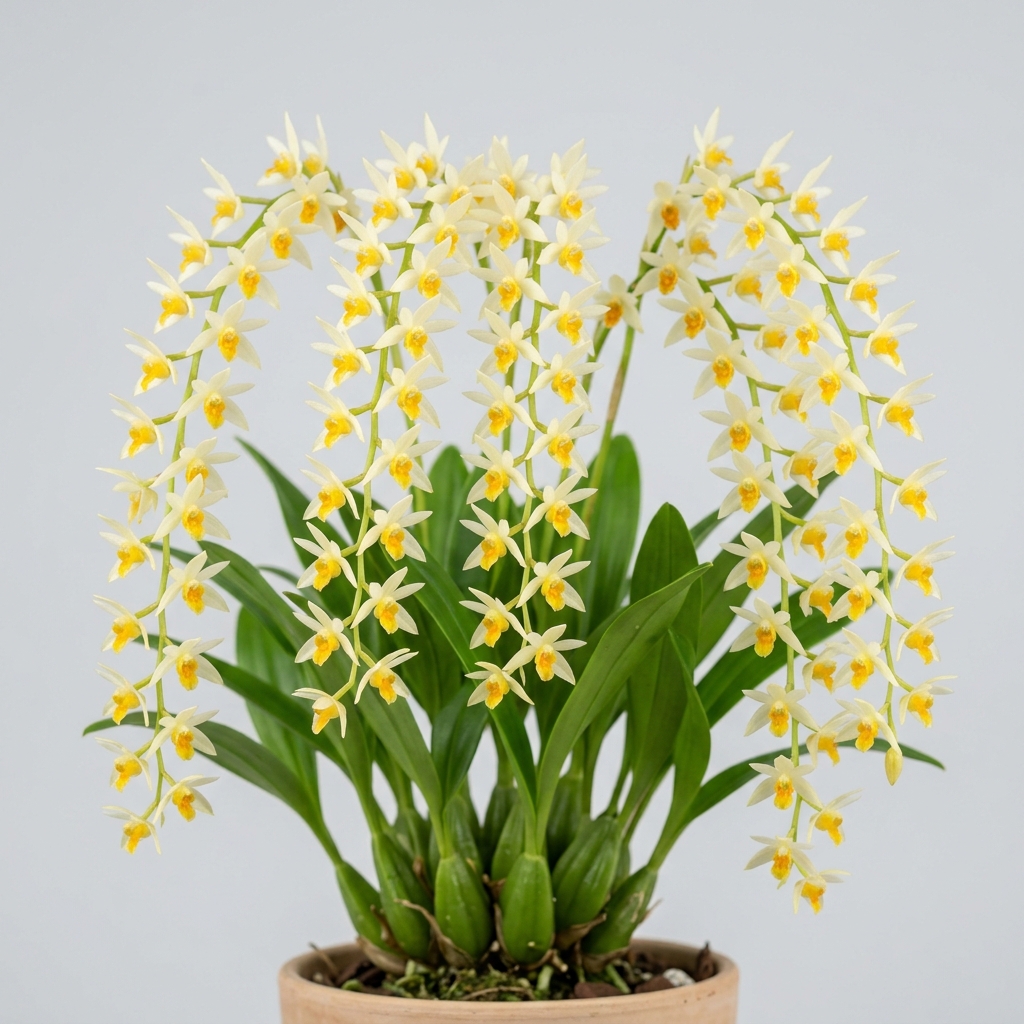
Phalaenopsis Modesta belongs to the Phalaenopsis orchid group, where flower presentation is often just as important as . White-flowered cultivars are especially valued indoors because their pale blooms reflect well and pair easily with many home, greenhouse, and display settings.
🌿 Botanical Overview
Phalaenopsis Modesta is a small-sized, warm-growing epiphytic species native to the island of Borneo, particularly found in damp, shaded riverine forests at lower elevations. In its natural habitat, it grows on tree trunks and branches, sheltered from direct sunlight by the dense forest canopy. This environment provides a stable climate characterized by high humidity, consistent warmth, and regular rainfall throughout the year.
The plant features a short stem wrapped in overlapping leaf bases, producing a few fleshy, obovate to oblong-elliptic leaves. These leaves are typically light to medium green, smooth, and slightly pendulous, reflecting its adaptation to shedding excess water in high-rainfall environments. The root system is active and relatively fine, adapted to clinging to mossy bark and absorbing moisture rapidly from the humid air.
🌸 Flower Characteristics
The flowers of Phalaenopsis Modesta are relatively small, typically measuring between 2 to 3 centimeters in diameter, but they make up for their size with exquisite detailing. The sepals and petals are generally lanceolate or elliptic, presenting a base color that ranges from pale greenish-white to soft cream. These segments are adorned with delicate, horizontal bars or flushes of rose-pink, magenta, or light purple, concentrated primarily toward the base of the segments.
The lip, or labellum, is a defining feature of the species, exhibiting a complex structure with three lobes. The mid-lobe is typically fleshy, often featuring a white or pinkish coloration with fine hairs or callosities near the center. The flowers are produced on short, arching to pendulous inflorescences that emerge from the base of the leaves, often bearing several flowers that open sequentially or simultaneously depending on the vigor of the plant.
Fragrance & Bloom Profile
One of the primary reasons orchid enthusiasts seek out Phalaenopsis Modesta is its exceptional fragrance. Unlike many modern Phalaenopsis hybrids that lack scent, this species is renowned for producing a strong, sweet aroma that many growers compare to fresh grapes, honeysuckle, or clean soap. The fragrance is typically most pronounced during the morning hours and early afternoon, fading slightly as evening approaches.
The blooming cycle of Phalaenopsis Modesta is often sequential, meaning a single flower spike can produce blooms over an extended period. It is important for growers to avoid cutting green flower spikes after the initial blooms fade, as these spikes can remain active and produce additional flowers in later seasons or even develop keikis (baby plants) under optimal conditions.
Parentage & Hybrid Lineage
As a naturally occurring species rather than a man-made hybrid, Phalaenopsis Modesta possesses a pure genetic lineage shaped by natural selection in the wild. It belongs to the section Polychilos within the genus Phalaenopsis. Because of its compact size, attractive horizontal striping, and intense fragrance, it has been used occasionally in hybridizing programs to introduce scent and manageable growth habits to novel novelty hybrids.
While its hybrid offspring are highly valued, the pure species remains a staple for collectors who appreciate the preservation of wild orchid forms. When purchasing Phalaenopsis Modesta, growers should seek plants from reputable nurseries that propagate them via seed or tissue culture rather than wild-collected specimens, ensuring conservation of natural populations.
🌱 Growing Conditions
Replicating the understory of a Bornean rainforest is the key to successfully growing Phalaenopsis Modesta. It thrives in low to medium indirect light, similar to the light levels preferred by standard jewel orchids or lower-light ferns. Direct sunlight must be avoided, as it will quickly scorch the thin, delicate leaves. Artificial LED grow lights adjusted to a moderate intensity work exceptionally well for indoor cultivation.
💡 Care Tip
For best results, grow Phalaenopsis Modesta in bright filtered with steady and gentle airflow. Avoid placing the plant in harsh midday sun, but do not keep it in a dark corner; weak is one of the most common reasons cultivated orchids refuse to rebloom.
Temperature: wise, this species prefers warm to intermediate conditions. Ideal daytime temperatures range from 75°F to 85°F (24°C to 29°C), with a slight drop at night to around 65°F to 68°F (18°C to 20°C). High relative humidity is crucial, ideally maintained between 60% and 80%. To prevent fungal or bacterial issues in such humid conditions, continuous, gentle air movement from a small fan is highly recommended.
Watering, Feeding & Potting Media
Phalaenopsis Modesta does not possess pseudobulbs to store water, meaning it has a low tolerance for prolonged drought. The potting medium should be kept consistently moist but never waterlogged. High-quality New Zealand sphagnum moss in terracotta or plastic pots with excellent drainage is a popular choice, as it retains moisture evenly. Alternatively, a fine-grade orchid bark mix mixed with perlite and charcoal can be used.
For growers who can maintain high humidity levels, mounting Phalaenopsis Modesta on cork bark or tree fern plaques with a small pad of moss around the roots is highly rewarding, mimicking its natural epiphytic growth habit. Fertilize weakly during the active growing season using a balanced, water-soluble orchid fertilizer diluted to one-quarter strength every second or third watering. Flush the pot with pure water periodically to prevent salt buildup.
Blooming Season & Care Notes
The primary blooming season for Phalaenopsis Modesta typically spans from late spring through autumn, though well-established plants in stable greenhouse environments may bloom at almost any time of year. To encourage blooming, maintain consistent warmth and humidity throughout the spring. A very slight drop in night temperatures during the autumn can sometimes stimulate the initiation of new flower spikes.
When the flowers fade, do not cut the green spikes unless they turn yellow or brown and dry up naturally. These spikes can remain green for years, producing new buds or vegetative offsets. Repotting should be performed only when the potting medium begins to break down, typically every one to two years, and is best done in the spring just as new root growth is observed.
⚠️ Common Issues
⚠️ Common Mistake
The most common mistake is by calendar instead of root and potting-media condition. Phalaenopsis roots need moisture and air at the same time, so constantly wet bark or sphagnum can lead to root loss even when the leaves still look healthy.
- Root Rot:
Caused by overwatering or compacted, decaying potting media that deprives the roots of oxygen. - Bud Blast:
Sudden drops in humidity, drafts, or temperature fluctuations can cause developing flower buds to shrivel and drop before opening. - Leaf Scorch: Exposure to direct sunlight causes yellow or bleached patches on the leaves, which eventually turn brown and dry.
- Spider Mites and Mealybugs: These pests can hide in the leaf joints or under the leaves; treat promptly with insecticidal soap or neem oil.
- Bacterial Soft Rot: Occurs when water sits in the crown or leaf joints overnight, especially in stagnant air.
❓ Frequently Asked Questions
How do I encourage my Phalaenopsis Modesta to bloom?
To encourage blooming, ensure the plant receives consistent, bright indirect light and high humidity. A slight, natural drop in nighttime temperatures by a few degrees in the autumn, combined with regular weak feeding, helps stimulate spike production.
Can Phalaenopsis Modesta be grown mounted on wood?
Yes, mounting this species on cork bark or tree fern plaques is highly successful and mimics its natural epiphytic habit. However, mounted plants require daily watering or a highly humid greenhouse environment to prevent the roots from drying out excessively.
Why are the flower buds on my orchid falling off before opening?
This issue, known as bud blast, is typically caused by environmental stress. Common culprits include a sudden drop in humidity, exposure to cold drafts, dry air from heating vents, or allowing the potting medium to dry out completely while the buds are forming.
Is Phalaenopsis Modesta suitable for beginner orchid growers?
While it is relatively hardy, Phalaenopsis Modesta is best suited for intermediate growers. It requires higher humidity and more consistent moisture levels than standard grocery store hybrid Phalaenopsis, making it slightly more demanding but highly rewarding.
⭐ Final Growing Notes
Phalaenopsis Modesta is a captivating species that brings the natural elegance of wild Bornean orchids into the home or greenhouse. By prioritizing high humidity, gentle air circulation, and consistent moisture, growers can enjoy its beautifully patterned, highly fragrant blooms for years to come. It stands as a testament to the diverse beauty of the orchid family, offering a rewarding challenge for those looking to expand their collection beyond common hybrids.
⚕️ Health, Safety & Edibility
Understanding how a plant interacts with people, pets, and the surrounding environment is part of responsible cultivation. This section uses conservative, general guidance and does not replace professional medical or veterinary advice.
Human Safety: No published evidence currently identifies species-specific toxicity concerns for Phalaenopsis Modesta during normal handling. As with most ornamental plants, it should not be intentionally consumed.
Pet Safety: Published information does not indicate that this orchid commonly poses a toxicity concern for cats or dogs. However, chewing leaves, flowers, roots, or potting media may still cause mild digestive upset.
Edibility: This orchid is cultivated for ornamental display rather than food. Ornamental plants may carry fertilizers, pesticides, or other horticultural treatments that make them unsuitable for consumption.
Skin Contact: Routine handling is not generally associated with skin irritation. Gardeners with sensitive skin may prefer wearing gloves when repotting, pruning, or handling potting media.
🌱 Propagation Tip
Propagation should be approached patiently. Most home growers should wait for natural keikis or divide only mature, healthy plants when the orchid type allows it. Never remove a young growth until it has strong roots and enough leaves to support itself away from the parent plant.
⭐ Expert Advice
Repot after flowering when fresh root tips begin to appear. This timing helps the plant anchor quickly into new bark or sphagnum and reduces stress, especially for orchids grown indoors where airflow, , and drying speed can change from season to season.

Leave A Comment