
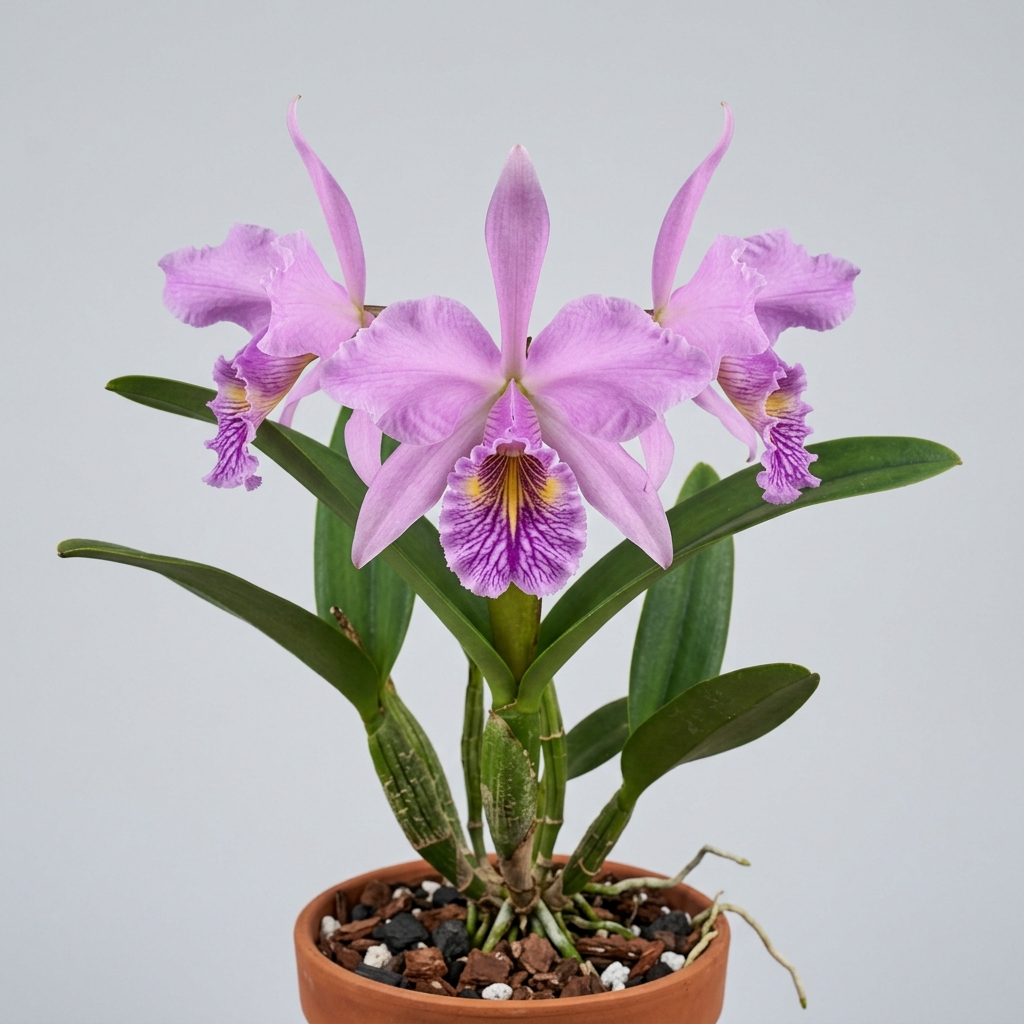
Cattleya maxima is a legendary orchid species that holds a revered place in the hearts of orchid enthusiasts worldwide. Renowned for its striking lavender-pink blossoms and highly detailed lip patterning, this species showcases the classic elegance of the Cattleya genus. Originating from the tropical regions of South America, it has adapted to diverse ecological niches, making it a resilient and rewarding subject for indoor and greenhouse cultivation.
This sympodial epiphyte produces robust, club-shaped pseudobulbs topped with a single, leathery leaf. Growers highly value the species for its reliable autumn-to-winter blooming cycle, during which it produces upright spikes carrying multiple showy, fragrant flowers. Whether grown on a windowsill or in a dedicated orchid house, its elegant growth habit and dramatic floral display make it a standout addition to any collection.
💡 Did You Know?
Cattleya maxima is unique for having two distinct, geographically separated forms: a short, lowland variety that produces up to fifteen smaller flowers per stem, and a tall, highland variety that produces fewer but much larger blossoms. This adaptability makes it incredibly versatile in cultivation.
🌿 Botanical Overview
Cattleya maxima is native to the western slopes of the Andes, spanning parts of Ecuador, Peru, and southwestern Colombia. In its natural habitat, it grows as an epiphyte on trees or occasionally as a lithophyte on rocky cliffs. This wide geographical distribution has resulted in two distinct horticultural forms that growers categorize based on their elevation of origin.
The lowland form, often found in drier, warmer coastal forests, is characterized by shorter, clump-forming pseudobulbs that produce a high volume of medium-sized flowers on a single stem. Conversely, the upland or highland form grows in cooler, more humid mountain forests, developing taller, more slender pseudobulbs that bear fewer but significantly larger blossoms. Understanding these two ecotypes helps growers tailor their care routines to match the specific needs of their plant.
🌸 Flower Characteristics
The blossoms of Cattleya maxima are celebrated for their delicate, paper-like texture and graceful presentation. The sepals and petals are typically a soft lavender or pale rose color, often featuring slightly wavy margins that add movement and depth to the flower. The flowers can range from ten to fifteen centimeters in diameter, depending on the specific variety and cultural conditions.
The defining feature of this species is its magnificent lip, or labellum. The tubular lip flares open to reveal an intricate network of dark purple or magenta veins that contrast sharply against the lighter background. Running down the center of the lip is a prominent, bright yellow stripe, which acts as a natural nectar guide for pollinators. This striking combination of colors and patterns makes the flower instantly recognizable.
Fragrance & Bloom Profile
Cattleya maxima produces a delightful, sweet fragrance that is often described as a blend of honey and fresh floral notes. The scent is most intense during the morning hours, filling the growing space with a clean, pleasant aroma. This fragrance, combined with the visual beauty of the flowers, creates a highly sensory experience for the grower.
The blooming cycle typically begins in the autumn and can extend into the early winter months. Individual flowers are long-lasting, often remaining fresh for three to five weeks if kept in a cool, draft-free environment. The flowers are carried on strong, upright inflorescences that emerge from a green sheath at the apex of the newly matured pseudobulb.
Parentage & Hybrid Lineage
As a naturally occurring species, Cattleya maxima does not have a man-made hybrid parentage. It was first described by botanists in the early nineteenth century and has since played a pivotal role in orchid hybridizing. Breeders have long valued this species for its ability to pass on its high flower count, robust growth habit, and spectacular lip patterning to its offspring.
In common grower references, its exact historical registration details and early hybrid records are sometimes varied, but its influence on modern lavender Cattleya hybrids is undeniable. It has been crossed with numerous other species to create complex, large-flowered hybrids that inherit its resilient nature and striking floral characteristics.
🌱 Growing Conditions
To cultivate Cattleya maxima successfully, providing the correct balance of light, temperature, and air movement is essential. This orchid thrives in bright, indirect light. A east- or shaded south-facing window is often ideal. The leaves should maintain a light, grassy green color; dark green leaves indicate insufficient light, while yellow or reddish-purple spots suggest the light is too intense.
💡 Care Tip
Provide Cattleya maxima with bright, filtered and strong air movement. If the leaves are a , grassy green, the level is ideal; dark green leaves indicate too much shade, while yellowing leaves suggest too much direct sun.
Temperature requirements depend slightly on whether you are growing the lowland or highland form, but generally, intermediate conditions work well. Aim for daytime temperatures between seventy-five and eighty-five degrees Fahrenheit, with a nighttime drop to sixty or sixty-five degrees Fahrenheit. This diurnal temperature fluctuation is crucial for triggering the development of flower buds inside the sheath.
Watering, Feeding & Potting Media
Like most epiphytic orchids, Cattleya maxima prefers a distinct wet-to-dry cycle. Water the plant thoroughly, allowing water to run freely through the pot, and then allow the potting medium to dry out almost completely before watering again. During the active growing season in spring and summer, watering frequency will need to be increased, while in the winter rest period, it should be reduced significantly.
A coarse, free-draining potting mix is vital to prevent root suffocation. A mixture of medium to large fir bark, charcoal, and perlite works exceptionally well. Alternatively, the plant can be mounted on cork bark or tree fern plaques if high humidity can be maintained. Feed the orchid weekly with a diluted, balanced orchid fertilizer during the active growth phase, and flush the pot with pure water once a month to prevent salt buildup.
Blooming Season & Care Notes
The blooming process begins when a new pseudobulb matures and produces a green sheath at its tip. It is important to monitor this sheath closely. In high-humidity environments, condensation can sometimes form inside the sheath, which may lead to bud rot. If you notice moisture accumulating, carefully slit the top of the sheath to allow airflow.
Once the blooming period concludes, the orchid enters a semi-dormant phase. Cut the old flower spike back to the base of the sheath, taking care not to damage the leaf. Repotting should only be performed when new root tips begin to emerge from the base of the newest pseudobulb, which typically occurs in the spring. This ensures the plant establishes quickly in its new medium with minimal transplant shock.
⚠️ Common Issues
⚠️ Common Mistake
The most common mistake is overwatering during the winter rest period. Cattleya maxima requires a slight reduction in water and fertilizer after blooming, as soggy will quickly lead to root rot.
- Root Rot:
Caused by overwatering or a decomposing potting medium that retains too much moisture, leading to mushy, black roots. - Bud Blast:
Sudden changes in temperature, low humidity, or drafts can cause developing buds to turn yellow and drop before opening. - Leaf Sunburn: Direct, unfiltered midday sunlight can scorch the leaves, leaving permanent brown or black dry patches.
- Pests:
Scale insects and mealybugs can occasionally hide in the dry sheaths of the pseudobulbs; inspect the plant regularly and treat with horticultural soap.
❓ Frequently Asked Questions
How often should I water my Cattleya maxima?
Watering frequency depends on your environmental conditions, but typically, Cattleya maxima should be watered once or twice a week during the active growing season. Always check the potting medium first; it should be almost completely dry before you apply water again.
Why are the buds on my Cattleya maxima turning yellow and dropping?
This issue, known as bud blast, is usually triggered by environmental stress. Sudden drops in humidity, cold drafts, or moving the plant to a new location with different light levels while the buds are developing can cause them to abort.
Can Cattleya maxima be grown mounted on cork bark?
Yes, Cattleya maxima thrives when mounted on cork bark, as this closely mimics its natural epiphytic growth habit. However, mounted plants dry out much faster than potted ones and will require daily watering or a very high-humidity environment to flourish.
How do I encourage my Cattleya maxima to bloom?
To encourage blooming, ensure the plant receives bright, indirect light throughout the growing season and a distinct ten-to-fifteen-degree temperature drop between day and night in the late summer. This temperature differential helps stimulate bud initiation inside the sheath.
⭐ Final Growing Notes
Cattleya maxima remains a timeless masterpiece of the orchid world, offering a perfect blend of historical significance, visual drama, and captivating fragrance. By respecting its natural wet-to-dry cycle, providing bright, filtered light, and ensuring adequate air circulation, growers can enjoy its spectacular autumn display year after year. It is a resilient species that generously rewards attentive care with some of the most beautiful blossoms nature has to offer.
🌱 Propagation Tip
Propagate Cattleya maxima by division during the spring repotting cycle. Ensure each division has at least three to four healthy, mature pseudobulbs with active eye buds at the base to guarantee successful establishment.
⭐ Expert Advice
To trigger a robust bloom cycle, ensure a noticeable drop of about ten to fifteen degrees Fahrenheit between day and night during the late summer and early autumn months when the pseudobulbs are maturing.




Leave A Comment