

Cattleya Porphyroglossa is a highly prized bifoliate orchid species native to the coastal rainforests of Brazil. Highlighted by its distinctive metallic bronze-to-copper petals and its contrasting, vibrant amethyst-purple lip, this orchid is a standout choice for collectors of classic Cattleya species. Its exotic color palette and elegant growth habit make it a centerpiece in any dedicated greenhouse or indoor growing setup.
This species typically produces slender, upright, cane-like pseudobulbs topped with two leathery, deep green leaves. Orchid enthusiasts appreciate Cattleya Porphyroglossa not only for its striking visual presentation but also for its sweet, honey-like fragrance and its historical significance in breeding lines. While it requires a bit more attention to humidity and watering cycles than mass-market hybrids, the reward of its annual summer blooms is unparalleled.
💡 Did You Know?
Unlike many unifoliate Cattleya orchids that produce a single leaf per pseudobulb, Cattleya Porphyroglossa is a classic bifoliate species, meaning it naturally grows two leathery leaves atop each cane-like stem. This growth habit is typical of orchids native to the humid coastal swamps of Brazil, where the extra leaf surface area helps maximize photosynthesis in the dappled of the forest canopy.
🌿 Botanical Overview
Cattleya Porphyroglossa is a distinct bifoliate species native to the humid coastal regions of Brazil. It naturally grows epiphytically on trees in swampy or humid lowland forests, where it benefits from consistent air movement and high ambient humidity. The plant features slender, cane-like pseudobulbs that can reach up to 12 to 18 inches in height, each topped with a pair of rigid, elliptical leaves that help capture light under the forest canopy.
This species is closely related to other Brazilian bifoliates like Cattleya granulosa and Cattleya leopoldii, sharing similar growth habits but distinguished by its unique floral morphology and color combination. Its natural habitat experiences warm temperatures year-round with a slight cooling and drying period during the winter months, which dictates its seasonal care requirements in cultivation.
🌸 Flower Characteristics
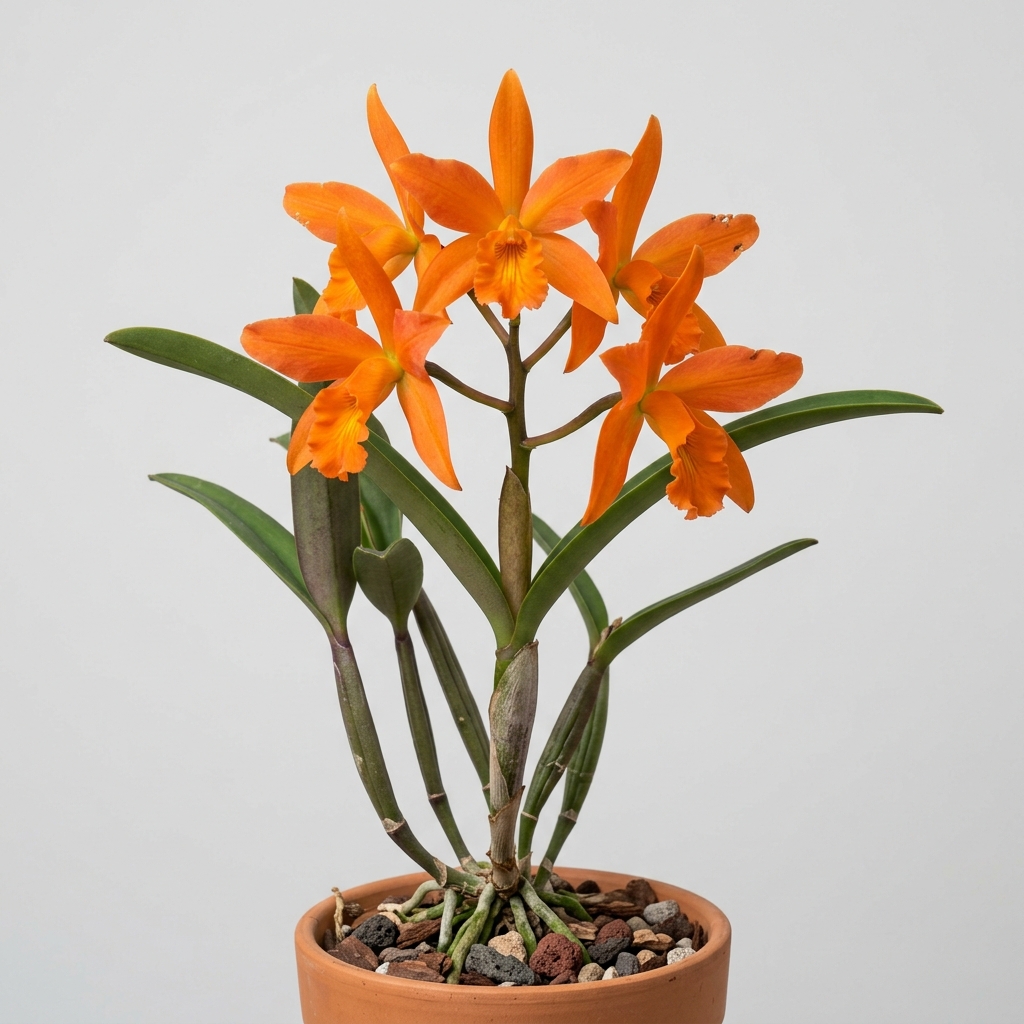
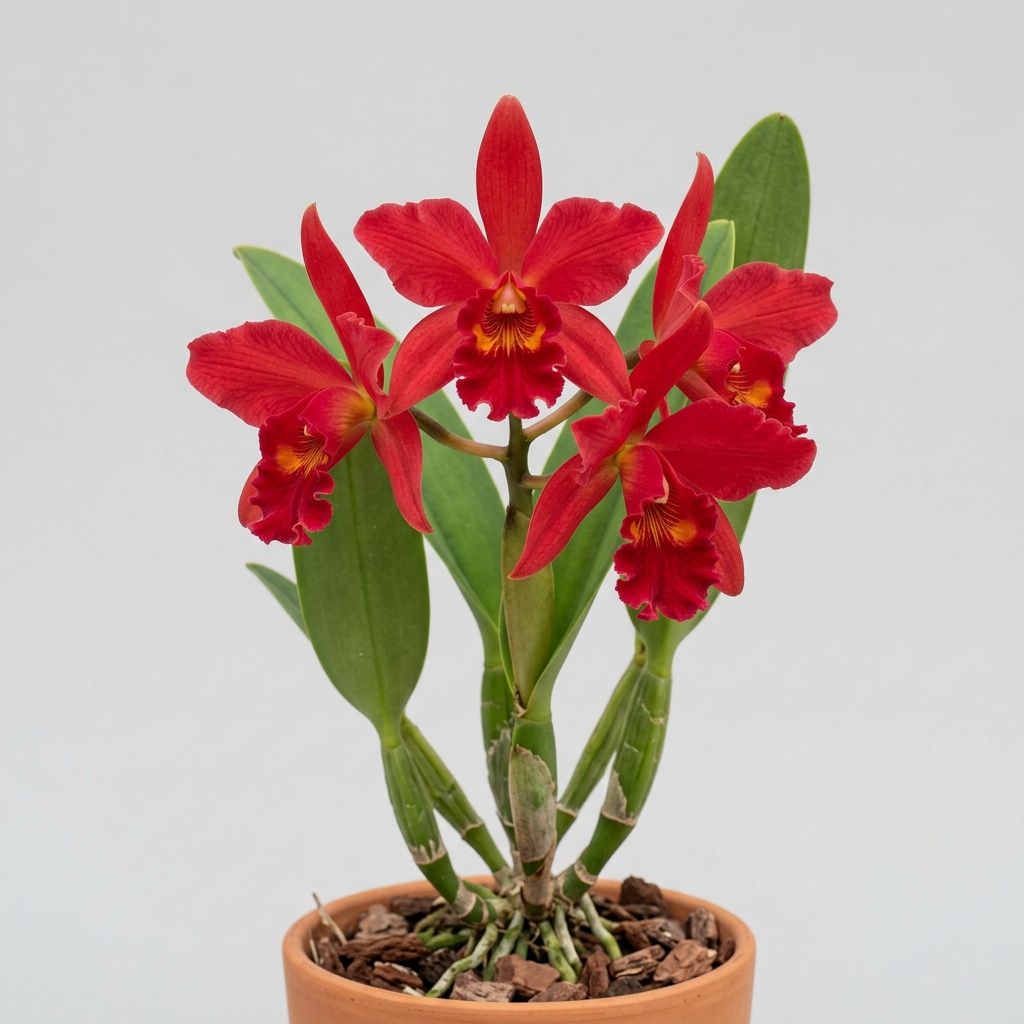
The flowers of Cattleya Porphyroglossa are typically 3 to 4 inches in diameter, presented on a short, upright inflorescence that emerges from a green sheath at the apex of the pseudobulb. Each spike can carry between two and five flowers, depending on the maturity and vigor of the plant. The sepals and petals are relatively narrow, often displaying a glossy, waxy texture with colors ranging from yellowish-green to a deep, metallic bronze or copper-brown.
The defining feature of the bloom is its striking trilobed lip, or labellum. The lateral lobes wrap around the column, while the mid-lobe is fan-shaped, heavily ruffled, and colored a brilliant amethyst-purple or magenta. This intense purple contrasts sharply with a bright yellow or white throat, creating a dramatic visual focal point that makes the species highly sought after by orchid connoisseurs.
Fragrance & Bloom Profile
This species is celebrated for its sweet, pleasant fragrance, which is often described as a mix of honey and floral notes. The scent is most pronounced during the morning hours when temperatures begin to rise and light levels increase. A single well-grown specimen can easily fill a small greenhouse or growing room with its perfume.
The blooms are long-lasting, typically remaining fresh for three to four weeks if kept in a cool, draft-free environment. To maximize the lifespan of the flowers, growers should avoid getting water on the petals during routine watering, as excess moisture can lead to fungal spotting or premature wilting.
Parentage & Hybrid Lineage
As a naturally occurring species rather than a man-made hybrid, Cattleya Porphyroglossa does not have a complex parentage. It was first formally described in the 19th century and has since been used selectively in hybridizing programs to introduce its unique bronze coloration, ruffled purple lip, and waxy flower substance to modern Cattleya hybrids.
While it is less common in mass-market breeding than some of its larger unifoliate relatives, it remains a prized parent for creating novelty bifoliate hybrids. In grower circles, maintaining the purity of the species through selfing or sibling crosses is highly valued, ensuring that the distinct wild characteristics of this Brazilian native are preserved for future generations.
🌱 Growing Conditions
To cultivate Cattleya Porphyroglossa successfully, growers must replicate its warm, humid native environment. It thrives in bright, indirect light, similar to the conditions preferred by most standard Cattleyas. A slight yellow-green tint to the leaves indicates optimal light levels, while dark green leaves suggest the plant requires more light to bloom.
💡 Care Tip
To prevent fungal infections, always water your Cattleya Porphyroglossa early in the morning. This ensures that any water splashed onto the leaves or into the central growth sheaths has ample time to evaporate before nighttime temperatures drop, reducing the risk of rot.
Temperature ranges should remain warm to intermediate, with daytime temperatures between 75°F and 85°F, and a nighttime drop to around 60°F to 65°F. High humidity is crucial, ideally maintained between 60% and 80%. Excellent air circulation is mandatory to prevent stagnant air pockets, which can invite fungal and bacterial diseases in high-humidity setups.
Watering, Feeding & Potting Media
During the active growing season in spring and summer, Cattleya Porphyroglossa requires frequent and thorough watering. The potting medium should be allowed to dry out slightly between waterings, but never bone-dry for extended periods. In winter, watering should be reduced significantly, allowing the plant a semi-dormant rest period where it receives just enough moisture to prevent the pseudobulbs from shriveling.
A balanced, water-soluble orchid fertilizer (such as a 20-20-20 formulation) should be applied weekly at quarter or half strength during active growth. Flush the pot with pure water once a month to prevent salt buildup. The ideal potting medium is a coarse, free-draining mix of fir bark, charcoal, and perlite. Alternatively, mature plants with robust root systems can be grown on cork slabs or in open wooden baskets to accommodate their epiphytic nature.
Blooming Season & Care Notes
The primary blooming season for Cattleya Porphyroglossa is late spring through summer, coinciding with the peak of its active growth phase. The flower buds develop within a protective sheath at the top of the newly matured pseudobulb. During this critical phase, avoid sudden changes in temperature or light, which can cause bud blast.
Once flowering is complete, the plant enters a brief period of rest before initiating new root and shoot growth. Repotting should only be performed when new roots are just beginning to emerge from the base of the newest pseudobulb. This minimizes transplant shock and allows the orchid to establish itself quickly in its fresh medium.
⚠️ Common Issues
⚠️ Common Mistake
A frequent error is repotting this orchid at the wrong time of year. Cattleya Porphyroglossa is highly sensitive to root disturbance. Only repot when you see active new root tips emerging from the base of the newest pseudobulb, which allows the plant to anchor itself quickly in the fresh medium.
- Root rot:
Caused by overwatering or a degraded, compacted potting medium that retains too much moisture. - Bud blast:
Sudden dropping or yellowing of buds due to rapid shifts in temperature, low humidity, or drafty conditions. - Pests:
Scale insects, mealybugs, and spider mites can occasionally colonize the undersides of leaves and pseudobulb sheaths. - Leaf spotting: Fungal or bacterial spots can develop if water is allowed to sit on the foliage overnight without adequate airflow.
- Dehydration:
Shriveled pseudobulbs and wrinkled leaves indicate insufficient watering or a compromised root system unable to absorb moisture.
❓ Frequently Asked Questions
How often should I water Cattleya Porphyroglossa?
Water thoroughly when the potting medium is nearly dry, which typically translates to once or twice a week during the warm summer growing season. Reduce watering frequency significantly during the winter rest period, allowing the medium to dry completely between light waterings.
What is the best potting medium for this orchid?
A coarse, highly porous medium is essential. A mix of large-grade fir bark, horticultural charcoal, and perlite works exceptionally well in pots. For growers with high-humidity greenhouses, mounting the orchid on a cork slab or placing it in a wooden basket allows the roots to dry rapidly, mimicking its natural epiphytic habitat.
Why are the flower buds on my Cattleya Porphyroglossa turning yellow and falling off?
This issue, known as bud blast, is usually triggered by environmental stress. Common culprits include sudden temperature drops, low ambient humidity, drafty air currents from heating or cooling vents, or underwatering while the buds are actively developing inside the sheath.
Can Cattleya Porphyroglossa be grown under LED grow lights?
Yes, this orchid adapts well to indoor cultivation under high-intensity LED grow lights. Position the plant close enough to the light source to receive bright, indirect light for 12 to 14 hours a day, ensuring the leaves maintain a healthy light-green color without showing signs of burning.
⭐ Final Growing Notes
Cattleya Porphyroglossa is a rewarding species that brings a touch of exotic Brazilian beauty to any orchid collection. While it requires a bit more attention to humidity and watering cycles than mass-produced hybrids, its stunning bronze flowers, brilliant amethyst lip, and sweet fragrance make the effort entirely worthwhile. By providing bright light, excellent air movement, and a distinct winter rest, growers can enjoy the spectacular annual blooms of this classic bifoliate orchid for many years.
⚕️ Health, Safety & Edibility
Understanding how a plant interacts with people, pets, and the surrounding environment is part of responsible cultivation. This section uses conservative, general guidance and does not replace professional medical or veterinary advice.
Human Safety: No published evidence currently identifies species-specific toxicity concerns for Cattleya Porphyroglossa during normal handling. As with most ornamental plants, it should not be intentionally consumed.
Pet Safety: Published information does not indicate that this orchid commonly poses a toxicity concern for cats or dogs. However, chewing leaves, flowers, roots, or potting media may still cause mild digestive upset.
Edibility: This orchid is cultivated for ornamental display rather than food. Ornamental plants may carry fertilizers, pesticides, or other horticultural treatments that make them unsuitable for consumption.
Skin Contact: Routine handling is not generally associated with skin irritation. Gardeners with sensitive skin may prefer wearing gloves when repotting, pruning, or handling potting media.
🌱 Propagation Tip
Propagate this species by division only when the plant has outgrown its container and possesses at least six to eight healthy pseudobulbs. Carefully divide the rhizome using a sterile blade, ensuring each new division has at least three active pseudobulbs and a healthy lead growth to support rapid recovery.
⭐ Expert Advice
If your orchid fails to bloom despite looking healthy, try gradually increasing its exposure. Bifoliate Cattleyas require very bright, filtered to trigger flowering. The leaves should be a chartreuse green; if they are dark forest green, the plant is not receiving enough to initiate buds.

Leave A Comment