

Cattleya Praestans is a highly prized dwarf orchid species native to the rainforests of Brazil, celebrated by collectors for its remarkably large flowers relative to its compact growth habit. Belonging to the renowned Cattleya genus, this miniature epiphyte produces striking blooms that easily rival the visual impact of its larger relatives. Its manageable size makes it an exceptional choice for indoor growers, windowsill gardeners, and orchid enthusiasts with limited growing space.
Historically classified under the genus Laelia, this species is cherished for its elegant, trumpet-shaped lip and resilient nature. Growers value Cattleya Praestans not only for its stunning, long-lasting floral displays but also for its adaptable growth requirements. When provided with bright, filtered light and consistent humidity, this charming miniature rewards keepers with a spectacular show of color and a delicate fragrance that enhances any collection.
💡 Did You Know?
Cattleya Praestans belongs to the Cattleya orchid group, where flower presentation is often just as important as . White-flowered cultivars are especially valued indoors because their pale blooms reflect well and pair easily with many home, greenhouse, and display settings.
🌿 Botanical Overview
Cattleya Praestans is characterized by its small, club-shaped pseudobulbs, which typically reach only a few inches in height. Each pseudobulb is topped by a single, thick, leathery leaf that is dark green and slightly rigid, designed to conserve moisture in its native canopy habitat. This compact architecture allows the plant to thrive as an epiphyte, clinging to tree branches where it receives excellent air circulation.
The root system of this species is relatively fine but robust, adapting well to both mounted culture and small pots. In its natural Brazilian habitat, the plant experiences distinct seasonal shifts, which influence its growth and flowering cycles. Understanding this botanical background helps growers replicate the natural wet and dry periods necessary for optimal development.
🌸 Flower Characteristics
The flowers of Cattleya Praestans are remarkably large, often measuring between three to four inches (8 to 10 centimeters) in diameter, which practically dwarfs the vegetative portion of the plant. The petals and sepals are typically a soft rose-purple or lavender hue, presenting a classic orchid silhouette with a graceful, slightly forward-facing posture.
The most defining feature of the bloom is its prominent, trumpet-like lip, or labellum. The lip wraps tightly around the column, displaying a rich, deep purple or magenta margin that contrasts beautifully with a lighter, often yellowish or white throat. The flowers emerge singly or occasionally in pairs from a short terminal spike, lasting several weeks in pristine condition.
Fragrance & Bloom Profile
This species is known for producing a sweet, moderate fragrance that is most noticeable during the morning hours when temperatures begin to rise. The scent is often described as a delicate mix of floral and subtle spicy notes, though the intensity can vary depending on individual clones and environmental conditions.
The blooms typically open fully and remain stable for three to four weeks under ideal conditions. To maximize the lifespan of the flowers, growers should avoid getting water directly on the petals and maintain stable temperatures during the blooming cycle.
Parentage & Hybrid Lineage
Cattleya Praestans is a distinct, naturally occurring species rather than a man-made hybrid. In botanical nomenclature, it was historically grouped with Laelia pumila and Laelia dayana due to physical similarities, and it is still occasionally found under those names in older literature or legacy collections.
Because of its compact size and large flower proportion, hybridizers have frequently used Cattleya Praestans in breeding programs. It contributes dwarf growth habits and intense lip coloration to modern compact Cattleya hybrids, though pure species specimens remain highly sought after by purists.
🌱 Growing Conditions
To cultivate Cattleya Praestans successfully, provide bright, indirect light. A spot near an east- or shaded south-facing window is ideal, where the plant can receive plenty of light without the risk of foliage scorch. The leaves should maintain a healthy, light-green color; dark green leaves indicate insufficient light, while yellowing or reddish tints suggest excess exposure.
💡 Care Tip
For best results, grow Cattleya Praestans in bright filtered with steady and gentle airflow. Avoid placing the plant in harsh midday sun, but do not keep it in a dark corner; weak is one of the most common reasons cultivated orchids refuse to rebloom.
Temperature: wise, this orchid thrives in intermediate to warm conditions. Daytime temperatures should ideally range between 70°F and 85°F (21°C to 29°C), with a nighttime drop of about 10°F to 15°F to help stimulate flower bud development. High humidity levels of 50% to 70% are highly beneficial, paired with constant, gentle air movement to prevent stagnant moisture.
Watering, Feeding & Potting Media
Watering should be frequent during the active growing season, typically spring and summer, allowing the potting medium to dry out slightly but not completely between waterings. In the winter, when growth slows, reduce watering frequency to prevent root rot, though the pseudobulbs should never be allowed to shrivel severely.
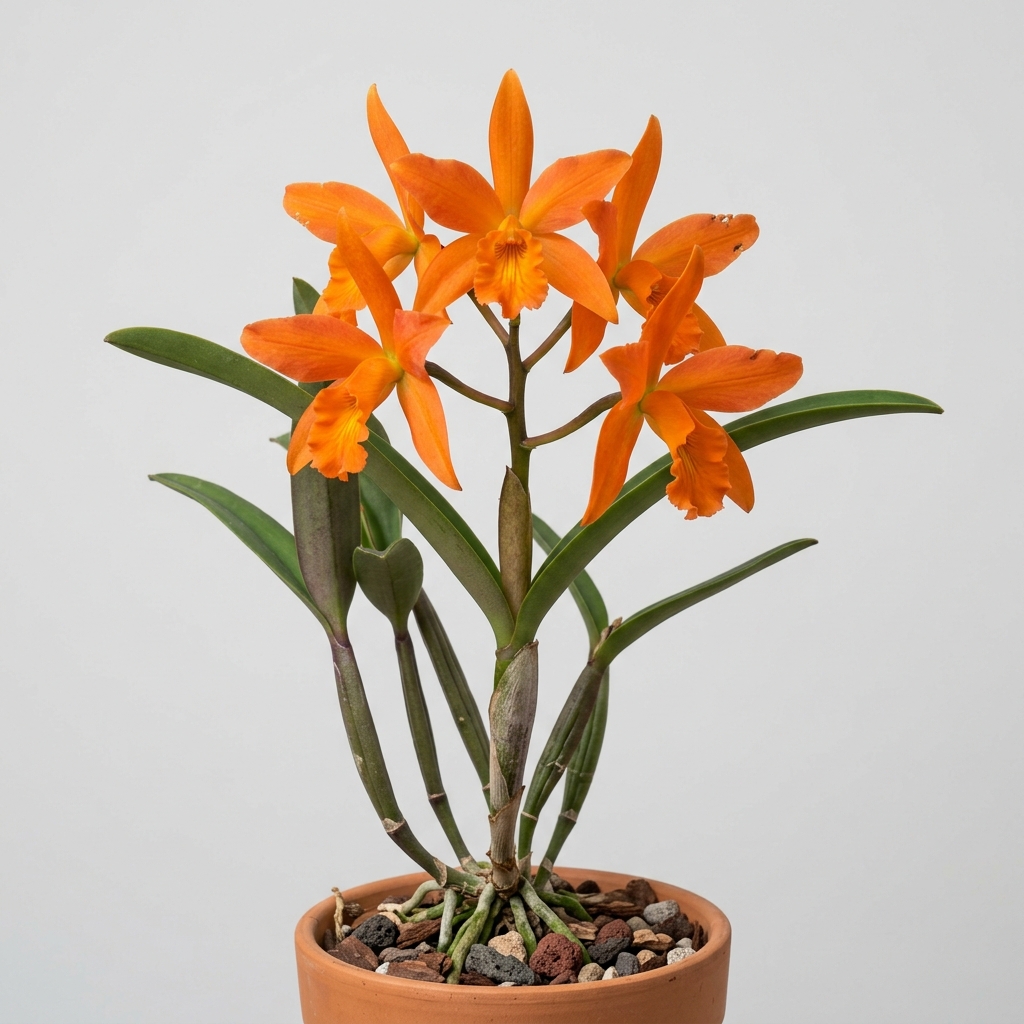
A well-draining potting medium is critical. Coarse fir bark mixed with perlite or charcoal works exceptionally well in small, clay or plastic pots. Alternatively, because of its compact size and epiphytic nature, Cattleya Praestans is an excellent candidate for mounting on cork bark or tree fern plaques, provided the grower can maintain high humidity and water the plant daily. Feed weekly with a diluted, balanced orchid fertilizer during active growth.
Blooming Season & Care Notes
The primary blooming season for Cattleya Praestans is typically in the autumn, though healthy plants may occasionally bloom at other times of the year as new pseudobulbs mature. The flower buds develop within a protective sheath at the apex of the newly matured pseudobulb.
During the bud development phase, maintain stable humidity and avoid moving the plant to prevent bud drop. Once flowering is complete, allow the plant a brief rest period with reduced watering and no fertilizer until new root and shoot growth is visible in the spring. Repotting is best done during this early spring growth phase when new roots are just beginning to emerge.
⚠️ Common Issues
⚠️ Common Mistake
The most common mistake is by calendar instead of root and potting-media condition. Cattleya roots need moisture and air at the same time, so constantly wet bark or sphagnum can lead to root loss even when the leaves still look healthy.
- Root rot:
Caused by overwatering or a decomposing, compacted potting medium that suffocates the roots. - Dehydration:
Indicated by wrinkled pseudobulbs and leathery, limp leaves, often due to underwatering or a completely dead root system. - Bud blast:
The sudden yellowing and dropping of flower buds before they open, usually triggered by rapid temperature fluctuations, low humidity, or drafts. - Pests:
Scale insects and mealybugs can occasionally hide in the dry sheaths of the pseudobulbs; inspect regularly and treat with horticultural soap or isopropyl alcohol.
❓ Frequently Asked Questions
How often should I water my Cattleya Praestans?
Watering frequency depends heavily on your growing environment and media. Generally, potted plants should be watered once or twice a week during the active growing season, allowing the medium to dry out slightly between applications. Mounted plants require daily misting or watering due to rapid drainage.
Can Cattleya Praestans be grown under LED lights?
Yes, this compact species adapts exceptionally well to indoor grow light setups. Position the plant under full-spectrum LED lights, adjusting the distance so the leaves maintain a light-green color without showing signs of heat stress or leaf burn.
Why are the pseudobulbs on my orchid shriveling?
Shriveled pseudobulbs usually indicate a lack of moisture. This can be caused by simple underwatering or, conversely, by overwatering which has rotted the root system, leaving the plant unable to absorb water. Check the roots to determine the correct cause.
Is Cattleya Praestans suitable for beginners?
While it requires slightly more attention to humidity and watering than common grocery store orchids, its compact size and resilient nature make it an excellent choice for intermediate beginners looking to transition into growing species orchids.
⭐ Final Growing Notes
Cattleya Praestans remains one of the most rewarding miniature orchids for both novice and experienced collectors. Its ability to produce magnificent, full-sized blooms on a remarkably compact frame makes it a space-saving treasure. By replicating its natural Brazilian environment with bright light, high humidity, and excellent drainage, growers can enjoy the vibrant colors and sweet fragrance of this exceptional species for many years to come.
⚕️ Health, Safety & Edibility
Understanding how a plant interacts with people, pets, and the surrounding environment is part of responsible cultivation. This section uses conservative, general guidance and does not replace professional medical or veterinary advice.
Human Safety: No published evidence currently identifies species-specific toxicity concerns for Cattleya Praestans during normal handling. As with most ornamental plants, it should not be intentionally consumed.
Pet Safety: Published information does not indicate that this orchid commonly poses a toxicity concern for cats or dogs. However, chewing leaves, flowers, roots, or potting media may still cause mild digestive upset.
Edibility: This orchid is cultivated for ornamental display rather than food. Ornamental plants may carry fertilizers, pesticides, or other horticultural treatments that make them unsuitable for consumption.
Skin Contact: Routine handling is not generally associated with skin irritation. Gardeners with sensitive skin may prefer wearing gloves when repotting, pruning, or handling potting media.
🌱 Propagation Tip
Propagation should be approached patiently. Most home growers should wait for natural keikis or divide only mature, healthy plants when the orchid type allows it. Never remove a young growth until it has strong roots and enough leaves to support itself away from the parent plant.
⭐ Expert Advice
Repot after flowering when fresh root tips begin to appear. This timing helps the plant anchor quickly into new bark or sphagnum and reduces stress, especially for orchids grown indoors where airflow, , and drying speed can change from season to season.

Leave A Comment