
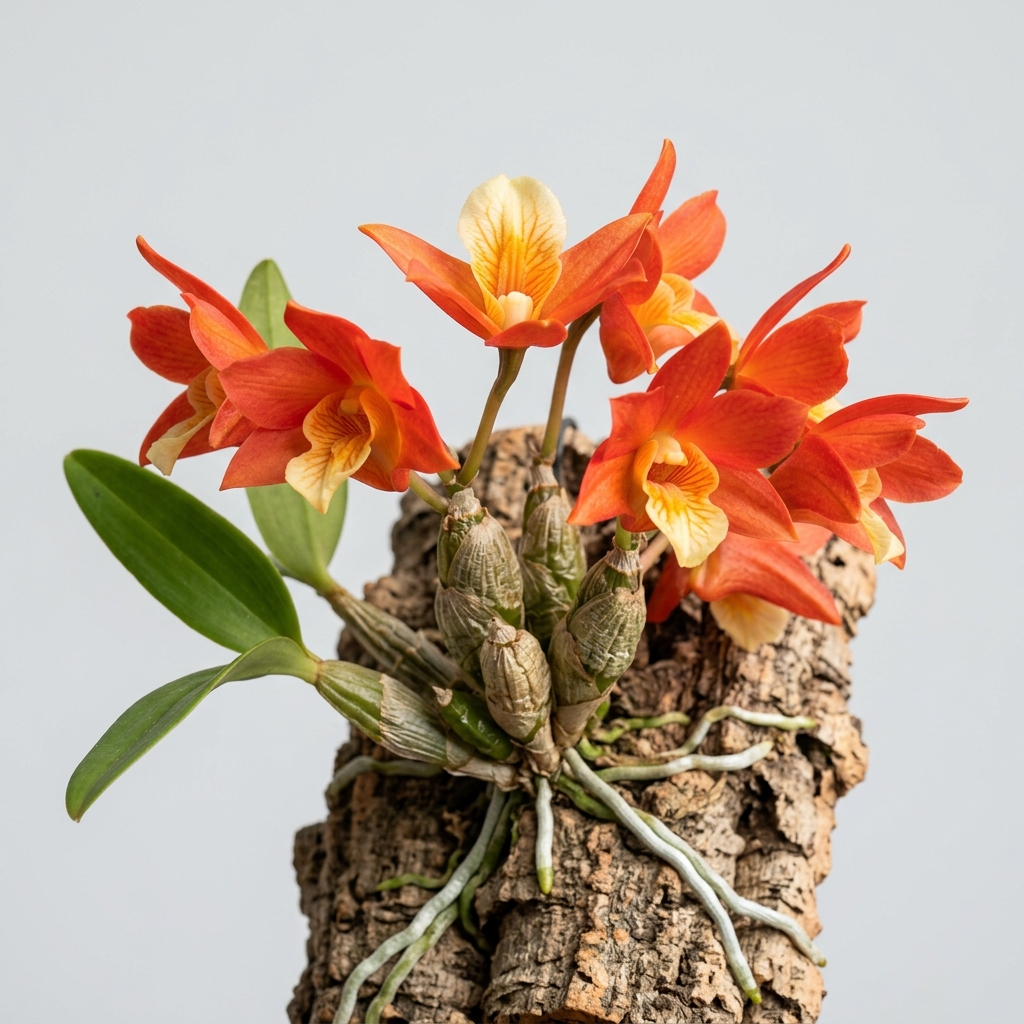
Dendrobium Unicum is a highly sought-after miniature orchid species celebrated for its striking, vibrant orange blossoms and unique growth habit. Native to the deciduous forests of Southeast Asia, this epiphytic orchid brings a dramatic splash of color to specialized collections. Growers particularly value its compact size, making it an excellent candidate for mountings or small pot culture where space is limited.
Unlike many larger members of its genus, this species displays a fascinating deciduous nature, often shedding its leaves before producing its brilliant, fiery blooms. The contrast of bright orange flowers emerging from seemingly lifeless, papery pseudobulbs creates a spectacular visual display. While it requires a distinct seasonal care routine to thrive, its rewarding blooming cycle makes it a favorite among intermediate and advanced orchid enthusiasts.
💡 Did You Know?
Dendrobium Unicum is famous for its non-resupinate appearance in some blooms, where the lip points upward rather than downward. This botanical quirk, combined with its intense, neon-orange coloration, makes it one of the most visually distinct miniature species in the entire , mimicking the bright colors of tropical pollinators in its native Southeast Asian canopy.
🌿 Botanical Overview
Dendrobium Unicum is a miniature to small-sized epiphytic species native to regions including Thailand, Laos, Vietnam, and Myanmar. In its natural habitat, it grows on mossy tree trunks and branches in deciduous forests, experiencing distinct wet and dry seasons. The plant features clustered, spindle-shaped pseudobulbs that are typically upright or semi-pendulous, covered in thin, papery sheaths.
The leaves are lanceolate, thin, and deciduous, usually lasting only one or two seasons before dropping. This leaf loss is a natural adaptation to the dry winter months of its native environment. Understanding this growth cycle is crucial for growers, as the bare pseudobulbs are not dead but are preparing to channel their energy into the upcoming spring bloom.
🌸 Flower Characteristics
The flowers of Dendrobium Unicum are renowned for their intense, saturated orange hue, which can range from a bright tangerine to a deep reddish-orange. The blossoms are typically produced in short racemes from the nodes of both leafy and leafless pseudobulbs. Each inflorescence usually carries two to four flowers, which are uniquely presented.
A defining feature of the flower is its lip, or labellum, which is pale yellow or cream-colored with prominent, dark orange or reddish veins. The lip is structurally interesting, often curving upward or remaining somewhat tubular, contrasting sharply with the reflexed petals and sepals. The flowers generally measure about 3 to 5 centimeters in diameter and are long-lasting if kept in cool, stable conditions.
Fragrance & Bloom Profile
The fragrance of Dendrobium Unicum is a highly discussed characteristic among orchid hobbyists. It is commonly described as having a sweet, fruity scent reminiscent of fresh apricots, peaches, or warm citrus. This pleasant aroma is typically most pronounced during the morning hours when temperatures begin to rise and light levels increase.
The blooming period generally begins in late winter and extends through the spring months. Individual flowers can remain fresh for several weeks, provided the plant is kept in a humid environment away from direct drafts. Because the flowers often emerge on leafless canes, the visual impact of the bright orange clusters against the bare, textured pseudobulbs is exceptionally striking.
Parentage & Hybrid Lineage
As a naturally occurring species rather than a man-made hybrid, Dendrobium Unicum possesses a distinct genetic identity. It belongs to the section Dendrobium, though taxonomic classifications can sometimes vary among botanical authorities. Its unique color and compact habit have made it a popular parent in hybridizing programs.
While its exact evolutionary lineage is shaped by its wild habitats in Southeast Asia, it has been used to introduce bright orange coloration and miniature growth habits to various Dendrobium hybrids. When researching specimens, growers should ensure they are purchasing true species plants rather than unregistered hybrids, as care requirements can vary.
🌱 Growing Conditions
To cultivate Dendrobium Unicum successfully, growers must replicate its native seasonal environment. It thrives in bright, filtered light, similar to the conditions preferred by many cattleya orchids. Direct midday sun should be avoided to prevent scorching, but adequate light is essential during the active growing season to build up energy in the pseudobulbs.
💡 Care Tip
Ensure high air movement around your Dendrobium Unicum, especially if grown in high . Good ventilation prevents fungal spot diseases on the thin leaves during the summer and helps mounted roots dry quickly after daily waterings.
Temperature requirements are intermediate to warm during the summer growing season, with daytime temperatures ranging from 24°C to 30°C (75°F to 86°F). In the winter, the plant benefits from cooler night temperatures, dropping to around 10°C to 15°C (50°F to 59°F). High humidity of 60% to 80% is ideal, coupled with strong air movement to prevent fungal pathogens from establishing on the foliage.
Watering, Feeding & Potting Media
Watering practices must be strictly adjusted according to the plant’s seasonal growth phases. During the spring and summer, when new shoots and roots are actively developing, the plant should be watered copiously, keeping the media evenly moist but not waterlogged. Weekly applications of a balanced, diluted orchid fertilizer support this rapid growth phase.
Because of its epiphytic nature, Dendrobium Unicum performs exceptionally well when mounted on cork bark or tree fern plaques, which allows the roots to dry rapidly after watering. If grown in pots, a highly porous, fast-draining medium such as medium-grade fir bark mixed with perlite or charcoal is essential. As autumn approaches, watering and feeding must be systematically reduced to prepare the plant for its winter rest.
Blooming Season & Care Notes
The winter rest period is the most critical phase for initiating blooms in Dendrobium Unicum. Starting in late autumn, water should be withheld almost entirely, providing only occasional light misting to prevent the pseudobulbs from shriveling excessively. Fertilizer must be stopped completely during this time.
This cool, dry rest mimics the natural dry season of Southeast Asia and triggers the development of flower buds along the mature canes. Once flower buds begin to emerge from the nodes in late winter or early spring, regular watering can be gradually resumed. Repotting or remounting should only be performed in the spring, immediately after flowering, just as new root growth begins from the base of the pseudobulbs.
⚠️ Common Issues
⚠️ Common Mistake
The most common mistake is the plant normally during its winter rest. Continuous moisture during this cool phase prevents flower bud initiation and almost always leads to root rot, which can quickly destroy the miniature pseudobulbs.
- Bud Blast: Sudden drops in humidity or temperature fluctuations can cause developing flower buds to yellow and drop prematurely.
- Pseudobulb Rot: Overwatering during the winter rest period or using a heavy, water-retaining potting medium can quickly lead to root and stem rot.
- Spider Mites: These pests can target the thin leaves during dry winter periods; maintain adequate ambient humidity and monitor leaf undersides.
- Excessive Shriveling: While some shriveling of the pseudobulbs is normal during the winter rest, extreme dehydration indicates a need for a light morning misting.
❓ Frequently Asked Questions
Why is my Dendrobium Unicum losing its leaves?
Leaf drop is a natural, deciduous characteristic of this species. It typically sheds its leaves in late autumn or winter as it enters its seasonal rest period. This is not a sign of poor health, but rather a preparation phase for spring blooming.
How do I trigger blooms on my Dendrobium Unicum?
To initiate flowering, you must provide a distinct cool, dry winter rest. Reduce watering significantly and stop fertilizing from late autumn until buds appear in early spring, while keeping the plant in a bright, cool location.
Can I grow Dendrobium Unicum in a pot?
Yes, but it requires an extremely free-draining medium like coarse bark or tree fern fiber. However, many growers find it performs best when mounted on cork bark, which mimics its natural epiphytic growth habit and prevents root rot.
What does the fragrance of Dendrobium Unicum smell like?
The fragrance is highly prized and is commonly described as a sweet, fruity scent resembling fresh apricots or tangerines. The aroma is usually strongest in the morning under bright, warm conditions.
⭐ Final Growing Notes
Dendrobium Unicum is a rewarding and visually spectacular orchid that brings a unique architectural form and vibrant color to any collection. By respecting its natural deciduous cycle and providing a strict winter rest, growers can enjoy a reliable annual display of brilliant orange blossoms. Its compact size and delightful fragrance make it an exceptional choice for those looking to expand their experience with specialized epiphytic species.
⚕️ Health, Safety & Edibility
Understanding how a plant interacts with people, pets, and the surrounding environment is part of responsible cultivation. This section uses conservative, general guidance and does not replace professional medical or veterinary advice.
Human Safety: No published evidence currently identifies species-specific toxicity concerns for Dendrobium Unicum during normal handling. As with most ornamental plants, it should not be intentionally consumed.
Pet Safety: Published information does not indicate that this orchid commonly poses a toxicity concern for cats or dogs. However, chewing leaves, flowers, roots, or potting media may still cause mild digestive upset.
Edibility: This orchid is cultivated for ornamental display rather than food. Ornamental plants may carry fertilizers, pesticides, or other horticultural treatments that make them unsuitable for consumption.
Skin Contact: Routine handling is not generally associated with skin irritation. Gardeners with sensitive skin may prefer wearing gloves when repotting, pruning, or handling potting media.
🌱 Propagation Tip
This species can occasionally produce adventitious offsets, known as keikis, along the nodes of older pseudobulbs. Allow the keiki to develop several roots at least two inches long before carefully detaching and mounting it independently.
⭐ Expert Advice
If you notice the pseudobulbs shriveling severely during the winter dry spell, do not soak the medium. Instead, give the plant a morning misting on a sunny day. This provides just enough moisture to sustain the canes without triggering rot.




Leave A Comment