

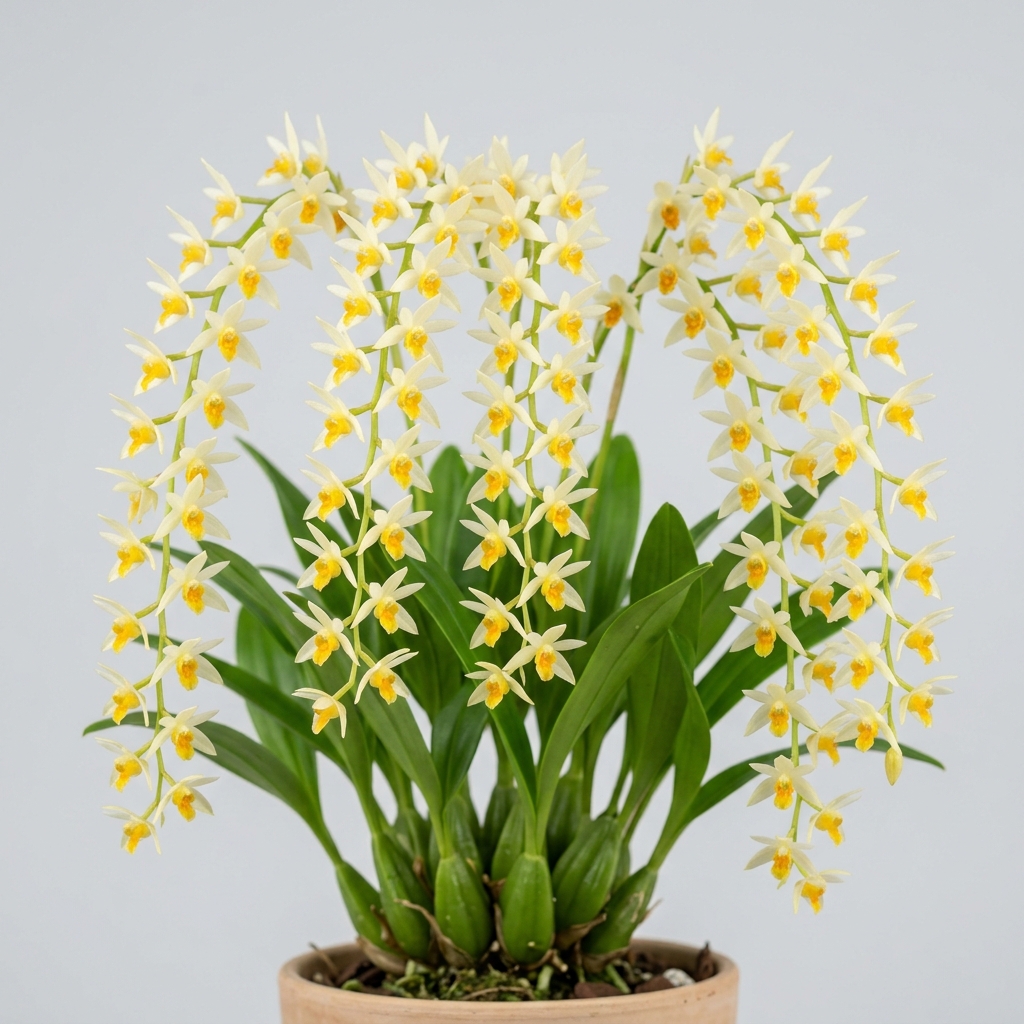
Coelogyne Mooreana is a highly esteemed species orchid, widely celebrated by collectors as one of the most beautiful members of its genus. Native to the high-altitude cloud forests of Vietnam, this sympodial orchid is famous for producing upright spikes of pristine, snow-white flowers highlighted by a brilliant golden-yellow throat. Its elegant growth habit and striking floral contrast make it a prized centerpiece in any intermediate to cool-climate orchid collection.
While many Coelogyne species exhibit a pendulous blooming habit, Coelogyne Mooreana stands out with its strictly erect inflorescences that present the flowers beautifully above the foliage. It is relatively resilient and adaptable compared to other high-altitude species, making it an excellent choice for growers looking to venture beyond standard nursery hybrids into the rewarding world of species orchids.
💡 Did You Know?
Coelogyne Mooreana is often referred to as the Queen of the Coelogynes due to its exceptionally clean, snow-white flowers and elegant upright growth habit. Discovered in the high-altitude regions of Vietnam in the early 20th century, it remains one of the most sought-after species in the for its pristine beauty and sweet .
🌿 Botanical Overview
Coelogyne Mooreana is native to the Lang Biang plateau in southern Vietnam, where it grows as an epiphyte on moss-covered trees at elevations of 1,300 to 2,000 meters. This high-altitude origin dictates its preference for cooler temperatures and high humidity. The plant features tightly clustered, ovoid pseudobulbs that are glossy green and carry one or two leathery, lanceolate leaves from their apex.
The growth habit is sympodial, meaning it expands horizontally by producing new leads from the base of older pseudobulbs. Over time, a single plant can develop into a dense, multi-lead specimen that produces multiple flower spikes simultaneously, creating a spectacular display of white blooms.
🌸 Flower Characteristics
The flowers of Coelogyne Mooreana are highly distinctive, characterized by their crystalline white sepals and petals that frame a complex, beautifully detailed lip. The center of the lip features a vibrant golden-yellow or orange-yellow patch adorned with soft, hair-like ridges or lamellae. This bright splash of color serves as a natural guide for pollinators against the otherwise pure white flower.
Individual flowers typically measure between 7 to 10 centimeters in diameter. They are borne on erect, sturdy inflorescences that emerge from the center of developing new growths. Each spike can carry anywhere from three to eight flowers, which open nearly simultaneously and are presented elegantly above the dark green foliage.
Fragrance & Bloom Profile
One of the most appealing traits of Coelogyne Mooreana is its delightful fragrance. The blooms emit a sweet, honey-like scent that is most pronounced during the warm daylight hours. The fragrance is clean and pleasant, filling a growing space without becoming overwhelming.
The blossoms are remarkably long-lasting, often remaining in pristine condition for four to six weeks if the plant is kept in a cool, draft-free environment. Because the flowers open almost at the same time, the plant provides a high-impact visual and olfactory display throughout its blooming cycle.
Parentage & Hybrid Lineage
Coelogyne Mooreana is a naturally occurring species rather than a man-made hybrid. First described in the early 20th century, it has been used extensively by orchid breeders to introduce upright flower spikes, pure white coloration, and cold tolerance into new Coelogyne hybrids.
Among its most famous hybrid offspring is Coelogyne Unchained Melody, which benefits from the clean lines and robust growth of its parentage. Hybridization efforts continue to value this species for its dominant white genes and exceptional floral presentation.
🌱 Growing Conditions
To cultivate Coelogyne Mooreana successfully, growers should aim to replicate its native montane cloud forest environment. It thrives in medium to bright filtered light, similar to the conditions preferred by Miltoniopsis or cool-growing Masdevallias. Direct afternoon sunlight must be avoided to prevent leaf scorch.
💡 Care Tip
Maintain high levels of 60% to 80% and ensure constant, gentle air movement around the plant. This balance is critical to prevent fungal leaf spotting while keeping the moisture-loving roots and foliage healthy.
Temperature management is key to its long-term health. It prefers cool to intermediate conditions, ideally with daytime temperatures ranging from 65°F to 75°F (18°C to 24°C) and a distinct drop at night to around 50°F to 55°F (10°C to 13°C). High humidity of 60% to 80% is essential, coupled with continuous, gentle air movement to prevent stagnant air pockets.
Watering, Feeding & Potting Media
This species does not possess a significant winter dormancy period and prefers to remain evenly moist throughout the year. Water the plant thoroughly as the potting medium approaches dryness, but do not allow the roots to sit in standing water. During the active growing season in spring and summer, watering frequency should be increased.
Feed the orchid with a highly diluted, balanced orchid fertilizer every second or third watering during active growth. A well-draining yet moisture-retentive potting medium is crucial. A mix of fine-grade fir bark, chopped sphagnum moss, and perlite or charcoal provides the ideal balance of moisture retention and root aeration.
Blooming Season & Care Notes
While Coelogyne Mooreana can bloom at various times of the year, its primary flowering season typically spans from spring through late summer. Flower spikes emerge from the center of new vegetative growths before the pseudobulbs have fully matured. It is important not to disturb the plant or allow it to dry out during this critical spike-development phase.
Once flowering is complete, allow the flower spike to dry naturally before cutting it back near the base. Repotting should only be performed when new root growth is visible at the base of the newest pseudobulbs, which usually occurs shortly after the blooming cycle concludes.
⚠️ Common Issues
⚠️ Common Mistake
A frequent error is allowing the potting medium to dry out completely between waterings. Unlike some orchids that prefer a dry cycle, this species requires consistent moisture and will quickly show stress through shriveled pseudobulbs.
- Root rot caused by compacted, poorly draining potting media or overwatering.
- Shriveled pseudobulbs indicating chronic underwatering or a loss of healthy roots.
- Leaf tip burn or spotting, often resulting from low humidity or mineral buildup from hard water.
- Bud blast, where developing flower buds yellow and drop due to sudden temperature fluctuations or dry air.
- Pests such as spider mites and mealybugs, which can hide in the tight crevices between pseudobulbs.
❓ Frequently Asked Questions
How often should I water Coelogyne Mooreana?
Watering frequency depends on your home environment, but the medium should remain consistently damp. Typically, watering once or twice a week is sufficient, ensuring the mix never dries out completely.
Why are the leaves on my orchid turning yellow?
Yellowing leaves can indicate overwatering, poor drainage, or excessive direct sunlight. Check the roots to ensure they are firm and white, and move the plant to a location with bright, filtered light.
Can I grow Coelogyne Mooreana mounted on cork bark?
Yes, it can be grown mounted if you can maintain very high humidity and water the plant daily. However, most growers find that potting in a basket or plastic pot with a moisture-retentive mix yields more consistent results.
Does Coelogyne Mooreana require a dry winter rest?
No, this species does not require a dry rest period. You should reduce watering slightly during the darker winter months to match the slower growth rate, but the potting medium should never be allowed to dry out entirely.
⭐ Final Growing Notes
Coelogyne Mooreana remains a crowning achievement of the orchid world, offering unparalleled elegance with its pristine white and gold blossoms. By providing cool to intermediate temperatures, consistent moisture, and high humidity, growers can enjoy the reliable annual display and sweet fragrance of this magnificent Vietnamese species for decades.
⚕️ Health, Safety & Edibility
Understanding how a plant interacts with people, pets, and the surrounding environment is part of responsible cultivation. This section uses conservative, general guidance and does not replace professional medical or veterinary advice.
Human Safety: No published evidence currently identifies species-specific toxicity concerns for Coelogyne Mooreana during normal handling. As with most ornamental plants, it should not be intentionally consumed.
Pet Safety: Published information does not indicate that this orchid commonly poses a toxicity concern for cats or dogs. However, chewing leaves, flowers, roots, or potting media may still cause mild digestive upset.
Edibility: This orchid is cultivated for ornamental display rather than food. Ornamental plants may carry fertilizers, pesticides, or other horticultural treatments that make them unsuitable for consumption.
Skin Contact: Routine handling is not generally associated with skin irritation. Gardeners with sensitive skin may prefer wearing gloves when repotting, pruning, or handling potting media.
🌱 Propagation Tip
Propagate during repotting by carefully dividing mature clumps. Ensure each division has at least three to four healthy, active pseudobulbs with viable root systems to ensure successful establishment in new media.
⭐ Expert Advice
To encourage robust blooming, provide a distinct but gentle drop in night temperatures during the autumn and winter months. This differential mimics its native high-altitude habitat and helps trigger the development of flower spikes.

Leave A Comment