
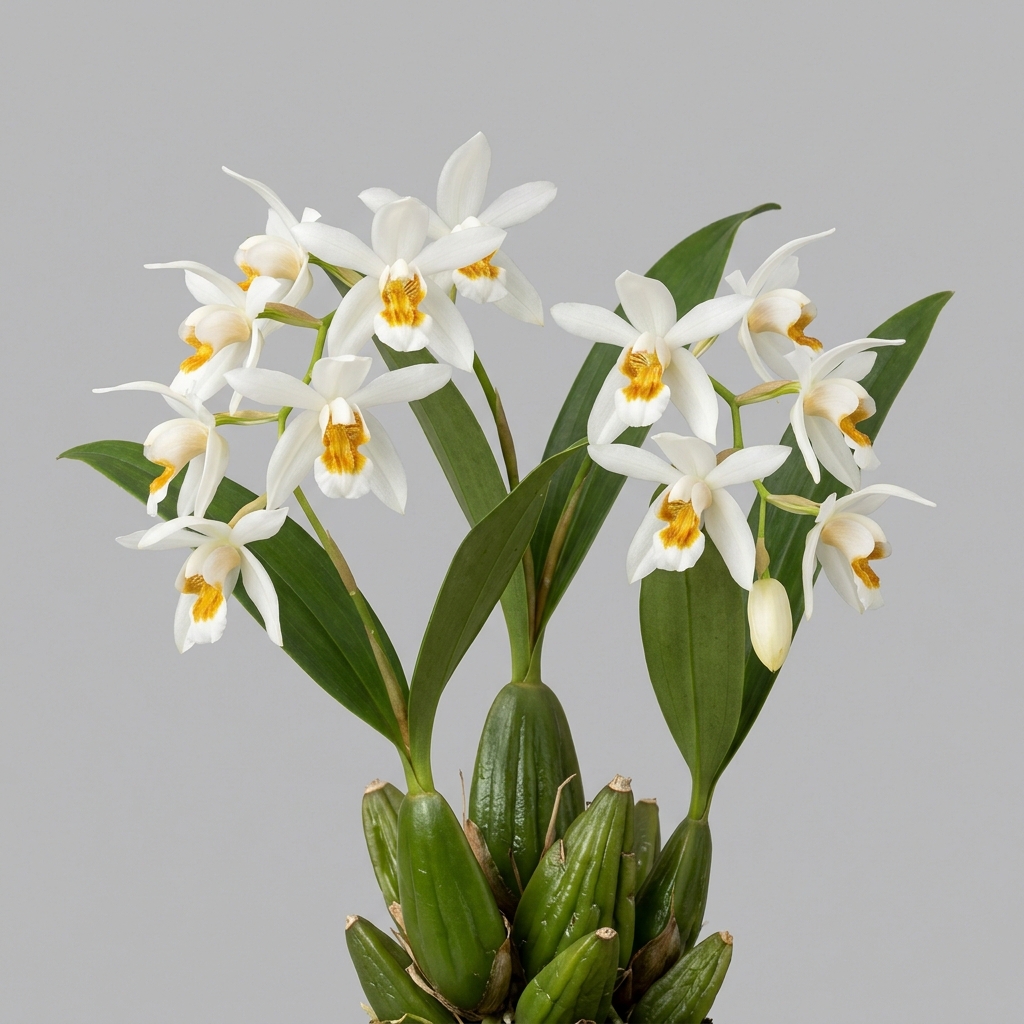
Coelogyne Nitida is a captivating epiphytic orchid species highly prized by collectors for its pristine white blossoms and striking golden-yellow lip markings. Native to the cool, moist montane forests of the Himalayas and Southeast Asia, this resilient orchid brings a touch of alpine elegance to indoor collections. Its glossy, tightly clustered pseudobulbs and lush evergreen foliage provide year-round visual interest even when the plant is not in bloom.
Growers value Coelogyne Nitida not only for its elegant floral display but also for its relatively accommodating nature compared to more finicky cool-growing orchids. When provided with bright, filtered light, consistent moisture, and buoyant airflow, this species rewards caretakers with a generous flush of fragrant flowers. Understanding its seasonal growth cycle is the key to unlocking its full blooming potential year after year.
💡 Did You Know?
Coelogyne Nitida is native to the high-altitude regions of the Himalayas, where it often grows on moss-covered trees alongside wild rhododendrons. Its specific epithet, nitida, is derived from the Latin word for shining or lustrous, which directly refers to the remarkably glossy, polished appearance of its bright green pseudobulbs.
🌿 Botanical Overview
Coelogyne Nitida, historically also referred to as Coelogyne ochracea, belongs to a diverse genus of sympodial orchids celebrated for their distinctive pseudobulbs and cascading inflorescences. In its natural habitat, this species grows as an epiphyte on moss-covered tree branches or as a lithophyte on damp rocky outcrops at elevations ranging from 1,000 to 2,300 meters. This high-altitude origin dictates its preference for cooler temperatures and high atmospheric humidity.
The plant features prominent, glossy green pseudobulbs that are oblong to ovoid in shape, typically measuring two to three inches in height. Each pseudobulb bears two lanceolate, leathery leaves that channel water down toward the root system. Over time, the plant forms dense, attractive clumps that can easily fill a medium-sized basket or shallow pot, making it an excellent specimen plant for intermediate greenhouse or windowsill culture.
🌸 Flower Characteristics
The flowers of Coelogyne Nitida are a masterclass in delicate contrast. Emerging from the base of mature pseudobulbs, the upright to slightly arching inflorescences carry between three and eight flowers, each measuring approximately one and a half to two inches across. The sepals and petals are a clean, crystalline white, providing a stark background for the intricate details of the lip.
The three-lobed labellum, or lip, is the focal point of the blossom. It features bright yellow to ochre-orange patches outlined in white or light brown, resembling glowing eyes or a central golden shield. This vivid coloration serves as a guide for natural pollinators in the dim light of the forest canopy. The flowers open nearly simultaneously, creating a concentrated and highly impactful display.
Fragrance & Bloom Profile
One of the most appealing attributes of Coelogyne Nitida is its delightful fragrance. The blossoms emit a sweet, honey-like scent with subtle musky undertones that can easily fill a small growing room or greenhouse on warm, sunny mornings. The intensity of the fragrance is highly dependent on light levels and ambient temperature, peaking during midday.
Individual flowers typically remain in pristine condition for two to three weeks, provided they are kept in cool, dry air. High humidity is beneficial for the plant, but water droplets sitting directly on the open petals can cause premature spotting or decay. To maximize the lifespan of the blooms, growers often move the plant to a slightly cooler, draft-free location once the buds have fully opened.
Parentage & Hybrid Lineage
As a naturally occurring species rather than a man-made hybrid, Coelogyne Nitida carries a pure genetic lineage shaped by its native environment. In taxonomic circles, it is classified under the section Erectae within the genus Coelogyne. While it is not as heavily hybridized as genera like Cattleya or Phalaenopsis, it has been used occasionally in breeding programs to introduce cool-tolerance, compact growth habits, and its signature golden-lipped white flowers to new grexes.
In horticultural trade, it is crucial to distinguish true Coelogyne Nitida from closely related species such as Coelogyne corymbosa, which shares a similar color palette but differs in pseudobulb shape and floral details. Because registration records for older species can sometimes be obscure, purchasing plants from reputable nurseries ensures that growers receive a genetically true representation of this Himalayan treasure.
🌱 Growing Conditions
Replicating the montane forest environment is essential for successfully cultivating Coelogyne Nitida. It thrives in bright, indirect light, similar to the dappled sunlight found under a forest canopy. East- or shaded south-facing windows are ideal, while strong, direct afternoon sun must be avoided to prevent the leaves from scorching.
💡 Care Tip
To maintain the ideal balance of moisture and aeration, consider growing Coelogyne Nitida in a slatted wooden basket lined with coconut coir or high-quality sphagnum moss. This setup allows the roots to dry out evenly and prevents the stagnant conditions that lead to root rot.
Temperature management is a critical factor in the health of this orchid. It prefers cool to intermediate conditions, with daytime temperatures ranging from 65 to 75 degrees Fahrenheit (18 to 24 degrees Celsius) and a distinct drop at night to 50 to 60 degrees Fahrenheit (10 to 15 degrees Celsius). Constant, gentle air movement is vital, especially in high-humidity environments, to prevent stagnant air pockets that encourage fungal pathogens.
Watering, Feeding & Potting Media
During the active growing season in spring and summer, Coelogyne Nitida requires abundant water. The potting medium should be kept consistently damp but never waterlogged. As the new pseudobulbs mature in autumn, watering should be gradually reduced, allowing the medium to dry out slightly between waterings during the cooler winter months.
A well-draining, moisture-retentive potting mix is essential. A blend of medium-grade fir bark, sphagnum moss, and perlite works exceptionally well. Alternatively, many growers prefer to cultivate this species in open slatted wooden baskets, which mimic its natural epiphytic habit and allow the roots to breathe. Feed the plant weekly with a highly diluted, balanced orchid fertilizer during active growth, flushing the pot with pure water once a month to prevent salt buildup.
Blooming Season & Care Notes
Coelogyne Nitida typically blooms in the spring, with flower spikes emerging alongside or just before the new vegetative growth. Once the blooming cycle concludes, the plant enters its primary growth phase, producing new roots and pseudobulbs. This post-bloom period is the optimal time for repotting or dividing the plant, as the emerging roots will quickly establish themselves in the fresh medium.
Avoid disturbing the root system unless the potting medium has begun to break down, which usually occurs every two to three years. When repotting, select a container that allows for two years of future growth, as Coelogyne species can be sensitive to root disturbance and may skip a blooming season if divided too aggressively.
⚠️ Common Issues
⚠️ Common Mistake
A common mistake is failing to provide a cooler, drier winter rest. Keeping the orchid warm and heavily watered year-round often results in lush vegetative growth at the expense of spring flowers, and can eventually lead to root decay.
- Root Rot:
Caused by overwatering or compacted, poorly draining potting media. Ensure the mix remains airy and fresh. - Leaf Tip Burn: Often a sign of excessive fertilizer salts in the medium or low humidity. Flush the pot thoroughly with rainwater or distilled water.
- Bud Blast:
Sudden drops in humidity, drafts, or water contact on developing buds can cause them to yellow and drop before opening. - Spider Mites and Mealybugs: These pests can hide in the crevices of the tightly packed pseudobulbs and under leaves. Treat promptly with insecticidal soap or neem oil.
- Shriveled Pseudobulbs: While slight wrinkling is normal during the winter rest, severe shriveling during the growing season indicates underwatering or a compromised root system.
❓ Frequently Asked Questions
How do I trigger blooming in Coelogyne Nitida?
To encourage robust spring blooming, provide a distinct winter rest period with reduced watering and cooler night temperatures. A drop to around 50 to 55 degrees Fahrenheit (10 to 13 degrees Celsius) in winter mimics its natural habitat and triggers flower spike initiation.
Can Coelogyne Nitida be grown mounted on wood?
Yes, this species thrives when mounted on cork bark or tree fern plaques, provided you can maintain high humidity and water the plant daily during the hot summer months. Mounting beautifully showcases its natural cascading growth habit.
Why are the leaves on my orchid turning yellow?
Yellowing leaves can indicate several issues, most commonly overwatering, which leads to root rot, or exposure to excessive direct sunlight. Check the roots first; if they are firm and white, reduce the light intensity slightly.
Is Coelogyne Nitida suitable for beginners?
This orchid is moderately easy to grow and is an excellent choice for beginners who can provide cool to intermediate temperatures. It is far more forgiving of occasional watering mistakes than other high-altitude orchid species.
⭐ Final Growing Notes
Coelogyne Nitida remains a highly rewarding addition to any orchid collection, offering a brilliant combination of pristine white flowers, vibrant golden accents, and a sweet, refreshing fragrance. By respecting its montane heritage—providing cool temperatures, bright indirect light, and a distinct winter rest—growers can enjoy the annual spectacle of its elegant blooms. Its compact, clumping habit makes it a space-efficient choice for windowsills, greenhouses, and indoor grow setups alike.
⚕️ Health, Safety & Edibility
Understanding how a plant interacts with people, pets, and the surrounding environment is part of responsible cultivation. This section uses conservative, general guidance and does not replace professional medical or veterinary advice.
Human Safety: No published evidence currently identifies species-specific toxicity concerns for Coelogyne Nitida during normal handling. As with most ornamental plants, it should not be intentionally consumed.
Pet Safety: Published information does not indicate that this orchid commonly poses a toxicity concern for cats or dogs. However, chewing leaves, flowers, roots, or potting media may still cause mild digestive upset.
Edibility: This orchid is cultivated for ornamental display rather than food. Ornamental plants may carry fertilizers, pesticides, or other horticultural treatments that make them unsuitable for consumption.
Skin Contact: Routine handling is not generally associated with skin irritation. Gardeners with sensitive skin may prefer wearing gloves when repotting, pruning, or handling potting media.
🌱 Propagation Tip
Propagate Coelogyne Nitida by division only when the plant has outgrown its container and has at least eight to ten healthy pseudobulbs. Ensure each division contains at least three to four mature pseudobulbs with active root systems to guarantee successful establishment.
⭐ Expert Advice
If you struggle with low indoor , place your Coelogyne Nitida on a wide tray filled with pebbles and water, or group it closely with other plants. Ensure a small fan runs nearby to keep the air moving, preventing fungal spots on the foliage.

Leave A Comment