

Dendrobium Gouldii is a striking epiphytic orchid species belonging to the Spatulata section, commonly referred to as the antelope orchids due to their uniquely twisted, upright petals. Native to the warm, coastal regions of the Solomon Islands and neighboring archipelagos, this robust orchid is highly prized by collectors for its stately growth habit and long-lasting, architectural blooms. Its ability to produce tall, multi-flowered inflorescences makes it a dramatic centerpiece in any tropical orchid collection.
In cultivation, this species is favored for its vigor and the remarkable durability of its flowers, which can remain fresh on the plant for several months. While it requires bright light and consistent warmth to thrive, its adaptable nature makes it an excellent choice for intermediate to advanced growers looking to master the care of cane-type Dendrobiums. Understanding its natural coastal habitat is key to unlocking its full blooming potential and maintaining its lush, evergreen foliage year-round.
💡 Did You Know?
Dendrobium Gouldii is part of the Dendrobium orchid group, a favorite among growers because its flowers, growth habit, and care needs make it useful for comparing cultivated orchids within the same . Observing its leaves, roots, and bloom spikes can help growers understand how this cultivar responds to indoor conditions.
🌿 Botanical Overview
Dendrobium Gouldii is a medium to large-sized epiphyte characterized by its tall, cane-like pseudobulbs. These canes are slender at the base, swelling slightly in the middle, and can reach heights of several feet under optimal conditions. The leaves are leathery, oblong, and arranged alternately along the upper portion of the canes, providing a rich green backdrop for the emerging flower spikes.
In its native habitat, this orchid grows on trees and rocks near coastal areas, where it is exposed to bright sunlight, sea breezes, and frequent rainfall. This environment has adapted the plant to tolerate high light levels and require excellent air circulation around its root system. The robust root system is designed to cling tightly to surfaces and absorb moisture rapidly from humid air and passing showers.
🌸 Flower Characteristics
The defining feature of Dendrobium Gouldii is its distinctive antelope flower form. The petals are narrow, elongated, and twisted upward, mimicking the horns of an antelope. The sepals are typically shorter and slightly reflexed, framing the prominent, three-lobed lip or labellum. The lip often features intricate veining, usually in shades of purple or deep violet, which contrasts beautifully with the primary petal colors.
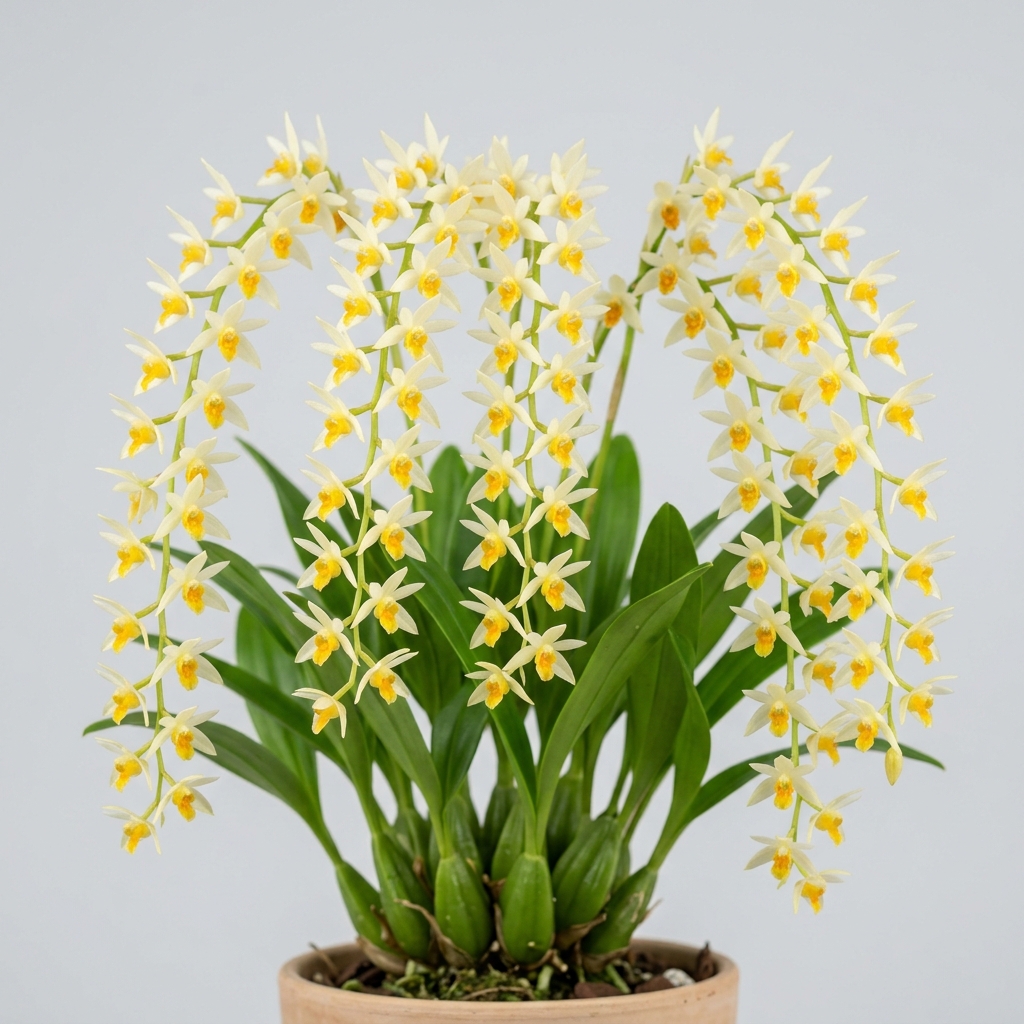
Individual flowers typically measure one to two inches across, but they are produced in abundance on arching, terminal or subterminal racemes that can carry dozens of blooms. The color palette of the flowers is highly variable, ranging from pale yellow and golden bronze to deep brown, with the contrasting purple lip serving as a consistent focal point. The flowers are exceptionally long-lasting, often remaining pristine for up to three months.
Fragrance & Bloom Profile
While some growers report a very faint, sweet scent on warm, sunny days, Dendrobium Gouldii is not primarily grown for its fragrance. Any scent produced is typically subtle and not consistently documented across all specimens, as fragrance intensity can be highly dependent on environmental factors such as temperature, humidity, and light intensity.
The bloom profile is defined by its impressive longevity and structural elegance. A mature, well-grown specimen can produce multiple flower spikes simultaneously, creating a spectacular display of twisted, colorful blooms. Because the flowers open sequentially along the spike, the overall blooming period can extend over several months, making it one of the most rewarding species in the genus for floral display.
Parentage & Hybrid Lineage
As a naturally occurring species rather than a man-made hybrid, Dendrobium Gouldii possesses a pure genetic lineage that has been used extensively in orchid breeding. It is a key parent in the creation of many modern antelope-type Dendrobium hybrids, contributing its tall growth habit, flower count, and twisted petal structure to its progeny.
In horticultural literature, some variation exists within the species, and various color forms have been selected and propagated by growers. However, because documentation on specific wild-collected clones can be limited, growers should treat individual plants as representatives of a diverse species complex. Its genetic dominance in hybridizing ensures that its distinctive twisted petals remain a prominent feature in its hybrid descendants.
🌱 Growing Conditions
To cultivate Dendrobium Gouldii successfully, growers must replicate its warm, tropical coastal origin. This orchid thrives in bright, filtered light, similar to the conditions found in a lightly shaded greenhouse or a south-facing window with sheer curtains. High light is essential for triggering flower spike development; insufficient light often results in weak, floppy canes and a lack of blooms.
💡 Care Tip
For best results, grow Dendrobium Gouldii in bright filtered with steady and gentle airflow. Avoid placing the plant in harsh midday sun, but do not keep it in a dark corner; weak is one of the most common reasons cultivated orchids refuse to rebloom.
Temperature ranges should remain consistently warm, with daytime temperatures between 75°F and 90°F, and nighttime temperatures rarely dropping below 60°F. High humidity, ideally between 60% and 80%, is crucial for healthy growth. To prevent fungal and bacterial issues in such humid conditions, strong and continuous air movement must be provided around the foliage and root zone.
Watering, Feeding & Potting Media
During the active growing season, typically from spring through autumn, Dendrobium Gouldii requires frequent and abundant watering. The potting medium should be allowed to approach dryness but not dry out completely between waterings. In winter, when growth slows, watering should be reduced, allowing the medium to dry out more thoroughly, though the canes should never be allowed to shrivel severely.
A coarse, fast-draining potting mix is essential to prevent root rot. A blend of medium to large fir bark, charcoal, and perlite works exceptionally well in clay pots, which provide stability for the tall canes. Alternatively, smaller plants can be mounted on cork bark or tree fern plaques if high humidity can be maintained. Feed the plant weekly with a balanced, diluted orchid fertilizer during the active growth phase, reducing feeding to once a month or halting it entirely during the winter rest.
Blooming Season & Care Notes
Dendrobium Gouldii can bloom at various times of the year, but flowering most commonly occurs from late autumn through spring. The flower spikes emerge from the upper nodes of mature, leafy canes. Once a cane has finished blooming, it should not be cut down unless it becomes completely dry and yellow, as old canes store vital water and nutrients that support new growth and future blooms.
Repotting should only be performed when necessary, typically every two to three years when the potting medium begins to break down or the plant outgrows its container. The best time to repot is in the spring, just as new growth and fresh root tips begin to emerge from the base of the pseudobulbs. Minimize root disturbance during this process to avoid stalling the plant’s growth.
⚠️ Common Issues
⚠️ Common Mistake
The most common mistake is by calendar instead of root and potting-media condition. Dendrobium roots need moisture and air at the same time, so constantly wet bark or sphagnum can lead to root loss even when the leaves still look healthy.
- Root Rot: Caused by overwatering or a decomposing, compacted potting medium that suffocates the roots.
- Bud Blast: The premature dropping of unopened flower buds, often triggered by sudden changes in temperature, drafts, or low humidity.
- Pests: Mealybugs, scale, and spider mites can infest the crevices of the leaves and canes; treat promptly with insecticidal soap or neem oil.
- Leaf Spotting: Fungal or bacterial spots can develop on the foliage if air circulation is inadequate in high-humidity environments.
- Dehydration: Shriveled canes and wrinkled leaves indicate insufficient watering or a compromised root system unable to absorb moisture.
❓ Frequently Asked Questions
How do I encourage my Dendrobium Gouldii to bloom?
To trigger blooming, ensure the plant receives bright, filtered light and consistent warmth. A slight reduction in watering and a minor drop in night temperatures during the autumn can also help stimulate the initiation of flower spikes from mature canes.
Why are the leaves on my orchid turning yellow and falling off?
While older leaves at the base of mature canes will naturally yellow and drop over time, widespread leaf loss can indicate overwatering, underwatering, or exposure to cold drafts. Check the root system to ensure it is healthy and firm.
Can I grow Dendrobium Gouldii under LED grow lights?
Yes, this orchid can be grown successfully under high-intensity LED grow lights. Ensure the lights are positioned close enough to provide the high light levels this species requires, while monitoring the foliage to prevent heat stress or leaf scorching.
What should I do with the canes after they finish blooming?
Leave the old canes intact on the plant. Even after they have shed their leaves and finished flowering, these pseudobulbs act as crucial storage organs for water and nutrients, fueling the development of new leads and future flower spikes.
⭐ Final Growing Notes
Dendrobium Gouldii is a rewarding and architecturally stunning orchid that brings a touch of the tropical Pacific to any collection. By providing it with abundant light, consistent warmth, and excellent air circulation, growers can enjoy its spectacular, long-lasting antelope-like blooms year after year. Its robust nature and historical significance in hybridizing make it a classic choice for dedicated orchid enthusiasts.
⚕️ Health, Safety & Edibility
Understanding how a plant interacts with people, pets, and the surrounding environment is part of responsible cultivation. This section uses conservative, general guidance and does not replace professional medical or veterinary advice.
Human Safety: No published evidence currently identifies species-specific toxicity concerns for Dendrobium Gouldii during normal handling. As with most ornamental plants, it should not be intentionally consumed.
Pet Safety: Published information does not indicate that this orchid commonly poses a toxicity concern for cats or dogs. However, chewing leaves, flowers, roots, or potting media may still cause mild digestive upset.
Edibility: This orchid is cultivated for ornamental display rather than food. Ornamental plants may carry fertilizers, pesticides, or other horticultural treatments that make them unsuitable for consumption.
Skin Contact: Routine handling is not generally associated with skin irritation. Gardeners with sensitive skin may prefer wearing gloves when repotting, pruning, or handling potting media.
🌱 Propagation Tip
Propagation should be approached patiently. Most home growers should wait for natural keikis or divide only mature, healthy plants when the orchid type allows it. Never remove a young growth until it has strong roots and enough leaves to support itself away from the parent plant.
⭐ Expert Advice
Repot after flowering when fresh root tips begin to appear. This timing helps the plant anchor quickly into new bark or sphagnum and reduces stress, especially for orchids grown indoors where airflow, , and drying speed can change from season to season.

Leave A Comment