
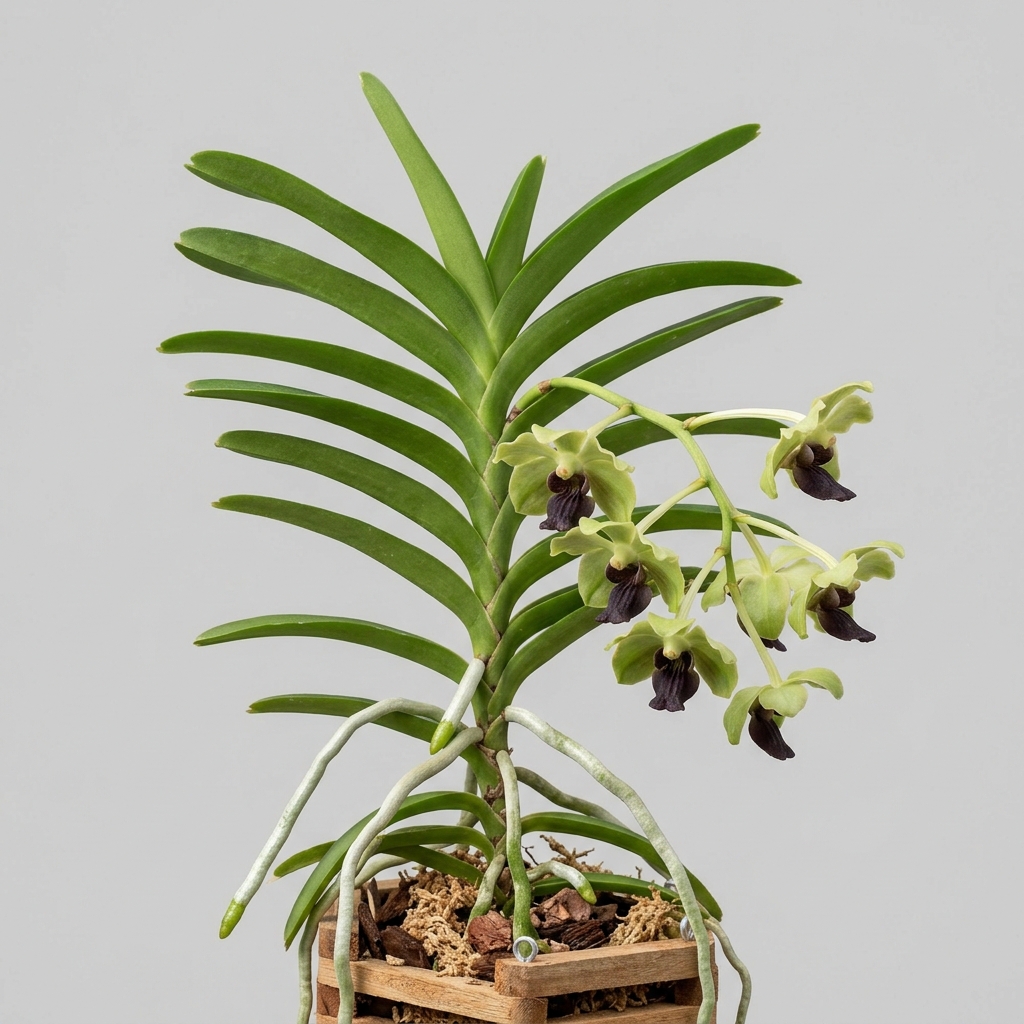
Vanda Alpina, also known in some taxonomic circles as Trudelia alpina, is a distinctive miniature to small-sized epiphytic orchid species highly prized by collectors for its unique montane origin and striking floral morphology. Native to the high-altitude forests of the Himalayas, southern China, and northern Indochina, this orchid departs from the typical warm-growing Vanda stereotype by thriving in cooler, humid conditions. Its compact growth habit and elegant, downward-facing blooms make it an exceptional choice for growers seeking a montane orchid with refined botanical character.
Unlike its larger, flamboyant hybrid relatives, Vanda Alpina offers a subtle, understated beauty with fleshy, jade-green to yellowish sepals and petals contrasted by a deeply colored, dark lip. Cultivating this species successfully requires a shift in traditional Vanda care, emphasizing cooler temperatures, consistent moisture, and excellent air circulation. For dedicated orchid enthusiasts, mastering the specific environmental rhythms of this high-altitude gem is a rewarding pursuit that brings a piece of the misty Himalayan canopy into the home greenhouse.
💡 Did You Know?
Vanda Alpina is native to high-altitude Himalayan forests up to 2,400 meters, making it one of the few cool-growing species in a dominated by warm-loving tropical giants. Its unique adaptation allows it to withstand chilly night temperatures that would severely damage or kill typical lowland Vanda orchids.
🌿 Botanical Overview
Vanda Alpina is a monopodial epiphyte characterized by its upright, leafy stems that typically reach only 15 to 25 centimeters in height. The leaves are strap-shaped, leathery, and arranged in a neat, two-ranked fashion along the stem. Thick, fleshy aerial roots emerge from the lower portions of the stem, anchoring the plant to mossy tree branches in its native montane habitat.
In the wild, this species is found at elevations ranging from 1,200 to 2,400 meters above sea level, where it is subjected to cool temperatures, frequent mists, and seasonal monsoon rains. This evolutionary background has adapted the plant to tolerate lower temperatures than most lowland Vanda species, making it a unique physiological outlier within the genus.
🌸 Flower Characteristics
The inflorescence of Vanda Alpina is relatively short, arising from the leaf axils and bearing one to three closely spaced flowers. Each bloom is moderately sized, usually measuring between 2 and 3 centimeters in diameter. The sepals and petals are fleshy, slightly incurved, and typically present a pale green, olive-green, or yellowish-green hue.
The defining feature of the flower is its prominent, fleshy lip. The lip is deeply channeled, featuring a dark purplish-brown, maroon, or nearly black interior with subtle striping. This dramatic contrast between the pale, understated petals and the dark, complex lip structure creates a highly sophisticated visual profile that appeals to botanical purists.
Fragrance & Bloom Profile
The fragrance of Vanda Alpina is a subject of discussion among growers, as its scent profile is not consistently documented across all cultivated specimens. Some growers report a faint, sweet, or slightly herbal aroma that is most noticeable during the warm morning hours when humidity is high. Others observe virtually no scent, suggesting that fragrance intensity may be highly dependent on individual clones, light levels, and ambient temperatures.
The blooms are long-lasting, often remaining in pristine condition for four to six weeks if kept in cool, stable conditions. Because the flowers tend to nod slightly downward, displaying the plant on an eye-level mount or hanging basket allows for the best appreciation of the intricate lip details.
Parentage & Hybrid Lineage
As a naturally occurring species rather than a man-made hybrid, Vanda Alpina carries a pure genetic lineage shaped by natural selection in the Himalayan foothills. In botanical nomenclature, it is sometimes classified under the segregate genus Trudelia due to its distinct floral structure and cool-growing habit, though modern databases frequently maintain it within the broader Vanda genus.
While not as widely used in commercial hybridization as warm-growing Vandas, Vanda Alpina has been utilized by specialized breeders aiming to introduce cold-tolerance, compact growth habits, and unique green-and-brown color combinations into modern Vanda hybrids. Any hybrid progeny inheriting its genetics typically display a preference for intermediate temperatures and a more manageable physical footprint.
🌱 Growing Conditions
Successful cultivation of Vanda Alpina hinges on replicating its cool, humid montane environment. Unlike standard Vandas that demand blazing, direct sunlight, this species prefers bright, filtered indirect light. East-facing windows or shaded greenhouses where the plant receives morning sun and afternoon shade are ideal.
💡 Care Tip
To keep Vanda Alpina thriving indoors, place it near a cool, east-facing window where it can receive gentle morning sun. Supplement the surrounding area with a humidifier to maintain a steady 60% to 80% level, which is essential for preventing leaf shriveling.
Temperature management is critical. The plant thrives in cool to intermediate conditions, with daytime temperatures ideally ranging from 18 to 24 degrees Celsius and a distinct drop at night to 10 to 15 degrees Celsius. High humidity of 60% to 80% must be maintained, accompanied by constant, gentle air movement to prevent stagnant moisture from settling on the foliage.
Watering, Feeding & Potting Media
During the active growing season in spring and summer, Vanda Alpina requires frequent watering. If grown mounted on cork bark or in open wooden baskets, it may need daily misting or soaking to keep the aerial roots hydrated. If potted, a highly porous, coarse medium such as large-grade fir bark mixed with charcoal and perlite is essential to ensure rapid drainage.
Fertilization should be light but regular during periods of active growth. A balanced, water-soluble orchid fertilizer diluted to one-quarter strength can be applied every second or third watering. In the winter, watering should be reduced significantly, allowing the medium to dry out more thoroughly between waterings, and fertilization should be suspended entirely to respect the plant’s natural semi-dormant rest period.
Blooming Season & Care Notes
Vanda Alpina typically initiates its blooming cycle in late spring or early summer, triggered by the gradual increase in day length and ambient temperatures. Once the flower spikes begin to emerge from the leaf axils, it is vital to maintain stable environmental conditions. Sudden drops in humidity or extreme temperature fluctuations can cause the developing buds to yellow and drop prematurely.
After the blooming cycle concludes, the old flower spikes should be cut back close to the stem using sterilized cutting tools. Repotting or remounting is best performed in early spring, just as new root tips begin to emerge, minimizing transplant shock and allowing the plant to establish itself before the summer heat arrives.
⚠️ Common Issues
⚠️ Common Mistake
A frequent error is treating Vanda Alpina like a standard tropical Vanda by exposing it to intense, direct afternoon sun and hot temperatures. This high-altitude species will quickly suffer from leaf scorch, dehydration, and root decline under extreme heat and .
- Root Rot:
Occurs when the plant is grown in dense, compacted media that retains water for too long, suffocating the sensitive aerial roots. - Bud Blast:
The premature drying and dropping of flower buds, usually caused by low humidity, drafty conditions, or sudden temperature shifts. - Leaf Spotting: Fungal or bacterial spots can develop on the foliage if water is allowed to sit on the leaves overnight without adequate air circulation.
- Dehydration:
Indicated by shriveled, wrinkled leaves and dry, silvery roots, often resulting from insufficient watering of mounted specimens. - Pests:
Scale insects and mealybugs can occasionally hide in the tight leaf axils; treat promptly with insecticidal soap or horticultural oil.
❓ Frequently Asked Questions
How do I know if my Vanda Alpina is getting the right amount of light?
The leaves of a healthy Vanda Alpina should be a medium, grassy green color. If the leaves turn dark green, the plant is likely receiving too little light, which may prevent blooming. Conversely, if the foliage develops a yellowish cast or shows reddish-purple pigmentation, the light is too intense, and the plant should be moved to a more shaded location.
Can Vanda Alpina be grown successfully indoors without a greenhouse?
Yes, Vanda Alpina can be grown indoors, provided you can meet its humidity and temperature requirements. Using a humidifier, placing the plant over a humidity tray, and utilizing a small fan to maintain air circulation will greatly improve success. Growing the plant in a coarse bark mix in a clay pot rather than bare-root in a basket can also help retain necessary moisture in indoor environments.
Why are the flower buds on my orchid turning yellow and falling off?
This issue, known as bud blast, is typically caused by environmental stress. Common culprits include a sudden drop in ambient humidity, exposure to cold drafts from air conditioning or heating vents, or allowing the potting medium to dry out completely while the spike is developing. Keeping conditions stable and humidity high during spike development is the best prevention.
Does Vanda Alpina require a winter rest period to bloom?
Yes, Vanda Alpina benefits from a cooler, drier rest period during the winter months. During this time, reduce watering to a minimum—just enough to prevent the leaves from shriveling severely—and stop fertilizing. This seasonal rest mimics its native Himalayan winter and helps stimulate the initiation of flower spikes in the spring.
⭐ Final Growing Notes
Vanda Alpina is a captivating orchid that rewards the patient grower with its exquisite, structurally unique blooms and manageable, compact growth habit. By respecting its montane heritage and providing the cool, humid, and well-ventilated conditions it craves, you can enjoy a healthy, long-lived specimen that stands out as a true botanical treasure in any orchid collection.
⚕️ Health, Safety & Edibility
Understanding how a plant interacts with people, pets, and the surrounding environment is part of responsible cultivation. This section uses conservative, general guidance and does not replace professional medical or veterinary advice.
Human Safety: No published evidence currently identifies species-specific toxicity concerns for Vanda Alpina during normal handling. As with most ornamental plants, it should not be intentionally consumed.
Pet Safety: Published information does not indicate that this orchid commonly poses a toxicity concern for cats or dogs. However, chewing leaves, flowers, roots, or potting media may still cause mild digestive upset.
Edibility: This orchid is cultivated for ornamental display rather than food. Ornamental plants may carry fertilizers, pesticides, or other horticultural treatments that make them unsuitable for consumption.
Skin Contact: Routine handling is not generally associated with skin irritation. Gardeners with sensitive skin may prefer wearing gloves when repotting, pruning, or handling potting media.
🌱 Propagation Tip
Propagation of Vanda Alpina is typically achieved through the separation of basal offsets, or keikis, which occasionally form at the base of mature stems. Wait until the keiki has developed several strong, active roots of its own before carefully detaching and potting it.
⭐ Expert Advice
For the best floral display, grow Vanda Alpina in a hanging wooden basket or mounted on a cork slab. Because the flowers naturally nod downward, hanging the orchid at eye level allows you to fully appreciate the intricate, dark-purple interior of its cup-like lip.

Leave A Comment