
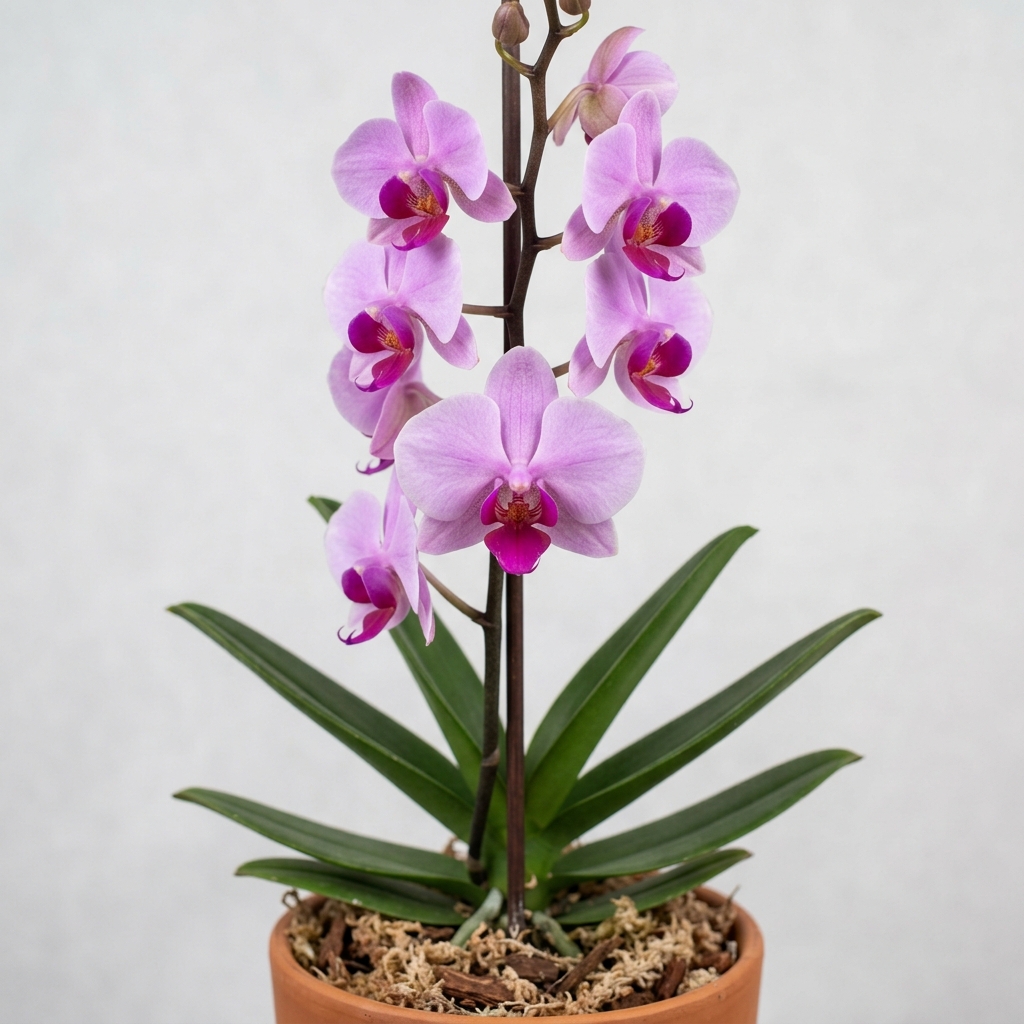
Phalaenopsis Buyssoniana is a highly distinctive orchid species, historically classified under the genus Doritis, celebrated for its upright growth habit and striking erect flower spikes. Unlike many of its pendulous epiphytic relatives, this orchid displays a more terrestrial or lithophytic nature in its native habitats of Southeast Asia. Growers particularly value this plant for its structural elegance, rigid foliage, and reliable display of vibrant blooms that stand tall above the leaves.
In cultivation, this species offers a rewarding experience for both novice and experienced orchid enthusiasts. Its compact size and tolerance for slightly higher light levels than standard hybrid moth orchids make it an adaptable addition to indoor grow spaces. By understanding its unique natural history and growth preferences, caretakers can enjoy its long-lasting blossoms and robust vegetative growth year after year.
💡 Did You Know?
Phalaenopsis Buyssoniana is part of the Phalaenopsis orchid group, a favorite among growers because its flowers, growth habit, and care needs make it useful for comparing cultivated orchids within the same . Observing its leaves, roots, and bloom spikes can help growers understand how this cultivar responds to indoor conditions.
🌿 Botanical Overview
Phalaenopsis Buyssoniana is native to the seasonal tropical climates of Indochina, including Thailand, Vietnam, and Cambodia. In these regions, it is frequently found growing in sandy soils, rocky crevices, or at the base of trees, which explains its unique semi-terrestrial growth habit. Its leaves are thick, rigid, and grow in a tight, upright rosette, distinguishing it from the floppy, pendulous leaves of typical epiphytic moth orchids.
The species was long classified as Doritis buyssoniana before taxonomists integrated the genus Doritis into Phalaenopsis. This evolutionary background contributes to its robust nature, as the plant is naturally adapted to withstand dry spells and higher light intensities than its shade-loving relatives.
🌸 Flower Characteristics
The flowers of Phalaenopsis Buyssoniana are borne on rigid, strictly upright inflorescences that can reach up to two feet in height. Each spike can carry numerous blossoms, opening sequentially to provide an extended display. The flowers typically measure around one to one and a half inches in diameter.
The petals and sepals exhibit soft shades of pink, lilac, or pale lavender, contrasting beautifully with a deeply saturated magenta or purple lip. The lip is narrow and features a distinct three-lobed structure, a characteristic trait inherited from its Doritis ancestry. The overall presentation is clean, symmetrical, and highly vertical.
Fragrance & Bloom Profile
Fragrance is not a primary feature of Phalaenopsis Buyssoniana, and most growers report that the flowers are virtually scentless. Occasionally, under warm, humid morning conditions, a very faint, clean herbal scent may be detected, though this is highly variable and not guaranteed.
What the blooms lack in scent, they make up for in longevity. Individual flowers can remain pristine for several weeks, and a single flower spike can remain in bloom for two to three months as new buds continue to open at the tip of the stem.
Parentage & Hybrid Lineage
As a naturally occurring species, Phalaenopsis Buyssoniana does not have a hybrid parentage. However, it has been widely used in hybridization programs to introduce upright flower spikes, compact growth habits, and intense pink coloration to modern Phalaenopsis hybrids.
While some botanical databases list it as a synonym or variety of Phalaenopsis pulcherrima, many collectors and growers maintain it as a distinct entity due to its larger plant size, tetraploid chromosome count, and subtle differences in flower morphology.
🌱 Growing Conditions
To cultivate this orchid successfully, provide medium to bright indirect light. It can tolerate more direct morning sun than standard hybrid moth orchids, which helps stimulate flowering. A east- or shaded south-facing window is often ideal.
💡 Care Tip
For best results, grow Phalaenopsis Buyssoniana in bright filtered with steady and gentle airflow. Avoid placing the plant in harsh midday sun, but do not keep it in a dark corner; weak is one of the most common reasons cultivated orchids refuse to rebloom.
Temperature ranges should mimic its tropical origin, preferring warm daytime temperatures between 75°F and 85°F and a slight drop at night to around 65°F. Maintain relative humidity levels between 50% and 70%, supported by good air circulation to prevent stagnant air around the rigid foliage.
Watering, Feeding & Potting Media
Unlike epiphytic orchids that prefer to dry out rapidly, Phalaenopsis Buyssoniana appreciates a potting medium that retains even, light moisture without becoming waterlogged. A mix of fine fir bark, perlite, and a small amount of chopped sphagnum moss works exceptionally well.
Water the plant thoroughly when the top inch of the medium feels dry to the touch. During the active growing season in spring and summer, apply a balanced, diluted orchid fertilizer weekly at one-quarter strength. Reduce feeding frequency during the cooler winter months when growth naturally slows.
Blooming Season & Care Notes
The primary blooming season occurs from late summer through autumn, triggered by the natural seasonal shifts in day length and temperature. Once the flower spike begins to emerge, avoid changing the plant’s orientation to the light source, as this can cause the developing buds to twist or align unevenly.
After the blooming cycle is complete, do not cut the green spike unless it turns brown and dry. Sometimes, secondary branches can emerge from the lower nodes of the spike, yielding a second flush of flowers. Repotting is best done in early spring as new root growth initiates.
⚠️ Common Issues
⚠️ Common Mistake
The most common mistake is by calendar instead of root and potting-media condition. Phalaenopsis roots need moisture and air at the same time, so constantly wet bark or sphagnum can lead to root loss even when the leaves still look healthy.
- Root Rot: Caused by overwatering or using a decomposed potting medium that suffocates the roots.
- Bud Blast: Occurs when sudden temperature drops, low humidity, or drafts cause developing buds to shrivel and fall off.
- Leaf Scorch: Appears as bleached or black patches on the leaves if the plant is exposed to intense, direct midday sunlight.
- Mealybugs and Scale: These pests can hide in the tight crevices of the upright leaf rosettes; treat promptly with insecticidal soap or horticultural oil.
❓ Frequently Asked Questions
How does Phalaenopsis Buyssoniana differ from standard moth orchids?
This species features a more upright, rigid growth habit with stiff leaves and strictly vertical flower spikes, reflecting its semi-terrestrial ancestry, whereas standard moth orchids are epiphytic with floppy, pendulous leaves and arching spikes.
Can I grow Phalaenopsis Buyssoniana under LED grow lights?
Yes, this orchid adapts exceptionally well to artificial lighting. Position the plant under moderately bright LED grow lights, ensuring it receives about 12 to 14 hours of light daily to encourage robust growth and reliable blooming.
Why are the flower buds on my orchid falling off before opening?
This issue, known as bud blast, is typically caused by environmental stress such as sudden temperature fluctuations, dry indoor air, cold drafts, or inconsistent watering while the spike is developing.
How often should I repot Phalaenopsis Buyssoniana?
Repotting should generally be done every one to two years in the spring. This refreshes the potting medium before it decomposes and provides space for new roots to expand without damaging the active growth cycle.
⭐ Final Growing Notes
Phalaenopsis Buyssoniana stands out as a resilient and architecturally striking orchid that rewards growers with vertical towers of lavender-pink blooms. By accommodating its preference for slightly higher light, consistent moisture, and warm temperatures, you can enjoy a highly distinctive species that bridges the gap between terrestrial resilience and classic tropical orchid beauty.
⚕️ Health, Safety & Edibility
Understanding how a plant interacts with people, pets, and the surrounding environment is part of responsible cultivation. This section uses conservative, general guidance and does not replace professional medical or veterinary advice.
Human Safety: No published evidence currently identifies species-specific toxicity concerns for Phalaenopsis Buyssoniana during normal handling. As with most ornamental plants, it should not be intentionally consumed.
Pet Safety: Published information does not indicate that this orchid commonly poses a toxicity concern for cats or dogs. However, chewing leaves, flowers, roots, or potting media may still cause mild digestive upset.
Edibility: This orchid is cultivated for ornamental display rather than food. Ornamental plants may carry fertilizers, pesticides, or other horticultural treatments that make them unsuitable for consumption.
Skin Contact: Routine handling is not generally associated with skin irritation. Gardeners with sensitive skin may prefer wearing gloves when repotting, pruning, or handling potting media.
🌱 Propagation Tip
Propagation should be approached patiently. Most home growers should wait for natural keikis or divide only mature, healthy plants when the orchid type allows it. Never remove a young growth until it has strong roots and enough leaves to support itself away from the parent plant.
⭐ Expert Advice
Repot after flowering when fresh root tips begin to appear. This timing helps the plant anchor quickly into new bark or sphagnum and reduces stress, especially for orchids grown indoors where airflow, , and drying speed can change from season to season.

Leave A Comment