
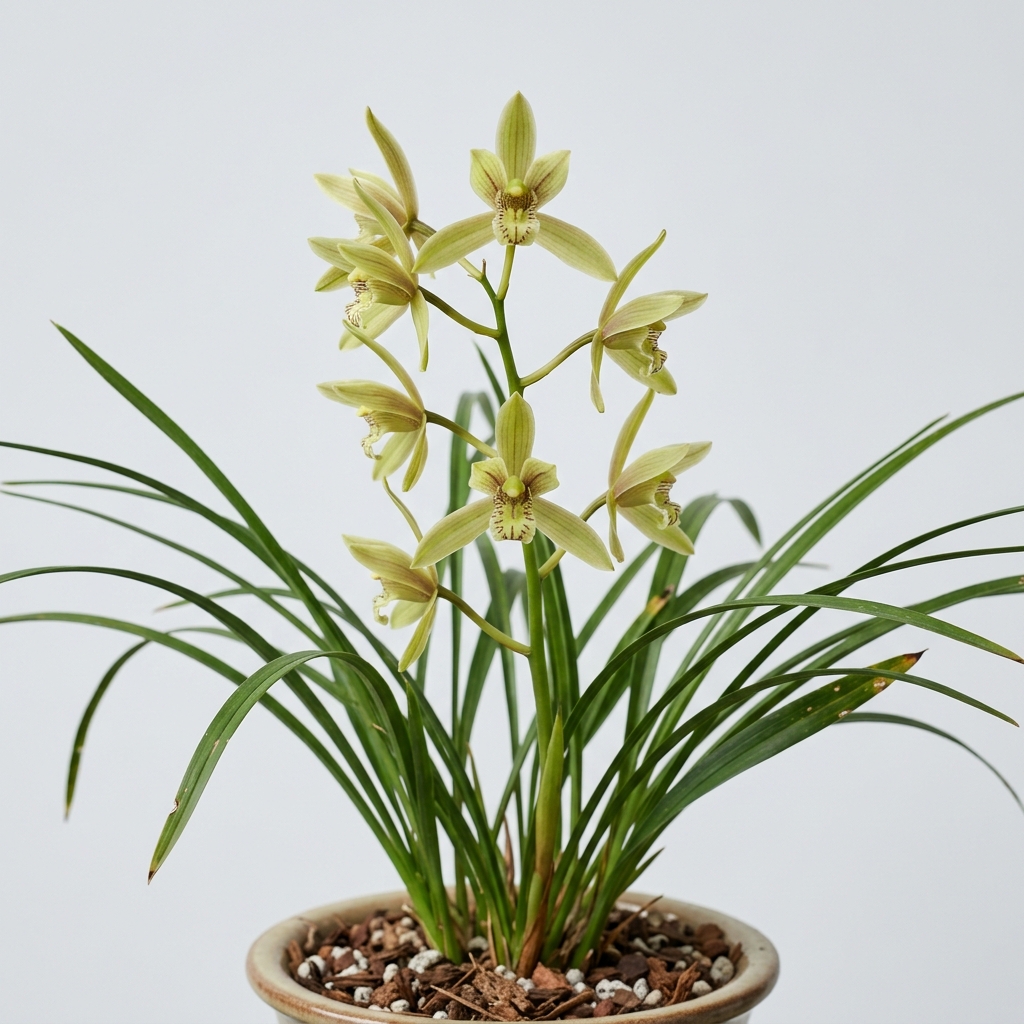
Cymbidium Forrestii is a highly prized terrestrial orchid within the genus Cymbidium, celebrated by collectors for its elegant, minimalist growth habit and delicate blooms. Often associated with traditional East Asian orchid cultivation, this plant features slender, grass-like foliage that arches gracefully, making it an attractive specimen even when not in flower.
Growers value this orchid for its understated beauty and historical significance in classical orchid appreciation. While it requires specific temperature fluctuations to trigger blooming, the reward of its uniquely structured, often fragrant flowers makes it a sought-after addition for dedicated orchid enthusiasts seeking to master traditional cultivation techniques.
💡 Did You Know?
Cymbidium Forrestii is part of the Cymbidium orchid group, a favorite among growers because its flowers, growth habit, and care needs make it useful for comparing cultivated orchids within the same . Observing its leaves, roots, and bloom spikes can help growers understand how this cultivar responds to indoor conditions.
🌿 Botanical Overview
Cymbidium Forrestii is a small-to-medium-sized terrestrial orchid native to mountainous regions of East Asia. It typically grows in organic-rich, well-draining soil on forest floors or rocky slopes, where it receives dappled sunlight and experiences distinct seasonal temperature shifts.
The plant is characterized by its small, tightly clustered pseudobulbs, which are largely concealed by the bases of its narrow, linear leaves. These grass-like leaves are tough and leathery, designed to withstand the cooler, drier winter conditions of its natural habitat.
🌸 Flower Characteristics
The flowers of Cymbidium Forrestii are typically borne on upright or slightly arching spikes that emerge from the base of the pseudobulbs. Each spike usually carries a single flower or a small cluster of blooms, depending on the specific clone and cultural conditions.
The sepals and petals are generally lanceolate, displaying soft shades of pale green, yellow-green, or muted bronze. The labellum (lip) is a prominent feature, often marked with delicate spots or stripes of dark red, purple, or brown, providing a striking contrast to the pastel tones of the surrounding segments.
Fragrance & Bloom Profile
Many growers report a delicate, sweet, or slightly spicy fragrance emanating from the flowers, particularly during the warmest hours of the day. However, fragrance intensity can be highly variable and is often influenced by temperature, humidity, and individual plant genetics.
The blooms are remarkably long-lasting, often remaining fresh for several weeks if the plant is kept in a cool, draft-free environment. This enduring display is one of the primary reasons the cultivar remains highly esteemed in traditional exhibitions.
Parentage & Hybrid Lineage
The exact taxonomic status and hybrid lineage of Cymbidium Forrestii are subject to ongoing discussion among botanists and orchid taxonomists. In some classical references, it is treated as a distinct species or a specific regional variant closely allied with the Cymbidium goeringii complex.
Because documentation regarding historical registrations can be limited or inconsistent in general grower literature, it is best approached as a distinct horticultural entity. It has occasionally been used in breeding programs to introduce compact growth habits and cold tolerance to modern Cymbidium hybrids.
🌱 Growing Conditions
To thrive, this orchid requires bright, filtered light, mimicking the dappled canopy of its native mountain forests. Direct afternoon sun should be avoided to prevent leaf scorch, while excessive shade will result in weak foliage and a failure to initiate flower spikes.
💡 Care Tip
For best results, grow Cymbidium Forrestii in bright filtered with steady and gentle airflow. Avoid placing the plant in harsh midday sun, but do not keep it in a dark corner; weak is one of the most common reasons cultivated orchids refuse to rebloom.
Temperature management is critical for this selection. It prefers cool to intermediate conditions, with daytime temperatures ranging from 65°F to 75°F (18°C to 24°C). Crucially, a distinct drop in night temperatures during autumn and winter—ideally down to 45°F to 50°F (7°C to 10°C)—is necessary to stimulate bud development.
Watering, Feeding & Potting Media
During the active growing season in spring and summer, the potting medium should be kept consistently moist but never waterlogged. As growth slows in the autumn and winter, watering frequency should be reduced, allowing the medium to dry out slightly between waterings while ensuring the pseudobulbs do not shrivel.
A highly porous, well-draining potting mix is essential. Traditional growers often use deep, narrow clay pots filled with a mixture of fine fir bark, pumice, perlite, and chopped sphagnum moss. Fertilize sparingly with a balanced, highly diluted orchid fertilizer during the active growth phase, flushing the pot with pure water periodically to prevent salt buildup.
Blooming Season & Care Notes
The primary blooming period occurs from late winter to early spring. Once flower spikes begin to emerge from the base of the pseudobulbs, growers should avoid moving the plant to a warmer location, as sudden temperature increases can cause the developing buds to blast (wither and drop).
After blooming is complete, any spent flower spikes should be cut back close to the base using sterilized tools. Repotting is best performed in late spring, just as new root growth begins, and should only be done every two to three years to avoid disturbing the sensitive root system.
⚠️ Common Issues
⚠️ Common Mistake
The most common mistake is by calendar instead of root and potting-media condition. Cymbidium roots need moisture and air at the same time, so constantly wet bark or sphagnum can lead to root loss even when the leaves still look healthy.
- Root rot caused by overwatering or compacted, poorly draining potting media.
- Bud blast resulting from sudden changes in temperature, low humidity, or drafts during spike development.
- Leaf scorch or yellowing due to exposure to direct, intense sunlight.
- Dehydration, characterized by shriveled pseudobulbs and wrinkled leaves, often due to underwatering or root loss.
- Pests such as spider mites, scale, and mealybugs, which can hide in the tight crevices of the foliage and pseudobulb bases.
❓ Frequently Asked Questions
How do I trigger blooming in Cymbidium Forrestii?
Triggering blooms requires a distinct drop in night temperatures during the autumn months, ideally down to 45°F to 50°F (7°C to 10°C) for several weeks, combined with bright, filtered light and reduced watering.
What is the best potting medium for this orchid?
A highly aerated, fast-draining mix is best. A blend of fine fir bark, pumice, and a small amount of sphagnum moss works well, ideally housed in a deep, narrow pot to accommodate its terrestrial root system.
Why are the leaf tips turning brown?
Brown leaf tips are commonly caused by tap water high in dissolved salts, over-fertilization, or low humidity. Using rainwater or distilled water and flushing the pot regularly can help prevent this issue.
Can Cymbidium Forrestii be grown indoors under LED lights?
Yes, it can be grown under high-quality LED grow lights designed for orchids. Ensure the lights provide sufficient intensity (bright, indirect equivalent) and that you can still provide the necessary cool night temperatures in autumn.
⭐ Final Growing Notes
Cymbidium Forrestii remains a captivating choice for the patient orchid grower. By respecting its seasonal cycle of cool winter rests and warm, humid summers, you will be rewarded with elegant foliage and exquisite, long-lasting blooms that bring a touch of classical botanical history to your collection.
⚕️ Health, Safety & Edibility
Understanding how a plant interacts with people, pets, and the surrounding environment is part of responsible cultivation. This section uses conservative, general guidance and does not replace professional medical or veterinary advice.
Human Safety: No published evidence currently identifies species-specific toxicity concerns for Cymbidium Forrestii during normal handling. As with most ornamental plants, it should not be intentionally consumed.
Pet Safety: Published information does not indicate that this orchid commonly poses a toxicity concern for cats or dogs. However, chewing leaves, flowers, roots, or potting media may still cause mild digestive upset.
Edibility: This orchid is cultivated for ornamental display rather than food. Ornamental plants may carry fertilizers, pesticides, or other horticultural treatments that make them unsuitable for consumption.
Skin Contact: Routine handling is not generally associated with skin irritation. Gardeners with sensitive skin may prefer wearing gloves when repotting, pruning, or handling potting media.
🌱 Propagation Tip
Propagation should be approached patiently. Most home growers should wait for natural keikis or divide only mature, healthy plants when the orchid type allows it. Never remove a young growth until it has strong roots and enough leaves to support itself away from the parent plant.
⭐ Expert Advice
Repot after flowering when fresh root tips begin to appear. This timing helps the plant anchor quickly into new bark or sphagnum and reduces stress, especially for orchids grown indoors where airflow, , and drying speed can change from season to season.

Leave A Comment