

Dendrobium Alexandrae is a striking and highly sought-after orchid species belonging to the Latouria section of the Dendrobium genus. Native to the warm, humid forests of Papua New Guinea, this orchid is prized by collectors for its exotic, almost alien-like floral morphology and its robust growth habit. Its pseudobulbs support leathery, evergreen foliage that provides year-round visual interest even when the plant is not in bloom.
Cultivating this species successfully requires an understanding of its natural epiphytic habitat. Unlike many common mass-market hybrids, it demands consistent warmth, high humidity, and excellent air circulation to thrive. For dedicated orchid enthusiasts, the reward of its long-lasting, intricately patterned blossoms makes it a standout centerpiece in any tropical collection.
💡 Did You Know?
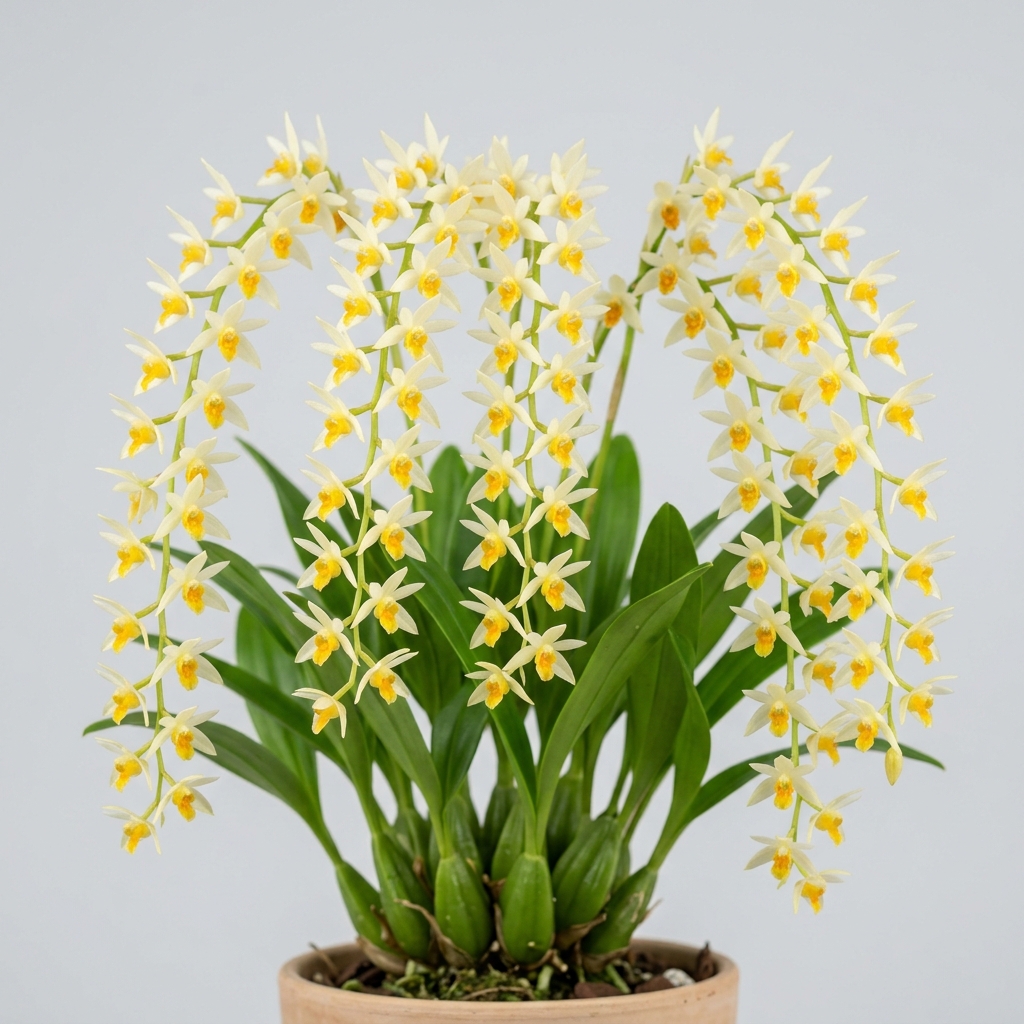
Dendrobium Alexandrae belongs to the Dendrobium orchid group, where flower presentation is often just as important as . White-flowered cultivars are especially valued indoors because their pale blooms reflect well and pair easily with many home, greenhouse, and display settings.
🌿 Botanical Overview
Dendrobium Alexandrae is an epiphytic orchid species native to the cloud forests of Papua New Guinea, typically found growing on mossy tree trunks at moderate elevations. It belongs to the Latouria section of the genus, which is famous for producing long-lasting flowers with unique, often bristly or heavily textured structures. The plant features club-shaped, erect pseudobulbs that can reach up to twelve inches or more in height, topped with two to three thick, coriaceous leaves.
The growth cycle of this species is closely tied to its tropical origin, characterized by active vegetative growth during the warmer, wetter months followed by a slightly drier, cooler period. Its root system is relatively fine but extensive, adapted to grasping rough bark surfaces and absorbing moisture rapidly from frequent rainfall and heavy mist.
🌸 Flower Characteristics
The blossoms of Dendrobium Alexandrae are remarkably distinct, showcasing the classic Latouria form with a dramatic twist. The flowers are typically medium-sized, measuring around two to three inches across, and are borne on upright or slightly arching inflorescences that emerge from the upper nodes of mature pseudobulbs. Each spike can carry several flowers, which are known for their exceptional longevity, often remaining fresh for up to three months.
The sepals and petals are generally creamy yellow, pale green, or off-white, adorned with intricate, dark purple-brown speckles or blotches. The lip, or labellum, is the most striking feature, being deeply three-lobed, heavily veined with dark purple, and often displaying a ruffled or fringed margin. The reverse side of the sepals frequently shows a unique, bristly texture that adds to the orchid’s exotic appeal.
Fragrance & Bloom Profile
The fragrance of Dendrobium Alexandrae is a subject of some variation among growers, as environmental factors and individual clones can influence scent production. Many growers report a light, pleasant fragrance that is most noticeable during the morning hours when temperatures begin to rise. The scent is often described as subtly sweet, honey-like, or slightly musky.
Because the flowers are exceptionally thick and waxy, they possess a remarkable resistance to wilting. A single blooming cycle can provide a stunning display for many weeks, making this species a highly rewarding choice for exhibition. The contrast between the pale background of the petals and the dark, dramatic markings ensures that the blooms stand out even from a distance.
Parentage & Hybrid Lineage
As a naturally occurring species rather than a man-made hybrid, Dendrobium Alexandrae does not have a hybrid parentage. It was formally described in the early 20th century and named in honor of Queen Alexandra. In modern horticulture, it is highly valued as a parent species in breeding programs within the Latouria section.
Hybridizers use this species to introduce its unique spotted patterns, ruffled lip structure, and long-lasting floral qualities to new grexes. When crossed with other Latouria species, such as Dendrobium spectabile or Dendrobium macrophyllum, it consistently passes on its robust growth habit and exotic flower form, contributing to some of the most spectacular modern Dendrobium hybrids available today.
🌱 Growing Conditions
To cultivate Dendrobium Alexandrae successfully, growers should aim to replicate the warm, humid environment of its native New Guinea cloud forests. It thrives in medium to bright indirect light, similar to the conditions preferred by many Cattleya orchids. Direct midday sunlight should be avoided to prevent leaf scorch, but adequate light is crucial for stimulating healthy pseudobulb development and later blooming.
💡 Care Tip
For best results, grow Dendrobium Alexandrae in bright filtered with steady and gentle airflow. Avoid placing the plant in harsh midday sun, but do not keep it in a dark corner; weak is one of the most common reasons cultivated orchids refuse to rebloom.
Temperature ranges should remain warm to intermediate, ideally between 70°F and 85°F during the day, with a slight drop of 10°F to 15°F at night to encourage bud initiation. High relative humidity of 60% to 80% is essential, coupled with strong, continuous air movement to prevent stagnant air pockets, which can invite fungal and bacterial pathogens.
Watering, Feeding & Potting Media
During its active growing season, Dendrobium Alexandrae requires frequent and thorough watering. The potting medium should be kept evenly moist but never waterlogged. As the new pseudobulbs mature in late autumn, watering should be gradually reduced, allowing the medium to dry out slightly more between applications, though the plant should never be allowed to shrivel completely.
A well-draining potting mix is critical for root health. A combination of medium-grade fir bark, charcoal, and perlite works exceptionally well, often topped with a thin layer of sphagnum moss to retain humidity around the surface roots. Alternatively, larger specimens can be mounted on cork bark or tree fern plaques if high humidity can be maintained. Feed the plant weekly with a balanced, highly diluted orchid fertilizer during active growth, flushing the pot with pure water once a month to prevent salt buildup.
Blooming Season & Care Notes
The primary blooming season for Dendrobium Alexandrae typically occurs from late winter through spring, although healthy plants may occasionally produce flowers at other times of the year. The flower spikes emerge from the nodes near the apex of the pseudobulbs. It is important not to cut old pseudobulbs, as they serve as vital energy reservoirs for the plant and can rebloom from unused nodes in later years.
Repotting should be performed only when necessary, typically every two to three years as the potting medium begins to break down or when the plant outgrows its container. The best time to repot is immediately after flowering, just as new root growth begins to emerge from the base of the newest pseudobulbs. Minimize root disturbance as much as possible to avoid stalling the plant’s growth.
⚠️ Common Issues
⚠️ Common Mistake
The most common mistake is by calendar instead of root and potting-media condition. Dendrobium roots need moisture and air at the same time, so constantly wet bark or sphagnum can lead to root loss even when the leaves still look healthy.
- Root Rot:
Caused by overwatering or a degraded potting medium that retains too much moisture, leading to limp, yellowing leaves and soft, brown roots. - Bud Blast:
Sudden dropping of flower buds before they open, often triggered by abrupt changes in temperature, low humidity, or drafty conditions. - Pests:
Spider mites and mealybugs are common pests that hide in the crevices of the leaves and pseudobulbs; they should be treated promptly with insecticidal soap or horticultural oil. - Foliar Spotting: Fungal or bacterial spots can develop on the leaves if water is allowed to sit on the foliage overnight without adequate air circulation.
❓ Frequently Asked Questions
How often should I water my Dendrobium Alexandrae?
During the active summer growing season, water the plant thoroughly as soon as the potting medium approaches dryness, which may be two to three times a week. In winter, reduce watering frequency, allowing the medium to dry out more substantially between waterings.
Does Dendrobium Alexandrae require a winter rest period?
This species does not require a severe dry rest like some other Dendrobium sections. However, it benefits from a slight reduction in water and fertilizer during the cooler winter months to mimic its natural seasonal cycle and encourage blooming.
Can I grow Dendrobium Alexandrae under LED grow lights?
Yes, this orchid adapts well to indoor cultivation under high-quality LED grow lights. Position the plant so it receives bright, indirect light for 12 to 14 hours a day, ensuring the lights do not emit excessive heat that could dry out the foliage.
Why are the leaves on my orchid turning yellow and dropping?
Yellowing leaves can indicate several issues, most commonly overwatering or poor drainage leading to root rot. Alternatively, older leaves at the base of mature pseudobulbs may naturally yellow and drop as part of the plant’s normal aging process.
⭐ Final Growing Notes
Dendrobium Alexandrae is a magnificent testament to the diversity of the orchid family, offering growers a captivating blend of exotic form and long-lasting floral beauty. While its environmental demands require a bit more attention than common household hybrids, its robust nature and spectacular, intricate blooms make it an incredibly rewarding species to master. By providing consistent warmth, high humidity, and careful watering, you can enjoy this Papuan treasure in your home collection for many years to come.
⚕️ Health, Safety & Edibility
Understanding how a plant interacts with people, pets, and the surrounding environment is part of responsible cultivation. This section uses conservative, general guidance and does not replace professional medical or veterinary advice.
Human Safety: No published evidence currently identifies species-specific toxicity concerns for Dendrobium Alexandrae during normal handling. As with most ornamental plants, it should not be intentionally consumed.
Pet Safety: Published information does not indicate that this orchid commonly poses a toxicity concern for cats or dogs. However, chewing leaves, flowers, roots, or potting media may still cause mild digestive upset.
Edibility: This orchid is cultivated for ornamental display rather than food. Ornamental plants may carry fertilizers, pesticides, or other horticultural treatments that make them unsuitable for consumption.
Skin Contact: Routine handling is not generally associated with skin irritation. Gardeners with sensitive skin may prefer wearing gloves when repotting, pruning, or handling potting media.
🌱 Propagation Tip
Propagation should be approached patiently. Most home growers should wait for natural keikis or divide only mature, healthy plants when the orchid type allows it. Never remove a young growth until it has strong roots and enough leaves to support itself away from the parent plant.
⭐ Expert Advice
Repot after flowering when fresh root tips begin to appear. This timing helps the plant anchor quickly into new bark or sphagnum and reduces stress, especially for orchids grown indoors where airflow, , and drying speed can change from season to season.

Leave A Comment