
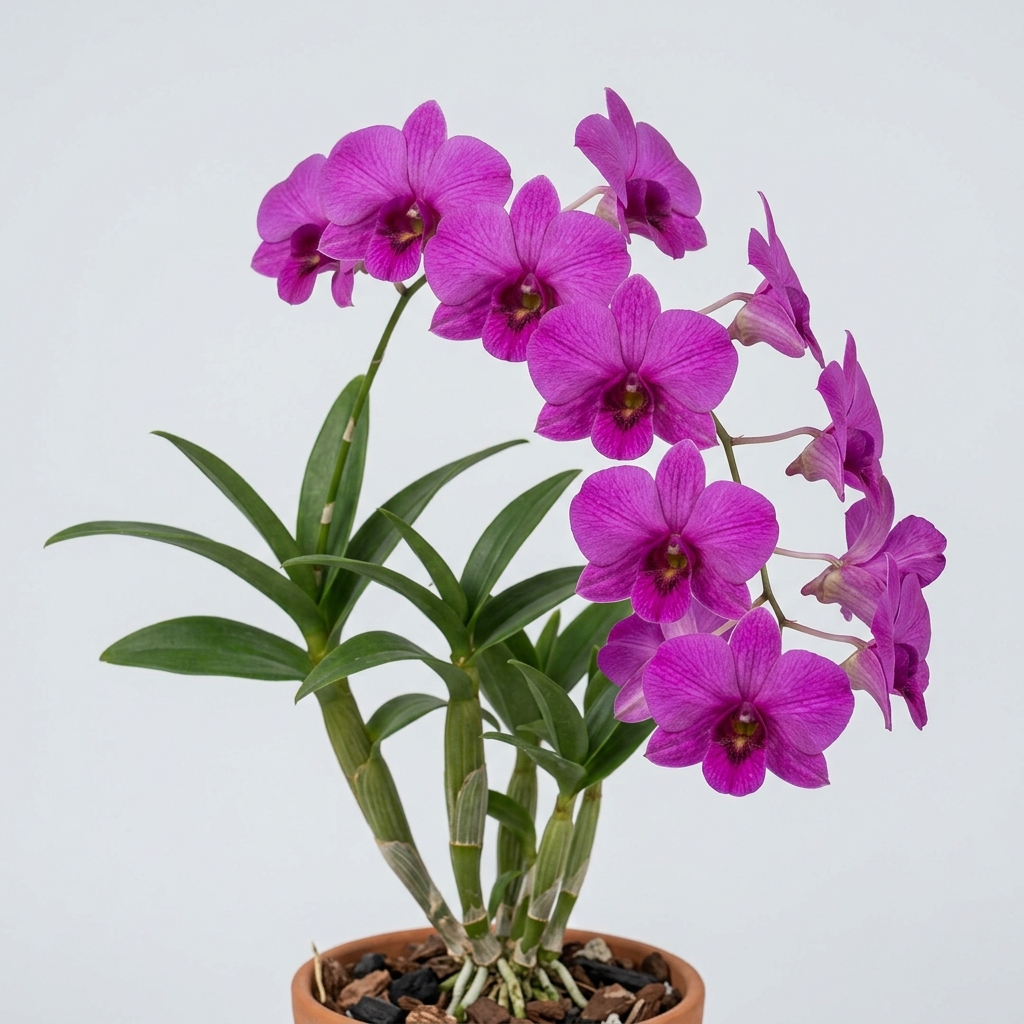
Dendrobium Bigibbum, commonly known as the Cooktown orchid, is a highly prized species and cultivar group within the diverse Dendrobium genus. Native to tropical regions of northern Australia and parts of New Guinea, this epiphytic orchid is celebrated for its striking, long-lasting blooms and resilient growth habit. It serves as a foundational parent in many modern dendrobium hybrids, valued for its ability to produce graceful arching sprays of vibrant purple to magenta flowers.
Growers of all experience levels appreciate this orchid for its relative adaptability and spectacular floral displays, which can persist for several weeks. While it thrives in warm, bright conditions reminiscent of its native monsoon forest canopy, it remains a manageable and rewarding choice for indoor cultivation. Understanding its seasonal moisture requirements and light preferences is key to unlocking its full blooming potential.
💡 Did You Know?
Dendrobium Bigibbum is the official floral emblem of Queensland, Australia, where it is affectionately known as the Cooktown orchid. In its native habitat, it can occasionally be found growing lithophytically on exposed coastal rocks, enduring intense tropical sun and salt spray, showcasing the incredible resilience of this popular species.
🌿 Botanical Overview
Dendrobium Bigibbum is characterized by its upright, cane-like pseudobulbs, which can vary in height depending on the specific variety and cultural conditions. These slender, slightly swollen canes serve as water and nutrient storage organs, allowing the plant to withstand dry periods in its native habitat. The leaves are narrow, lanceolate, and coriaceous, typically clustered toward the upper portion of the pseudobulbs.
As an epiphyte, this orchid naturally grows on trees or rocks, anchoring itself with a robust, clinging root system. The roots are covered in a thick layer of velamen, which efficiently absorbs moisture and atmospheric nutrients. Under optimal cultivation, the plant develops a compact, clump-forming habit that makes it well-suited for pot culture or mounting.
🌸 Flower Characteristics
The flowers of Dendrobium Bigibbum are renowned for their classic phalaenopsis-like shape, which has led to the common horticultural designation of “phalaenanthe-type” dendrobiums. The blooms feature broad, rounded petals and slightly narrower sepals, creating a full, symmetrical appearance. The lip, or labellum, is typically three-lobed and darker in color, often displaying intricate veining or a contrasting throat.
Individual flowers generally range from two to three inches in diameter and are produced on arching, terminal racemes that emerge from the upper nodes of the mature canes. A single spike can carry anywhere from five to over twenty blossoms, depending on the vigor of the plant. The flowers are remarkably durable, often remaining fresh and vibrant on the plant for up to six to eight weeks.
Fragrance & Bloom Profile
Unlike some of its relatives in the Dendrobium genus, Dendrobium Bigibbum is not primarily grown for its scent. Most cultivars and wild forms are considered unscented, though some growers report a very faint, sweet fragrance under warm, humid conditions in the peak of the day. The primary appeal remains its outstanding visual display and the longevity of its blooms.
The blooming cycle typically begins in late summer or autumn, with the flowers lasting well into the winter months. Because the spikes emerge from the upper nodes of both new and older, leafless canes, a mature specimen can produce multiple flower spikes simultaneously, creating a spectacular dome of color.
Parentage & Hybrid Lineage
As a distinct species, Dendrobium Bigibbum has a rich history in orchid hybridization. It is the primary ancestor of the vast majority of modern “den-phal” hybrids, which dominate the commercial potted orchid market. Its genetic contribution ensures that its offspring inherit the round flower shape, upright growth habit, and long-lasting floral qualities.
While the exact lineage of specific cultivated selections can sometimes be obscured by decades of complex breeding, growers often distinguish between different natural varieties, such as Dendrobium Bigibbum var. superbum or var. compactum. These variations influence the overall size of the plant and the intensity of the flower coloration, though all share the fundamental characteristics of the parent species.
🌱 Growing Conditions
To cultivate Dendrobium Bigibbum successfully, growers should aim to replicate its warm, tropical native environment. It requires bright, filtered light to thrive and initiate buds. A south- or west-facing window with sheer curtains is often ideal, or artificial LED grow lights designed for orchids. The foliage should be a light, healthy green; dark green leaves often indicate insufficient light, while yellowing or scorched spots suggest excessive direct sun.
💡 Care Tip
Provide this orchid with excellent air movement, especially during hot summer days. A small oscillating fan placed near your growing area will help prevent fungal leaf spots and keep the root zone healthy.
Temperature management is crucial for this species. It prefers warm daytime temperatures between 75°F and 85°F, with a slight drop at night to around 60°F to 65°F. It is sensitive to cold drafts and should not be exposed to temperatures below 55°F, as this can cause premature leaf drop and stall growth. Adequate air circulation is essential to prevent stagnant air and minimize the risk of fungal infections.
Watering, Feeding & Potting Media
The watering regime for Dendrobium Bigibbum must be closely aligned with its active growth cycle. During the spring and summer, when new canes and roots are actively developing, the plant should be watered thoroughly as soon as the potting medium approaches dryness. In contrast, during the cooler winter months, watering should be significantly reduced, allowing the medium to dry out completely between light waterings to simulate the natural dry season.
A balanced, water-soluble orchid fertilizer should be applied weekly at a diluted strength during the active growing season. Flush the pot with pure water once a month to prevent salt buildup. The ideal potting medium is a highly porous, free-draining mix, such as medium-grade fir bark blended with charcoal and perlite. Alternatively, the plant can be mounted on cork bark or tree fern plaques if high humidity can be consistently maintained.
Blooming Season & Care Notes
The primary blooming season occurs in the autumn, though well-established plants may produce occasional spikes at other times of the year. Once the flower spike begins to emerge from the top of the cane, avoid changing the plant’s orientation relative to the light source, as this can cause the developing buds to twist or align awkwardly.
After the blooms have faded, the flower spike should be cut back close to the cane, but do not remove the cane itself. Old, leafless canes continue to store vital energy and water for the plant and can occasionally produce flowers in later years. Repotting is best done in the spring, just as new root growth is initiated from the base of the newest canes, typically every two to three years.
⚠️ Common Issues
⚠️ Common Mistake
The most common error is overwatering during the winter rest phase. Keep the potting medium dry between waterings in winter; keeping the roots constantly wet during this cool period will quickly lead to root rot.
- Bud Blast:
Sudden drops in temperature, low humidity, or drafts can cause developing flower buds to turn yellow and drop before opening. - Root Rot:
Overwatering during the winter rest period or using a degraded, water-retentive medium can quickly lead to root decay. - Pests:
Mealybugs and scale insects can occasionally infest the tight crevices between the leaves and canes; treat promptly with insecticidal soap or neem oil. - Leaf Spotting: Fungal or bacterial spots may develop if water is allowed to sit on the foliage overnight without adequate air movement.
❓ Frequently Asked Questions
How do I trigger my Dendrobium Bigibbum to rebloom?
To encourage reblooming, ensure the orchid receives bright, filtered light throughout the growing season and experiences a slight drop in nighttime temperatures in the autumn. Additionally, providing a distinct dry period in late winter, where watering is reduced, helps stimulate the initiation of new flower spikes.
Why are the leaves on my orchid turning yellow and falling off?
Leaf loss on older canes is a natural part of the plant’s aging process. However, if leaves on new canes are yellowing and dropping, it may indicate overwatering, exposure to cold drafts, or insufficient light. Ensure the potting medium drains rapidly and temperatures remain warm.
Can I grow Dendrobium Bigibbum under LED lights?
Yes, this orchid adapts well to artificial lighting. Position the plant under full-spectrum LED grow lights, keeping it close enough to receive high-intensity light without overheating the foliage. Aim for a 12- to 14-hour light cycle during the active growing season.
Should I cut off the old, leafless canes?
No, you should not cut off healthy, firm canes even if they have lost their leaves. These canes act as essential reservoirs for water and nutrients, supporting new growth. Only remove canes that are completely dry, brown, and shriveled.
⭐ Final Growing Notes
Dendrobium Bigibbum remains a classic and rewarding orchid that bridges the gap between wild species charm and reliable hybrid performance. By respecting its seasonal cycle of warm, wet summers and cooler, drier winters, growers can enjoy spectacular displays of vibrant blooms year after year. Its compact growth habit and durable flowers make it an enduring favorite in any indoor orchid collection.
⚕️ Health, Safety & Edibility
Understanding how a plant interacts with people, pets, and the surrounding environment is part of responsible cultivation. This section uses conservative, general guidance and does not replace professional medical or veterinary advice.
Human Safety: No published evidence currently identifies species-specific toxicity concerns for Dendrobium Bigibbum during normal handling. As with most ornamental plants, it should not be intentionally consumed.
Pet Safety: Published information does not indicate that this orchid commonly poses a toxicity concern for cats or dogs. However, chewing leaves, flowers, roots, or potting media may still cause mild digestive upset.
Edibility: This orchid is cultivated for ornamental display rather than food. Ornamental plants may carry fertilizers, pesticides, or other horticultural treatments that make them unsuitable for consumption.
Skin Contact: Routine handling is not generally associated with skin irritation. Gardeners with sensitive skin may prefer wearing gloves when repotting, pruning, or handling potting media.
🌱 Propagation Tip
While division of large clumps is possible, this orchid occasionally produces adventitious baby plants called keikis along the canes. Wait until the keiki develops several roots at least two inches long before gently detaching and potting it.
⭐ Expert Advice
When repotting, choose the smallest pot that will comfortably accommodate the root system. Dendrobium Bigibbum prefers to be slightly root-bound, and excess holds too much moisture, which can discourage active root growth.

Leave A Comment