
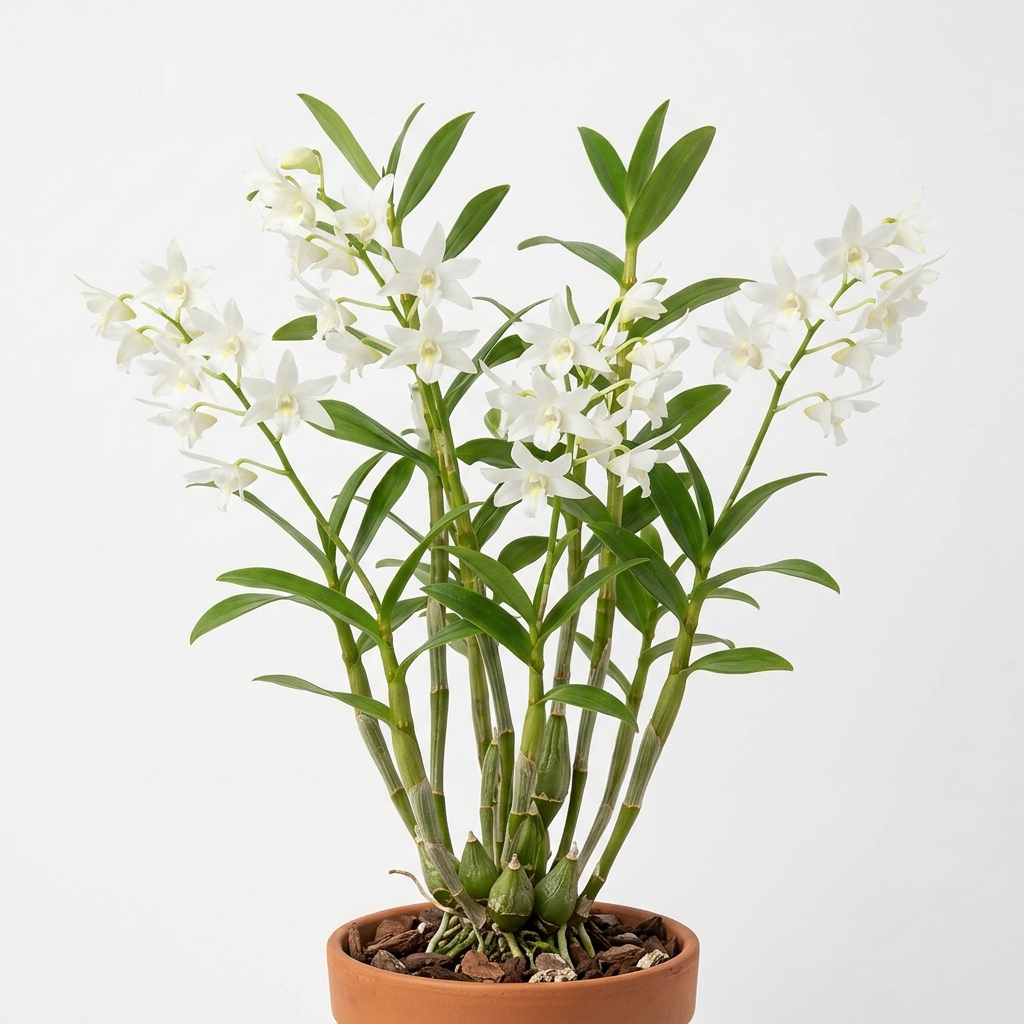
Dendrobium Crumenatum, commonly known as the pigeon orchid, is a fascinating epiphytic species native to various tropical regions of Southeast Asia. Highly valued by collectors for its unique flowering habits and delicate white blooms, this resilient orchid features distinctive pseudobulbs that taper into thin, cane-like upper stems. Its growth habit is robust, making it a popular choice for growers in warm, humid climates who appreciate its rapid development and architectural form.
What truly sets this species apart is its remarkable gregarious flowering behavior, where entire populations bloom simultaneously in response to specific environmental cues. While the individual blossoms are notoriously short-lived, their sudden, synchronized appearance and sweet fragrance create a spectacular, albeit brief, display. Cultivating this orchid offers a rewarding experience for those interested in witnessing one of nature’s most coordinated botanical events.
💡 Did You Know?
The synchronized blooming of Dendrobium Crumenatum is a phenomenon known as gregarious flowering. This event is triggered by a sudden drop in , typically caused by a heavy rainstorm. Exactly nine days after the storm, every mature plant in the area will burst into bloom simultaneously, creating a stunning but brief display that lasts for only a single day.
🌿 Botanical Overview
Dendrobium Crumenatum is a sympodial epiphyte characterized by its unusual pseudobulb structure. The lower portion of each pseudobulb is conspicuously swollen and bulbous, serving as a water storage organ, while the upper portion transitions into a slender, woody cane. These canes can grow quite tall, often reaching up to a meter in height under optimal conditions, and bear leathery, lanceolate leaves along their upper nodes.
In its natural habitat, this species grows on tree branches in open forests, coastal areas, and even urban environments, demonstrating a high degree of adaptability. The root system is extensive and tenacious, designed to cling tightly to rough bark and rapidly absorb moisture from frequent tropical downpours. This structural resilience allows the plant to withstand brief periods of drought between rain events.
🌸 Flower Characteristics
The flowers of Dendrobium Crumenatum are pristine white, occasionally featuring subtle yellow or pale green highlights on the lip. Each bloom measures approximately 2.5 to 5 centimeters across and bears a striking resemblance to a small white pigeon in flight, which inspires its common name. The sepals and petals are lanceolate and spread widely, while the three-lobed labellum features a yellow-crested callus in the center.
These blossoms emerge from the nodes along the upper, leafless portions of older canes. Rather than producing a single long spike, the flowers appear individually or in small clusters from multiple nodes simultaneously. This creates a scattered, starry effect along the length of the canes, contrasting beautifully against the dark green foliage of the active growth.
Fragrance & Bloom Profile
The fragrance of Dendrobium Crumenatum is intensely sweet and floral, often compared to the scent of gardenias or jasmine. This powerful perfume is strongest in the early morning hours, filling the surrounding air shortly after the buds open. The scent serves as a highly effective attractant for local pollinators, which must find the flowers quickly due to their brief lifespan.
The defining characteristic of this orchid’s bloom profile is its ephemerality. The flowers typically open at dawn and wither by dusk, lasting less than twenty-four hours. While this short duration can be disappointing to novice growers, the sheer volume of simultaneous blooms across multiple canes provides a highly dramatic and memorable sensory experience.
Parentage & Hybrid Lineage
Dendrobium Crumenatum is a naturally occurring species rather than a man-made hybrid or specific cultivar. Within the massive genus Dendrobium, it belongs to the section Crumenata, which is defined by plants with swollen pseudobulb bases and transient flowers. Because it is a distinct species, there is no hybrid parentage to document, and its genetic lineage remains true to its wild ancestors found throughout tropical Asia.
While it is occasionally used in breeding programs to introduce fragrance or temperature-trigger traits to new hybrids, such crosses are relatively rare due to the fleeting nature of its blooms. Most specimens found in cultivation are direct vegetative propagations or seed-grown selections of the wild species, preserved for their classic botanical characteristics.
🌱 Growing Conditions
To cultivate Dendrobium Crumenatum successfully, growers must replicate its warm, tropical native environment. This orchid thrives in bright, filtered light, similar to the dappled sunlight of an open forest canopy. While it can tolerate some direct morning sun, harsh afternoon rays can scorch the leaves, so moderate shading is recommended during the peak hours of the day.
💡 Care Tip
To support the high moisture needs of Dendrobium Crumenatum without risking root rot, ensure your growing area has excellent air movement. A small oscillating fan running nearby will help dry the foliage and potting medium quickly, mimicking the breezy conditions of its natural treetop habitat.
Temperature ranges should remain consistently warm, with daytime temperatures between 24°C and 32°C (75°F to 90°F) and night temperatures rarely dropping below 18°C (65°F). High humidity is essential, ideally maintained between 60% and 80%. Strong air movement is equally critical; constant ventilation helps prevent fungal pathogens from settling on the damp foliage and aids in drying the roots after watering.
Watering, Feeding & Potting Media
During the active growing season, Dendrobium Crumenatum requires frequent and abundant watering. The potting medium should be thoroughly saturated and then allowed to dry out slightly before the next application. Because of its epiphytic nature, this orchid is highly susceptible to root rot if left in stagnant water. A coarse, fast-draining medium such as medium-grade fir bark, charcoal, and perlite is ideal, though many growers prefer to mount the plant on cork bark or hardwood plaques to mimic its natural growth habit.
Fertilization should be regular but light. A balanced, water-soluble orchid fertilizer applied at quarter-strength every two weeks during active growth supports robust cane development. It is beneficial to flush the medium with pure water once a month to prevent salt buildup, which can damage the sensitive root tips. Reduce watering and cease fertilization slightly during the cooler winter months when growth slows.
Blooming Season & Care Notes
The blooming cycle of Dendrobium Crumenatum is not dictated by a specific season but rather by a meteorological trigger. In nature, a sudden drop in temperature of about 5°C to 10°C (9°F to 18°F)—typically caused by a heavy tropical rainstorm—initiates bud development. Exactly nine days after this temperature drop, the buds swell and open in unison.
In cultivation, growers can sometimes stimulate this blooming response by exposing the plant to a cool watering or placing it in an air-conditioned room for a few hours. After the brief bloom cycle concludes, do not cut the old canes, as they can produce flowers from different nodes during later trigger events. Repotting should only be done when the potting medium begins to break down or when the plant completely outgrows its container, preferably just as new root growth emerges from the base of the newest pseudobulbs.
⚠️ Common Issues
⚠️ Common Mistake
A frequent error is cutting back old, leafless canes. Unlike some orchids, Dendrobium Crumenatum can bloom repeatedly from the same canes over several years. Removing these canes prematurely deprives the plant of stored energy and reduces the potential for future spectacular, multi-cane blooming events.
- Root Rot: Caused by overwatering or a degraded, compacted potting medium that retains too much moisture.
- Bud Blast: Occurs when sudden drafts, low humidity, or extreme temperature fluctuations cause developing buds to dry up and drop before opening.
- Spider Mites and Mealybugs: Common pests that hide in the crevices of the leaves and pseudobulbs, particularly in dry environments.
- Leaf Spotting: Fungal or bacterial spots can develop on the foliage if air circulation is inadequate when humidity is high.
- Shriveled Pseudobulbs: A sign of dehydration, indicating either insufficient watering or a loss of roots due to rot.
❓ Frequently Asked Questions
Why do the flowers of Dendrobium Crumenatum only last one day?
The short-lived nature of the blooms is an evolutionary adaptation. By opening all flowers simultaneously across a region for just one day, the species maximizes its chances of attracting pollinators through a massive, concentrated display of color and scent, while conserving the energy that would be required to maintain the blooms over a longer period.
How can I trigger my Dendrobium Crumenatum to bloom indoors?
To encourage blooming indoors, you can simulate a tropical rainstorm. Expose the plant to a sudden drop in temperature of about 5°C to 8°C (9°F to 14°F) by watering it with cool (but not ice-cold) water or moving it to a cooler room for a day. If successful, you should see buds develop and open approximately nine days later.
Can I grow Dendrobium Crumenatum on a mount?
Yes, mounting this orchid on cork bark, tree fern plaques, or hardwood is highly recommended. Mounting mimics its natural epiphytic habitat, ensures excellent drainage, and prevents root rot. Mounted plants will require more frequent watering, often daily, to maintain adequate hydration.
What should I do with the canes after they finish flowering?
You should leave the old canes intact. Unlike some orchid species, Dendrobium Crumenatum can bloom multiple times from the same canes, utilizing different nodes during future flowering cycles. Only remove canes that are completely yellow, dry, and shriveled.
⭐ Final Growing Notes
Dendrobium Crumenatum is a rewarding and resilient orchid that brings a touch of tropical wonder to any collection. While its fleeting blooms require patience and attentive observation, the spectacular phenomenon of synchronized flowering and the accompanying sweet fragrance make it a truly unique botanical treasure. By providing bright light, high humidity, and excellent drainage, growers can enjoy this fascinating species for many years.
⚕️ Health, Safety & Edibility
Understanding how a plant interacts with people, pets, and the surrounding environment is part of responsible cultivation. This section uses conservative, general guidance and does not replace professional medical or veterinary advice.
Human Safety: No published evidence currently identifies species-specific toxicity concerns for Dendrobium Crumenatum during normal handling. As with most ornamental plants, it should not be intentionally consumed.
Pet Safety: Published information does not indicate that this orchid commonly poses a toxicity concern for cats or dogs. However, chewing leaves, flowers, roots, or potting media may still cause mild digestive upset.
Edibility: This orchid is cultivated for ornamental display rather than food. Ornamental plants may carry fertilizers, pesticides, or other horticultural treatments that make them unsuitable for consumption.
Skin Contact: Routine handling is not generally associated with skin irritation. Gardeners with sensitive skin may prefer wearing gloves when repotting, pruning, or handling potting media.
🌱 Propagation Tip
This orchid frequently produces keikis, which are miniature baby plants, along the upper nodes of older canes. Allow the keiki to grow until its roots are at least two to three inches long before gently detaching it and potting it up individually in a fine bark mix.
⭐ Expert Advice
For the most dramatic display, grow multiple specimens of Dendrobium Crumenatum in close proximity or pot several leads together in a large basket. When the -drop trigger occurs, the combined flush of simultaneous white blooms creates a breathtaking, cloud-like effect that maximizes the impact of their short-lived flowers.

Leave A Comment