
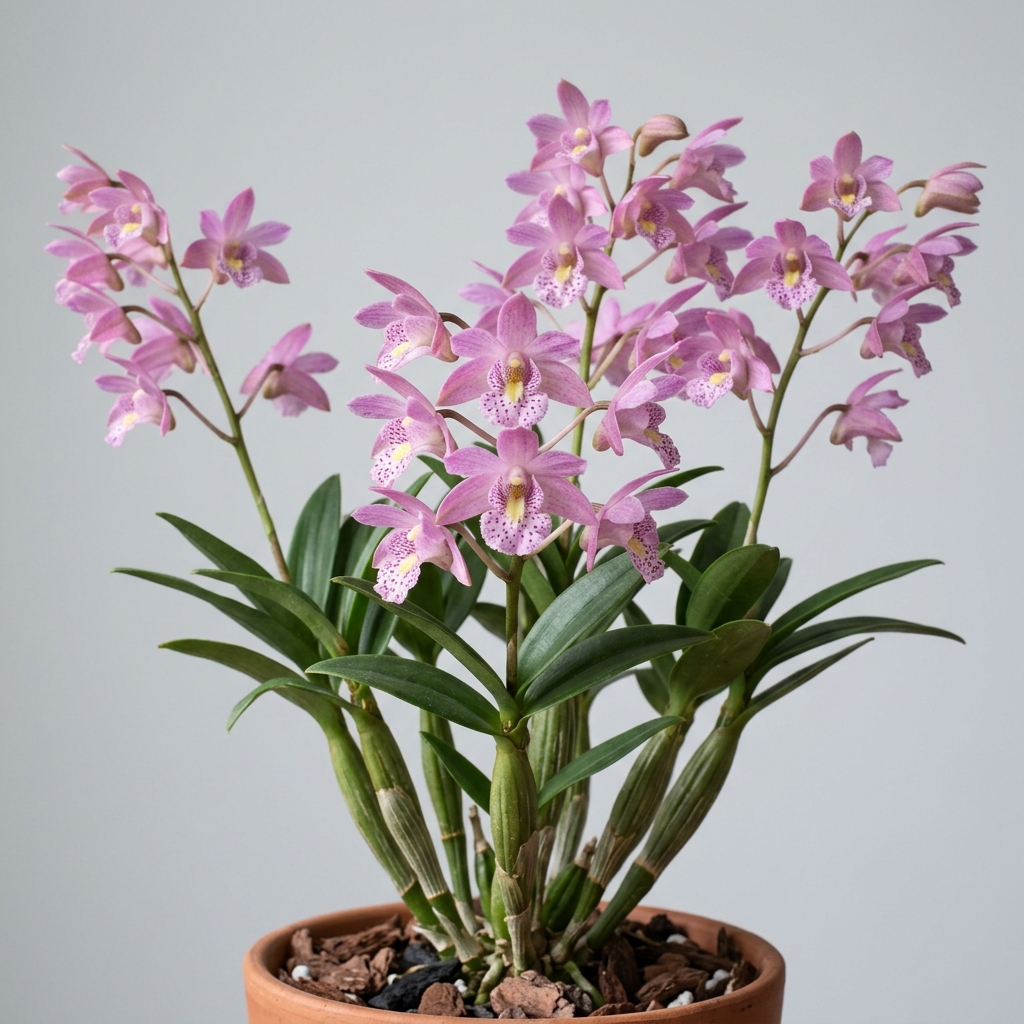
Dendrobium kingianum, commonly known as the pink rock orchid, is a highly resilient and popular lithophytic orchid native to eastern Australia. Prized by both novice and experienced growers, this species is celebrated for its compact growth habit, tough pseudobulbs, and profuse displays of small, long-lasting flowers. Its ability to tolerate a wide range of temperatures and environmental conditions makes it an exceptional choice for indoor collections and temperate outdoor gardens alike.
In cultivation, this orchid forms dense, clumping mats of cane-like pseudobulbs topped with narrow, leathery leaves. During its peak blooming season, it produces multiple upright or arching flower spikes that carry clusters of delicate blossoms, filling the growing space with a sweet, honey-like scent. Its robust nature and ease of propagation through aerial offsets, or keikis, have secured its status as a staple in orchid collections worldwide.
💡 Did You Know?
In its native Australian habitat, Dendrobium kingianum is so well-adapted to growing on bare stone that it can survive intense bushfires. The plants may lose their leaves during a fire, but the tough, moisture-storing pseudobulbs often survive to produce new growth and roots directly from the scorched rock surfaces once the rains return.
🌿 Botanical Overview
Dendrobium kingianum is naturally adapted to growing on rocky outcrops, cliff faces, and occasionally as an epiphyte on trees in open forests. This lithophytic lifestyle is reflected in its extremely tough, fibrous root system, which is designed to cling tightly to stone surfaces and absorb moisture rapidly from passing rain. The pseudobulbs are typically tapered, broader at the base, and can vary in height from a few inches to over a foot depending on the specific clone and light levels.
The foliage consists of two to several dark green, lanceolate leaves clustered at the apex of each pseudobulb. These leaves are thick and leathery, helping the plant conserve water during dry spells. Because it has evolved to survive in exposed, rocky environments, this species possesses a remarkable tolerance for temperature fluctuations and temporary drought, making it far more forgiving than many tropical orchid species.
🌸 Flower Characteristics
The flowers of Dendrobium kingianum are relatively small, usually measuring between 0.5 to 1 inch in diameter, but they make up for their size with sheer numbers. Each flower spike can bear anywhere from 2 to 15 blossoms, depending on the maturity and vigor of the cane. The sepals and petals are typically similar in color, ranging from pale pink and lavender to deep magenta, with rare pure white forms highly sought after by collectors.
The lip, or labellum, is three-lobed and often features striking purple spots, veins, or a yellow callus in the center, providing a beautiful contrast to the surrounding petals. The flowers are presented on upright or slightly arching racemes that emerge from the upper nodes of both mature and occasionally older pseudobulbs, creating a cloud-like blooming effect over the foliage.
Fragrance & Bloom Profile
One of the most appealing attributes of Dendrobium kingianum is its delightful fragrance. On warm, sunny days, the flowers emit a pronounced, sweet aroma that many growers compare to honey, vanilla, or sweet clover. This scent is highly diffusive and can easily fill a small greenhouse or growing room.
The blooms typically open in late winter or early spring, coinciding with the end of the dry winter rest period. Individual flowers can remain fresh for three to four weeks, and because a well-grown specimen can produce dozens of spikes simultaneously, the overall blooming display can extend for up to two months.
Parentage & Hybrid Lineage
As a distinct species native to Australia, Dendrobium kingianum does not have hybrid parentage, but it has served as a foundational parent in orchid breeding. It is the primary ancestor of the popular Dendrobium section Dendrocoryne hybrids, which are celebrated for their cold tolerance and floriferous nature.
Numerous selected cultivars and line-bred color forms exist within the species, selected for larger flowers, deeper coloration, or compact growth habits. When purchasing, growers may encounter named clones, though their exact registration history and award status are not always consistently documented in general retail references.
🌱 Growing Conditions
To thrive, Dendrobium kingianum requires bright, indirect light, and can even tolerate some direct morning sun. Inadequate light is the primary reason for a lack of flowers and the excessive production of vegetative offsets instead of flower spikes. A light green leaf color indicates optimal light levels, while dark green leaves suggest the plant needs a brighter location.
💡 Care Tip
To ensure a heavy bloom cycle, place your orchid outdoors in a sheltered spot during the autumn. The natural drop in night temperatures combined with reduced is the most reliable trigger for flower bud initiation.
Temperature tolerance is a key feature of this species. It can withstand summer temperatures up to 95 degrees Fahrenheit (35 degrees Celsius) and winter lows near freezing, though it is best kept above 40 degrees Fahrenheit (4 degrees Celsius) to avoid foliage damage. Good air movement is essential at all times to prevent stagnant air pockets and minimize the risk of fungal infections.
Watering, Feeding & Potting Media
During the active growing season in spring and summer, Dendrobium kingianum should be watered thoroughly and allowed to dry out slightly between waterings. It benefits from regular applications of a balanced orchid fertilizer diluted to half-strength every two to three weeks.
Because of its lithophytic nature, the potting medium must be exceptionally free-draining. A mix of coarse fir bark, perlite, and charcoal works well in plastic or clay pots. Alternatively, the plant can be mounted on cork bark or tree fern slabs, or even grown in shallow lava rock, provided humidity levels are maintained and watering is adjusted accordingly.
Blooming Season & Care Notes
The key to successful blooming lies in a cool, dry winter rest. Starting in late autumn, watering should be significantly reduced, and fertilizer should be withheld entirely. The plant should only receive enough water to prevent the pseudobulbs from shriveling excessively.
This dry period, combined with cool night temperatures between 45 and 55 degrees Fahrenheit (7 to 13 degrees Celsius) for several weeks, triggers the initiation of flower buds. Once the flower spikes begin to emerge from the tops of the canes in late winter, regular watering can gradually resume. Repotting is best done in late spring, immediately after flowering, as new root growth begins from the base of the new leads.
⚠️ Common Issues
⚠️ Common Mistake
The most common mistake is and fertilizing the orchid continuously through the winter. Without a distinct dry and cool rest period, the plant will channel its energy into producing leafy offsets rather than fragrant flower spikes.
- Excessive Keiki Production: Growing the plant in too much shade or applying nitrogen-rich fertilizer during the winter rest often causes the orchid to produce vegetative offsets (keikis) instead of flower spikes.
- Pseudobulb Shriveling: While minor wrinkling is normal during the winter rest, severe shriveling during the active growing season indicates underwatering or root loss due to a degraded potting medium.
- Spider Mites and Mealybugs: These pests can occasionally hide in the tight crevices between the leaves and pseudobulbs, especially in low-humidity environments.
- Root Rot:
Using a heavy, water-retaining potting soil or overwatering during the winter rest can quickly suffocate and rot the tough but sensitive root system.
❓ Frequently Asked Questions
Why is my Dendrobium kingianum producing baby plants instead of flowers?
This is usually caused by a lack of a proper winter rest. If the orchid is kept too warm, watered too frequently, or fertilized during the late autumn and winter months, it will produce vegetative offsets called keikis from the upper nodes of the canes instead of flower spikes.
How cold can Dendrobium kingianum get in the winter?
This species is exceptionally cold-tolerant and can easily handle winter night temperatures down to 40 degrees Fahrenheit (4 degrees Celsius). Some growers report survival during brief, light frosts, but it is safest to protect the plant from freezing temperatures to prevent foliage damage.
What is the best potting medium for this orchid?
A highly porous, fast-draining medium is essential. A mixture of coarse fir bark, horticultural charcoal, and pumice or perlite is ideal. Because they naturally grow on rocks, they also perform exceptionally well in inorganic media like lava rock or when mounted on cork bark slabs.
How do I propagate my Dendrobium kingianum?
Propagation is easily achieved by removing mature keikis (aerial offsets) that have developed several roots at least two inches long. Gently twist the keiki off the parent cane and pot it up individually. Large clumps can also be divided during repotting, ensuring each division has at least three to four healthy pseudobulbs.
⭐ Final Growing Notes
Dendrobium kingianum remains one of the most rewarding and forgiving orchids for growers of all experience levels. By mimicking its natural Australian habitat with bright light, excellent drainage, and a distinct cool, dry winter rest, you will be rewarded with a spectacular, fragrant cloud of pink blossoms year after year.
🌱 Propagation Tip
When separating keikis for propagation, wait until the young roots are at least two inches long. Gently grasp the base of the offset and twist it off the mother cane; avoiding scissors reduces the risk of introducing viral pathogens.
⭐ Expert Advice
If you struggle to keep up with mounted specimens, try growing this orchid in a shallow clay pot filled entirely with medium-grade lava rock. This mimics its natural lithophytic environment while retaining just enough around the roots.




Leave A Comment