
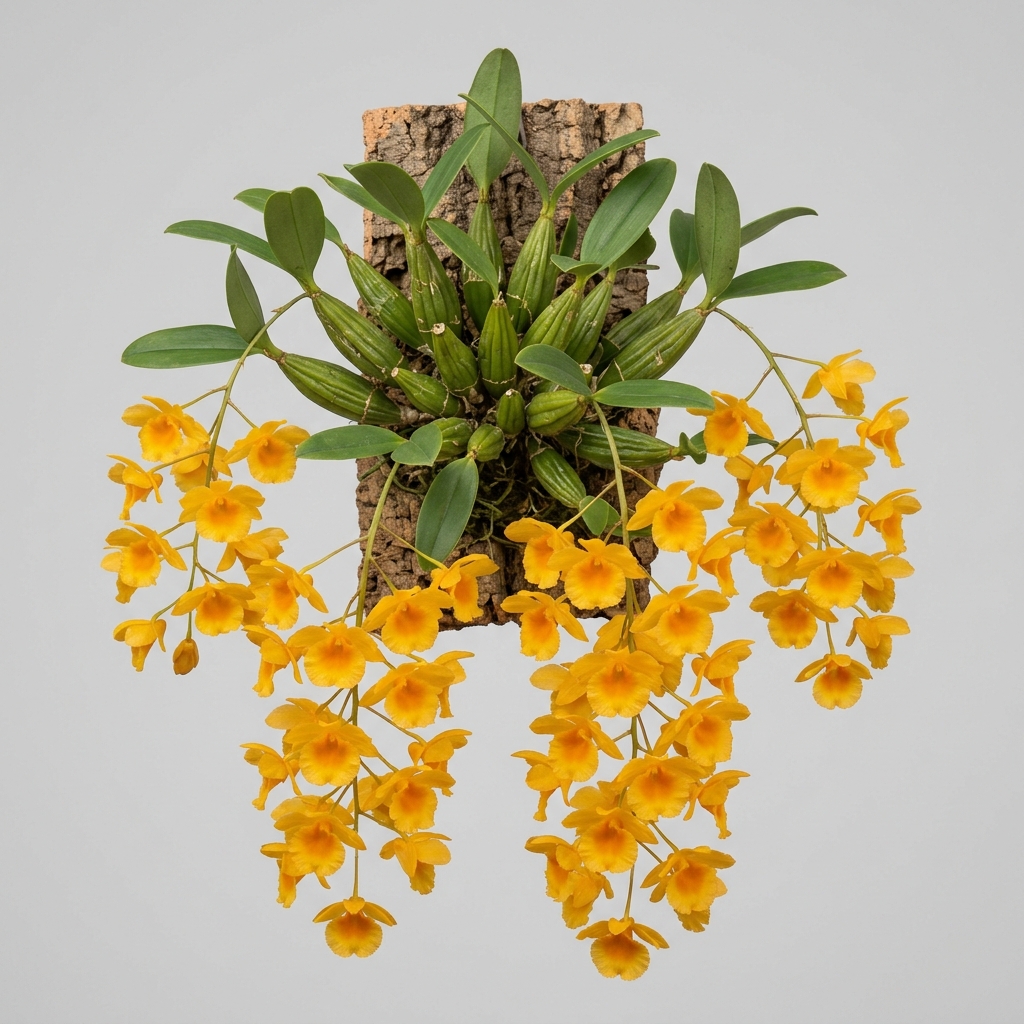
Dendrobium lindleyi is a highly sought-after epiphytic orchid species within the Dendrobium genus, celebrated for its spectacular spring displays of cascading golden-yellow blossoms. Often referred to by its historical synonym, Dendrobium aggregatum, this compact grower features distinctive, tightly clustered pseudobulbs that store water and nutrients, making it a resilient choice for indoor and greenhouse collections.
Growers highly value this orchid for its dramatic flowering habit, where multiple pendulous inflorescences emerge from the sides of mature pseudobulbs, creating a shower of vibrant color. Its relatively compact footprint allows it to thrive on mounts or in small baskets, making it an excellent specimen plant for space-conscious enthusiasts who appreciate a rewarding seasonal bloom cycle.
💡 Did You Know?
Dendrobium lindleyi was long known in cultivation as Dendrobium aggregatum. The species relies on a strict dry winter rest to trigger its spectacular spring flowering. Without this period of drought and cooler temperatures, the plant will produce vegetative keikis instead of the highly anticipated golden-yellow flower spikes.
🌿 Botanical Overview
Dendrobium lindleyi is characterized by its unique vegetative structure. The pseudobulbs are relatively short, spindle-shaped, and distinctly angled or grooved, turning a deeper golden-green as they mature. Each pseudobulb is topped by a single, leathery, oblong leaf that remains evergreen throughout the year, providing a handsome backdrop even when the plant is not in bloom.
In its native habitats across Southeast Asia, including parts of India, Thailand, Vietnam, and southern China, this orchid grows as an epiphyte on the branches of deciduous trees. This natural environment experiences dramatic seasonal shifts, with monsoon-driven wet summers followed by cool, dry winters. Understanding this natural cycle is the key to successfully cultivating and blooming this species in a home or greenhouse environment.
🌸 Flower Characteristics
The flowers of Dendrobium lindleyi are the primary reason for its widespread popularity. They are borne on arching, pendulous racemes that emerge from the nodes along the sides of the pseudobulbs. Each spike can carry anywhere from ten to over thirty individual blossoms, creating a dense, cascading cluster of color.
The individual flowers are flat and rounded, measuring about one to one and a half inches across. They feature delicate, translucent petals and sepals of a bright, sunny yellow. The most prominent feature is the broad, kidney-shaped lip, which is typically a deeper, richer golden-orange at the center, creating a beautiful contrast that draws the eye.
Fragrance & Bloom Profile
This orchid produces a delightful, mild fragrance that is often described as sweet and honey-like, though some growers note a subtle, musky undertone. The scent is typically most pronounced during the warmest hours of the day when sunlight hits the blossoms, filling the growing area with a pleasant, natural perfume.
While the flowering display is exceptionally showy, the individual blooms are somewhat delicate. Under optimal conditions, a flowering spike will remain attractive for two to three weeks. To maximize the lifespan of the blooms, keep the plant in a slightly cooler, draft-free location once the flowers have fully opened, and avoid getting water directly on the petals.
Parentage & Hybrid Lineage
Unlike many highly bred orchid cultivars, Dendrobium lindleyi is a naturally occurring species. In botanical nomenclature, it is recognized as a distinct species within the massive Dendrobium genus. Because of its outstanding floral display and compact growth habit, it has occasionally been used by hybridizers to introduce bright yellow coloration and pendulous blooming traits to new orchid crosses.
In common grower references, specific awarded clones or select cultivars of this species may be documented, but the general care requirements remain consistent across the species. When purchasing this orchid, growers are typically acquiring the true species, prized for its wild, authentic charm rather than complex hybrid parentage.
🌱 Growing Conditions
To thrive, Dendrobium lindleyi requires bright, indirect light. It can tolerate some direct morning sun, but protection from intense midday rays is essential to prevent the foliage from scorching. High light levels are particularly important during the autumn and winter months to ensure the plant has enough stored energy to produce flower spikes in the spring.
💡 Care Tip
To achieve the best blooming results, place your orchid in a location where it receives bright, filtered , similar to the dappled canopy of its native habitat. High levels during the winter rest period are especially critical for bud development.
Temperature management is crucial for this species. During the active growing season in spring and summer, it prefers warm temperatures ranging from 75 to 85 degrees Fahrenheit. In the winter, however, it requires a distinct cooling period, with night temperatures dropping to 50 to 55 degrees Fahrenheit. This temperature drop, combined with high light, is the primary catalyst for bud initiation.
Watering, Feeding & Potting Media
The watering regime for Dendrobium lindleyi must be strictly adjusted according to the season. During the active growth phase in spring and summer, the plant should be watered copiously, allowing the media to dry slightly but never completely dehydrate. Weekly applications of a balanced, diluted orchid fertilizer will support the rapid development of new pseudobulbs.
Because of its pendulous flowering habit and need for rapid drying, this orchid is exceptionally well-suited to being mounted on cork bark or tree fern plaques. If mounting is not practical, it can be grown in open wooden slat baskets or clay pots filled with an extremely coarse, free-draining medium such as large fir bark, charcoal, and perlite. Excellent air circulation around the roots is vital at all times.
Blooming Season & Care Notes
The blooming cycle of Dendrobium lindleyi begins in late winter to early spring. The most critical aspect of its care is the winter rest period, which must begin in late autumn. During this time, watering should be severely restricted, and fertilizer must be withheld entirely. The plant should only receive occasional light misting to prevent the pseudobulbs from shriveling excessively.
Once the flower spikes begin to emerge from the sides of the pseudobulbs in late winter, regular watering can be gradually resumed. After the blooming cycle is complete, the plant will enter a period of active vegetative growth, which is the ideal time to consider repotting or remounting if the potting medium has begun to break down.
⚠️ Common Issues
⚠️ Common Mistake
The most common mistake is this orchid during its winter dormancy. Continuing a regular schedule in late autumn and winter prevents the plant from entering its necessary rest, often resulting in root rot or a complete lack of spring blooms.
- Failure to bloom: This is almost always caused by an insufficient winter rest period or inadequate light levels during the autumn and winter months.
- Excessive pseudobulb shriveling: While minor wrinkling is normal during the dry winter rest, severe shriveling indicates extreme dehydration, requiring a light increase in misting.
- Root rot:
Caused by waterlogged potting media or watering too early in the spring before active root growth has resumed. - Bud blast:
Developing flower buds may dry up and drop if the plant experiences sudden temperature fluctuations, cold drafts, or extremely low humidity. - Pests:
Scale insects and spider mites can occasionally hide in the deep grooves of the pseudobulbs or on the undersides of the leaves.
❓ Frequently Asked Questions
How do I trigger blooms on my Dendrobium lindleyi?
To trigger blooming, you must provide a strict cool, dry rest period starting in late autumn. Reduce watering to a bare minimum, withhold all fertilizer, and ensure the plant experiences night temperatures around 50 to 55 degrees Fahrenheit along with bright light. Resume normal watering only when you see active flower spikes emerging.
Can I grow this orchid in a standard plastic pot?
While possible, growing Dendrobium lindleyi in a standard plastic pot is not recommended. The plant’s roots require rapid drying and high oxygen levels, and its flower spikes naturally cascade downward. It performs much better mounted on cork bark or grown in an open wooden basket where the blooms can hang freely.
Is Dendrobium lindleyi suitable for beginners?
This species is moderately easy to grow but is best suited for growers who can commit to its seasonal care requirements. Beginners who understand the necessity of the dry winter rest and can provide the required temperature drop will find it a highly rewarding and resilient orchid.
What should I do if the pseudobulbs wrinkle during winter?
A moderate amount of wrinkling or shriveling of the pseudobulbs is completely normal during the winter rest period as the plant conserves water. Do not panic and resume heavy watering. If the shriveling becomes severe, simply mist the plant lightly in the morning rather than soaking the root system.
⭐ Final Growing Notes
Dendrobium lindleyi remains one of the most rewarding epiphytic orchids for collectors who can accommodate its seasonal rhythms. By mimicking its native environment with warm, wet summers and a cool, dry winter rest, growers are rewarded each spring with an unforgettable, cascading display of golden-yellow blossoms that bring a bright, tropical warmth to any growing space.
🌱 Propagation Tip
This species is best propagated by division of mature clumps during the spring repotting phase, immediately after flowering. Ensure each division has at least three to four healthy, mature pseudobulbs and active root leads to guarantee successful establishment.
⭐ Expert Advice
If you grow this species mounted on cork, increase misting frequency during hot summer days to match its high transpiration rate. Adding a small pad of sphagnum moss beneath the roots can help retain just enough moisture without suffocating the root system.




Leave A Comment