
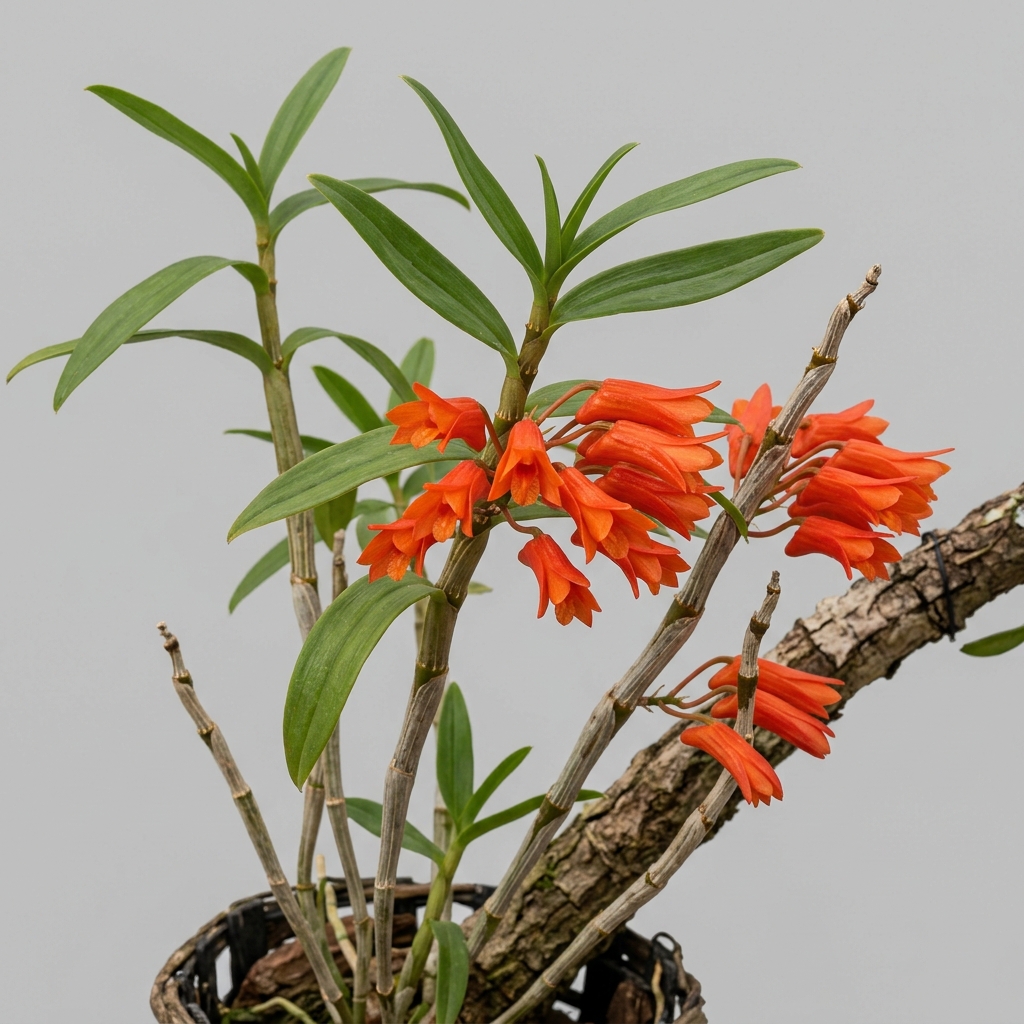
Dendrobium Mohlianum is a striking epiphytic orchid species native to the high-elevation montane forests of the South Pacific islands, including Fiji, Samoa, Vanuatu, and the Solomon Islands. Highly prized by collectors, this species is celebrated for its brilliant, fiery orange-to-red tubular blossoms that cluster densely along mature canes. Its vibrant coloration offers a dramatic departure from more common pastel orchid tones, making it a standout specimen in any diverse collection.
This orchid shows a pendulous or semi-erect growth habit, featuring slender, cane-like pseudobulbs that naturally shed their leaves as they mature. The contrast between the bare, textured canes and the intense, saturated floral clusters creates an exotic architectural display. While it requires specific attention to humidity and temperature, intermediate growers will find its long-lasting blooms and robust growth cycle highly rewarding.
💡 Did You Know?
Dendrobium Mohlianum produces bright orange and red tubular flowers specifically adapted to attract birds rather than insects. Because birds have an exceptional sense of color but a poor sense of smell, these flowers evolved their intense, fiery hues while remaining completely unscented.
🌿 Botanical Overview
Botanically classified within the genus Dendrobium, section Pedilonum, Dendrobium Mohlianum is an epiphytic species adapted to life on mossy tree branches in humid montane cloud forests. In these native habitats, it experiences consistent air movement, frequent rainfall, and high atmospheric humidity. The plant develops slender, elongated pseudobulbs, often referred to as canes, which can grow semi-erect when young but tend to become gracefully pendulous as they lengthen.
The foliage consists of narrow, lanceolate leaves arranged alternately along the upper portions of the active canes. Because this species is naturally deciduous, these leaves typically turn yellow and drop from the older canes after one or two seasons. This leaf-shedding process is a normal part of the plant's life cycle and serves as a precursor to the flowering phase, allowing the blooms to take center stage on the bare stems.
🌸 Flower Characteristics
The flowers of Dendrobium Mohlianum are renowned for their intense, saturated coloration, ranging from brilliant tangerine orange to deep reddish-orange. The petals and sepals are relatively small, thick, and waxy, forming a tubular or bell-like shape that protects the reproductive structures. The lip, or labellum, is similarly colored, sometimes featuring subtle yellow or darker orange highlights near the throat.
Rather than producing a single large flower spike, this species blooms in dense, tight clusters of three to fifteen flowers arising directly from the nodes of mature, leafless canes. The waxy texture of the petals gives the blossoms exceptional durability, allowing them to remain fresh and vibrant for several weeks. When a mature specimen blooms from multiple canes simultaneously, the visual impact is spectacular.
Fragrance & Bloom Profile
Unlike many of its relatives in the orchid family, Dendrobium Mohlianum is generally considered to be unscented. Its evolutionary strategy relies on its vivid, high-contrast coloration to attract pollinators, such as birds, which possess excellent color vision but a limited sense of smell. The absence of fragrance does not detract from its appeal, as the sheer intensity and longevity of the blooms more than compensate for the lack of aroma.
The blooming cycle typically initiates in late autumn and can extend through the winter months, though well-established plants under stable greenhouse conditions may bloom sporadically at other times of the year. Individual flowers are remarkably long-lasting, often maintaining their pristine appearance for up to two months if kept in a cool, draft-free environment away from direct sunlight.
Parentage & Hybrid Lineage
Dendrobium Mohlianum is a naturally occurring species rather than a man-made hybrid. Because of its stable genetic traits and exceptional orange coloration, it has occasionally been utilized by orchid breeders as a parent species to introduce warmth, color intensity, and a compact clustering habit into new Dendrobium hybrids. However, these hybrid offspring remain relatively specialized and are primarily found within collector circles.
When purchasing this orchid, growers should look for plants labeled as the true species to ensure they receive the authentic growth habit and floral characteristics. While minor variations in flower size and color intensity can occur among individual seed-grown specimens, the classic fiery orange tubular form remains the defining hallmark of the species.
🌱 Growing Conditions
To cultivate Dendrobium Mohlianum successfully, growers should attempt to replicate its native montane forest environment. It thrives in bright, filtered indirect light, similar to the conditions preferred by Cattleyas. Avoid exposing the plant to harsh, direct midday sun, which can scorch the foliage and dehydrate the canes. A location with east- or shaded south-facing exposure is often ideal.
💡 Care Tip
Position this orchid in a spot with strong air movement and high . If growing indoors, placing a small fan nearby and using a tray will help mimic its native montane cloud forest habitat.
Temperature management is crucial for this species. It prefers intermediate to warm daytime temperatures ranging from 70°F to 80°F (21°C to 27°C), with a distinct nighttime drop to around 60°F (15°C). This diurnal temperature fluctuation mimics the cool mountain nights of its native habitat and is vital for triggering the blooming cycle. High relative humidity of 60% to 80% must be maintained, supported by continuous, gentle air movement to prevent fungal pathogens from establishing on the damp foliage.
Watering, Feeding & Potting Media
During the active spring and summer growing season, Dendrobium Mohlianum requires frequent and thorough watering. The potting medium should remain consistently moist but never waterlogged. As the canes mature in autumn, watering should be gradually reduced, allowing the medium to dry out slightly between waterings, though the plant should never be subjected to a prolonged, bone-dry rest period.
Apply a balanced, water-soluble orchid fertilizer diluted to one-quarter strength weekly during the active growth phase. Flush the pot with pure water once a month to prevent harmful mineral salt buildup. Because of its pendulous growth habit, this species is exceptionally well-suited to being mounted on cork slabs or tree fern plaques, provided the grower can maintain high humidity. Alternatively, it can be grown in slatted wooden baskets or plastic pots using a highly porous, free-draining medium such as medium-grade fir bark mixed with perlite and charcoal.
Blooming Season & Care Notes
The primary blooming season occurs during the cooler months of autumn and winter. To encourage a robust bloom, ensure the plant experiences a slight drop in nighttime temperatures and a modest reduction in watering as the autumn days shorten. It is critical to remember that flowers develop on older, leafless canes; growers must resist the urge to prune bare canes, as they serve as vital energy reservoirs and will continue to produce flowers for multiple seasons.
Repotting or remounting should only be performed when new root growth is visible at the base of the newest canes, typically in early spring. This minimizes root shock and allows the orchid to establish itself quickly in the fresh medium. Use caution when handling the active root tips, as they are highly sensitive to damage.
⚠️ Common Issues
⚠️ Common Mistake
A frequent mistake is cutting off old, leafless canes. These bare canes are not dead; they store vital water and nutrients for the plant and will continue to produce flowers for several seasons.
- Bud Blast:
Sudden drops in humidity, drafty conditions, or drastic temperature fluctuations can cause developing buds to yellow, shrivel, and drop before opening. - Root Rot:
Overwatering or using a degraded, compacted potting medium that retains stagnant water will quickly lead to root decay, characterized by mushy, brown roots. - Foliage Drop: While shedding leaves on older canes is natural, rapid leaf loss on young, active canes usually indicates underwatering, low humidity, or root damage.
- Pests:
Spider mites and scale insects can occasionally target the foliage, particularly in dry indoor environments; treat infestations promptly with insecticidal soap or neem oil.
❓ Frequently Asked Questions
Why are the leaves falling off my Dendrobium Mohlianum?
Leaf loss on older, mature canes is a completely natural, deciduous characteristic of this species. It typically occurs prior to the blooming cycle, allowing the flowers to emerge clearly along the bare stems. However, if leaves are dropping prematurely from young, active canes, check for underwatering or root damage.
Can I grow Dendrobium Mohlianum mounted on wood?
Yes, this orchid is an excellent candidate for mounting on cork bark or tree fern plaques due to its naturally pendulous growth habit. When mounted, it requires daily watering or misting and high ambient humidity to prevent the roots from drying out excessively.
Does this orchid require a dry winter rest?
Dendrobium Mohlianum does not require a severe, bone-dry winter rest like some other Dendrobium species. Instead, it benefits from a moderate reduction in watering and fertilizer during the cooler winter months, allowing the medium to dry out slightly more than during the summer.
How long do the flowers of Dendrobium Mohlianum last?
The waxy, durable flowers of this species are exceptionally long-lasting. Under ideal intermediate temperatures and stable humidity, individual blooms can remain fresh and vibrant on the canes for six to eight weeks.
⭐ Final Growing Notes
Dendrobium Mohlianum is a magnificent species that rewards the patient grower with an unparalleled display of fiery orange blossoms. By respecting its deciduous nature, preserving its older canes, and maintaining a humid, intermediate environment with excellent air circulation, you can enjoy the dramatic seasonal transformations of this South Pacific treasure for many years to come.
⚕️ Health, Safety & Edibility
Understanding how a plant interacts with people, pets, and the surrounding environment is part of responsible cultivation. This section uses conservative, general guidance and does not replace professional medical or veterinary advice.
Human Safety: No published evidence currently identifies species-specific toxicity concerns for Dendrobium Mohlianum during normal handling. As with most ornamental plants, it should not be intentionally consumed.
Pet Safety: Published information does not indicate that this orchid commonly poses a toxicity concern for cats or dogs. However, chewing leaves, flowers, roots, or potting media may still cause mild digestive upset.
Edibility: This orchid is cultivated for ornamental display rather than food. Ornamental plants may carry fertilizers, pesticides, or other horticultural treatments that make them unsuitable for consumption.
Skin Contact: Routine handling is not generally associated with skin irritation. Gardeners with sensitive skin may prefer wearing gloves when repotting, pruning, or handling potting media.
🌱 Propagation Tip
This species can be propagated by carefully dividing mature clumps during repotting, ensuring each new division has at least three to four healthy, active canes with viable root systems.
⭐ Expert Advice
To accommodate the naturally pendulous growth habit of mature canes, grow this orchid in a hanging wooden basket or mounted on a cork plaque. This allows the stems to cascade gracefully without breaking.

Leave A Comment