
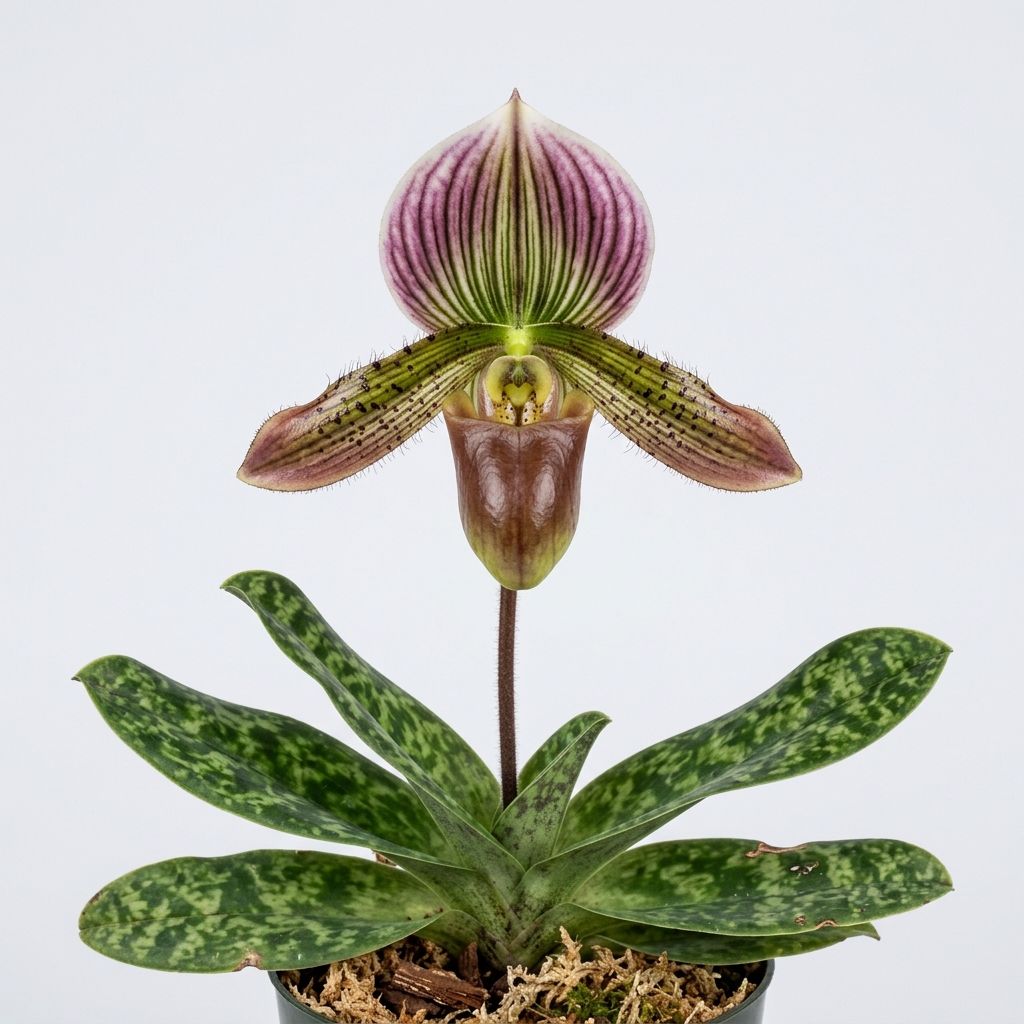
Paphiopedilum Robinsonii is a highly sought-after slipper orchid valued for its striking foliage and distinctive, pouch-shaped blooms. As a member of the genus Paphiopedilum, this orchid is characterized by its terrestrial or lithophytic growth habit, making it well-suited for indoor cultivation. Collectors and enthusiasts prize this selection for its elegant, architectural presentation and its ability to thrive in typical home environments when provided with consistent care.
The visual appeal of this orchid lies in its combination of beautifully mottled leaves and a single, long-lasting flower held aloft on a tall, slender spike. While it requires the consistent moisture and shaded conditions typical of mottled-leaf slipper orchids, it rewards dedicated growers with an exotic, refined display. Its moderate growth rate and compact footprint make it an excellent addition to any windowsill or dedicated orchid collection.
💡 Did You Know?
The pouch of Paphiopedilum Robinsonii is not actually a trap to digest insects, but a clever evolutionary mechanism. Insects are lured inside by color and texture, and the only escape route forces them to squeeze past the orchid's reproductive organs, ensuring pollen is deposited or collected on their way out.
🌿 Botanical Overview
Paphiopedilum Robinsonii is a sympodial orchid that grows in fans of leaves rather than producing pseudobulbs. This lack of water-storing pseudobulbs means the plant relies on its thick, fleshy roots and succulent leaves to maintain hydration. In their natural habitats, these orchids are typically found growing in leaf litter on forest floors or nestled in mossy rock crevices, where they receive filtered light and constant moisture.
The foliage of this orchid is a major selling point even when the plant is not in bloom. The leaves feature a beautiful tessellated or mottled pattern of dark and light green, which is an evolutionary adaptation to capture light efficiently in the deep shade of forest understories. This attractive foliage ensures the plant remains visually appealing throughout the entire year.
🌸 Flower Characteristics
The bloom of Paphiopedilum Robinsonii features a prominent, pouch-like lip (the labellum) designed to temporarily trap insect pollinators. The dorsal sepal is typically pointed, displaying vertical striping in shades of green, white, or brown. This upright sepal acts as a hood over the center of the flower, protecting the reproductive structures from rain.
The petals extend horizontally or slightly downward, often adorned with fine hairs (cilia) or small dark warts along the margins. The color palette is an earthy blend of bronze, green, purple, and mahogany, creating a sophisticated, complex look. Each mature leaf fan produces a single flower on an upright, pubescent inflorescence that rises well above the foliage.
Fragrance & Bloom Profile
Like many members of the Paphiopedilum genus, Paphiopedilum Robinsonii is generally considered non-fragrant. Any scent reports are rare and not consistently documented in mainstream horticultural literature. The primary appeal of the bloom lies entirely in its striking visual form and exceptional longevity.
A single flower can remain pristine on the plant for six to eight weeks, and sometimes even longer under optimal, cool conditions. The sturdy stem ensures the flower is presented beautifully, making it an excellent specimen for display on tables or windowsills where its intricate details can be appreciated up close.
Parentage & Hybrid Lineage
Taxonomically, Paphiopedilum Robinsonii is historically classified as a species native to specific regions of Southeast Asia, though some taxonomists treat it as a variety or synonym of Paphiopedilum bullenianum. Because taxonomic classifications within the slipper orchid group can shift as genetic testing improves, growers should consult modern botanical registries for the most current nomenclature.
In cultivation, it is grown both as a distinct species selection and used in hybridization to pass on its mottled foliage and compact, elegant flower form. When used in breeding, it contributes to the complex, multi-colored petals and sturdy flower spikes seen in modern slipper orchid hybrids.
🌱 Growing Conditions
To grow Paphiopedilum Robinsonii successfully, mimic its natural forest-floor habitat. It requires low to moderate indirect light. Direct sunlight will quickly scorch the mottled leaves, while too little light may prevent the plant from blooming. An east-facing window or a filtered LED setup is ideal for maintaining healthy growth.
💡 Care Tip
To maintain the vibrant mottling on the leaves of your Paphiopedilum Robinsonii, place it in a location with bright, filtered shade. If the leaves begin to look pale or washed out, the plant is likely receiving too much and should be moved further from the window.
This orchid prefers intermediate to warm temperatures, ideally ranging from 65°F to 80°F during the day, with a slight drop of 5 to 10 degrees at night to stimulate growth and future blooming. Maintain humidity levels between 50% and 70%. Good air movement is essential to prevent stagnant moisture from settling on the leaves, which can lead to bacterial or fungal rot.
Watering, Feeding & Potting Media
Because Paphiopedilum Robinsonii lacks pseudobulbs, it should never be allowed to dry out completely. Water thoroughly when the top layer of media begins to feel slightly dry, keeping the root zone consistently damp but never waterlogged. Using rainwater, distilled water, or reverse osmosis water is highly recommended, as slipper orchids are sensitive to dissolved salts in tap water.
Feed the orchid with a balanced, highly diluted orchid fertilizer (such as one-quarter strength) every two to three waterings during the active growing season. Flush the pot with pure water periodically to wash away any accumulated fertilizer salts. A well-draining, moisture-retentive mix is crucial; a blend of fine-grade fir bark, perlite, charcoal, and chopped sphagnum moss works exceptionally well.
Blooming Season & Care Notes
Blooming typically occurs in the spring or early summer, though it can vary based on local growing conditions. The flower spike emerges slowly from the center of a mature leaf fan. During this time, avoid changing the plant’s orientation to the light source, as this can cause the developing bud to twist or present awkwardly.
Once the bloom eventually fades, cut the spike near the base of the fan. Do not expect the same fan to bloom again; instead, focus on encouraging new vegetative growths (offsets) from the base, which will produce the next season’s flowers. Repotting is best done every one to two years in spring, just after flowering, to refresh the decomposing media and ensure the roots have access to oxygen.
⚠️ Common Issues
⚠️ Common Mistake
A frequent error is allowing the potting medium to dry out completely between waterings. Because Paphiopedilum orchids lack water-storing pseudobulbs, even brief periods of severe drought can damage their sensitive roots, leading to leaf loss and aborted flower buds.
- Root Rot:
Caused by overwatering or compacted, poorly draining media that suffocates the roots. - Leaf Spotting: Fungal or bacterial infections arising from water sitting on the foliage in stagnant air.
- Bud Blast:
The premature drying and dropping of developing buds, often due to sudden changes in temperature, low humidity, or drafty conditions. - Mealybugs and Scale: Common pests that hide in the tight crevices of the leaf fans; treat promptly with insecticidal soap or neem oil.
❓ Frequently Asked Questions
How often should I water my Paphiopedilum Robinsonii?
Watering frequency depends on your home’s temperature and humidity, but generally, you should water every 5 to 7 days. The goal is to keep the potting medium evenly moist, never allowing it to dry out completely or sit in standing water.
Why are the leaves on my slipper orchid turning yellow?
Yellowing leaves can be caused by too much direct sunlight, overwatering leading to root loss, or the natural aging process of old leaf fans. If the oldest fan is yellowing while new fans are healthy, it is likely a natural cycle.
Does Paphiopedilum Robinsonii require a winter rest period?
No strict dry winter rest is needed for this orchid. However, reducing watering slightly and keeping temperatures slightly cooler during the winter months mimics natural seasonal shifts and can help stimulate spring blooming.
Can I grow this orchid under artificial LED lights?
Yes, Paphiopedilum Robinsonii performs exceptionally well under artificial LED grow lights. Keep the lights at a moderate intensity and place the plant at a safe distance to avoid leaf scorch, aiming for about 10 to 12 hours of light daily.
⭐ Final Growing Notes
Paphiopedilum Robinsonii is an exceptional choice for both intermediate growers and dedicated orchid collectors. Its combination of striking, patterned foliage and exotic, long-lasting pouch flowers makes it a standout specimen in any indoor collection. By providing consistent moisture, shaded light, and gentle air movement, you can enjoy the unique architectural beauty of this classic slipper orchid for many years to come.
⚕️ Health, Safety & Edibility
Understanding how a plant interacts with people, pets, and the surrounding environment is part of responsible cultivation. This section uses conservative, general guidance and does not replace professional medical or veterinary advice.
Human Safety: No published evidence currently identifies species-specific toxicity concerns for Paphiopedilum Robinsonii during normal handling. As with most ornamental plants, it should not be intentionally consumed.
Pet Safety: Published information does not indicate that this orchid commonly poses a toxicity concern for cats or dogs. However, chewing leaves, flowers, roots, or potting media may still cause mild digestive upset.
Edibility: This orchid is cultivated for ornamental display rather than food. Ornamental plants may carry fertilizers, pesticides, or other horticultural treatments that make them unsuitable for consumption.
Skin Contact: Routine handling is not generally associated with skin irritation. Gardeners with sensitive skin may prefer wearing gloves when repotting, pruning, or handling potting media.
🌱 Propagation Tip
Slipper orchids like Paphiopedilum Robinsonii cannot be propagated by leaf or stem cuttings. Instead, propagate by division during repotting, ensuring each new division has at least two to three mature leaf fans and a healthy, active root system to support independent growth.
⭐ Expert Advice
When repotting, add a small handful of crushed oyster shells or agricultural lime to the fine bark mix. Paphiopedilum species often grow near limestone cliffs in nature, and a slight touch of calcium helps support strong cell wall development and healthier root systems.

Leave A Comment