
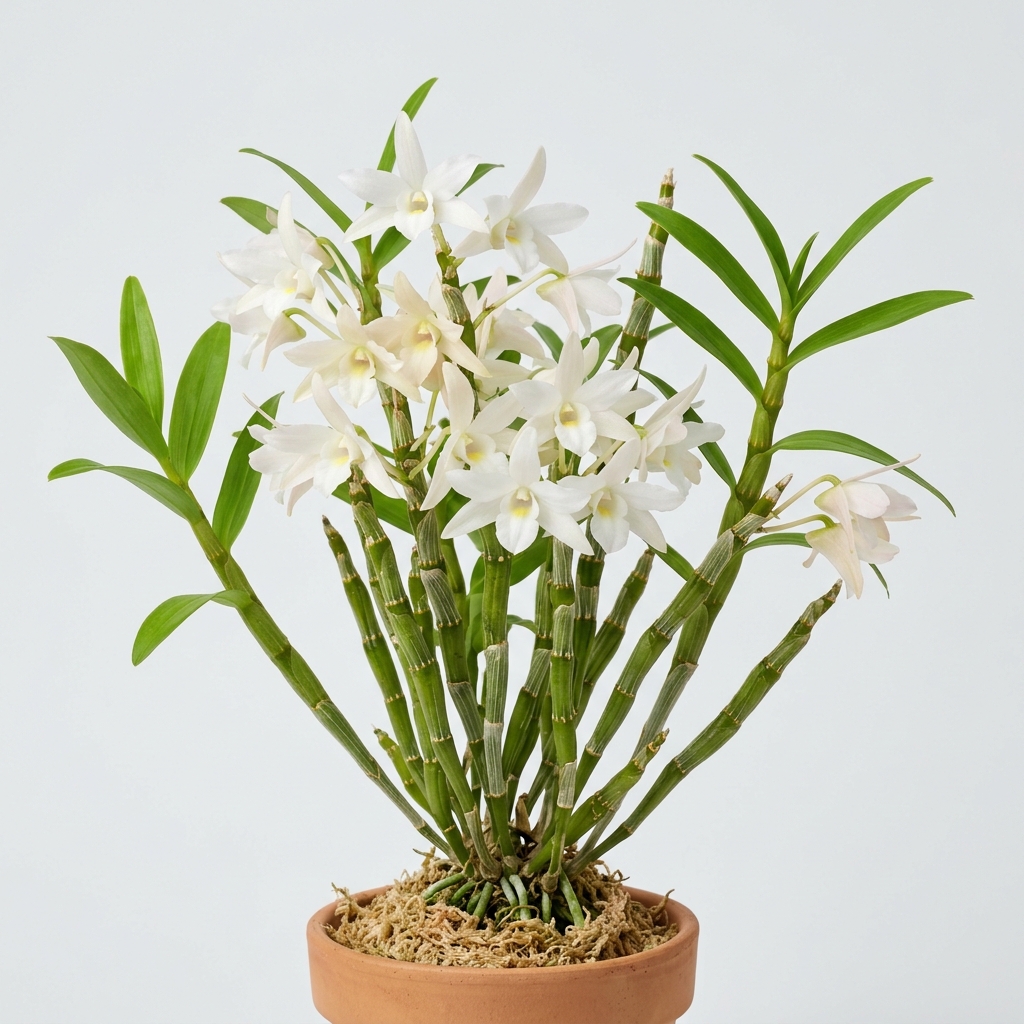
Dendrobium Moniliforme is a highly revered miniature orchid species native to East Asia, celebrated for its compact growth habit and elegant, star-shaped blossoms. Known historically in Japan as “Chouseiran,” this lithophytic and epiphytic orchid has been cultivated for centuries, prized not only for its delicate flowers but also for its diverse foliage patterns and structural charm. It forms dense clumps of slender, cane-like pseudobulbs that make it an exceptional choice for space-conscious indoor growers and traditional orchid enthusiasts alike.
In cultivation, this resilient orchid produces clusters of fragrant, long-lasting flowers that typically emerge from the upper nodes of both leafy and deciduous canes. Its adaptability to varying temperatures and its compact stature make it highly suitable for mounting on cork bark or potting in traditional moss-filled clay vessels. Growers value Dendrobium Moniliforme for its historical significance, ease of culture, and the delightful sweet fragrance that fills growing spaces during its peak blooming periods.
💡 Did You Know?
In traditional Japanese culture, Dendrobium Moniliforme is known as Chouseiran and has been cultivated by royalty and samurai for over four hundred years. Collectors historically valued specific mutations of this orchid so highly that individual plants were sometimes traded for the price of a house.
🌿 Botanical Overview
Dendrobium Moniliforme is characterized by its slender, segmented pseudobulbs, often referred to as canes, which grow in upright or slightly arching clusters. These canes feature a distinct jointed or beaded appearance, from which the species derives its botanical name. The lanceolate leaves are arranged alternately along the upper portions of the canes, and depending on the specific clone or environmental conditions, they may remain evergreen or drop during the winter dormancy period.
In nature, this species is found growing on mossy trees and rocky cliffs throughout Japan, Korea, China, and Taiwan. This diverse natural habitat has allowed the orchid to develop a robust tolerance for temperature fluctuations, making it exceptionally resilient in home cultivation. Over centuries of selective breeding, particularly in Japan, numerous cultivars with variegated leaves, unusual cane shapes, and unique flower colors have been established and classified.
🌸 Flower Characteristics
The blossoms of Dendrobium Moniliforme are typically star-shaped, measuring between one to two inches in diameter. They feature elegant, pointed petals and sepals that frame a delicate, slightly flared lip. The lip often displays a subtle yellow, green, or purple throat marking, which serves as a visual guide for pollinators. Flowers are produced in short racemes of two to three blooms from the upper nodes of mature canes, creating a highly decorative display when multiple canes bloom simultaneously.
While the classic form of this orchid features pristine white or soft pink petals, select cultivars may exhibit deeper rose tones, cream coloration, or even multi-colored margins. The flowers are remarkably long-lasting, often remaining fresh for several weeks if kept in cool, stable conditions. The presentation is neat and compact, with the blooms held close to the canes, highlighting the plant’s overall architectural symmetry.
Fragrance & Bloom Profile
One of the most celebrated attributes of Dendrobium Moniliforme is its sweet, pervasive fragrance. The scent is commonly described as a blend of vanilla, jasmine, and sweet spices, which becomes most intense during the morning hours when temperatures begin to rise. This strong olfactory appeal, combined with its prolific blooming habit, makes it a highly desirable addition to indoor growing spaces.
The blooming cycle is closely tied to seasonal temperature drops and a dry winter rest. Under optimal conditions, a single mature specimen can produce dozens of flowers across multiple canes, transforming the compact plant into a fragrant mound of white or pink blossoms. While spring is the primary blooming season, some growers report sporadic flowering in the autumn if environmental cues trigger a secondary growth cycle.
Parentage & Hybrid Lineage
As a distinct botanical species rather than a man-made hybrid, Dendrobium Moniliforme possesses a pure genetic lineage that has evolved naturally over millennia. It is one of the foundational species of the genus Dendrobium and has been utilized extensively in hybridization programs to introduce cold tolerance, compact growth habits, and fragrance to modern Dendrobium hybrids.
In traditional Japanese horticulture, specific collected clones and mutations are registered under the “Chouseiran” umbrella, where they are classified based on leaf variegation, cane morphology, and flower variations rather than hybrid parentage. When purchasing this orchid, growers should note that while it is a true species, individual cultivars may exhibit highly specialized traits developed through centuries of vegetative propagation and selection.
🌱 Growing Conditions
To cultivate Dendrobium Moniliforme successfully, growers should aim to replicate its natural montane environment. It thrives in bright, filtered light, similar to the dappled sunlight found under a forest canopy. East or shaded south-facing windows are ideal, as direct midday sun can scorch the delicate foliage. If grown under artificial lights, moderate to high intensity LED setups are highly effective.
💡 Care Tip
Always ensure your growing area has active air movement, especially when cultivating this orchid in high . Good ventilation prevents stagnant moisture from settling on the leaves and canes, which significantly reduces the risk of fungal infections.
Temperature management is crucial for this species. During the active growing season in spring and summer, it prefers intermediate to warm temperatures ranging from 65°F to 85°F (18°C to 29°C). In the winter, however, the plant requires a distinct cool period with night temperatures dropping to 40°F to 50°F (4°C to 10°C). This temperature drop, combined with reduced watering, is essential to initiate the development of flower buds rather than vegetative offsets.
Watering, Feeding & Potting Media
During the active spring and summer growth phases, Dendrobium Moniliforme should be watered thoroughly and kept consistently moist but never waterlogged. High humidity of 50% to 70% and excellent air circulation are vital to prevent fungal pathogens. Apply a balanced, diluted orchid fertilizer weekly or bi-weekly during this period to support the development of strong, healthy new canes.
As autumn approaches, gradually reduce watering and cease fertilization to prepare the orchid for its winter rest. During the winter dormancy, water only sparingly—just enough to prevent the pseudobulbs from shriveling excessively. Traditional potting methods involve wrapping the roots in high-quality sphagnum moss and placing them in a small, porous clay pot. Alternatively, the orchid performs exceptionally well when mounted on cork bark or tree fern plaques, provided humidity levels can be maintained.
Blooming Season & Care Notes
The primary blooming season occurs in late winter to early spring, emerging directly from the nodes of mature canes. To ensure a successful bloom, maintain the cool, dry winter rest until the flower buds are clearly visible. Once the buds begin to swell, gradually increase watering and return the plant to slightly warmer conditions to support the opening of the blossoms.
After the flowering cycle is complete, the orchid will enter a phase of rapid vegetative growth, producing new leads from the base of the pseudobulbs. This is the ideal time to repot the plant if the potting medium has begun to degrade. Avoid removing old, leafless canes unless they are completely dry and hollow, as they store vital water and nutrients that support the new growth and future blooms.
⚠️ Common Issues
⚠️ Common Mistake
The most common mistake is too heavily during the winter dormancy. While the canes may shrivel slightly, keeping the medium wet during cold temperatures will quickly rot the root system and prevent the plant from blooming in the spring.
- Root Rot:
Caused by overwatering or compacted potting media that lacks adequate drainage and aeration. - Bud Blast:
Sudden drops in humidity, drafts, or premature watering during the winter rest can cause developing flower buds to yellow and drop. - Shriveled Canes: While minor shriveling is normal during the winter rest, excessive wrinkling indicates severe dehydration or root loss.
- Pests:
Spider mites, scale, and mealybugs can occasionally infest the tight spaces between leaves and canes; treat promptly with insecticidal soap or neem oil. - Foliage Spotting: Fungal or bacterial spots may develop if leaves remain wet overnight or if air circulation is insufficient.
❓ Frequently Asked Questions
How do I trigger my Dendrobium Moniliforme to bloom?
To trigger blooming, you must provide a cool, dry winter rest starting in late autumn. Reduce watering significantly, stop all fertilization, and expose the plant to night temperatures between 40°F and 50°F (4°C to 10°C) for several weeks until flower buds begin to emerge from the cane nodes.
Why are the leaves on my orchid turning yellow and falling off?
It is natural for Dendrobium Moniliforme to shed leaves from older canes, especially during the autumn and winter rest period. However, if young, active canes are rapidly losing leaves, it may indicate overwatering, root rot, or insufficient light during the growing season.
Can I grow Dendrobium Moniliforme mounted on wood?
Yes, this species is an excellent candidate for mounting on cork bark or tree fern mounts. Mounting mimics its natural epiphytic growth habit and ensures excellent drainage. Mounted plants require more frequent watering and higher ambient humidity than those grown in pots.
What are the small plantlets growing on the sides of the canes?
These small plantlets are called keikis, which are vegetative clones of the parent plant. They often develop if the orchid receives too much water or nitrogen fertilizer during its winter rest instead of the required cool, dry conditions. Once they develop several roots, they can be carefully removed and potted individually.
⭐ Final Growing Notes
Dendrobium Moniliforme remains a timeless treasure in the orchid world, offering a perfect blend of historical elegance, compact size, and rewarding fragrance. By respecting its natural seasonal rhythm of warm, wet summers and cool, dry winters, growers of all experience levels can enjoy the exquisite beauty of this ancient Japanese cultivar. Its resilient nature and architectural form ensure it will continue to be a cherished centerpiece in botanical collections for generations to come.
⚕️ Health, Safety & Edibility
Understanding how a plant interacts with people, pets, and the surrounding environment is part of responsible cultivation. This section uses conservative, general guidance and does not replace professional medical or veterinary advice.
Human Safety: No published evidence currently identifies species-specific toxicity concerns for Dendrobium Moniliforme during normal handling. As with most ornamental plants, it should not be intentionally consumed.
Pet Safety: Published information does not indicate that this orchid commonly poses a toxicity concern for cats or dogs. However, chewing leaves, flowers, roots, or potting media may still cause mild digestive upset.
Edibility: This orchid is cultivated for ornamental display rather than food. Ornamental plants may carry fertilizers, pesticides, or other horticultural treatments that make them unsuitable for consumption.
Skin Contact: Routine handling is not generally associated with skin irritation. Gardeners with sensitive skin may prefer wearing gloves when repotting, pruning, or handling potting media.
🌱 Propagation Tip
If your orchid produces keikis along its canes, wait to detach them until they have developed at least three distinct roots that are one to two inches long. Gently twist the keiki off the parent cane and pot it in damp sphagnum moss.
⭐ Expert Advice
When repotting, choose the smallest pot possible. This species thrives when its roots are tightly confined. Using traditional Japanese clay pots with a hollow center mound of high-grade sphagnum moss will provide the perfect balance of moisture retention and root aeration.

Leave A Comment