
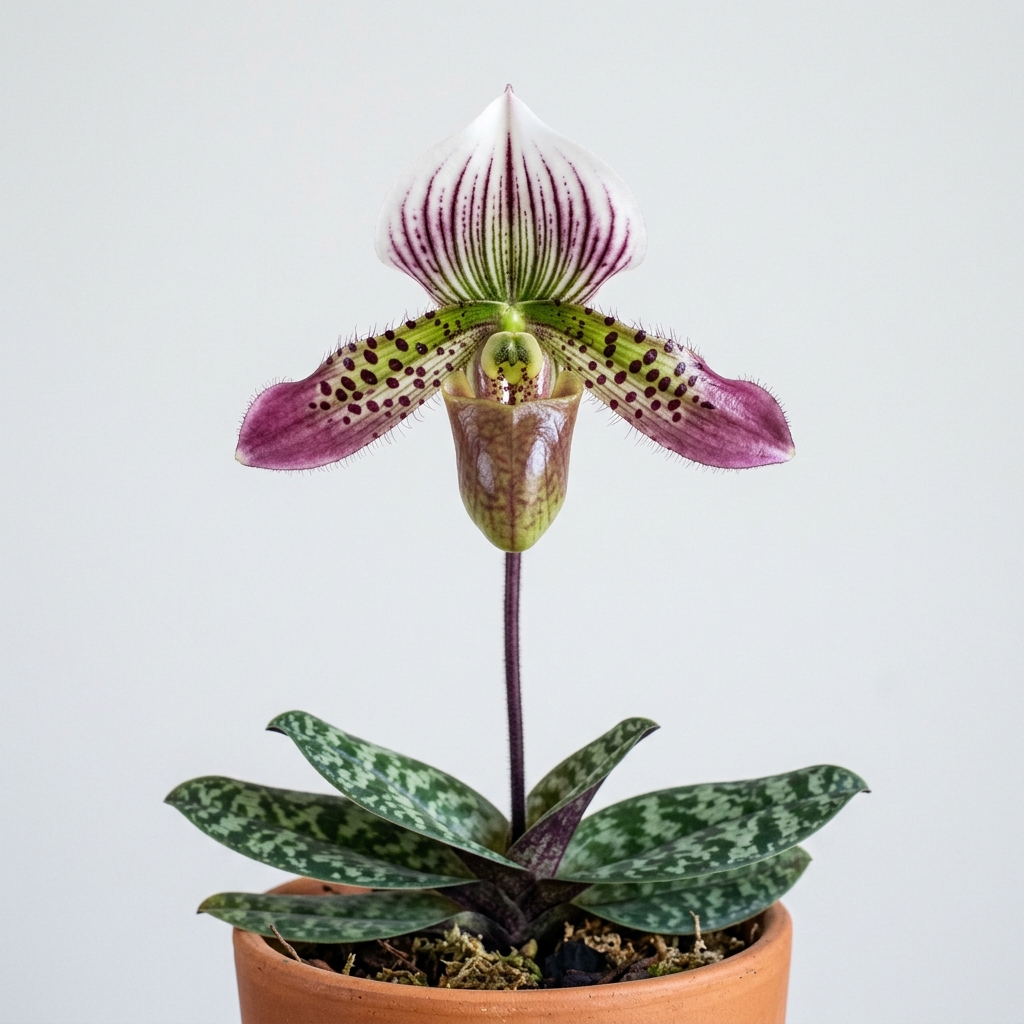
Paphiopedilum Urbanianum is a highly prized terrestrial slipper orchid native to the Philippines, specifically the island of Mindoro. This species is widely celebrated among orchid enthusiasts for its striking mottled foliage and distinctive, pouch-shaped flowers. Its compact growth habit and elegant presentation make it an exceptional addition to any indoor orchid collection or dedicated greenhouse space.
As a sympodial orchid that lacks pseudobulbs, this plant relies on its fan-like growth and thick, fleshy roots to store moisture and nutrients. Its relatively straightforward care requirements, combined with its year-round foliage appeal, make it an excellent choice for intermediate growers looking to expand their experience with the Paphiopedilum genus.
💡 Did You Know?
Paphiopedilum Urbanianum is named in honor of the German botanist Ignatz Urban. Native exclusively to the island of Mindoro in the Philippines, this species grows in the deep shade of tropical forests, often nestled in pockets of humus on limestone rocks. This unique lithophytic and terrestrial habit explains its preference for highly aerated, moisture-retentive in cultivation.
🌿 Botanical Overview
In its native habitat, Paphiopedilum Urbanianum grows primarily as a terrestrial or lithophytic plant on shaded limestone slopes and in pockets of leaf litter. This environment provides a constant supply of organic nutrients and excellent drainage. The plant is adapted to the humid, warm-temperate to tropical climate of the Philippine forests, where it thrives under the protective canopy of larger vegetation.
The foliage of this species is a standout feature, displaying a beautiful tessellated or mottled pattern of pale and dark green. Each leaf fan grows in a neat, compact arrangement, ensuring the plant remains highly decorative even when not in flower. Because it lacks pseudobulbs, the root system consists of thick, hairy roots designed to anchor the plant in loose organic debris and absorb moisture efficiently.
🌸 Flower Characteristics
The inflorescence of Paphiopedilum Urbanianum is typically single-flowered, arising from the center of a mature leaf fan on an erect, dark purple, pubescent stem. The flower itself is a masterpiece of natural geometry, featuring a prominent dorsal sepal that is ovate, white, and marked with striking green and purple vertical veins.
The petals extend horizontally or slightly downward, showing a green base adorned with dark spots or warts along the margins, which transitions into a vibrant purplish-pink toward the tips. The pouch, or labellum, is helmet-shaped and displays a glossy, greenish-brown to dull purple coloration, completing the classic slipper orchid silhouette that fascinates collectors worldwide.
Fragrance & Bloom Profile
This species is generally considered non-fragrant, with its primary horticultural appeal centered on its visual complexity and long-lasting blooms. While some growers occasionally report a very faint, earthy scent under specific warm and humid conditions, a distinct fragrance is not a documented characteristic of this orchid.
The flowers are remarkably durable, often remaining in pristine condition for six to eight weeks when kept in stable environmental conditions. This long bloom cycle makes the plant highly rewarding, as a single successful flowering period provides months of visual enjoyment.
Parentage & Hybrid Lineage
Paphiopedilum Urbanianum is a naturally occurring species rather than a man-made hybrid. It was first formally described in the late 20th century and belongs to the subgenus Sigmatopetalum. In the orchid breeding community, it is highly valued for its ability to pass down its compact growth habit, mottled foliage, and rich purple petal coloration to its offspring.
While its exact hybrid history can vary depending on the breeder, it has been used in numerous grexes to enhance the visual appeal of modern slipper orchid hybrids. When purchasing, growers should look for reputable nurseries to ensure they are acquiring a true species or a well-documented primary hybrid.
🌱 Growing Conditions
To cultivate Paphiopedilum Urbanianum successfully, growers should aim to replicate its natural forest-floor environment. It thrives in low to moderate filtered light, similar to the conditions preferred by Phalaenopsis orchids. Direct sunlight must be avoided, as it can easily scorch the delicate mottled leaves and cause permanent damage.
💡 Care Tip
To maintain the vibrant mottled pattern of the foliage, place the orchid in a location with bright, indirect . If the leaves begin to turn a pale, washed-out green, the plant is likely receiving too much ; if they turn a deep, solid green with no variegation, it may need slightly more .
Temperature: wise, this orchid prefers intermediate to warm conditions. Daytime temperatures should ideally range between 75°F and 85°F, with a slight drop at night to around 60°F to 65°F. Maintaining a consistent level of moderate to high humidity, ideally between 50% and 70%, is crucial for healthy leaf development and root growth.
Watering, Feeding & Potting Media
Because Paphiopedilum Urbanianum lacks water-storing pseudobulbs, the potting medium should never be allowed to dry out completely. Water the plant thoroughly just as the top layer of the media begins to feel dry to the touch. Ensure that excess water drains away freely, as stagnant water around the roots will quickly lead to rot.
Feed the orchid with a balanced, highly diluted orchid fertilizer every two to three waterings during the active growing season. A well-draining, moisture-retentive potting mix is essential; a blend of fine-grade fir bark, perlite, charcoal, and a small amount of chopped sphagnum moss mimics its natural organic substrate perfectly.
Blooming Season & Care Notes
The typical blooming season for Paphiopedilum Urbanianum occurs in the spring and early summer. A single leaf fan will only produce one flower spike in its lifetime. Once the flower has faded and dropped, the spike should be cut back close to the base of the fan to allow the plant to redirect its energy.
Following the bloom cycle, the orchid will focus on vegetative growth, producing new fans from the base of the old one. Repotting is best performed every one to two years, immediately after the flowering period has ended, to refresh the decomposing media and ensure the root system remains highly aerated.
⚠️ Common Issues
⚠️ Common Mistake
A frequent error is allowing the potting medium to dry out completely between waterings. Unlike epiphytic orchids with water-storing pseudobulbs, this species lacks water storage organs and will quickly suffer root loss and leaf dehydration if left dry for extended periods.
- Root Rot: Often caused by overwatering or compacted potting media that retains too much moisture.
- Leaf Scorch: Bleached or dry brown patches on the leaves resulting from exposure to direct sunlight.
- Mealybugs and Scale: Pests that frequently hide in the tight crevices at the base of the leaf fans.
- Bud Blast: The premature drying and dropping of flower buds, usually triggered by sudden drafts or low humidity.
❓ Frequently Asked Questions
How often should I water my Paphiopedilum Urbanianum?
Watering frequency depends on your home environment, but generally, you should water every 5 to 7 days. The goal is to keep the potting medium evenly moist but never soggy or waterlogged.
Why are the leaves on my slipper orchid losing their mottled pattern?
If the mottled pattern is fading or turning a solid, dark green, the plant may not be receiving enough light. Conversely, washed-out or pale leaves indicate the light levels are too high.
Can Paphiopedilum Urbanianum be grown under artificial LED lights?
Yes, this species adapts very well to indoor growing under LED setup. Position the plant under moderate-strength lights, ensuring they are kept at a safe distance to prevent heat stress or foliage burn.
What should I do with the leaf fan after it finishes blooming?
Leave the old fan intact, as it will continue to provide energy to the plant. Over time, new vegetative fans will emerge from the base of the old fan, which will produce future blooms.
⭐ Final Growing Notes
Paphiopedilum Urbanianum is a rewarding and visually captivating orchid that brings a touch of tropical elegance to any indoor garden. By providing consistent moisture, filtered light, and moderate humidity, growers can enjoy both its stunning mottled foliage year-round and its exquisite, long-lasting slipper flowers each spring.
⚕️ Health, Safety & Edibility
Understanding how a plant interacts with people, pets, and the surrounding environment is part of responsible cultivation. This section uses conservative, general guidance and does not replace professional medical or veterinary advice.
Human Safety: No published evidence currently identifies species-specific toxicity concerns for Paphiopedilum Urbanianum during normal handling. As with most ornamental plants, it should not be intentionally consumed.
Pet Safety: Published information does not indicate that this orchid commonly poses a toxicity concern for cats or dogs. However, chewing leaves, flowers, roots, or potting media may still cause mild digestive upset.
Edibility: This orchid is cultivated for ornamental display rather than food. Ornamental plants may carry fertilizers, pesticides, or other horticultural treatments that make them unsuitable for consumption.
Skin Contact: Routine handling is not generally associated with skin irritation. Gardeners with sensitive skin may prefer wearing gloves when repotting, pruning, or handling potting media.
🌱 Propagation Tip
Slipper orchids like this species cannot be propagated by leaf cuttings or backbulbs. Instead, propagation is achieved by carefully dividing mature plants during repotting. Ensure each division has at least two to three healthy, mature fans with active root systems to guarantee successful establishment.
⭐ Expert Advice
When repotting, avoid burying the base of the leaf fans too deeply in the media, as this can trap moisture and lead to crown rot. The base of the fan should sit flush with or slightly above the top of the potting mix for optimal health.

Leave A Comment