
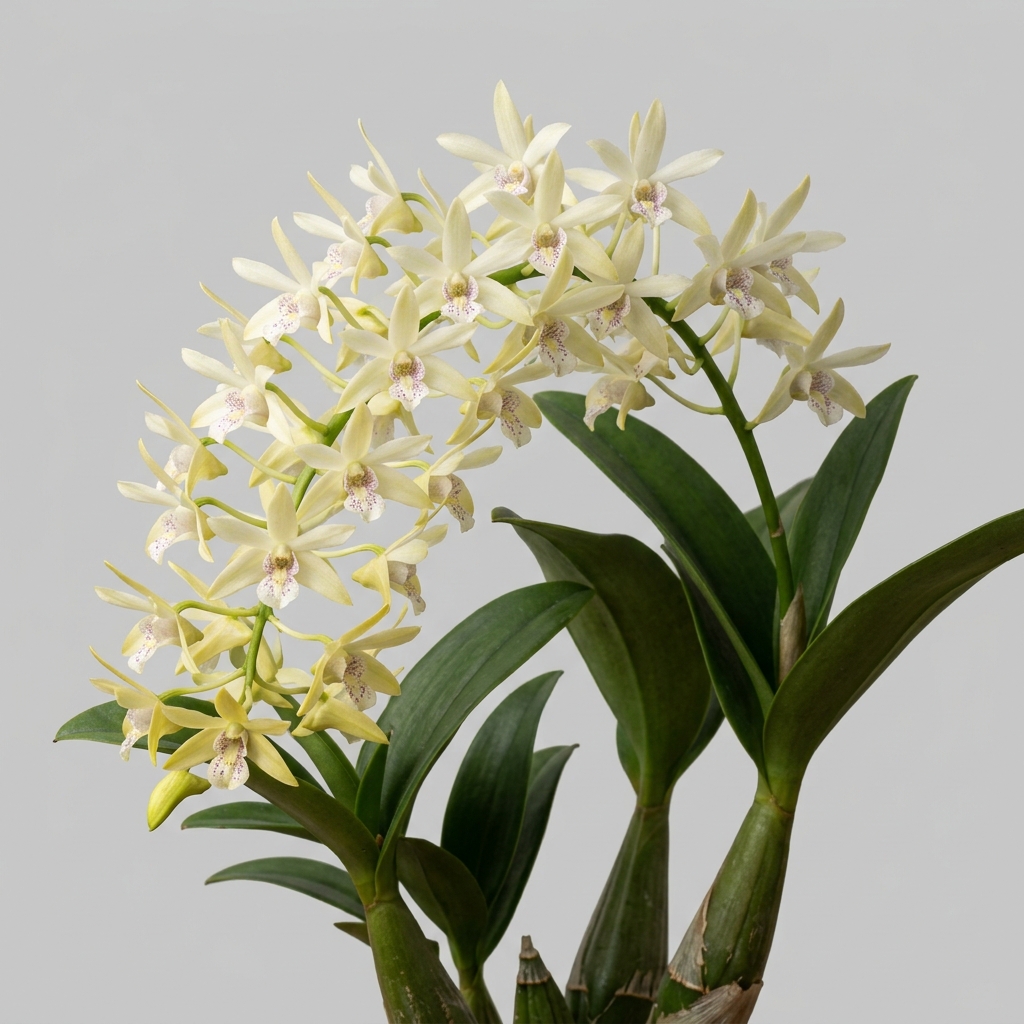
Dendrobium Speciosum, commonly known as the rock lily or outstanding dendrobium, is a highly celebrated orchid species native to eastern Australia. Renowned for its robust growth habit and spectacular flowering displays, this orchid produces large, dense sprays of fragrant blossoms that range from creamy white to deep yellow. It is highly valued by collectors and exhibitors alike for its sheer structural presence and its ability to produce hundreds of flowers on mature specimens.
In its natural habitat, this resilient orchid typically grows as a lithophyte on exposed sandstone cliffs or as an epiphyte in open forests. This rugged origin makes it exceptionally hardy and adaptable to a variety of cultivation styles, provided its basic requirements for light and seasonal dry spells are met. For growers seeking a dramatic, long-lived specimen that stands out during its blooming cycle, this species represents one of the most rewarding investments in the orchid world.
💡 Did You Know?
In its native Australia, mature wild specimens of Dendrobium Speciosum can grow into massive clumps weighing over one ton. These ancient plants anchor themselves so securely to sandstone cliffs that they can withstand intense bushfires, often regenerating quickly from their thick, water-storing pseudobulbs once the rains return.
🌿 Botanical Overview
Dendrobium Speciosum is characterized by its extremely tough, leathery leaves and thick, conical pseudobulbs. These pseudobulbs serve as vital water and nutrient storage organs, allowing the plant to survive prolonged dry periods in its native Australian environment. The growth habit is upright and clumping, with mature specimens forming massive, heavy clumps that can weigh several hundred pounds in the wild.
The foliage consists of thick, dark green, ovate leaves that emerge from the apex of the pseudobulbs. These leaves are exceptionally rigid, designed to withstand intense sunlight and wind. Under optimal conditions, the plant produces multiple new growths each season, gradually expanding its footprint and increasing its potential for a spectacular floral display.
🌸 Flower Characteristics
The flowers of this species are borne on long, arching racemes that emerge from the upper nodes of the pseudobulbs. Each spike can carry anywhere from thirty to over one hundred individual blooms, creating a dense, cylindrical cloud of color. The individual flowers typically feature narrow, spreading sepals and petals that curve gracefully forward, surrounding a smaller, intricately patterned labellum.
The color palette is dominated by shades of cream, pale yellow, and rich gold, often accented by fine purple or red speckling on the white lip. The flowers are relatively long-lasting, often remaining in pristine condition for several weeks. Their structural arrangement on the spike ensures that the entire inflorescence presents a highly symmetrical and visually striking appearance.
Fragrance & Bloom Profile
One of the most defining characteristics of Dendrobium Speciosum is its intense fragrance. On warm, sunny days, a single blooming specimen can fill an entire greenhouse or outdoor growing area with a heavy, sweet aroma reminiscent of honey and native blossoms. The scent is typically strongest during midday when temperatures rise and light levels are at their peak.
The blooming cycle occurs once a year, usually starting in late winter and extending into mid-spring. The initiation of these blooms is heavily dependent on environmental cues, particularly a distinct drop in night temperatures and a reduction in moisture during the autumn and winter months. Without this seasonal trigger, the plant may produce vegetative growths instead of flower spikes.
Parentage & Hybrid Lineage
As a naturally occurring species, Dendrobium Speciosum does not have hybrid parentage, but it has been divided into several distinct varieties or subspecies by botanists, such as variety speciosum, variety hillii, and variety grandiflorum. These naturally occurring variations exhibit differences in pseudobulb size, flower color, and geographical distribution across eastern Australia.
In artificial hybridization, this species has been used extensively as a parent to introduce cold hardiness, robust growth habits, and high flower counts to new Dendrobium hybrids. Its genetic influence is highly visible in many popular Australian native hybrids, where it consistently passes on its characteristic star-shaped flowers and strong, sweet fragrance.
🌱 Growing Conditions
To cultivate this orchid successfully, growers must replicate its bright, airy natural habitat. It thrives in high light conditions, requiring significantly more light than many other common orchid genera. In temperate climates, it can be grown outdoors in full morning sun with some protection from the harshest afternoon rays, which helps prevent leaf scorch.
💡 Care Tip
Provide this orchid with the brightest possible without burning the leaves. A green or slightly yellowish-green leaf color indicates the plant is receiving optimal for future flower production, whereas dark green leaves suggest it needs more .
Temperature tolerance is broad, ranging from cool winter nights near 40 degrees Fahrenheit (4 degrees Celsius) to warm summer days exceeding 90 degrees Fahrenheit (32 degrees Celsius). Adequate air movement is absolutely critical, especially when humidity levels are high, as stagnant air can quickly lead to fungal infections on the foliage and roots.
Watering, Feeding & Potting Media
During the active growing season in spring and summer, Dendrobium Speciosum requires frequent, heavy watering. The potting medium should be allowed to dry out slightly between waterings, but never remain bone-dry for extended periods while new pseudobulbs are developing. Weekly applications of a balanced, diluted orchid fertilizer will support this rapid vegetative growth.
Because of its lithophytic nature, the potting medium must be exceptionally free-draining. A coarse mix consisting of large fir bark, charcoal, and perlite or pumice is ideal. Mature specimens are also excellent candidates for mounting on large cork slabs, hardwood branches, or even directly onto stone faces in frost-free climates, provided they receive daily misting during the heat of summer.
Blooming Season & Care Notes
As the autumn approaches, watering must be gradually reduced to initiate the winter rest period. This dry, cool rest is essential for flower bud development. During this time, fertilizer should be withheld completely, and water should only be provided sparingly—just enough to prevent the pseudobulbs from shriveling excessively.
Once the flower spikes begin to emerge from the top of the pseudobulbs in late winter, regular watering can be slowly resumed. Care should be taken not to get water on the developing buds, as this can cause them to blast or rot. After flowering is complete, the plant will enter a brief period of dormancy before initiating new vegetative shoots, which is the ideal time for repotting or dividing.
⚠️ Common Issues
⚠️ Common Mistake
The most common mistake is this orchid continuously through the autumn and winter. Without a distinct dry rest period accompanied by cooler temperatures, the plant will fail to produce flower spikes and may suffer from root rot.
- Root Rot:
Caused by overwatering during the winter rest period or using a degraded, water-retentive potting medium. - Bud Blast:
Occurs when developing flower spikes are subjected to sudden temperature fluctuations, low humidity, or drafts. - Scale and Mealybugs: These pests often hide in the dry sheaths surrounding the pseudobulbs or under the tough leaves.
- Leaf Scorch: Appears as bleached or blackened patches on the foliage when the plant is moved too quickly into direct sun.
- Lack of Flowering: Usually the result of insufficient light during the growing season or a failure to provide a cool, dry winter rest.
❓ Frequently Asked Questions
How do I trigger my Dendrobium Speciosum to bloom?
Blooming is triggered by a combination of high light during the summer, followed by a cool, dry rest period in autumn and winter. Reduce watering significantly and expose the plant to cooler night temperatures to encourage spike initiation.
Can this orchid be grown indoors under artificial lights?
While possible, it is challenging due to the plant’s high light requirements and large mature size. High-output LED grow lights are necessary, and the plant must still experience a seasonal temperature drop to flower successfully.
How often should I repot a mature specimen?
This species dislikes root disturbance and should only be repotted every three to five years, or when the potting medium has completely broken down. Always repot immediately after the spring flowering cycle when new root growth begins.
Why are the pseudobulbs on my orchid shriveling?
Slight shriveling is normal during the dry winter rest. However, severe shriveling during the active growing season indicates either underwatering or root loss due to rot, which prevents the plant from absorbing moisture.
⭐ Final Growing Notes
Dendrobium Speciosum is a magnificent, architectural orchid that rewards patient growers with some of the most spectacular floral displays in the botanical world. By respecting its natural cycle of summer growth and winter rest, and providing it with abundant light and excellent drainage, this hardy Australian native will thrive and bloom for decades, often becoming a cherished family heirloom.
⚕️ Health, Safety & Edibility
Understanding how a plant interacts with people, pets, and the surrounding environment is part of responsible cultivation. This section uses conservative, general guidance and does not replace professional medical or veterinary advice.
Human Safety: No published evidence currently identifies species-specific toxicity concerns for Dendrobium Speciosum during normal handling. As with most ornamental plants, it should not be intentionally consumed.
Pet Safety: Published information does not indicate that this orchid commonly poses a toxicity concern for cats or dogs. However, chewing leaves, flowers, roots, or potting media may still cause mild digestive upset.
Edibility: This orchid is cultivated for ornamental display rather than food. Ornamental plants may carry fertilizers, pesticides, or other horticultural treatments that make them unsuitable for consumption.
Skin Contact: Routine handling is not generally associated with skin irritation. Gardeners with sensitive skin may prefer wearing gloves when repotting, pruning, or handling potting media.
🌱 Propagation Tip
Propagate mature specimens by division during the spring repotting cycle, ensuring each new division has at least four healthy, mature pseudobulbs. Avoid dividing the plant too frequently, as larger clumps produce significantly more impressive flower displays.
⭐ Expert Advice
When repotting, choose a heavy clay pot or a sturdy wooden basket to prevent the top-heavy pseudobulbs from tipping over. Secure the plant firmly with orchid stakes or wire until the new roots have fully anchored into the fresh, coarse medium.

Leave A Comment