
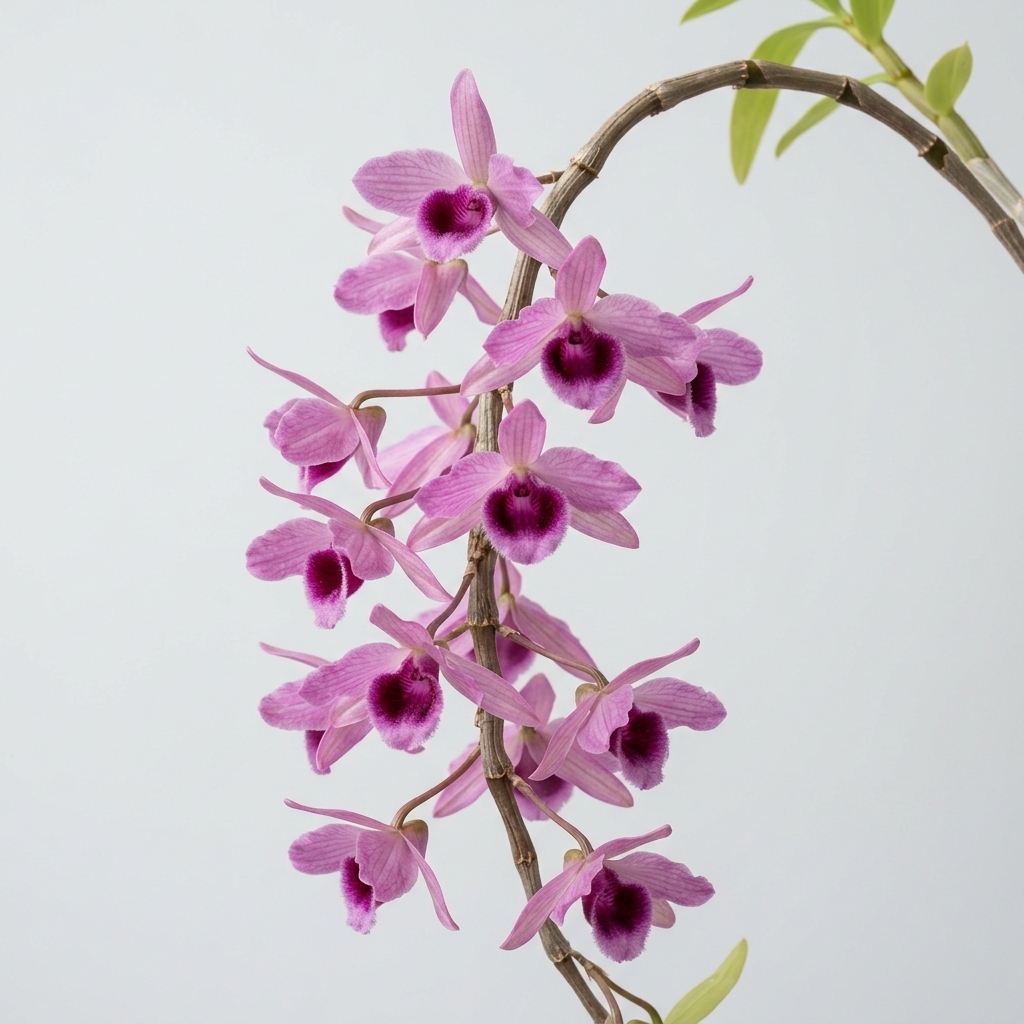
Dendrobium Nestor is a highly celebrated primary hybrid within the genus Dendrobium, cherished by orchid enthusiasts for its dramatic seasonal displays and graceful growth habit. This deciduous orchid produces long, pendulous canes that cascade elegantly, making it an ideal candidate for hanging baskets or mounted displays. During its peak blooming season, the leafless canes become completely covered in soft pink to mauve blossoms, creating a spectacular waterfall of color.
Beyond its visual appeal, this cultivar is famous for its intense, sweet fragrance that can easily fill a growing space. Because it follows a strict seasonal growth cycle, including a dry winter dormancy, it requires a bit more attention than standard grocery-store orchids. However, intermediate growers will find its predictable rhythm and rewarding floral show well worth the effort.
💡 Did You Know?
Dendrobium Nestor is a classic primary hybrid registered in the late 19th century, combining the best traits of its parent species. Its pendulous canes can grow up to three feet long, creating a spectacular weeping waterfall of fragrant pink blossoms when grown in a hanging basket or mounted on a cork slab.
🌿 Botanical Overview
Dendrobium Nestor is characterized by its sympodial growth habit, producing elongated, fleshy pseudobulbs commonly referred to as canes. These canes are naturally pendulous, growing outward and downward as they mature, sometimes reaching lengths of two to three feet. The leaves are light green, lanceolate, and arranged alternately along the length of the new canes during the spring and summer active growing phase.
As an epiphytic orchid, its root system is adapted to securing the plant to tree branches while absorbing moisture and nutrients from the air and surrounding organic debris. In the autumn, the plant undergoes a natural senescence where the leaves on the matured canes turn yellow and drop off. This deciduous phase is a vital part of the orchid’s life cycle, preparing the bare canes for the upcoming spring bloom cycle.
🌸 Flower Characteristics
The flowers of Dendrobium Nestor are highly distinctive and emerge in clusters of two to three from the nodes of the leafless canes. Each blossom typically measures between two and three inches in diameter. The sepals and petals are a delicate shade of rose-pink or light mauve, presenting a soft, translucent quality under bright light.
The most striking feature of the flower is its rounded, trumpet-shaped lip, or labellum. The lip is densely covered in fine, velvety hairs, giving it a soft, pubescent texture. The interior of the throat features deep purple or rich maroon markings, which contrast beautifully with the lighter pastel tones of the surrounding petals. The flowers are long-lasting, often remaining fresh for up to four weeks under optimal environmental conditions.
Fragrance & Bloom Profile
One of the primary reasons growers seek out Dendrobium Nestor is its exceptional fragrance. The scent is intensely sweet and is most commonly compared to ripe raspberries, strawberries, or sweet bubblegum. The fragrance is strongest during the morning and early afternoon hours, especially when the plant is kept in warm, humid conditions with gentle air movement.
The blooming cycle occurs once a year, typically starting in late winter or early spring as temperatures begin to rise. A single mature cane can produce dozens of flowers simultaneously, creating a dense, colorful column of blooms. Because the flowers open on bare canes, the display is uncluttered by foliage, maximizing the visual impact of the blossoms.
Parentage & Hybrid Lineage
Dendrobium Nestor is a classic primary hybrid resulting from the cross between Dendrobium parishii and Dendrobium anosmum (often referred to in older literature as Dendrobium superbum). This lineage explains many of its physical and cultural traits. Both parent species are native to Southeast Asia, where they grow as epiphytes in seasonally dry tropical forests.
From Dendrobium parishii, this hybrid inherits its somewhat compact flower size and the rich, dark coloration of the lip. From Dendrobium anosmum, it inherits the long, pendulous cane habit and the sweet, berry-like fragrance. The combination of these two species results in a vigorous hybrid that is often considered easier to grow and bloom in cultivation than either of its parent species.
🌱 Growing Conditions
To grow Dendrobium Nestor successfully, one must mimic the seasonal climate of its native ancestors. During the active growing season from spring through early autumn, the plant requires bright, filtered light. A location with morning sun and afternoon shade is ideal. If the leaves turn a light, yellowish-green, the light level is correct; dark green leaves indicate insufficient light, while yellow or scorched spots indicate too much direct sun.
💡 Care Tip
To accommodate the natural weeping growth habit of Dendrobium Nestor, grow it in a hanging wooden basket or mount it on a cork slab. This allows the long canes to cascade downward naturally without breaking under the weight of the spring blooms.
Temperatures should remain warm during the summer, ranging from 75 to 85 degrees Fahrenheit during the day. In the winter, the orchid requires a distinct cooling period to initiate flower buds. Nighttime temperatures during this rest period should drop to between 50 and 55 degrees Fahrenheit. High humidity of 60% to 80% is beneficial during the growing season, but it should be reduced during the winter rest to prevent rot.
Watering, Feeding & Potting Media
Watering and feeding must be adjusted strictly according to the season. During the spring and summer, when new canes and roots are actively growing, Dendrobium Nestor is a heavy feeder. Water the plant thoroughly as soon as the medium approaches dryness, and apply a balanced, diluted orchid fertilizer weekly. A well-draining potting medium is essential; coarse fir bark mixed with perlite, charcoal, or sphagnum moss works well in pots.
However, because of its pendulous growth habit, many growers prefer to mount this orchid on cork bark slabs or plant it in open wooden baskets. Mounted plants will require more frequent watering, often daily during hot summer weather. As autumn approaches and the leaves begin to yellow, gradually reduce watering and stop all fertilizer applications to prepare the plant for its winter rest.
Blooming Season & Care Notes
The winter rest period is the most critical phase for securing a successful bloom. Starting in late November, water should be withheld almost entirely. Only mist the canes occasionally if they begin to shrivel excessively; a slight wrinkling of the canes is normal and expected. Keep the plant in a cool, bright location during this time.
In late winter, small green buds will begin to emerge from the nodes along the leafless canes. Once these buds are clearly visible, gradually resume watering. Do not water heavily or apply fertilizer too early, as this can cause the developing flower buds to convert into vegetative offsets, known as keikis. Once the flowers fade in late spring, new vegetative shoots will emerge from the base of the plant, signaling the start of the next growth cycle.
⚠️ Common Issues
⚠️ Common Mistake
The most common mistake is Dendrobium Nestor during its winter dormancy. Continuing to water and fertilize during this cool rest period will cause the plant to produce vegetative keikis instead of flower buds, or worse, lead to fatal root rot.
- Bud blast, where developing buds turn yellow and drop off, often caused by sudden temperature drops, drafts, or low humidity.
- Root rot, which occurs if the plant is watered too frequently during its cool winter rest period.
- Infestations of spider mites or mealybugs, which tend to hide under the dry, papery sheaths of older canes.
- Failure to bloom, usually resulting from insufficient light during the summer or a winter rest that was too warm or too wet.
❓ Frequently Asked Questions
Why is my Dendrobium Nestor losing all of its leaves in the winter?
This is a completely natural, deciduous process for Dendrobium Nestor. The plant sheds its leaves on mature canes in the late autumn and winter to conserve resources and prepare for the spring blooming cycle. Do not panic; this leaf loss is necessary for the orchid to produce flowers.
How long should the winter dry rest last?
The dry rest should begin in late autumn (usually November) and last until you see distinct flower buds forming along the bare canes in late winter or early spring. During this time, withhold fertilizer and only water or mist very sparingly to prevent the canes from shriveling completely.
Can I grow Dendrobium Nestor in a standard plastic pot?
While you can grow it in a pot, its long, pendulous canes will naturally spill over the sides and may tip the pot over. It is highly recommended to grow this cultivar in a hanging wooden basket or mounted on a cork slab so the canes can cascade downward naturally.
What should I do if my orchid produces baby plants on the canes instead of flowers?
These baby plants are called keikis. They are often produced if the orchid did not receive a proper cool, dry winter rest, or if fertilizer was applied too early in the spring. You can leave them on the plant, or wait until their roots are at least two inches long to gently remove and pot them separately.
⭐ Final Growing Notes
Dendrobium Nestor remains a favorite among orchid collectors due to its dramatic transformation from bare, winter-dormant canes into a cascading waterfall of highly fragrant, pastel-pink blossoms. By respecting its natural seasonal cycle of heavy summer watering followed by a cool, dry winter rest, growers can enjoy a spectacular and incredibly fragrant floral display year after year.
⚕️ Health, Safety & Edibility
Understanding how a plant interacts with people, pets, and the surrounding environment is part of responsible cultivation. This section uses conservative, general guidance and does not replace professional medical or veterinary advice.
Human Safety: No published evidence currently identifies species-specific toxicity concerns for Dendrobium Nestor during normal handling. As with most ornamental plants, it should not be intentionally consumed.
Pet Safety: Published information does not indicate that this orchid commonly poses a toxicity concern for cats or dogs. However, chewing leaves, flowers, roots, or potting media may still cause mild digestive upset.
Edibility: This orchid is cultivated for ornamental display rather than food. Ornamental plants may carry fertilizers, pesticides, or other horticultural treatments that make them unsuitable for consumption.
Skin Contact: Routine handling is not generally associated with skin irritation. Gardeners with sensitive skin may prefer wearing gloves when repotting, pruning, or handling potting media.
🌱 Propagation Tip
This cultivar frequently produces adventitious offsets, known as keikis, along the nodes of older canes. Wait until the keiki has developed several roots at least two inches long before gently detaching and potting it individually.
⭐ Expert Advice
When initiating the winter rest, look for the terminal leaf to form at the tip of the cane. Once this leaf matures, stop all fertilizer and reduce to a misting once every two weeks to ensure a massive flush of spring blooms.

Leave A Comment