

Cattleya Hardyana represents one of the most celebrated natural hybrids in the orchid world, occurring spontaneously where its parent species share a habitat. This magnificent orchid combines the robust growth habit and large flower size of Cattleya warscewiczii with the exquisite coloration and intricate lip patterns of Cattleya dowiana. Highly prized by collectors and historical orchid enthusiasts, it serves as a cornerstone of classic Cattleya breeding.
As a sympodial epiphyte, this orchid produces stout pseudobulbs topped with single, leathery leaves that store moisture and nutrients to survive seasonal dry spells. Cultivating this hybrid successfully requires an understanding of its parental heritage, balancing bright light with a distinct watering rhythm. When properly managed, it rewards growers with spectacular, highly fragrant blooms that exemplify the golden age of orchid cultivation.
💡 Did You Know?
Cattleya Hardyana was first discovered in the wild in Colombia during the late nineteenth century. Because its parent species, Cattleya warscewiczii and Cattleya dowiana, grow at slightly different elevations, natural hybrids like Hardyana are exceptionally rare in nature, occurring only where their specific microclimates overlap in the canopy.
🌿 Botanical Overview
Cattleya Hardyana is a naturally occurring hybrid first documented in the late nineteenth century in Colombia, where the geographic ranges of its parent species overlap. Structurally, the plant shows classic unifoliate Cattleya characteristics, featuring club-shaped pseudobulbs that can reach significant heights under optimal conditions. Each pseudobulb supports a single, rigid, oblong leaf of a mid-to-dark green hue, designed to withstand high-light environments.
The growth cycle of this orchid is closely tied to seasonal shifts in light and moisture. New leads emerge from the base of the previous season’s pseudobulbs, developing rapidly during the spring and summer months. As the new growth matures, it forms a protective sheath at the apex, from which the impressive inflorescence will eventually emerge.
🌸 Flower Characteristics
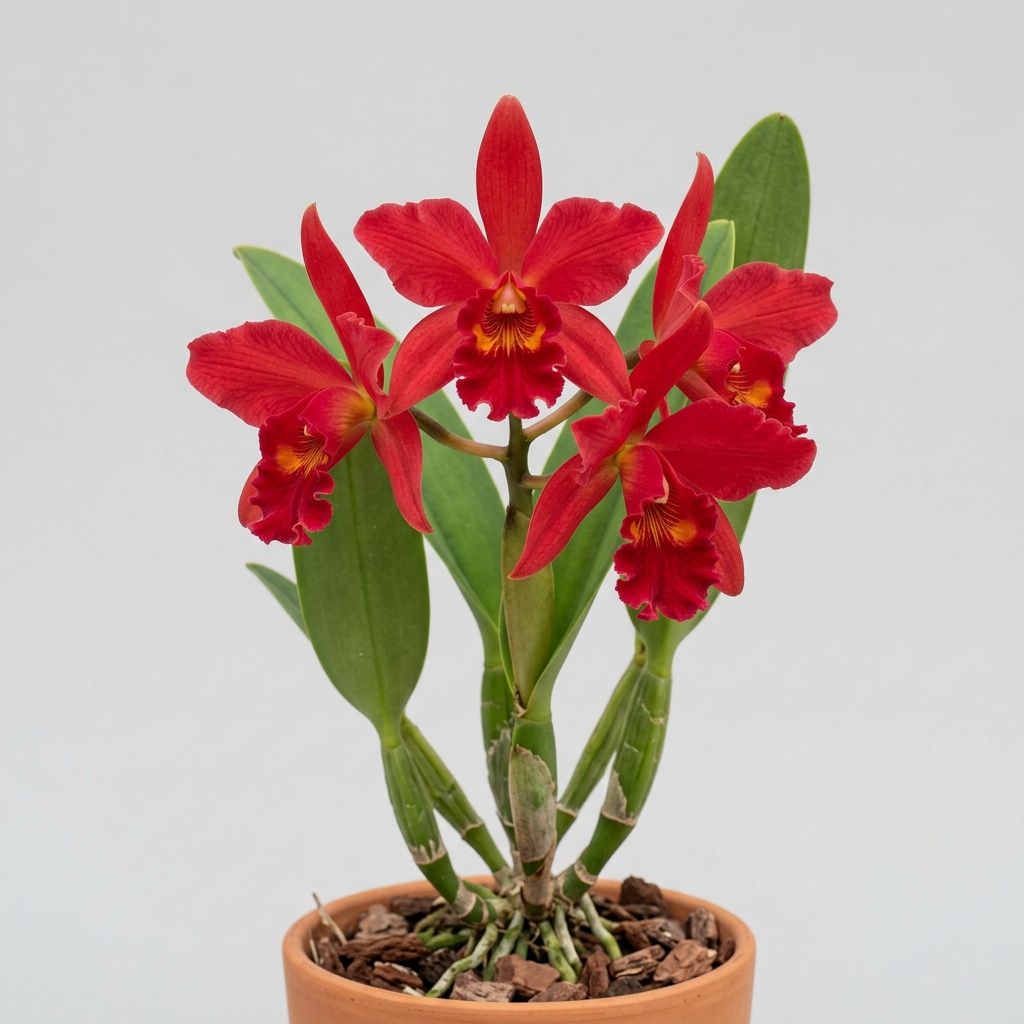
The blossoms of Cattleya Hardyana are renowned for their impressive size, often spanning fifteen to twenty centimeters in diameter. The sepals and petals typically display a rich lavender, rose-purple, or magenta coloration, though rare semi-alba forms with white segments also exist. These segments are generally broad, slightly wavy, and present a well-proportioned, classic orchid silhouette.
The defining feature of this hybrid is its spectacular labellum, or lip. Inheriting the dramatic patterning of Cattleya dowiana, the lip is large, deeply lobed, and saturated with velvet-like crimson or royal purple tones. This rich background is contrasted by two prominent golden-yellow patches, often referred to as eyes, and intricate golden veining that extends deep into the throat, creating a striking visual focal point.
Fragrance & Bloom Profile
The fragrance of Cattleya Hardyana is exceptionally strong and complex, combining the sweet, floral notes of Cattleya warscewiczii with the warm, citrus-and-vanilla undertones of Cattleya dowiana. The scent is most pronounced during the morning hours when temperatures begin to rise, filling the growing space with a rich, perfume-like aroma.
A mature, healthy pseudobulb can produce a flowering spike bearing three to five blossoms. The flowers are presented elegantly above the foliage on a sturdy, upright inflorescence. While the individual blooms generally last between two to three weeks—a duration typical for many classic large-flowered Cattleyas—their sheer visual impact and intense fragrance make the blooming event a highlight of the growing year.
Parentage & Hybrid Lineage
Taxonomically, Cattleya Hardyana is recognized as a natural hybrid between Cattleya warscewiczii and Cattleya dowiana (specifically the Colombian variety, Cattleya dowiana var. aurea). Because it occurs naturally in the wild, there is inherent genetic variation among different clones, with some individuals leaning closer to one parent in terms of color, growth habit, or temperature tolerance.
In historical orchid literature, this hybrid has played a pivotal role in the development of modern lavender and purple Cattleya lines. Breeders have long utilized its vigor and exceptional lip coloration to introduce depth of color and complex patterns into modern hybrids. While artificially produced remakes of this cross exist, wild-collected or historically documented clonal divisions remain highly sought after by purists.
🌱 Growing Conditions
To cultivate Cattleya Hardyana successfully, growers must replicate the bright, warm environments of its native Colombian canopy. It requires very bright, filtered light, equivalent to approximately 3,000 to 4,500 foot-candles. While it can tolerate some direct morning sun, protection from intense midday and afternoon rays is essential to prevent leaf scorch.
💡 Care Tip
Ensure your Cattleya Hardyana receives excellent air movement at all times. Strong ventilation mimics its native canopy habitat, helping the potting medium dry quickly after and significantly reducing the risk of fungal leaf spotting and root rot.
Temperature ranges should mimic intermediate to warm conditions. Ideal daytime temperatures range from twenty-four to thirty degrees Celsius, with a nighttime drop of six to eight degrees to stimulate healthy growth and eventual flowering. High humidity levels of sixty to eighty percent are optimal, paired with continuous, gentle air movement to prevent stagnant air pockets and fungal pathogens.
Watering, Feeding & Potting Media
Watering should be frequent and thorough during the active growing season, allowing the potting medium to dry out almost completely between applications. This wet-dry cycle is critical for preventing root rot, to which the Cattleya dowiana parentage makes this hybrid somewhat susceptible. During the winter rest period, watering frequency must be significantly reduced, providing only enough moisture to prevent the pseudobulbs from shriveling.
A balanced, water-soluble orchid fertilizer should be applied weakly weekly during periods of active vegetative growth. A coarse, free-draining potting medium is essential; a high-quality medium-to-large fir bark mix blended with charcoal and perlite works exceptionally well. Alternatively, growers in high-humidity environments may choose to mount the plant on cork bark or grow it in open wooden baskets to ensure rapid drying of the root zone.
Blooming Season & Care Notes
Cattleya Hardyana typically blooms in the late summer or early autumn, shortly after the new pseudobulbs complete their growth and mature. Once the flower sheath is visible at the apex of the leaf, growers should maintain stable environmental conditions, avoiding sudden shifts in temperature or humidity that could lead to bud blast.
After flowering concludes, the plant enters a period of semi-dormancy. Repotting should only be performed when new root tips begin to emerge from the base of the newest pseudobulb, which usually coincides with the start of the spring growth cycle. Disturbed roots can take a long time to recover, so minimizing root disturbance during this process is highly beneficial.
⚠️ Common Issues
⚠️ Common Mistake
The most common mistake is overwatering during the winter rest period. When the orchid is not actively growing, its roots cannot absorb excess moisture, leading to rapid root decay that can severely weaken or kill the plant by spring.
- Root rot caused by overwatering or compacted, poorly draining potting media.
- Bud blast due to sudden environmental shifts, low humidity, or drafty conditions while buds are developing.
- Scale insects and mealybugs hiding under the dry papery sheaths of the pseudobulbs.
- Leaf scorch resulting from sudden exposure to intense, direct afternoon sunlight.
- Fungal spotting on leaves and flowers when high humidity is combined with stagnant air.
❓ Frequently Asked Questions
How often should I water my Cattleya Hardyana?
Watering frequency depends on your environmental conditions, but as a general rule, water thoroughly only when the potting medium has dried out completely. During the active summer growing season, this may be once or twice a week, while the winter rest period may require watering only once every two weeks.
Why are the buds on my orchid turning yellow and dropping?
This issue, known as bud blast, is typically caused by sudden environmental stress. Common triggers include sharp temperature drops, low humidity, dry drafts, or moving the plant to a new location with significantly different light levels while the buds are actively developing inside the sheath.
Can Cattleya Hardyana be grown under LED lights?
Yes, this orchid can be grown successfully under high-output LED grow lights designed for horticultural use. Ensure the lights provide a full spectrum and are positioned close enough to deliver the high light intensity this hybrid requires, while monitoring leaf temperature to prevent heat damage.
What should I do if the pseudobulbs begin to shrivel?
Slight shriveling of older pseudobulbs during the winter rest is normal. However, severe shriveling during the active growing season usually indicates dehydration, which can be caused by underwatering or, conversely, root rot that has destroyed the root system’s ability to absorb water.
⭐ Final Growing Notes
Cattleya Hardyana remains an undisputed masterpiece of natural orchid hybridization, offering growers a captivating blend of historical significance, visual drama, and rich fragrance. While it demands careful attention to watering cycles and high light levels, providing these basic requirements rewards the dedicated hobbyist with some of the most spectacular blooms in the entire orchid family.
⚕️ Health, Safety & Edibility
Understanding how a plant interacts with people, pets, and the surrounding environment is part of responsible cultivation. This section uses conservative, general guidance and does not replace professional medical or veterinary advice.
Human Safety: No published evidence currently identifies species-specific toxicity concerns for Cattleya Hardyana during normal handling. As with most ornamental plants, it should not be intentionally consumed.
Pet Safety: Published information does not indicate that this orchid commonly poses a toxicity concern for cats or dogs. However, chewing leaves, flowers, roots, or potting media may still cause mild digestive upset.
Edibility: This orchid is cultivated for ornamental display rather than food. Ornamental plants may carry fertilizers, pesticides, or other horticultural treatments that make them unsuitable for consumption.
Skin Contact: Routine handling is not generally associated with skin irritation. Gardeners with sensitive skin may prefer wearing gloves when repotting, pruning, or handling potting media.
🌱 Propagation Tip
Propagate this orchid by division only when the plant has outgrown its container and possesses at least six to eight healthy pseudobulbs. Ensure each divided section has at least three active pseudobulbs with viable eye buds to support new growth.
⭐ Expert Advice
To maximize the intensity of the golden throat markings inherited from Cattleya dowiana, provide slightly brighter as the flower sheath begins to swell, but monitor leaf temperatures closely to avoid heat stress or sunburn.

Leave A Comment