
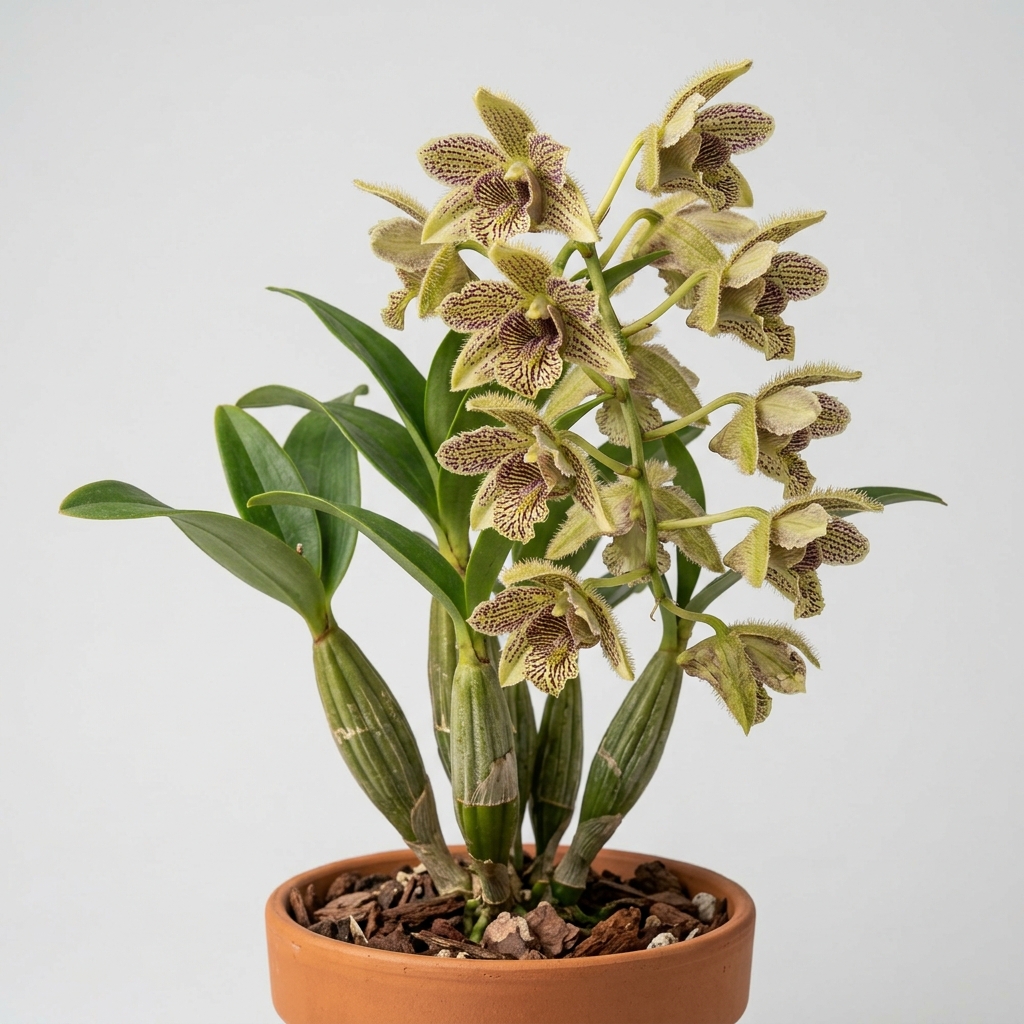
Dendrobium Macrophyllum is a fascinating and highly distinctive orchid species belonging to the Latouria section of the genus. Revered by collectors for its exotic, textured blooms and robust growth habit, this species stands out due to the unique, bristly hairs that coat the exterior of its sepals. Native to the warm, humid regions of the Western Pacific and Southeast Asia, it brings a dramatic, tropical presence to any indoor orchid collection or greenhouse.
Growers particularly value this orchid for its long-lasting flowers and sturdy, club-shaped pseudobulbs. Unlike many delicate orchid varieties, Dendrobium Macrophyllum possesses a bold, architectural structure that remains attractive even when the plant is not in bloom. With the proper balance of bright, filtered light, high humidity, and consistent moisture, this species rewards dedicated caretakers with spectacular, multi-flowered spikes that can remain in pristine condition for several weeks.
💡 Did You Know?
The distinctive fuzzy hairs on the sepals of Dendrobium Macrophyllum are actually an evolutionary adaptation. In their native tropical habitats, these tiny structures help protect the developing flower buds from excessive moisture, pests, and intense sunlight, ensuring the delicate petals inside can mature safely before opening.
🌿 Botanical Overview
Dendrobium Macrophyllum is a prominent member of the Latouria section, a group of orchids known for their durable flowers and distinct vegetative characteristics. This species is native to a wide geographical range spanning from the Philippines and Indonesia to New Guinea and various Pacific islands. In its natural habitat, it grows epiphytically on tree trunks and branches in lowland forests, where it is exposed to warm temperatures and high humidity year-round.
The vegetative structure of the plant is characterized by erect, clavate (club-shaped) pseudobulbs that are deeply ribbed and can reach significant heights under optimal conditions. These pseudobulbs are topped by two to four leathery, elliptic leaves that persist for multiple seasons. This robust growth habit allows the plant to store water and nutrients efficiently, helping it survive brief periods of environmental stress in the wild.
🌸 Flower Characteristics
The flowers of Dendrobium Macrophyllum are truly remarkable and easily distinguished from other members of the genus. The most striking feature is the presence of fine, stiff hairs or trichomes on the reverse side of the sepals and ovary, giving the buds a fuzzy appearance before they open. The flowers typically measure two to three inches across and are presented on upright or arching racemes that emerge from the upper nodes of the pseudobulbs.
The color palette of the blooms is a sophisticated combination of cream, chartreuse, and pale yellow, heavily marked with intricate spots, speckles, and radiating lines of deep purple or reddish-brown. The lip, or labellum, is three-lobed and features prominent side lobes that wrap around the column, often adorned with striking dark veins. A single inflorescence can carry anywhere from ten to over twenty flowers, creating a dense and visually arresting display.
Fragrance & Bloom Profile
While many orchids are grown solely for their visual appeal, Dendrobium Macrophyllum offers an intriguing sensory experience. The fragrance of this species is often described as mild, earthy, or slightly sweet, though the intensity and specific scent profile can vary significantly between individual specimens and environmental conditions. Some growers report a subtle, musky aroma that is most noticeable during the warm midday hours.
The blooms are exceptionally long-lived, frequently remaining fresh for six to eight weeks or even longer if kept in a cool, stable environment. The flowers open sequentially along the spike, extending the overall blooming period. Because the inflorescences are sturdy and upright, they present the flowers beautifully above the foliage, making them excellent subjects for exhibition.
Parentage & Hybrid Lineage
As a naturally occurring species rather than a man-made hybrid, Dendrobium Macrophyllum possesses a pure genetic lineage that has evolved over millennia. However, its desirable traits—such as flower longevity, robust growth, and unique textured blooms—have made it a popular parent in orchid breeding programs. It has been crossed with other Latouria species to produce highly successful hybrids that inherit its striking patterns and vigorous growth.
In horticultural literature, exact hybrid registration and parentage lines can sometimes be complex or inconsistently documented in general grower references. When purchasing hybrids derived from this species, growers should look for crosses within the Latouria section, as these plants typically share similar cultural requirements and exhibit the same reliable, long-lasting blooming characteristics.
🌱 Growing Conditions
To cultivate Dendrobium Macrophyllum successfully, one must replicate its warm, tropical forest origin. This orchid thrives in bright, filtered light, similar to the conditions preferred by Cattleyas. While it can tolerate some direct morning sun, harsh afternoon sunlight should be avoided to prevent leaf scorch. A light level of 2,000 to 3,000 foot-candles is generally ideal for promoting strong pseudobulb development and reliable flowering.
💡 Care Tip
To keep your orchid thriving, place it in a location with strong, continuous air movement. Good ventilation is crucial for preventing fungal leaf spots and root rot, especially when maintaining the high levels this species requires.
Temperature control is critical for this species. It prefers warm to intermediate conditions, with daytime temperatures ranging between 75°F and 85°F, and a slight drop at night to around 60°F to 65°F. High humidity is also essential, ideally maintained between 60% and 80%. Adequate air movement must be provided at all times to prevent stagnant air, which can lead to fungal infections and leaf spotting.
Watering, Feeding & Potting Media
During the active growing season, which typically spans from spring through autumn, Dendrobium Macrophyllum requires abundant water. The potting medium should be kept consistently moist but never waterlogged. As new pseudobulbs mature in the late autumn, watering should be gradually reduced, allowing the medium to dry out slightly more between waterings, though the plant should never be allowed to shrivel completely.
A balanced, water-soluble orchid fertilizer applied at quarter or half strength every two weeks is highly beneficial during active growth. Flushing the pot with pure water once a month helps prevent salt buildup. The ideal potting medium is a coarse, free-draining mix composed of medium-grade fir bark, charcoal, and perlite. Because this orchid resents root disturbance, it should only be repotted when the medium begins to break down or the plant completely outgrows its container.
Blooming Season & Care Notes
The primary blooming season for Dendrobium Macrophyllum occurs from late winter into spring, though well-grown plants may occasionally produce flowers at other times of the year. The development of the flower spikes is a slow process, often taking several weeks from the first appearance of the bud sheath to the fully opened flowers. During this period, it is crucial to maintain stable environmental conditions to avoid bud drop.
Once the blooming cycle is complete, the old flower spikes can be cut back to the base of the pseudobulb. It is important to note that the older, leafless pseudobulbs should not be removed, as they continue to store vital water and nutrients that support new growth. Repotting is best performed immediately after flowering, just as new green root tips begin to emerge from the base of the newest pseudobulbs.
⚠️ Common Issues
⚠️ Common Mistake
A frequent error is cutting away old, leafless pseudobulbs. While they may look inactive, these backbulbs store critical water and nutrients that fuel new growth and future blooms. Only remove them if they become completely dry, brown, and hollow.
- Root Rot:
Caused by overwatering or compacted, poorly draining potting media. Ensure the mix remains airy and fresh. - Bud Blast:
The sudden dropping of unopened buds, often triggered by rapid fluctuations in temperature, drafty conditions, or low humidity. - Leaf Spotting: Fungal or bacterial spots can develop on the foliage if air circulation is inadequate, especially in high-humidity environments.
- Spider Mites and Mealybugs: Common pests that can hide in the crevices of the ribbed pseudobulbs and under leaves. Treat promptly with insecticidal soap or neem oil.
- Dehydration:
Indicated by shriveled pseudobulbs and wrinkled leaves, usually due to underwatering or a compromised root system.
❓ Frequently Asked Questions
How often should I water my Dendrobium Macrophyllum?
During the active growing season in spring and summer, water thoroughly whenever the top inch of the potting medium feels dry, typically once or twice a week. In the winter rest period, reduce watering frequency, allowing the medium to dry out almost completely between waterings, but do not let the pseudobulbs shrivel excessively.
Why are the buds on my orchid falling off before opening?
This issue, known as bud blast, is usually caused by sudden environmental stress. Common culprits include cold drafts, dry indoor air, low humidity, or moving the plant to a different location with significantly different light levels while the buds are developing.
Can I grow Dendrobium Macrophyllum under LED lights?
Yes, this orchid can be successfully grown under high-intensity LED grow lights. Position the plant so it receives bright, indirect light for 12 to 14 hours a day, ensuring the lights are placed at a safe distance to prevent heat damage or leaf scorch.
What should I do with the pseudobulbs that have lost their leaves?
Do not cut off the old, leafless pseudobulbs. Even without leaves, these structures act as essential reservoirs for water and energy, supporting the growth of new shoots and contributing to the overall health and blooming potential of the orchid.
⭐ Final Growing Notes
Dendrobium Macrophyllum is a rewarding and visually stunning species that brings a touch of wild, tropical elegance to any orchid collection. While its unique, textured flowers and robust growth habit may seem exotic, its care requirements are highly manageable for intermediate growers who can provide warm temperatures, high humidity, and bright, filtered light. By respecting its seasonal growth cycles and maintaining excellent air circulation, you can enjoy the spectacular, long-lasting blooms of this remarkable Latouria orchid for many years to come.
⚕️ Health, Safety & Edibility
Understanding how a plant interacts with people, pets, and the surrounding environment is part of responsible cultivation. This section uses conservative, general guidance and does not replace professional medical or veterinary advice.
Human Safety: No published evidence currently identifies species-specific toxicity concerns for Dendrobium Macrophyllum during normal handling. As with most ornamental plants, it should not be intentionally consumed.
Pet Safety: Published information does not indicate that this orchid commonly poses a toxicity concern for cats or dogs. However, chewing leaves, flowers, roots, or potting media may still cause mild digestive upset.
Edibility: This orchid is cultivated for ornamental display rather than food. Ornamental plants may carry fertilizers, pesticides, or other horticultural treatments that make them unsuitable for consumption.
Skin Contact: Routine handling is not generally associated with skin irritation. Gardeners with sensitive skin may prefer wearing gloves when repotting, pruning, or handling potting media.
🌱 Propagation Tip
This species is best propagated by division during repotting. Ensure each division has at least three to four healthy, mature pseudobulbs with active root systems. Avoid dividing the plant too frequently, as larger specimens produce far more impressive floral displays.
⭐ Expert Advice
When repotting, choose a pot that seems slightly too small for the plant. Dendrobium Macrophyllum prefers to have its roots snug and confined. A tight fit prevents the potting medium from staying wet for too long, reducing the risk of root rot.

Leave A Comment