
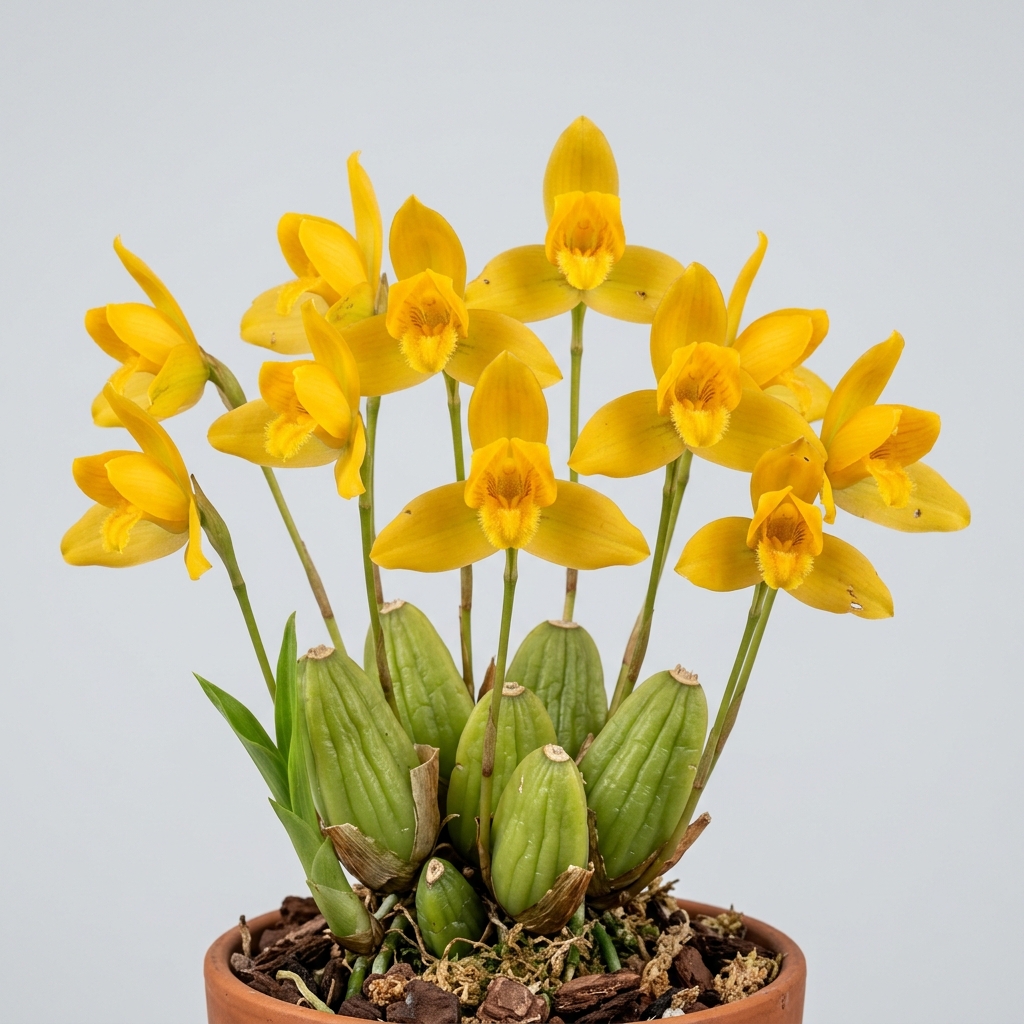
Lycaste Aromatica is a highly celebrated orchid species cherished by collectors for its vibrant display of golden-yellow blossoms and its remarkably distinct fragrance. Native to the damp, montane forests of Central America, this sympodial orchid produces a profusion of individual flowers that emerge from the base of its mature pseudobulbs. Its unique growth habit, characterized by large, pleated leaves and prominent pseudobulbs, makes it an attractive addition to any indoor greenhouse or dedicated growing space.
Unlike many tropical orchids that maintain evergreen foliage year-round, Lycaste Aromatica shows a distinct deciduous cycle, shedding its leaves during the cooler winter months. This natural dormancy is a crucial phase of its life cycle, paving the way for a spectacular spring bloom. For growers seeking an orchid that combines visual brilliance with a captivating sensory experience, this species offers a rewarding and dynamic cultivation journey.
💡 Did You Know?
Lycaste Aromatica is famous for its intense cinnamon , which is so distinct that it is often compared to a freshly opened spice jar. This scent is a natural evolutionary adaptation designed to attract specific stingless bee pollinators in its native Central American habitats, ensuring successful pollination during its brief spring blooming window.
🌿 Botanical Overview
Lycaste Aromatica is a sympodial epiphytic or lithophytic orchid native to the moist, seasonally dry forests of Mexico, Guatemala, Honduras, and El Salvador. In its natural habitat, it grows on moss-covered tree trunks or rocky ledges at elevations ranging from 500 to 2,000 meters. This elevation range exposes the plant to warm, wet summers and cooler, significantly drier winters, which dictates its seasonal growth patterns.
The plant features prominent, egg-shaped, slightly compressed pseudobulbs that can grow up to ten centimeters tall. These pseudobulbs are topped with thin, heavily veined, and pleated (plicate) leaves that can reach up to forty centimeters in length. The deciduous nature of the foliage means that as the pseudobulbs mature and the dry season approaches, the leaves gradually yellow and drop, leaving the bare pseudobulbs with sharp spines at their apexes where the leaves once attached.
🌸 Flower Characteristics
The flowers of Lycaste Aromatica are a striking display of bright yellow to rich orange-yellow. Unlike many orchids that produce multi-flowered spikes, this species produces single flowers on individual, upright stems that emerge from the base of the newly matured, leafless pseudobulbs. A single healthy pseudobulb can produce dozens of these flower spikes simultaneously, creating a dense, golden halo around the base of the plant.
Each flower typically measures between three to five centimeters in diameter. The sepals are spreading and greenish-yellow, while the smaller petals curve forward over the column, creating a hooded appearance. The lip, or labellum, is deeply three-lobed and features a prominent, fleshy callus in the center, which is often dotted with fine orange or reddish spots. The overall presentation is compact and highly structured, with the flowers facing outward to attract pollinators.
Fragrance & Bloom Profile
The defining feature of Lycaste Aromatica is its intense, spicy fragrance, which closely resembles cinnamon or clove. This scent is particularly strong during the morning hours when temperatures begin to rise, filling the surrounding growing area with a warm, sweet aroma. The fragrance is a primary reason for the species’ enduring popularity among orchid enthusiasts.
The blooming cycle typically begins in mid-spring, often just as new growth starts to emerge from the base of the pseudobulbs. Individual flowers are relatively long-lasting, remaining fresh for four to six weeks if kept in cool, buoyant air. Because the flowers open while the plant is largely devoid of leaves, the visual impact of the bright yellow blossoms against the green pseudobulbs is exceptionally striking.
Parentage & Hybrid Lineage
Lycaste Aromatica is a naturally occurring species rather than a man-made hybrid. First described in the early nineteenth century, it has served as a foundational species in Lycaste breeding. Hybridizers value it for its robust growth habit, floriferous nature, and, most importantly, its dominant cinnamon fragrance, which is often passed down to its progeny.
While its exact wild variations are not always consistently documented in common grower references, it has been successfully crossed with other Lycaste species to produce popular primary hybrids. These hybrids often aim to increase flower size or introduce pink and red tones while retaining the desirable spicy scent of the parent species.
🌱 Growing Conditions
To cultivate Lycaste Aromatica successfully, growers should mimic its native montane environment. During the active growing season, which spans from spring through autumn, the plant thrives in bright, filtered indirect light. Direct midday sun should be avoided to prevent the thin, pleated leaves from scorching, though morning or late afternoon sun is beneficial.
💡 Care Tip
During the active summer growing season, ensure your Lycaste Aromatica receives high and constant air movement. Placing a small fan nearby and using a tray can prevent fungal spotting on its delicate, pleated leaves.
Temperature management is critical for this species. It prefers intermediate to cool conditions, with daytime temperatures ranging from twenty to twenty-six degrees Celsius, and a night drop to fifteen to eighteen degrees Celsius. High humidity, ideally between fifty and seventy percent, coupled with constant, gentle air movement, is essential to prevent fungal pathogens from establishing on the soft foliage.
Watering, Feeding & Potting Media
Watering practices must change dramatically depending on the plant’s growth phase. During the active spring and summer growth period, Lycaste Aromatica requires copious amounts of water. The potting medium should be kept consistently moist but never waterlogged. Regular applications of a balanced orchid fertilizer, diluted to quarter or half strength, should be applied weekly to support the rapid development of new pseudobulbs.
The choice of potting media is crucial for balancing moisture retention and drainage. A mix of fine to medium fir bark, perlite, and a small amount of chopped sphagnum moss works exceptionally well. Plastic pots are generally preferred to help retain moisture during the hot summer months. When the leaves begin to yellow and drop in late autumn, watering must be severely reduced, and fertilizing should stop entirely to initiate the winter rest period.
Blooming Season & Care Notes
The blooming season is directly tied to the winter rest period. As winter approaches and the leaves drop, the plant enters a semi-dormant state. During this time, water should only be provided in small amounts—just enough to prevent the pseudobulbs from shriveling excessively. This dry, cool rest triggers the development of flower buds at the base of the pseudobulbs.
In early spring, as temperatures begin to rise, small green nubs will appear at the base of the pseudobulbs. These will rapidly develop into flower spikes. Once the spikes are visible, watering can be gradually increased. Repotting should only be performed every two to three years, immediately after the spring flowering has finished and just as the new green growths begin to produce fresh roots.
⚠️ Common Issues
⚠️ Common Mistake
The most common mistake is the orchid normally during its winter dormancy. Without leaves, the plant cannot process excess moisture, leading to rapid root rot. Keep to an absolute minimum, only dampening the medium if the pseudobulbs shrivel severely.
- Leaf Spotting: The thin, plicate leaves are highly susceptible to fungal and bacterial leaf spots if water is allowed to sit on the foliage or if humidity is high without adequate air movement.
- Pseudobulb Rot: Overwatering during the winter rest period can quickly lead to root loss and rot in the pseudobulbs, which is often fatal to the plant.
- Spider Mites:
These pests are attracted to the thin leaves, particularly in dry indoor environments during the transition into winter dormancy. - Bud Blast:
Sudden changes in temperature, low humidity, or drafty conditions while the flower buds are developing can cause them to yellow and drop before opening.
❓ Frequently Asked Questions
How do I know when to start the winter rest period for Lycaste Aromatica?
The winter rest period should begin in late autumn when the large, pleated leaves start to turn yellow and naturally drop. Once this leaf loss begins, gradually reduce watering to a minimum and stop all fertilizing. Only water lightly if the pseudobulbs show severe shriveling.
Why are the leaves on my Lycaste Aromatica turning yellow and falling off?
If this occurs in late autumn or early winter, it is a completely natural part of the plant’s deciduous cycle. The orchid is shedding its leaves to prepare for its winter dormancy and later spring bloom. If it happens during summer, it may indicate overwatering or root rot.
Can I grow Lycaste Aromatica mounted on wood or bark?
While it is possible to grow this species mounted, it is generally much easier to maintain in a pot. Because Lycaste Aromatica requires high moisture levels during its active summer growth phase, mounted plants will require daily or twice-daily watering to prevent dehydration.
What should I do with the sharp spines left on the pseudobulbs?
The sharp spines are the remaining leaf attachments at the top of the mature pseudobulbs. They are natural and do not harm the plant. However, they can be quite sharp, so use caution when handling the orchid during repotting or routine maintenance.
⭐ Final Growing Notes
Lycaste Aromatica remains a highly rewarding orchid for growers who can accommodate its seasonal rhythm. By respecting its need for a distinct dry winter rest and providing abundant water and nutrients during the summer, enthusiasts are rewarded with an unparalleled spring display of golden, cinnamon-scented blossoms. Its manageable size and robust nature make it an excellent introduction to the fascinating genus of Lycaste orchids.
⚕️ Health, Safety & Edibility
Understanding how a plant interacts with people, pets, and the surrounding environment is part of responsible cultivation. This section uses conservative, general guidance and does not replace professional medical or veterinary advice.
Human Safety: Species-specific human toxicity data for Lycaste Aromatica is limited. Use conservative handling practices and avoid intentional consumption.
Pet Safety: Pet-specific safety information for Lycaste Aromatica is limited, so keep it away from animals that commonly chew plants.
Edibility: Lycaste Aromatica should not be treated as edible. Ornamental specimens may contain natural irritants or horticultural residues that make them unsuitable for consumption.
Skin Contact: Skin irritation is not well documented for this plant, but gloves are sensible when repotting, pruning, or handling potting media.
🌱 Propagation Tip
Propagation is best achieved by dividing mature plants during repotting in spring. Ensure each division has at least three healthy, mature pseudobulbs and a new lead growth. Use a sterile blade and apply cinnamon powder to the cuts to prevent infection.
⭐ Expert Advice
To maximize the spring bloom, keep the plant in a cooler location during its winter rest, aiming for night temperatures around twelve to fifteen degrees Celsius. This drop, combined with dry conditions, strongly stimulates the initiation of multiple flower spikes from the base of the pseudobulbs.

Leave A Comment