
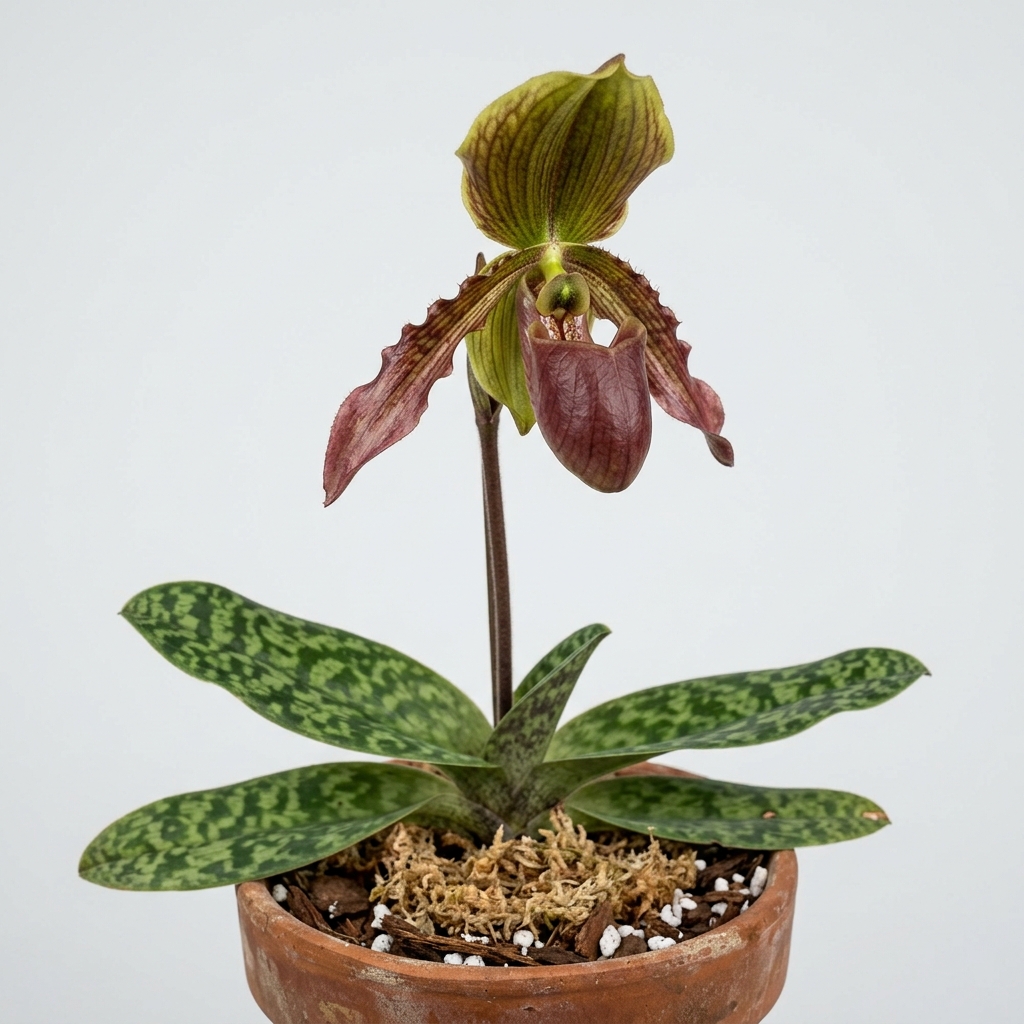
Paphiopedilum Sangii is a highly sought-after slipper orchid species native to the mountainous regions of northern Sulawesi, Indonesia. Renowned among collectors for its distinctively unusual floral morphology and beautifully mottled foliage, this terrestrial orchid brings an exotic, dramatic presence to indoor collections. Unlike many traditional slipper orchids, its flowers exhibit a unique, almost architectural structure that appeals to growers looking for something beyond the standard hybrid forms.
Cultivating this species successfully requires an understanding of its native forest-floor habitat, where it thrives under a canopy of dense shade and high humidity. While it is often considered a plant for intermediate to advanced growers due to its specific moisture requirements, providing the right balance of warmth, filtered light, and consistent moisture rewards the enthusiast with one of the most intriguing blooms in the orchid world.
💡 Did You Know?
Paphiopedilum Sangii is named after the Indonesian collector Sang, who discovered this unique species in northern Sulawesi. Its highly unusual, downward-pointing petals and deeply hooded dorsal sepal make it one of the most structurally distinct species within the entire Paphiopedilum , highly prized by taxonomic enthusiasts.
🌿 Botanical Overview
Paphiopedilum Sangii is a terrestrial or lithophytic orchid species native to the island of Sulawesi in Indonesia. It typically grows in pockets of leaf litter and humus over limestone formations, sheltered by the dense canopy of tropical forests. This specific habitat dictates its preference for shady, humid, and relatively warm conditions year-round.
The growth habit of this orchid is characterized by its attractive, mottled foliage. The leaves are oblong-elliptic, displaying a striking tessellated pattern of dark forest green and pale silvery-green. This beautiful foliage makes the plant highly ornamental even when it is not in bloom, a characteristic shared by many species within the Barbata section of the genus.
🌸 Flower Characteristics
The flower of Paphiopedilum Sangii is one of the most distinctive and unusual in the entire genus. It features a deeply hooded, reflexed dorsal sepal that is typically pale green or yellowish with prominent brownish-red veins. The petals are long, narrow, and tend to drape downwards, often exhibiting a wavy or twisted margin with rich mahogany, maroon, or brownish-red coloration.
The pouch, or labellum, is helmet-shaped and projects forward, colored in shades of dull red, brown, and olive green. A single flower is produced on an erect, dark purple, pubescent inflorescence that rises well above the foliage. The overall presentation is dramatic, with a somewhat sinister yet captivating silhouette that sets it apart from more conventional, rounded slipper orchids.
Fragrance & Bloom Profile
This species is not known for having a noticeable scent. Fragrance is not consistently documented in grower literature, and most cultivated specimens are considered unscented. The primary appeal of the bloom lies entirely in its complex, architectural form and contrasting color palette rather than olfactory attraction.
A single bloom can remain in pristine condition for six to eight weeks, provided the plant is kept in a cool, stable environment free from sudden drafts or temperature spikes. The long-lasting nature of the flower makes it a rewarding subject for display, allowing growers to appreciate its intricate details over an extended period.
Parentage & Hybrid Lineage
Paphiopedilum Sangii is a distinct, naturally occurring species rather than a man-made hybrid. First described in the late 20th century, its exact evolutionary relationships within the genus have been a subject of interest for taxonomists. It is classified within the subgenus Sigmatopetalum, sharing traits with other mottled-leaf slipper orchids.
Because of its highly unusual flower shape, hybridizers have occasionally used Paphiopedilum Sangii in breeding programs to introduce unique petal shapes and dramatic pouch forms to new grexes. However, primary hybrids involving this species remain relatively uncommon and are highly prized by collectors who appreciate unconventional floral structures.
🌱 Growing Conditions
Replicating the forest floor of Sulawesi is key to maintaining a healthy specimen. This orchid thrives in low to moderate, filtered light. Direct sunlight must be avoided, as it can easily scorch the delicate, mottled leaves. A position near a shaded east-facing window or under artificial LED grow lights adjusted to a lower intensity is ideal.
💡 Care Tip
To maintain the high Paphiopedilum Sangii requires without risking root rot, place the pot on a tray filled with pebbles and water. Ensure the bottom of the pot sits above the water level to prevent waterlogging while benefiting from localized evaporation.
Temperature ranges should reflect a warm to intermediate climate. Daytime temperatures are best maintained between 75°F and 85°F, with a slight drop at night to around 65°F. High relative humidity, ideally between 60% and 80%, is crucial for preventing leaf tip dieback and supporting healthy root development. Gentle, continuous air movement is necessary to prevent stagnant air pockets, which can invite fungal pathogens.
Watering, Feeding & Potting Media
Unlike epiphytic orchids that prefer to dry out completely between waterings, Paphiopedilum Sangii prefers to remain evenly moist. The potting medium should never be allowed to dry out entirely, nor should it remain waterlogged. Water the plant thoroughly when the top layer of the medium begins to feel slightly dry to the touch, using pure water such as rainwater, distilled water, or reverse osmosis water.
A well-draining, moisture-retentive potting mix is essential. A blend of fine-grade fir bark, perlite, horticultural charcoal, and a small amount of chopped sphagnum moss works exceptionally well. Feed the orchid with a highly diluted, balanced orchid fertilizer every second or third watering during the active growing season, and flush the pot with pure water periodically to prevent salt buildup.
Blooming Season & Care Notes
The blooming season for Paphiopedilum Sangii typically occurs in the autumn and winter months, though cultivated plants can occasionally bloom at other times of the year depending on local growing conditions. The development of the flower spike is a slow process, often taking several weeks from the first appearance of the bud in the center of the growth to the fully opened flower.
Once the flower has faded, cut the spike down close to the base of the leaves using a sterile cutting tool. Repotting is best performed every one to two years, ideally in the spring after flowering has finished and when new root growth is observed. This ensures the potting medium remains fresh and does not break down, which can suffocate the delicate, hairy roots of the slipper orchid.
⚠️ Common Issues
⚠️ Common Mistake
A frequent error is allowing the potting medium to dry out completely between waterings. Unlike epiphytic orchids with pseudobulbs, Paphiopedilum species lack water-storage organs and will quickly suffer root damage and leaf desiccation if left dry for extended periods.
- Root Rot:
Caused by overwatering or a degraded potting medium that retains too much water and lacks adequate aeration. - Leaf Spotting: Fungal or bacterial spots can develop if water is allowed to sit on the leaves overnight or if air circulation is poor.
- Bud Blast:
Sudden changes in temperature, low humidity, or drafty conditions can cause developing buds to yellow and drop before opening. - Mealybugs and Scale: These common pests can hide in the tight crevices at the base of the leaves and should be treated promptly with horticultural soap or neem oil.
❓ Frequently Asked Questions
How much light does Paphiopedilum Sangii need?
This species prefers low to moderate, indirect light. It should be kept out of direct sunlight, which can bleach or burn its beautifully mottled leaves. A shaded east-facing window or diffused grow lights are ideal.
How often should I water this orchid?
Water when the top layer of the potting medium feels slightly dry. Unlike some orchids, Paphiopedilum Sangii should remain evenly moist and should never be allowed to dry out completely or sit in standing water.
What is the ideal temperature range for Paphiopedilum Sangii?
It thrives in warm to intermediate conditions, with daytime temperatures between 75°F and 85°F, and night temperatures dropping to around 65°F. Protect the plant from temperatures below 60°F.
Can I grow Paphiopedilum Sangii under artificial lights?
Yes, this orchid adapts very well to indoor cultivation under LED grow lights. Keep the lights at a moderate distance or lower intensity to mimic the shaded forest floor of its natural habitat.
⭐ Final Growing Notes
Paphiopedilum Sangii is a captivating species that rewards the dedicated grower with one of the most unique floral displays in the orchid kingdom. By focusing on consistent moisture, high humidity, and shaded conditions, you can successfully maintain this Indonesian treasure. Its striking mottled foliage ensures it remains an attractive centerpiece in any collection, even when waiting for its dramatic, architectural blooms to emerge.
⚕️ Health, Safety & Edibility
Understanding how a plant interacts with people, pets, and the surrounding environment is part of responsible cultivation. This section uses conservative, general guidance and does not replace professional medical or veterinary advice.
Human Safety: No published evidence currently identifies species-specific toxicity concerns for Paphiopedilum Sangii during normal handling. As with most ornamental plants, it should not be intentionally consumed.
Pet Safety: Published information does not indicate that this orchid commonly poses a toxicity concern for cats or dogs. However, chewing leaves, flowers, roots, or potting media may still cause mild digestive upset.
Edibility: This orchid is cultivated for ornamental display rather than food. Ornamental plants may carry fertilizers, pesticides, or other horticultural treatments that make them unsuitable for consumption.
Skin Contact: Routine handling is not generally associated with skin irritation. Gardeners with sensitive skin may prefer wearing gloves when repotting, pruning, or handling potting media.
🌱 Propagation Tip
Slipper orchids like Paphiopedilum Sangii are propagated by division rather than stem cuttings or keikis. Only divide the plant when it has grown into a large clump with at least six to eight healthy growths, ensuring each new division has at least three mature fans and a viable root system.
⭐ Expert Advice
When repotting Paphiopedilum Sangii, add a small amount of oyster shell or dolomite lime to the potting mix. This species naturally grows on limestone cliffs, and a slightly alkaline touch to the media can help mimic its native habitat and support stronger root development.

Leave A Comment