
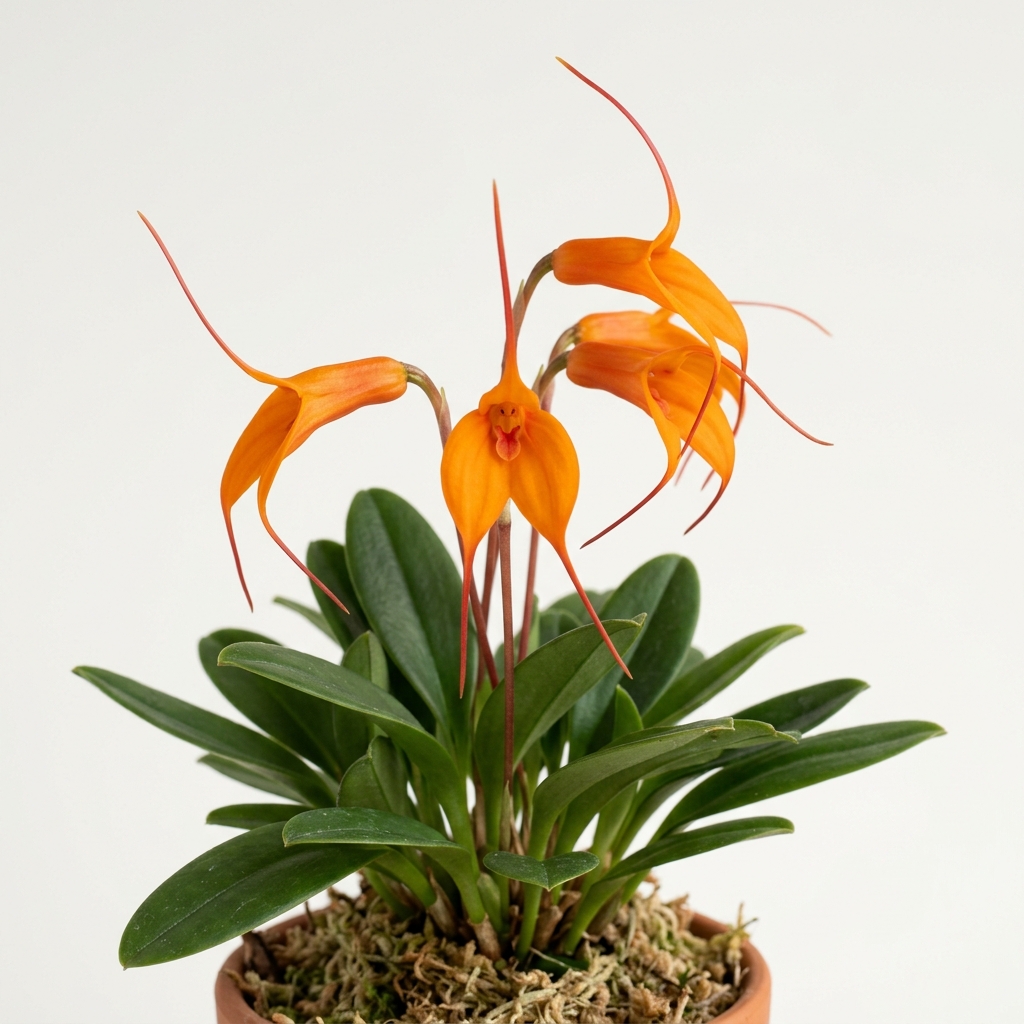
Masdevallia Constricta is a captivating miniature to small-sized orchid highly prized by collectors for its striking, tubular flowers and vibrant coloration. Belonging to the diverse Pleurothallidinae subtribe, this cool-growing species is native to the cloud forests of the Andes, where it thrives in high humidity and moderate shade. Orchid enthusiasts value this plant for its unique floral morphology, which stands out dramatically against its lush, tufted green foliage.
Cultivating this orchid successfully requires replicating its native montane habitat, characterized by consistent moisture, cool temperatures, and excellent air movement. While it can be more demanding than common lowland orchids, Masdevallia Constricta rewards attentive growers with frequent, long-lasting blooms that showcase the dramatic, elongated sepal tails characteristic of the genus. Its compact growth habit makes it an excellent candidate for indoor terrariums, Wardian cases, or dedicated cool-temperature grow spaces.
💡 Did You Know?
The specific epithet constricta refers to the unique narrowing or constriction at the base of the flower's fused sepals. This morphological feature creates a tight tube that restricts access to the flower's reproductive organs, ensuring that only specific, specialized insect pollinators can reach the nectar and successfully pollinate the orchid.
🌿 Botanical Overview
Masdevallia Constricta is an epiphytic orchid species native to the high-elevation cloud forests of Ecuador and Peru, typically found growing on moss-covered tree trunks at altitudes ranging from 1,200 to 1,800 meters. Structurally, the plant lacks pseudobulbs, a common trait among pleurothallids. Instead, it produces erect, fleshy, obovate leaves that emerge from short ramicauls, forming dense, tufted clumps that remain attractive year-round.
Because it lacks water-storing pseudobulbs, the plant is highly sensitive to dry conditions and relies on its thick leaves and roots to absorb moisture from the humid mountain air. In its native habitat, it experiences near-constant moisture, frequent mists, and gentle breezes, which keep the root zone cool and hydrated. Understanding this ecological niche is key to maintaining the plant’s vigor in cultivation.
🌸 Flower Characteristics
The flowers of Masdevallia Constricta are structurally fascinating, featuring fused sepals that form a distinct, constricted tube-like structure at the base, which gives the species its botanical name. The sepals then flare outward, terminating in long, slender, tail-like appendages (caudae) that can extend several centimeters. The color is typically a brilliant, saturated orange or golden-yellow, sometimes with reddish undertones, creating a vivid contrast against the green foliage.
The actual petals and the lip (labellum) are extremely small and hidden deep within the sepaline tube, a specialized adaptation for specific insect pollinators. Each single-flowered inflorescence is produced on a slender, erect to sub-erect peduncle that holds the bloom near or slightly above the leaf canopy, presenting the striking flowers clearly to onlookers.
Fragrance & Bloom Profile
While some members of the Masdevallia genus exhibit subtle scents, a distinct fragrance for Masdevallia Constricta is not consistently documented in common grower references. Most cultivators report that the flowers are virtually odorless, relying instead on their vivid coloration and unique shape to attract pollinators.
The blooms are remarkably long-lasting, often remaining in pristine condition for several weeks if kept in a cool, humid environment. A healthy, mature specimen can produce multiple flower spikes simultaneously or sequentially throughout its active growing phases, providing an extended display of color.
Parentage & Hybrid Lineage
Masdevallia Constricta is recognized as a distinct, naturally occurring species rather than an artificial hybrid. In orchid literature, it is sometimes referred to under its taxonomic synonym, Masdevallia urosalpinx, though M. constricta remains the widely accepted botanical name.
While it is a species in its own right, hybridizers have occasionally used Masdevallia Constricta in breeding programs to introduce its vibrant orange coloration, compact growth habit, and unique tubular flower structure to new grexes. However, exact hybrid lineages and registered offspring can vary, and parentage details should be verified through official orchid registries for specific cultivated crosses.
🌱 Growing Conditions
Successful cultivation of Masdevallia Constricta hinges on maintaining cool to intermediate temperatures. Ideally, daytime temperatures should range between 65°F and 75°F (18°C to 24°C), with a distinct drop at night to around 50°F to 55°F (10°C to 13°C). Prolonged exposure to temperatures above 80°F (27°C) can cause severe heat stress, leaf drop, and eventual decline.
💡 Care Tip
To keep your orchid cool during hot summer days, place it near an evaporative cooler or use a tray filled with wet pebbles and water. The evaporation process naturally lowers the ambient immediately surrounding the plant while simultaneously boosting the local levels.
Light levels should be kept low to moderate, mimicking the dappled shade of the forest understory. Bright, indirect light is ideal, while direct sunlight must be avoided to prevent leaf scorching. High relative humidity of 70% to 90% is essential, coupled with constant, gentle air movement to prevent stagnant air pockets, which can encourage fungal pathogens.
Watering, Feeding & Potting Media
Due to the absence of pseudobulbs, Masdevallia Constricta must never be allowed to dry out completely. The potting medium should remain consistently damp but not waterlogged. Water the plant thoroughly using pure water sources, such as rainwater, reverse osmosis water, or distilled water, as this species is highly sensitive to dissolved salts and minerals.
A potting medium that retains moisture while allowing excellent drainage is crucial. High-quality New Zealand sphagnum moss or a fine-grade bark mix blended with perlite and tree fern fiber works exceptionally well. If grown in pots, plastic pots with ample drainage holes are preferred. Fertilization should be extremely light; use a balanced, diluted orchid fertilizer at one-quarter strength every two to three weeks during active growth, flushing the pot with pure water between feedings to prevent salt buildup.
Blooming Season & Care Notes
Masdevallia Constricta can bloom at various times throughout the year, but peak flowering typically occurs during the cooler months of winter and early spring. To encourage robust blooming, ensure the plant experiences the natural seasonal drop in night temperatures.
Once a flower spike has finished blooming and naturally withered, it can be cut back to the base of the leaf stem. Repotting is best done in the spring, just as new root growth begins, or in the autumn when temperatures cool down. Avoid repotting during the heat of summer, as the plant is already stressed by high temperatures and may struggle to establish new roots.
⚠️ Common Issues
⚠️ Common Mistake
A frequent error is allowing the potting medium to dry out completely between waterings. Unlike many common orchids with water-storing pseudobulbs, this species lacks water reserves and can suffer irreversible leaf drop and root death if the root zone dries out even for a short period.
- Leaf Spotting and Drop: Often caused by high temperatures, poor air circulation, or fungal infections. Ensure cooler temperatures and active air movement.
- Root Rot:
Occurs when the potting medium becomes compacted, sour, or waterlogged. Repot annually or biennially to keep the media fresh. - Bud Blast:
Premature dropping or drying of flower buds, usually triggered by sudden drops in humidity, drafts, or water stress. - Pests:
Spider mites, aphids, and mealybugs can occasionally target the tender foliage. Treat promptly with gentle insecticidal soap or neem oil, avoiding harsh chemical sprays.
❓ Frequently Asked Questions
How do I know if my Masdevallia Constricta is getting too much light?
If the plant is receiving too much light, the leaves will often turn a pale yellow or develop a reddish-purple tint as a protective pigment response. In severe cases, direct sunlight will cause dry, white, or brown scorched patches on the foliage. Healthy leaves should be a vibrant, medium green.
Can I grow Masdevallia Constricta in a home terrarium?
Yes, this orchid is an excellent candidate for terrariums or vivariums due to its compact size and high humidity requirements. However, you must ensure adequate ventilation, perhaps by installing a small computer fan, to prevent stagnant air, which can quickly lead to rot in enclosed spaces.
Why are the leaf tips of my orchid turning black?
Black leaf tips are commonly caused by salt accumulation from tap water or over-fertilization. Because this species is highly sensitive to minerals, always use pure water (such as rainwater or reverse osmosis water) and fertilize very sparingly, flushing the medium regularly.
Is Masdevallia Constricta suitable for beginner orchid growers?
This species is generally considered moderately challenging and may not be ideal for absolute beginners unless they can reliably provide cool temperatures and high humidity. However, for growers with some experience or those utilizing controlled environments like terrariums, it is a highly rewarding species to cultivate.
⭐ Final Growing Notes
Masdevallia Constricta is a jewel of the orchid world, offering a spectacular display of tubular, bright orange flowers that bring a touch of the Andean cloud forests into cultivation. While its requirements for cool temperatures, high humidity, and pure water demand a disciplined approach to care, the sheer beauty and unique form of its blooms make it an incredibly rewarding addition to any serious orchid collection. By focusing on consistent moisture and excellent air movement, growers can enjoy this miniature marvel for many years.
⚕️ Health, Safety & Edibility
Understanding how a plant interacts with people, pets, and the surrounding environment is part of responsible cultivation. This section uses conservative, general guidance and does not replace professional medical or veterinary advice.
Human Safety: No published evidence currently identifies species-specific toxicity concerns for Masdevallia Constricta during normal handling. As with most ornamental plants, it should not be intentionally consumed.
Pet Safety: Published information does not indicate that this orchid commonly poses a toxicity concern for cats or dogs. However, chewing leaves, flowers, roots, or potting media may still cause mild digestive upset.
Edibility: This orchid is cultivated for ornamental display rather than food. Ornamental plants may carry fertilizers, pesticides, or other horticultural treatments that make them unsuitable for consumption.
Skin Contact: Routine handling is not generally associated with skin irritation. Gardeners with sensitive skin may prefer wearing gloves when repotting, pruning, or handling potting media.
🌱 Propagation Tip
This orchid is best propagated by division during the repotting process in spring. Ensure each division has at least five to eight healthy leaves and a robust root system. Gently tease the roots apart to minimize damage, and pot the new divisions in fresh, damp sphagnum moss.
⭐ Expert Advice
If you struggle to maintain the cool night temperatures this orchid requires, try the plant with chilled, pure water in the evening. This simple technique can help lower the root zone , mimicking the cool mountain mists of its native Andean habitat.

Leave A Comment