

Bulbophyllum Affine, commonly known as the fleshy-flowered Bulbophyllum, is a captivating orchid species highly prized by collectors for its unique growth habit and striking, striped blossoms. Belonging to the vast and diverse genus Bulbophyllum, this epiphytic orchid is native to the warm, humid forests of Asia, stretching from the eastern Himalayas to Taiwan and the Ryukyu Islands. Growers value this species for its resilient nature, creeping rhizomes, and the architectural elegance it brings to indoor growing spaces and greenhouses alike.
Unlike many orchids that produce tall, multi-flowered spikes, Bulbophyllum Affine produces solitary, star-shaped flowers that emerge directly from the nodes along its creeping rhizome. Each bloom features a beautiful contrast of pale yellow or cream petals adorned with prominent, reddish-purple longitudinal veins. This growth habit makes it an useful selection for mounting on cork bark or tree fern plaques, where its rambling pseudobulbs can spread naturally and mimic its wild epiphytic environment.
💡 Did You Know?
The hinged lip of Bulbophyllum Affine is an evolutionary marvel designed to assist in pollination. When a small insect lands on the fleshy, tongue-like labellum, its weight causes the lip to tip backward, gently pushing the pollinator against the column of the flower to ensure the transfer of pollen.
🌿 Botanical Overview
Bulbophyllum Affine is characterized by its distinct vegetative structure, featuring a stout, creeping rhizome that produces well-spaced, cylindrical to ovoid pseudobulbs. Each pseudobulb is topped by a single, thick, leathery leaf that is oblong to lanceolate in shape. This robust foliage allows the plant to store moisture and nutrients, helping it survive fluctuations in its natural canopy habitat.
The creeping habit of this species means that it tends to quickly outgrow traditional pots, spreading horizontally across its growing surface. In nature, these plants form dense mats on the trunks and branches of trees, absorbing moisture and organic debris from the surrounding humid air. Understanding this epiphytic lifestyle is key to successfully cultivating the species in a home or greenhouse environment.
🌸 Flower Characteristics
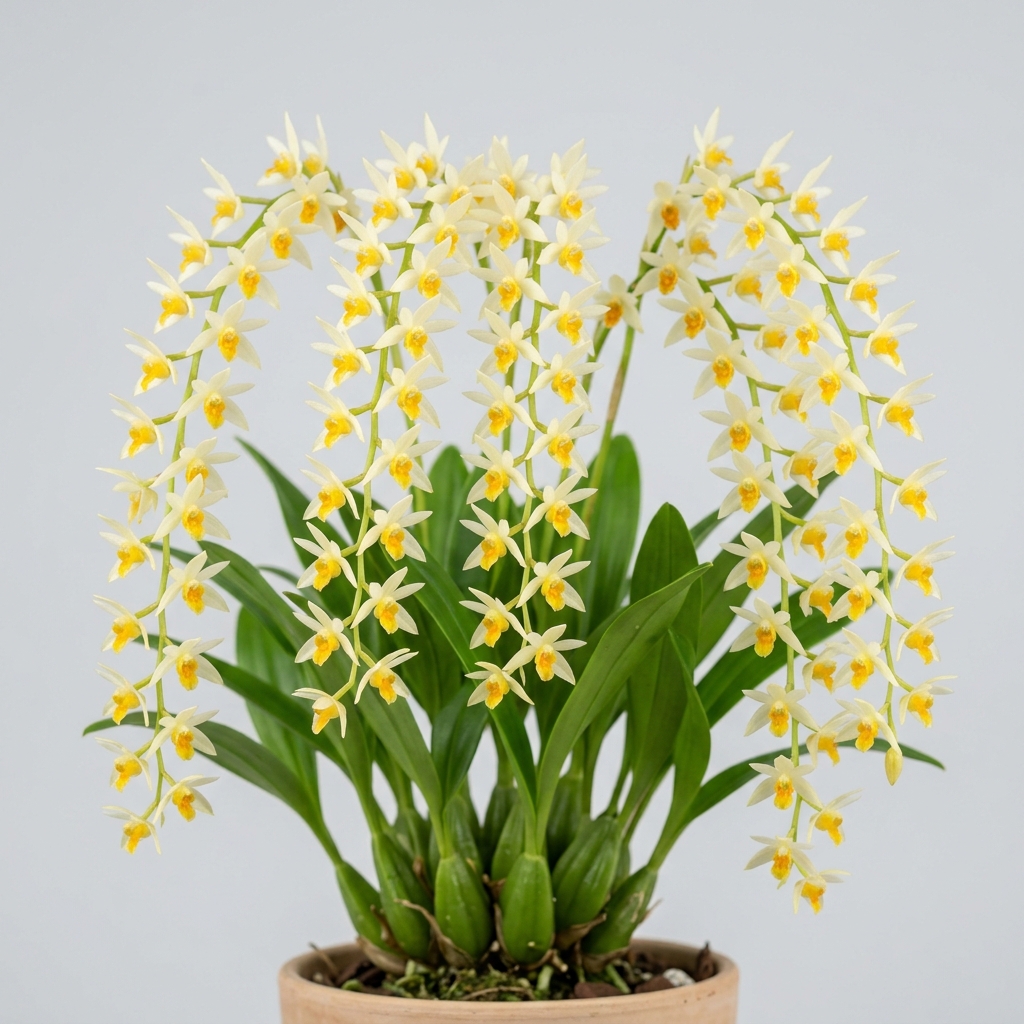
The flowers of Bulbophyllum Affine are singularly produced on short, erect stalks that arise from the rhizome near the base of the pseudobulbs. Each blossom is approximately three to five centimeters in diameter, presenting a striking star-like outline. The sepals and petals are lanceolate, featuring a translucent cream or pale yellow base color decorated with distinct, parallel lines of reddish-purple or maroon.
A defining feature of this flower is its fleshy, tongue-like lip, which is typically a deeper yellow, orange, or reddish hue. This lip is delicately hinged, a classic evolutionary trait of the genus Bulbophyllum designed to assist in pollination by moving slightly with the breeze or the weight of visiting insects.
Fragrance & Bloom Profile
The fragrance of Bulbophyllum Affine is a subject of discussion among orchid enthusiasts, as it is often described as variable or faint. Unlike some members of the genus that emit strong, unpleasant odors to attract carrion flies, this species generally produces a mild, slightly sweet, or musky scent that is not overpowering.
Individual flowers are relatively long-lasting compared to other Bulbophyllum species, often remaining fresh for two to three weeks if kept in cool, humid conditions. Because the flowers emerge close to the rhizome, they are best viewed at eye level, making mounted specimens particularly rewarding during the blooming cycle.
Parentage & Hybrid Lineage
As a naturally occurring species rather than a man-made hybrid, Bulbophyllum Affine does not have a complex lineage of parental cultivars. It is registered under its botanical name and represents a distinct evolutionary branch within the massive Bulbophyllum genus.
While hybridizers have occasionally used the species in breeding programs to introduce its striped patterning and compact, creeping habit to new grexes, such hybrids remain relatively rare in the commercial market. Most plants available to hobbyists are propagated through division or seed flasking of select wild-type clones, preserving the natural characteristics of the species.
🌱 Growing Conditions
To cultivate Bulbophyllum Affine successfully, growers should aim to replicate its native warm-to-intermediate forest environment. The plant thrives in bright, filtered light, similar to the dappled shade of a forest canopy. Direct afternoon sunlight should be avoided, as it can easily scorch the leathery leaves and dehydrate the pseudobulbs.
💡 Care Tip
To maintain the high this orchid craves without risking rot, place a tray filled with water and pebbles beneath your growing area, and use a small fan to keep air circulating gently around the foliage.
Temperature ranges should ideally remain between 18 degrees Celsius and 29 degrees Celsius during the day, with a slight drop at night to stimulate healthy growth. High humidity is crucial, ideally maintained between 60% and 80%. Adequate air movement is equally important to prevent stagnant air pockets, which can encourage fungal pathogens in high-humidity setups.
Watering, Feeding & Potting Media
Consistent moisture is vital for Bulbophyllum Affine, as it lacks the large water-storing pseudobulbs found in some other orchid genera. The growing medium should never be allowed to dry out completely. Mounted plants may require daily misting or watering during the heat of summer, while those in baskets or shallow pots should be watered just as the medium begins to approach dryness.
A high-quality, free-draining medium is essential to prevent root rot. High-grade sphagnum moss, fine fir bark, or a combination of both works well in shallow containers. During the active growing season, apply a balanced, highly diluted orchid fertilizer every two to three weeks, ensuring you flush the medium with pure water periodically to prevent salt buildup.
Blooming Season & Care Notes
The primary blooming season for Bulbophyllum Affine typically spans from late spring through the summer months. Initiating blooms requires consistent care during the winter rest period, during which watering should be slightly reduced, though the plant should never be left bone-dry.
When repotting or remounting, timing is critical. It is best to perform these tasks just as new root growth begins to emerge from the base of the leading pseudobulbs, usually in early spring. Avoid disturbing the root system unnecessarily, as Bulbophyllum species can be sensitive to root disturbance and may skip a blooming cycle if severely disrupted.
⚠️ Common Issues
⚠️ Common Mistake
A common mistake is planting this orchid in a deep, heavy potting soil or standard orchid pot. This suffocates the roots and restricts the natural horizontal spread of the rhizome, often leading to rot.
- Root Rot:
Caused by poorly draining media or overwatering, leading to mushy, black roots and declining pseudobulbs. - Leaf Scorch: Yellow or brown patches on the leaves resulting from exposure to direct, intense sunlight.
- Dehydration:
Shriveled pseudobulbs and wrinkled leaves indicate insufficient watering or low ambient humidity. - Pests:
Mealybugs and spider mites can occasionally hide in the crevices of the creeping rhizome or under leaves. - Bud Blast:
Sudden drops in humidity or temperature fluctuations can cause developing flower buds to yellow and drop before opening.
❓ Frequently Asked Questions
Can Bulbophyllum Affine be grown in a standard plastic pot?
While it can be grown in a pot, a standard deep plastic pot is not ideal due to the plant’s creeping rhizome. A shallow orchid pan, a wooden basket, or a mount on cork bark is highly recommended to accommodate its horizontal spreading habit.
How often should I water my mounted Bulbophyllum Affine?
Mounted specimens dry out very quickly. In typical indoor or greenhouse conditions, they generally require daily watering or heavy misting, especially during the warm summer months when the plant is actively growing.
Why are the pseudobulbs on my orchid shriveling?
Shriveled pseudobulbs are a sign of dehydration. This can be caused by underwatering, extremely low humidity, or a damaged root system that can no longer absorb water. Check the roots to ensure they are healthy before increasing watering frequency.
Does Bulbophyllum Affine require a winter rest period?
Yes, it benefits from a slight winter rest. During the cooler months, reduce watering and fertilizer frequency slightly, allowing the medium to dry out a bit more between waterings, but do not allow the plant to dry out completely or shrivel.
⭐ Final Growing Notes
Bulbophyllum Affine is a rewarding and highly unique orchid species that brings a touch of exotic elegance to any collection. By providing consistent moisture, high humidity, and a suitable mounting or shallow potting environment, growers can enjoy its striking striped blooms and fascinating creeping growth habit for many years.
⚕️ Health, Safety & Edibility
Understanding how a plant interacts with people, pets, and the surrounding environment is part of responsible cultivation. This section uses conservative, general guidance and does not replace professional medical or veterinary advice.
Human Safety: No published evidence currently identifies species-specific toxicity concerns for Bulbophyllum Affine during normal handling. As with most ornamental plants, it should not be intentionally consumed.
Pet Safety: Published information does not indicate that this orchid commonly poses a toxicity concern for cats or dogs. However, chewing leaves, flowers, roots, or potting media may still cause mild digestive upset.
Edibility: This orchid is cultivated for ornamental display rather than food. Ornamental plants may carry fertilizers, pesticides, or other horticultural treatments that make them unsuitable for consumption.
Skin Contact: Routine handling is not generally associated with skin irritation. Gardeners with sensitive skin may prefer wearing gloves when repotting, pruning, or handling potting media.
🌱 Propagation Tip
Propagate this species by dividing the creeping rhizome during the spring repotting phase. Ensure each division has at least three to four healthy pseudobulbs with active root growth to give the new plant the best start.
⭐ Expert Advice
If your orchid refuses to bloom, try increasing the levels slightly to bright, indirect and ensure there is a noticeable drop of a few degrees between day and night during the autumn months.

Leave A Comment