
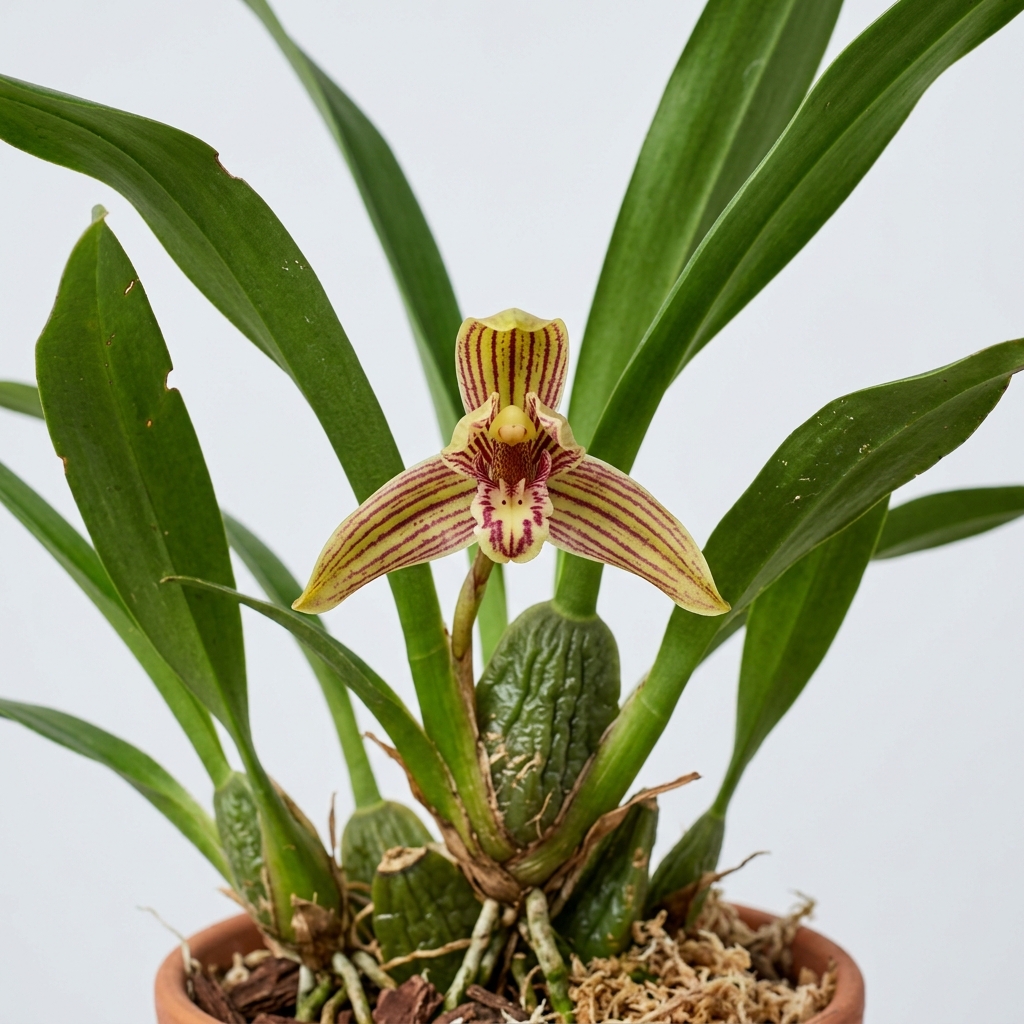
Maxillaria Striata is a highly sought-after orchid species within the diverse Maxillaria genus, celebrated for its dramatic, striped flowers and robust growth habit. Native to the montane forests of South America, particularly Ecuador and Peru, this epiphytic orchid appeals to intermediate and advanced collectors who appreciate bold botanical forms. Its large, nodding blooms stand out among a genus often known for much smaller flowers.
Cultivating this orchid successfully requires replicating its cool-to-intermediate, humid forest habitat. With its distinctive pseudobulbs and long, strap-like leaves, the plant presents an attractive architectural profile even when not in bloom. When provided with consistent moisture, high humidity, and moderate light, it rewards growers with a striking floral display that highlights the intricate diversity of the Orchidaceae family.
💡 Did You Know?
Maxillaria Striata belongs to the Maxillaria orchid group, where flower presentation is often just as important as . White-flowered cultivars are especially valued indoors because their pale blooms reflect well and pair easily with many home, greenhouse, and display settings.
🌿 Botanical Overview
Maxillaria Striata is characterized by its clustered, flattened pseudobulbs, each topped by a single, leathery, lanceolate leaf. The plant’s growth habit is primarily epiphytic, meaning it grows on trees in its natural habitat, anchoring itself with a vigorous root system. In the wild, these orchids thrive in wet, mossy montane forests at elevations ranging from 800 to 1,500 meters.
The vegetative structure is robust, with pseudobulbs acting as water and nutrient storage organs. This adaptation helps the plant survive brief periods of reduced moisture, though it prefers a consistently humid environment. The foliage is a deep, matte green, providing an attractive backdrop for the emerging flower spikes that arise from the base of the pseudobulbs.
🌸 Flower Characteristics
The flowers of Maxillaria Striata are among the largest in the genus, often reaching up to 4 to 5 inches (10 to 12 cm) in diameter. The sepals and petals are long, pointed, and spread widely, featuring a base color of pale yellow or greenish-yellow heavily marked with longitudinal reddish-purple or brown stripes. This striking striping pattern gives the species its specific epithet, striata.
The lip, or labellum, is relatively small compared to the dramatic sepals and petals, often white or pale yellow with dark purple veining and a yellow callus. The flowers are typically borne singly on short, erect to nodding spikes that emerge from the base of the matured pseudobulbs, presenting the blooms nestled closely to the foliage.
Fragrance & Bloom Profile
The fragrance of Maxillaria Striata is a subject of much discussion among orchid enthusiasts. It is frequently described as having a strong, sweet, melon-like scent, though some growers report a more complex, slightly medicinal or musty undertone. The intensity of the fragrance can vary depending on temperature, humidity, and the time of day, typically peaking in the morning hours under bright light.
Individual blooms are relatively long-lasting, often remaining in prime condition for three to five weeks if kept in cool, stable conditions. Because the flowers emerge from the base of the pseudobulbs, a well-grown specimen with multiple mature leads can produce a succession of blooms, extending the overall display period.
Parentage & Hybrid Lineage
As a naturally occurring species rather than a man-made hybrid, Maxillaria Striata carries a pure genetic lineage. It has been used occasionally in hybridizing programs to introduce larger flower size and bold striping patterns to other Maxillaria species, though such hybrids remain relatively uncommon in the general commercial trade.
In botanical nomenclature, it is classified under the genus Maxillaria, which is one of the largest and most diverse genera in the orchid family. Because wild collection is strictly regulated, growers should ensure they purchase plants propagated from seed or division by reputable nurseries to protect wild populations.
🌱 Growing Conditions
To cultivate Maxillaria Striata successfully, growers must provide cool to intermediate temperatures. Ideal daytime temperatures range from 70°F to 78°F (21°C to 26°C), with a night drop to 55°F to 62°F (13°C to 17°C). This diurnal temperature drop is highly beneficial for stimulating healthy growth and eventual flowering.
💡 Care Tip
For best results, grow Maxillaria Striata in bright filtered with steady and gentle airflow. Avoid placing the plant in harsh midday sun, but do not keep it in a dark corner; weak is one of the most common reasons cultivated orchids refuse to rebloom.
Light levels should be moderate to bright but filtered, similar to the dappled light found under a forest canopy. Direct afternoon sun will quickly scorch the leaves, while too little light will result in weak, floppy growth and a failure to bloom. High humidity of 60% to 80% is essential, accompanied by constant, gentle air movement to prevent fungal pathogens from settling on the damp foliage.
Watering, Feeding & Potting Media
Unlike some orchids that require a distinct dry rest period, Maxillaria Striata prefers to remain evenly moist throughout the year. The potting medium should never be allowed to dry out completely, though it must drain freely to prevent root rot. A mix of high-quality New Zealand sphagnum moss and fine fir bark works exceptionally well in retaining moisture while allowing air to reach the roots.
During the active growing season in spring and summer, apply a balanced, diluted orchid fertilizer (such as a quarter-strength 20-20-20 formula) every second or third watering. Flush the pot thoroughly with pure water between fertilizer applications to prevent harmful mineral salts from building up in the medium. Reduce feeding frequency during the cooler winter months when growth slows.
Blooming Season & Care Notes
The primary blooming season for Maxillaria Striata typically occurs in the late summer and autumn, although healthy plants may occasionally produce flowers at other times of the year. As the new pseudobulbs mature, watch for the appearance of flower sheaths at their bases. Keep watering consistent during this period, as drying out can cause the developing buds to blast.
Repotting is best performed in the spring, just as new vegetative growth and fresh roots begin to emerge. Avoid disturbing the root system unnecessarily, as Maxillaria species can be sensitive to repotting shock. Choose a pot that allows for two years of growth, ensuring adequate drainage holes are present.
⚠️ Common Issues
⚠️ Common Mistake
The most common mistake is by calendar instead of root and potting-media condition. Maxillaria roots need moisture and air at the same time, so constantly wet bark or sphagnum can lead to root loss even when the leaves still look healthy.
- Root Rot: Caused by overwatering or a degraded, compacted potting medium that suffocates the roots.
- Leaf Spotting: Fungal or bacterial spots can develop if humidity is high but air circulation is stagnant.
- Bud Blast: Developing flower buds may shrivel and die before opening due to sudden drops in humidity, underwatering, or extreme temperature fluctuations.
- Pests: Spider mites and mealybugs are common pests that hide in the crevices of the pseudobulbs and the undersides of leaves.
- Pseudobulb Shriveling: A sign of dehydration, either due to underwatering or a loss of functional roots from overwatering.
❓ Frequently Asked Questions
How often should I water my Maxillaria Striata?
Watering frequency depends on your growing environment, but the potting medium should remain consistently damp. Typically, this means watering two to three times a week during the warm growing season, and slightly less often in winter, ensuring the medium never dries out completely.
Why are the leaves on my orchid turning yellow?
Yellowing leaves can indicate several issues, most commonly overwatering leading to root rot, or excessive direct sunlight scorching the foliage. Examine the roots; if they are brown and mushy, reduce watering and repot. If they are healthy, move the plant to a more shaded location.
Can I grow Maxillaria Striata under LED lights?
Yes, this orchid adapts well to indoor cultivation under broad-spectrum LED grow lights. Position the plant so it receives moderate light intensity, ensuring the lights do not generate excess heat that could dry out the surrounding air or scorch the leaves.
Does this orchid require a winter rest period?
No, Maxillaria Striata does not require a strict dry winter rest. However, because growth naturally slows during the shorter, cooler days of winter, you should slightly reduce the frequency of watering and suspend fertilizing until active growth resumes in spring.
⭐ Final Growing Notes
Maxillaria Striata is a rewarding and visually spectacular species that brings a touch of the South American cloud forests into the home or greenhouse. While its moisture and humidity requirements demand a bit more attention than common grocery store orchids, its large, dramatically striped flowers and intriguing fragrance make it an exceptional centerpiece for any dedicated orchid collection.
⚕️ Health, Safety & Edibility
Understanding how a plant interacts with people, pets, and the surrounding environment is part of responsible cultivation. This section uses conservative, general guidance and does not replace professional medical or veterinary advice.
Human Safety: No published evidence currently identifies species-specific toxicity concerns for Maxillaria Striata during normal handling. As with most ornamental plants, it should not be intentionally consumed.
Pet Safety: Published information does not indicate that this orchid commonly poses a toxicity concern for cats or dogs. However, chewing leaves, flowers, roots, or potting media may still cause mild digestive upset.
Edibility: This orchid is cultivated for ornamental display rather than food. Ornamental plants may carry fertilizers, pesticides, or other horticultural treatments that make them unsuitable for consumption.
Skin Contact: Routine handling is not generally associated with skin irritation. Gardeners with sensitive skin may prefer wearing gloves when repotting, pruning, or handling potting media.
🌱 Propagation Tip
Propagation should be approached patiently. Most home growers should wait for natural keikis or divide only mature, healthy plants when the orchid type allows it. Never remove a young growth until it has strong roots and enough leaves to support itself away from the parent plant.
⭐ Expert Advice
Repot after flowering when fresh root tips begin to appear. This timing helps the plant anchor quickly into new bark or sphagnum and reduces stress, especially for orchids grown indoors where airflow, , and drying speed can change from season to season.

Leave A Comment